Thinking about giving your child their own study space? You’ll need a kids’ study room design guide that ensures comfort and productivity in their daily learning routine.
This approach is beneficial if you often feel overwhelmed when dealing with a child who struggles to focus or gets easily distracted when studying at home.
This common challenge can be solved by creating a dedicated study area. It helps children distinguish between time for studying, playing, and resting.
Curious about what kind of design elements can help build a productive learning zone that matches your child’s personality? Let’s explore how you can lay the foundation for effective study habits!
Read also: A cool tween shared room with space for individual expression
Creating a dedicated study space for your child isn’t just about placing a desk and a chair. Essentially, you’re establishing clear physical and mental boundaries between leisure/playtime and focus time.
This space plays both a psychological and functional role. When children consistently stay in the same area to complete schoolwork, their brain automatically associates it with studying.
This connection is vital. It helps children develop routines and effectively reduces distractions from toys, television, or even their beds.
The benefits are evident during study time. Children can transition into “study mode” more easily without resistance or fuss, improving focus and reducing stress for parents.
By minimizing the effort it takes for them to start studying, you’re setting them up for more productive and sustainable learning sessions.
Now it’s time to select furniture for your child’s study space! There are three key pillars to keep in mind: ergonomics, comfort, and function. These elements help create an enjoyable atmosphere while protecting your child’s physical health.
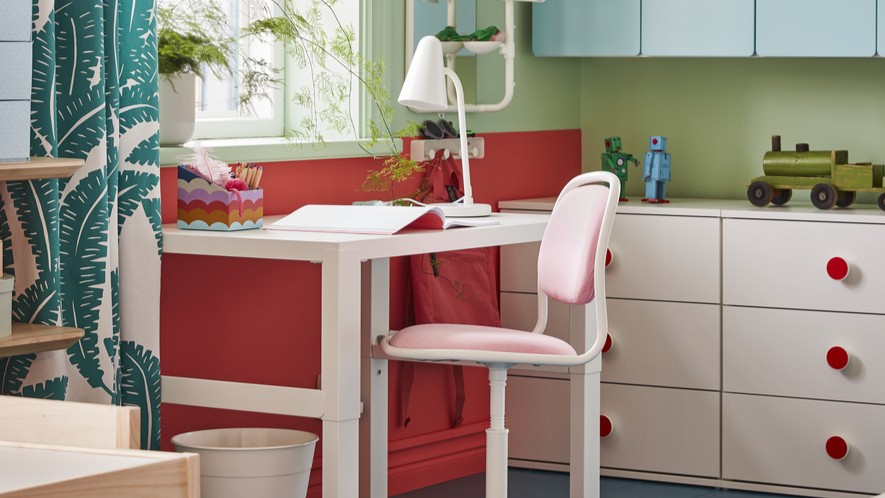
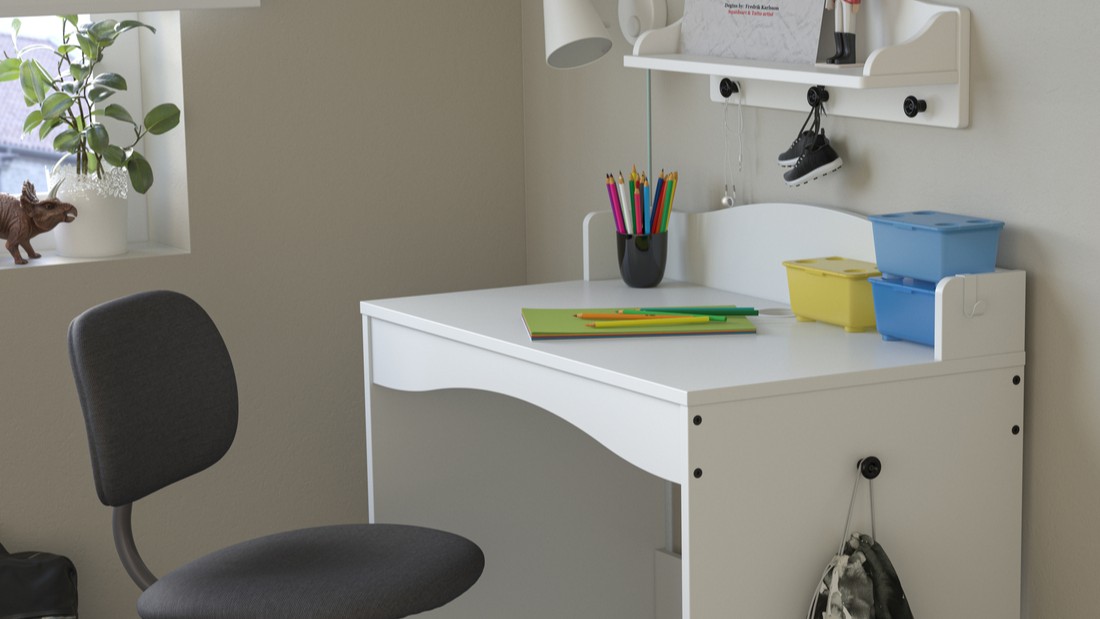
Choose height-adjustable desks and chairs, such as those from IKEA! These pieces not only enhance the room’s aesthetics but also serve as a central space where your child can explore their curiosity.
Make sure the furniture matches your child’s current height. The correct sitting posture, with feet flat on the floor and elbows level with the desk, is essential for maintaining a healthy spine and body alignment.
Don’t overlook lighting. A mix of optimal natural light and a good study lamp is crucial. Ensure the light is bright enough, evenly distributed, and doesn’t glare directly into their eyes.
With supportive furniture, you can prevent long-term health issues like back pain, stiff necks, or eye strain.
More than that, you’ll transform study sessions from a source of physical discomfort into a comfortable, lasting experience that boosts focus and motivation.
Once you’ve set up sturdy furniture, it’s time to focus on what brings the room to life: visual design and layout strategy.
Wall color is more than just aesthetics. It’s a powerful mood enhancer. Avoid overly bright or flashy colors that may cause restlessness.
Instead, go for soft and calming tones like light blue, pastel green, or off-white with subtle, cheerful accents.
These shades help create a peaceful environment, ideal for promoting concentration and calmness without making the space feel dull.
By choosing colors that align with your child’s personality, you can naturally spark creativity and make them feel more comfortable spending time in their study area.
Since the room should reflect your child’s interests, involve them in the setup process. For instance, if they love geography or outer space, add inspiring elements like world maps, educational posters, or planet-themed decorations.
Provide interactive spaces such as an idea board or whiteboard. Allowing your child to choose decorations and jot down ideas gives them a sense of ownership over their study area.
This feeling of ownership actively boosts motivation and encourages them to explore knowledge beyond textbooks.
Once everything is in place, the next challenge is keeping it tidy. A cluttered desk is the biggest enemy of focus and disrupts a supportive study environment.
Teach your child basic life skills by providing storage systems that are easy to reach and simple to use.
Add labeled shelves and storage boxes or low drawers that your child can access independently. The key is simplicity.
An organized storage system helps children put away their study supplies by themselves after each session, building responsibility and discipline.
For flexible and budget-friendly options, many parents choose modular storage systems that can grow with their child, such as those offered by IKEA.
With the right setup, your child’s workspace will always look neat and ready to help them stay focused.
Read also: Create a tidy children’s room is easier
An ideal study room is a smart investment, not just a short-term expense. The key to creating a lasting study zone lies in design flexibility.
Instead of overhauling the room every few years, focus on furniture that can adapt to your child’s physical growth and learning needs, from preschool to teenage years.
How? Choose adjustable furniture. Prioritize desks and chairs with adjustable heights and modular storage systems.
A height-adjustable desk ensures proper ergonomics, while expandable shelving accommodates an ever-growing collection of books and school supplies.
Thanks to timeless and adaptable designs, you won’t need frequent replacements, making it a more affordable long-term solution. The study room will continue to fit your child’s needs at every learning stage.
Now you have the complete guide to building a functional and inspiring study space for your child. And it is a good time to start turning these ideas into a study room that supports your child’s daily activities
Leave the work to the experts! The IKEA interior design service team is ready to help you turn every idea into a beautiful, ergonomic, and affordable reality.
You don’t have to worry about the details! Let IKEA’s professional designers ensure that every piece of furniture is perfectly integrated.
Visit the IKEA interior design service page to consult with experts and create the perfect study room that supports your child’s success!
Please enter the verification code sent to your WhatsApp
Did not receive OTP?
Resend code in seconds