Starting in May 2026, Jakarta residents are required to sort household waste into four categories through the Waste Sorting Movement initiated by the DKI Jakarta Provincial Government. This policy has become a change in everyday habits at home.
Now, food scraps, plastic bottles, used batteries, and residual waste need to be separated directly from the source. For many families, the biggest challenge lies in organizing the waste area so it remains neat, practical, and easy to use every day.
Therefore, this article will discuss simple ways to start the habit of sorting waste at home, including choosing suitable waste bin solutions for modern household needs.
“Good to know: Many Jakarta residents support the new waste sorting regulation, but they are still concerned about the readiness of facilities in the field. Organizing your own waste sorting system at home using HÅLLBAR can help support facility readiness in waste disposal.”
What types of waste must Jakarta residents sort?
The DKI Jakarta Provincial Government now requires household waste to be sorted into four main categories: organic, inorganic, B3 (Hazardous and Toxic Materials), and residual waste. This regulation is implemented through Governor Instruction Number 5 of 2026 as part of the Waste Sorting Movement from the Source.
Each category has a different handling method. Therefore, it is important for families to understand each type of waste while also preparing a practical sorting area at home so this new habit becomes easier to carry out every day.
1. Organic waste
Organic waste comes from materials that naturally decompose. This type of waste includes food scraps, fruit peels, cooking residue, and dry leaves. Under DKI Jakarta Provincial Government regulations, organic waste is identified with green-colored containers to make the identification process easier.
Kitchen areas often become the main point for collecting organic waste. Covered containers help reduce odors while keeping the kitchen comfortable to use throughout the day.
Homes with frequent cooking activities can also use covered waste bins as a neater organic sorting system. Its modular design makes it easier for you to adjust the capacity according to family needs.
2. Inorganic and recyclable waste
The inorganic category includes waste that can still be recycled, such as cardboard, plastic bottles, paper, glass, and metal. This type of waste can later be sent to waste banks or other recycling facilities so it does not immediately end up in landfills.
The volume of inorganic waste is usually larger compared to other types, especially from household shopping packaging and delivery boxes. Large-capacity containers make temporary storage easier before the waste is taken to a waste bank.
Using sorting bins with lids can help keep the sorting area neat because the design is easy to stack and move. Household needs that require flexible solutions can also use waste sorting bags to separate plastic, paper, and glass more practically.
3. B3 waste that requires special attention
B3 waste or hazardous and toxic materials requires special handling because it risks polluting the environment and endangering health. This type of waste includes used batteries, light bulbs, small electronic waste, and household chemical packaging.
B3 waste is generally not too large in size, but it should not be mixed with other daily waste. Small covered containers help reduce the risk of spilling while making the collection process easier before being taken to B3 waste collection facilities. Special storage can become a practical solution for storing used batteries or household electronic waste so it remains separated and safer at home.
4. Residual waste that cannot be recycled
Residual waste is waste that can no longer be processed or composted. Examples include disposable diapers, used tissues, cigarette butts, sanitary pads, and chewing gum. This waste will later be processed further through RDF Plant or waste-to-energy facilities.
The often dirty nature of residual waste makes hygienic waste bins important at home. Pedal-operated models help reduce direct contact when disposing of daily waste.
Read also: IKEA Eco-Friendly Plastic. A Healthier Choice for the Earth
How to make waste sorting areas neater in small homes
Limited space is often the reason many families delay creating a waste sorting system at home. In fact, sorting areas can still feel neat and comfortable even if the kitchen or service area has limited space. A simple system also makes it easier for all family members to follow new habits, here’s how.
1. Use a vertical system in the kitchen
Small kitchen areas require space-saving solutions. Arranging waste bins vertically can help utilize upward space without making activity paths feel narrow.
A modular waste bin system helps you arrange several waste categories in one more organized area. Waste bins can be arranged inside kitchen cabinets or service corners so the cooking area still looks neat.
Different container sizes also make it easier to adjust to household needs. Organic waste can use larger capacities, while other categories can be placed in more compact containers so the space remains efficiently used every day.
2. Separate daily waste areas and periodic waste areas
Placement based on frequency of use makes waste sorting areas feel more practical. Organic and residual waste should be placed in easily accessible areas because they are disposed of every day.
Inorganic and recyclable waste can be placed in special storage areas, such as kitchen corners, small storage rooms, or laundry areas. This placement helps reduce the feeling of a “full” main home area because the waste is usually only taken to the waste bank periodically.
B3 waste also needs to be separated from family daily activity areas. Covered containers on storage shelves help keep used batteries, light bulbs, or small electronic waste safe before being taken to B3 waste collection facilities.
3. Use color codes so family members can easily understand
The DKI Jakarta Provincial Government has established color identities for each waste category so the sorting process becomes easier to understand. Organic waste uses green, inorganic uses yellow, B3 waste uses red, and residual waste uses gray.
Applying color codes at home can help all family members build new habits more quickly. Simple methods such as using color labels, text stickers, or different colored waste bin lids are enough to help the daily identification process.
Children also find it easier to understand the sorting system when each category has clear visual signs. The home feels more organized because everyone knows where to dispose of waste according to its type without needing constant reminders.
Read also: 4 Ways to clean the bathroom effectively with furniture from IKEA
IKEA waste bin recommendations for waste sorting habits
Starting the habit of sorting waste will feel more practical when each type of waste has a suitable container. The right waste bin design helps kitchen and service areas stay neat even when used for several waste categories at once.
You can also see various IKEA waste bin collections for everyday household needs through the IKEA waste bin collection page. Here are several waste bin options you can choose from:
1. FARMARKVAST for daily organic waste
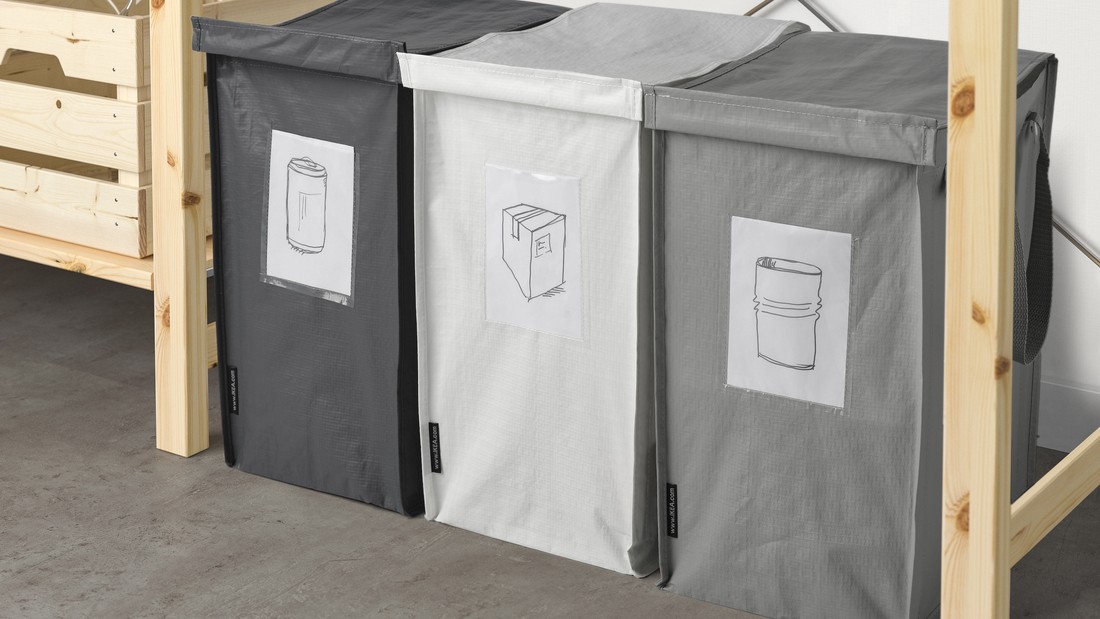
FARMARKVAST waste bin with lid for organic waste is suitable for holding food scraps, fruit peels, and other organic kitchen waste. The closed design helps reduce odors in the kitchen area, while the size is practical for daily needs in small to medium households.
2. HÅLLBAR for modular waste sorting systems
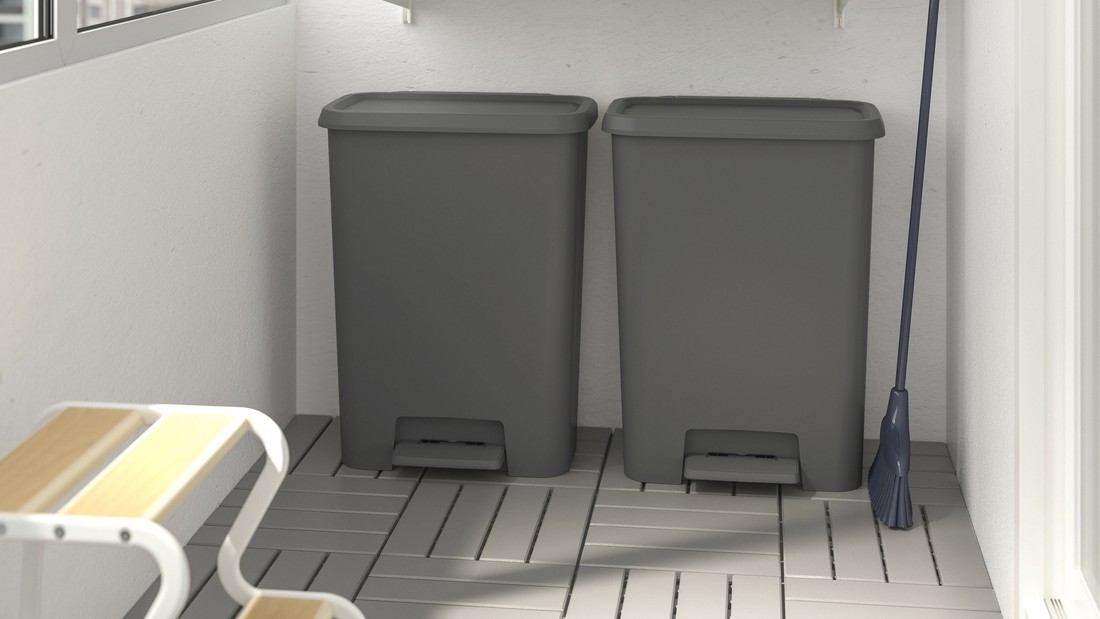
HÅLLBAR waste bin with lid is specifically designed to help the waste sorting process at home. This series can be stacked and arranged modularly so it is suitable for small kitchens or service areas with limited space. The capacity is also available in several sizes to suit organic and inorganic waste needs.
3. SORTERA for large recyclable waste
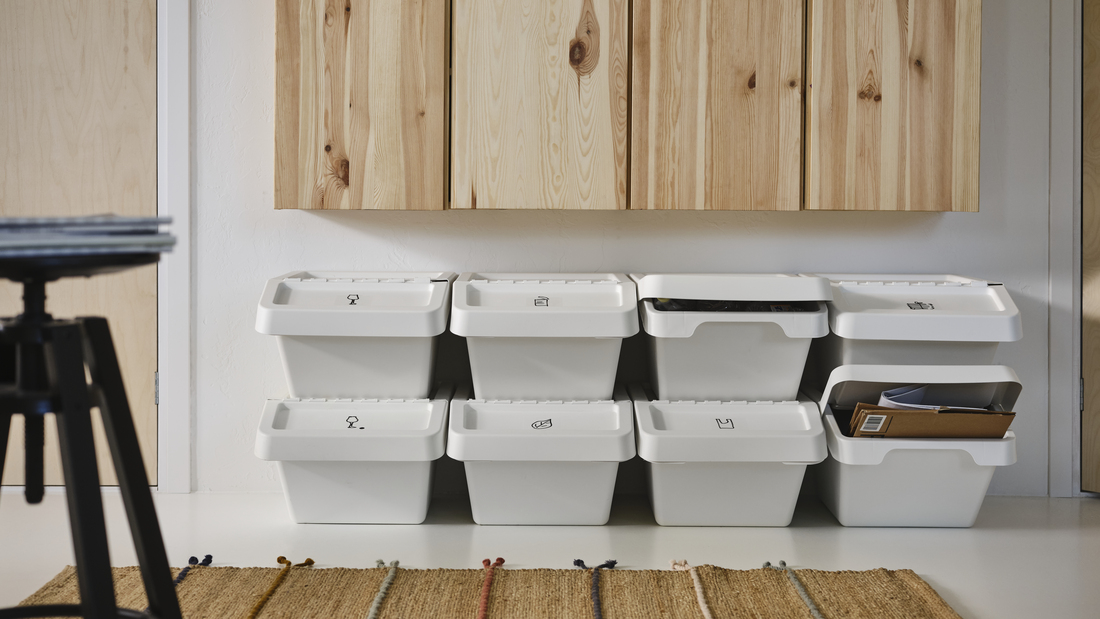
SORTERA waste bin with lid is ideal for holding cardboard, plastic bottles, and other recyclable packaging with fairly large volume. The shape is easy to stack so it helps keep sorting areas more space-efficient.
4. DIMPA for separating waste by category
DIMPA waste sorting bag helps separate inorganic waste such as plastic, paper, and glass more practically. The material is lightweight so it is easy to move when you want to bring waste to a waste bank or recycling point.
5. DAMMÄNG for household B3 waste
DAMMÄNG waste bin with lid is suitable for storing used batteries, light bulbs, or small electronic waste. The size is compact and has a lid so the contents remain safe and do not mix with other daily waste.
6. KNÖCKLA for more hygienic residual waste
KNÖCKLA pedal waste bin helps make disposing of residual waste more hygienic because it can be opened without direct hand contact. Suitable for kitchens and home areas with high activity.
7. STENTRAPPA for small areas such as bathrooms
STENTRAPPA pedal waste bin has a more compact size so it fits perfectly in bathrooms or small room corners. The pedal system helps maintain cleanliness in daily home areas.
8. KNODD for temporary waste storage
KNODD waste bin with lid is suitable as a temporary storage container for inorganic or residual waste before being disposed of outside the home. The material is sturdy and available in fairly large capacities for family needs.
9. FNISS for lightweight daily waste needs
FNISS waste bin can be used as an additional waste bin in bedrooms, workspaces, or study areas. The lightweight design and various color options make it easy to adjust according to household needs.
Organize your home so waste sorting habits become easier to maintain
Waste sorting regulations in Jakarta are not only about compliance with new policies, but also about changing daily habits at home. An organized system helps make the waste sorting process feel lighter because every family member knows where and how to dispose of waste according to its category.
A neat waste area arrangement also keeps the home comfortable to use even with limited space. Suitable containers help reduce clutter in kitchens, service areas, and home storage corners.
Discover various waste sorting solutions and waste bins at IKEA.co.id to help keep your home neat and more adaptable to new habits.
FAQ
Are Jakarta residents required to sort waste from home?
Yes. The DKI Jakarta Provincial Government requires residents to sort household waste into four categories through Governor Instruction Number 5 of 2026 regarding Waste Sorting and Processing from the Source. This policy began implementation on May 10, 2026.
What categories of waste must be sorted?
Waste must be sorted into four types: organic, inorganic, B3, and residual. Organic waste includes food scraps and leaves, inorganic includes plastic and cardboard, B3 consists of batteries and electronic waste, while residual waste is waste that can no longer be recycled.
Why must B3 waste be separated from regular waste?
B3 waste contains hazardous and toxic materials that can pollute the environment and endanger health if mixed with other household waste. This type of waste needs to be collected separately before being taken to B3 waste collection facilities.
How can waste sorting areas stay neat in small homes?
Small homes can still have comfortable waste sorting areas by using vertical systems, modular waste bins, and color codes according to waste categories. Placement based on frequency of use also helps kitchen areas feel more efficient and less crowded.
Can inorganic waste have economic value?
Yes. Inorganic waste such as cardboard, plastic bottles, glass, and metal can be sent to waste banks or recycling facilities. Sorting from home helps recyclable materials stay clean so they become easier to process again.