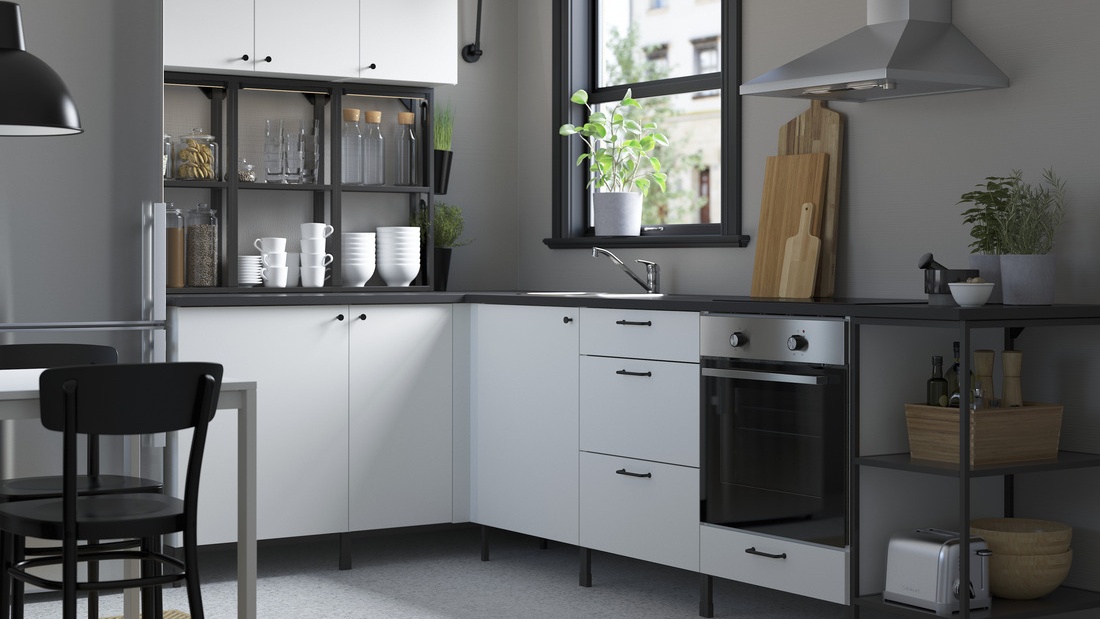
A small tidy kitchen is a kitchen where the layout, visual design, and storage all support daily cooking routines. This guide walks through clear zones, the full cooking flow, storage choices, and simple habits that help the kitchen stay comfortable and clutter-free every day.
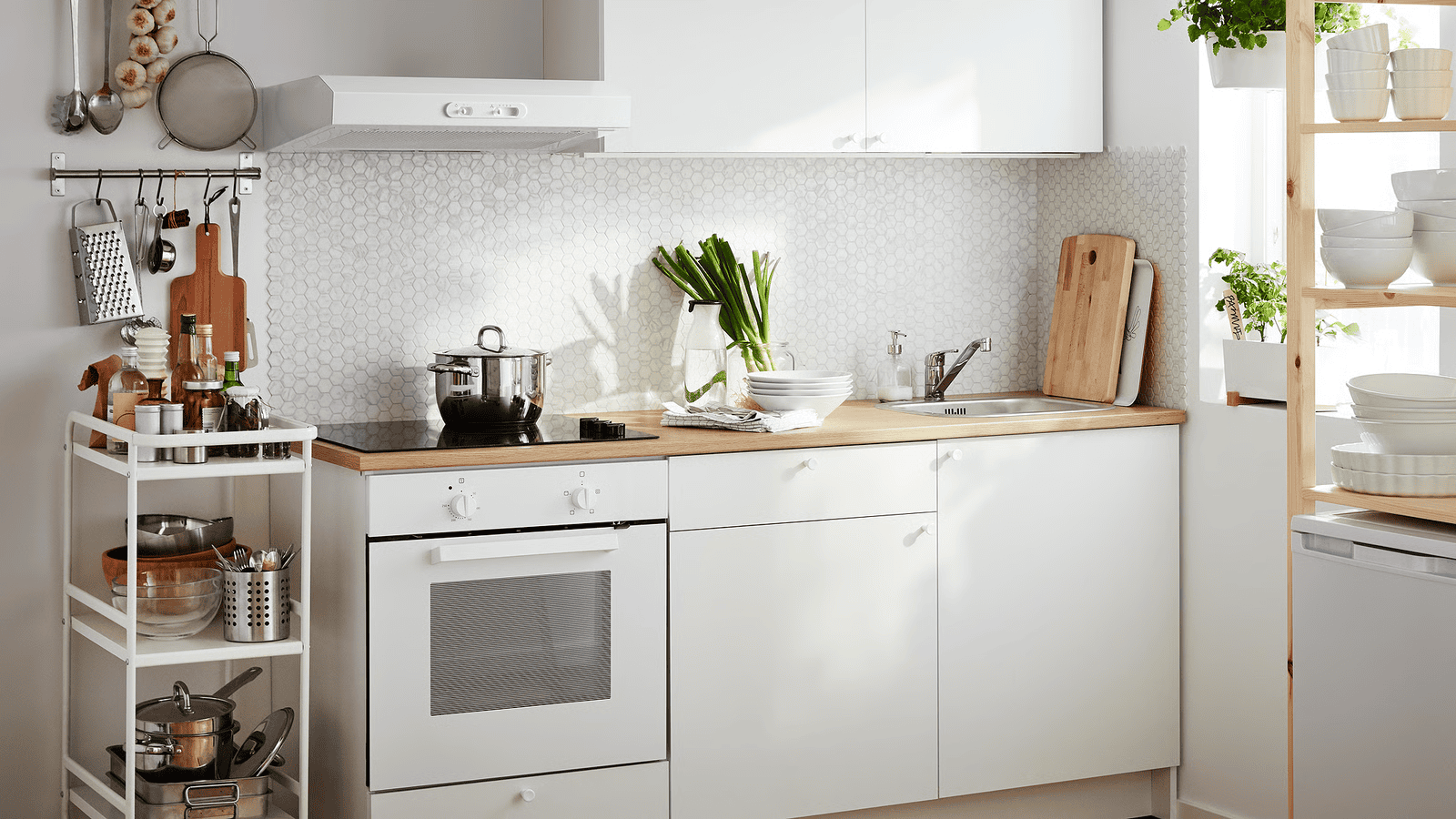
Caption: With separate units, KNOXHULT can adapt to the layout of the kitchen, helping smaller spaces stay neat without feeling crowded.
Start with your needs: are you planning a new kitchen or improving the one you have?
If you are planning a kitchen from scratch, this guide can help you think through the layout, design, and storage in a more intentional way from the beginning. That can make later choices feel a little clearer.
If you already have a kitchen and want it to work better, that is fine too. You can start with the part that feels most crowded, then adjust the layout, storage, and daily habits little by little.
What makes a small kitchen feel tidy and easy to use?
A small kitchen feels tidy and easy to use when each area has a clear job, everyday items are grouped by category, and there is enough room to move. That way, the full cooking flow, from storage and washing to prep, cooking, and walking paths, can work together without everything landing on the countertop.
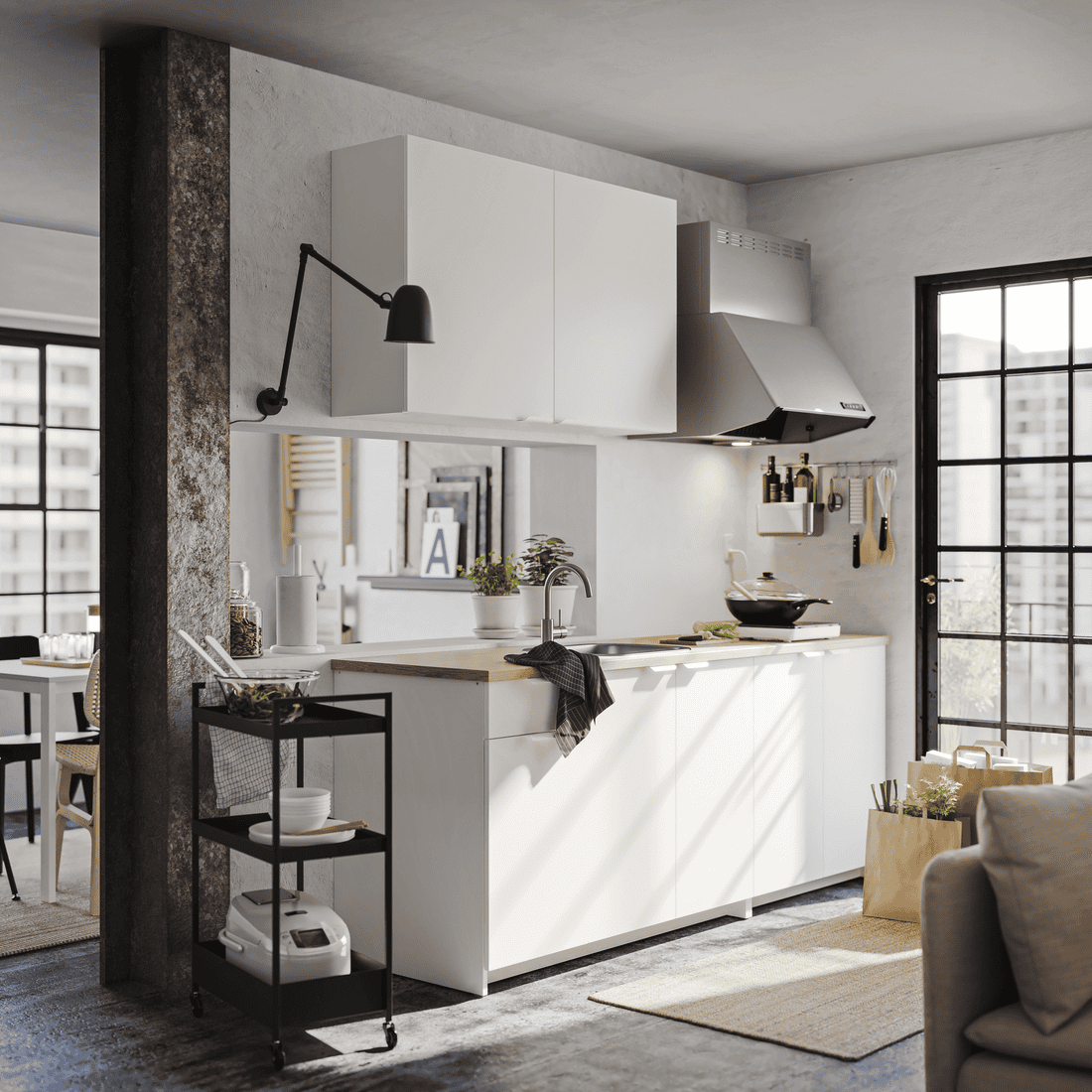
Caption: A KNOXHULT kitchen set shows a compact kitchen workflow, with an open countertop on the left, followed by washing, prep, and cooking areas arranged in one line.
1. Give each area a job
Cooking, washing, and storage areas should not overlap too much. When each area has a clear role, daily tasks feel more organized and the space does not fill up as quickly.
For example, the area near the stove can hold cooking tools and everyday spices, while the area near the sink can be used for dish soap, sponges, and a dish rack. When often-used items stay close to the task they belong to, you do not have to keep moving them around.
2. Each category of items has its own place
Spices, cookware, dining utensils, and cleaning supplies should be stored separately based on how they are used. This makes things easier to find and helps the kitchen feel more organized.
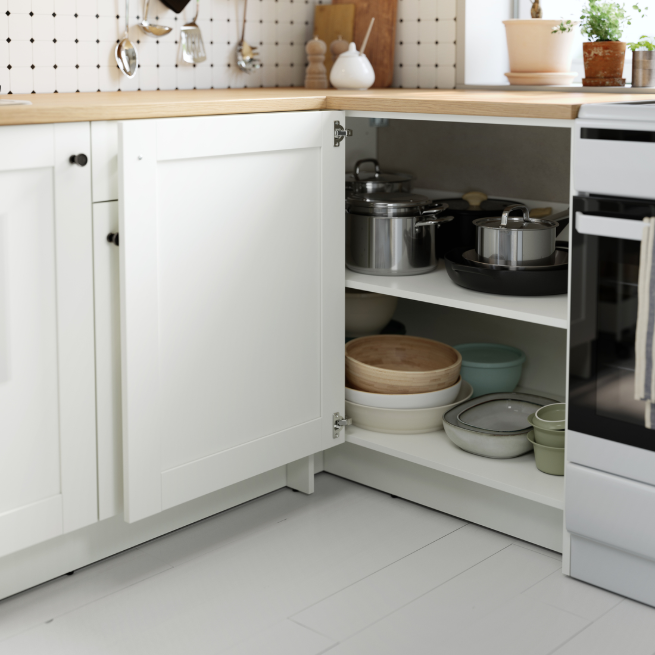
Caption: One KNOXHULT cabinet can work as both storage below and a prep area on the countertop above.
For example, spoons, forks, and knives can go in one drawer, while food containers are grouped on a separate shelf. When items are not mixed together, you do not need to open several places just to find one thing.
You can also store items based on their proximity to their area of use, for example, dining spoons placed near the dining table or on a sideboard in the dining area.
3. Keep a little room to move
A kitchen still needs enough room for cooking, walking through, and cleaning nearby areas comfortably. In a small kitchen, this matters even more because limited space can feel cramped very quickly. For example, avoid placing an extra shelf in a walkway or too close to a cabinet door. If movement is blocked, the kitchen will feel tighter and everyday tasks become less practical.
How to arrange a small kitchen layout so it stays clutter-free
A small kitchen layout stays clutter-free when the storage, cooking, washing, and prep areas are planned around the wall, sink, stove, and the space you need to move. This matters whether you are designing a new kitchen or improving the one you already have, because every cabinet, shelf, rack, and work surface needs to support the way you cook day to day.
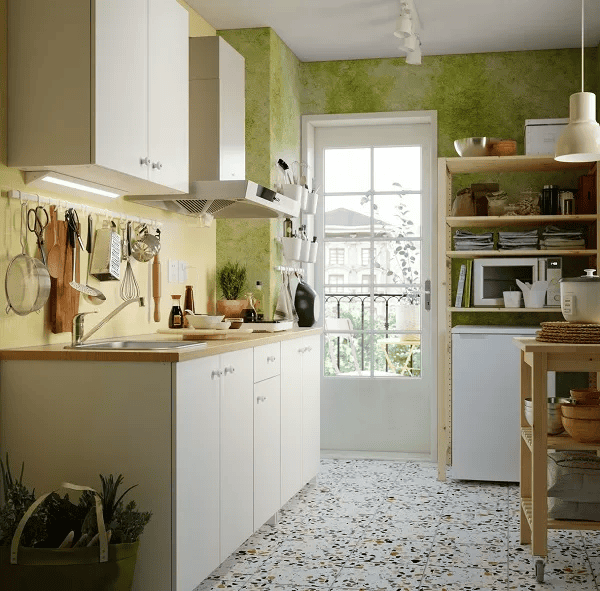
Caption: The layout keeps movement clear, so cooking and accessing items feels more manageable even in a small space.
KNOXHULT can be a helpful starting point if you want a kitchen that stays simple and easy to arrange. Its separate units let you plan around the wall, sink, stove, and storage you actually need, so the layout can support daily cooking without making the room feel too crowded.
1. Divide the kitchen into zones based on activity: storing, cooking, and washing
One of the easiest ways to organize a kitchen is to divide it into zones: cooking zone, a washing zone, and a storage zone. The cooking zone can include the stove, your main cooking tools, and the spices you use most often. The washing zone usually centers around the sink, dish soap, and cleaning tools. The storage zone is where food supplies, utensils, and other kitchen essentials are kept. This kind of setup helps daily tasks feel more organized. You do not need to keep moving back and forth just to prepare one simple meal.
2. Arrange the layout around how you cook
A small kitchen feels easier to use when the layout follows your usual cooking flow: store, prep, cook, then wash. Keep spices, knives, and cutting boards close to the prep area. Place the stove where cooking feels easy to reach, and keep the sink nearby for washing ingredients or tools. This helps cut down on too much back-and-forth while you cook.
For a long, narrow kitchen, a linear layout can work well because everything can sit along one side. If your kitchen is in a corner, an L-shaped layout can help separate prep and cooking areas without taking up too much room.
3. Add storage where things usually pile up
In a small kitchen, clutter often gathers in three places: near the stove, near the sink, and on the easiest-to-reach part of the countertop. A little storage in these spots can make daily cooking feel more manageable.
Near the stove, keep everyday cooking tools and frequently used spices close by. A small tray can hold daily spices, while wall-mounted storage or upright containers can help keep cooking tools off the counter. Near the sink, a caddy or perforated holder can give sponges, dish soap, and brushes a proper place. A dish rack also helps freshly washed plates and utensils land somewhere clear before they go back into the cabinet.
It also helps to sort items by how often you use them. Keep daily items near the activity area they belong to. Things you use less often can move to upper cabinets, closed shelves, or another spot that does not get in the way.
How to design a simple minimalist kitchen so it feels more open
A simple minimalist kitchen feels more open when the visual details are kept simple, from the wall color and cabinet fronts to the drawers, shelves, and storage boxes. Start with one or two main colors, then choose pieces with similar finishes or shapes so the kitchen feels connected instead of crowded.
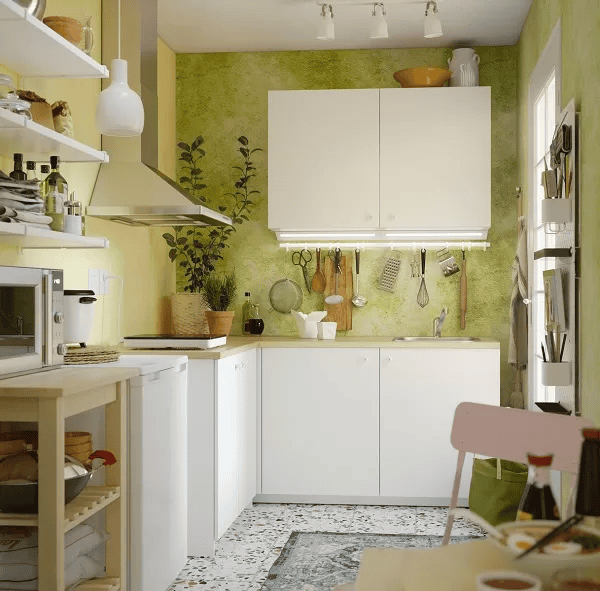
Caption: With units arranged in a simple sequence, KNOXHULT helps prep, cooking, and washing areas feel more connected in everyday use.
1. Use one or two main colors
Light colors like white, cream, soft gray, or light wood can help a small kitchen feel brighter and more open. They reflect light well and keep the room from feeling too heavy. Try using one or two main colors for the walls, cabinets, and work surfaces. It does not have to be all white. The idea is to keep the look calm, so cookware, storage boxes, and everyday items do not make the room feel too crowded.
2. Choose cabinets, drawers, and storage that look good together
A small kitchen feels calmer when the cabinets, drawers, shelves, and storage pieces share a similar look. Matching colors or finishes can help the space feel more connected, even if the kitchen is compact. Flat cabinet doors, simple drawers, and slim hanging shelves are good options if you want a cleaner look. They keep the kitchen practical without adding too much visual noise.
How to organize storage so a small kitchen feels more put together
To organize storage so a small kitchen feels more put together, start with the items you reach for most, use the wall near busy spots, and match each item with storage that fits how it is used.
| Item type | Storage to consider | Suggested spot |
|---|---|---|
| Everyday spices | Spice rack, small tray, tiered shelf | Near the stove or prep area |
| Spoons, forks, and small knives | Drawer tray or drawer divider | In a drawer near the prep or dining area |
| Sponges, dish soap, and brushes | Caddy, draining container, small shelf | Near the sink |
| Pots and pans | Lower cabinet or sturdy shelf | Near the stove |
| Food containers | Cabinet shelf or deep drawer | In an easy-to-reach storage area |
| Items used less often | Upper cabinet or closed shelf | Away from the main work area |
Small storage ideas
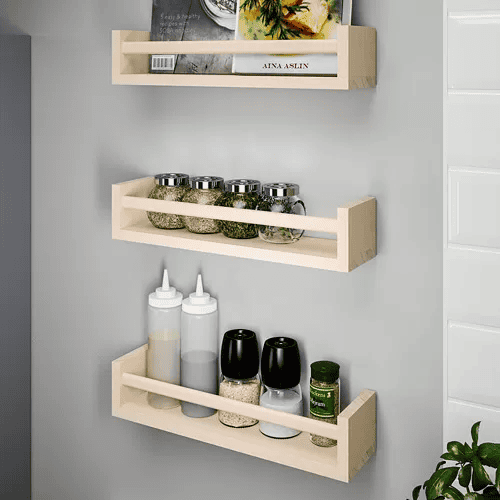
Spice rack or small tray
BEKVÄM rack
- Recommended for
- Everyday spices, small bottles, cooking oil, or sauces you use often.
- Best for
- The area near the stove or prep area, so spices are easy to see and reach.
- Keep in mind
- Keep only the items you use often, so this area stays light and easy to manage.
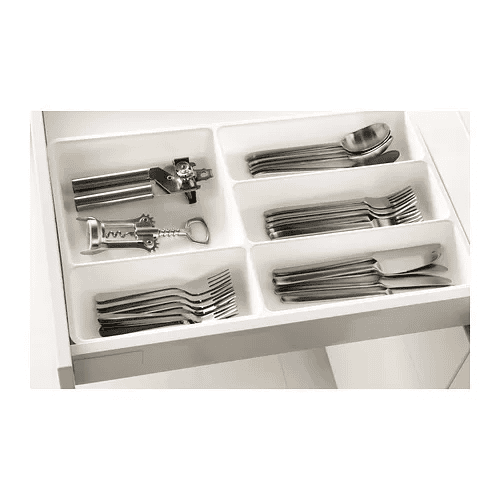
Drawer tray or drawer divider
STÖDJA cutlery tray
- Recommended for
- Spoons, forks, small knives, or small cooking tools.
- Best for
- Making drawer contents easier to see when opened.
- Keep in mind
- Group items by type, so you do not have to search around while cooking.
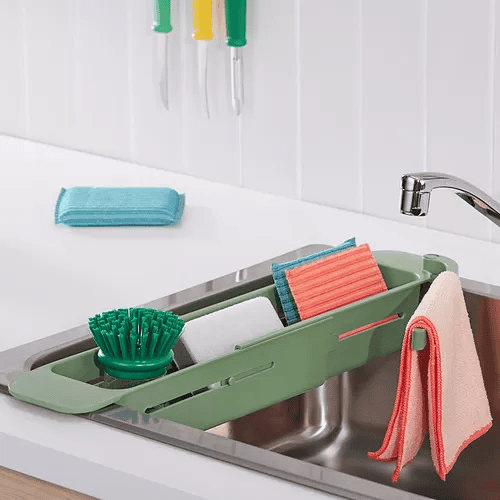
Caddy or perforated holder
SKOLÄST caddy
- Recommended for
- Sponges, dish soap, brushes, or small cleaning tools.
- Best for
- The area near the sink, so wet items have a dedicated place.
- Keep in mind
- Choose a holder that is easy to dry or clean, so the sink area stays comfortable.
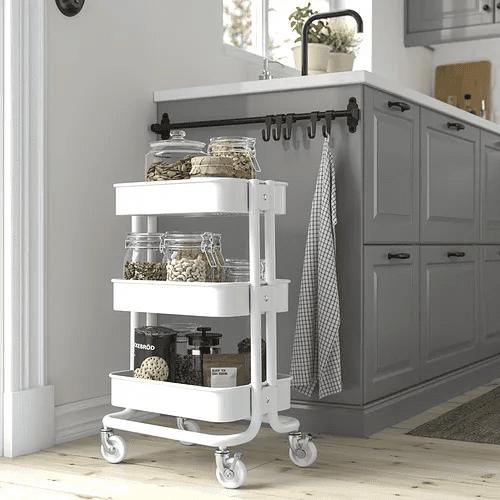
Wall rack, rail, or small trolley
RÅSKOG trolley
- Recommended for
- Lightweight cooking tools, kitchen towels, or everyday items.
- Best for
- Making use of wall space, corners, or empty spots when the countertop is full.
- Keep in mind
- Make sure the position does not block the walkway, cabinet doors, or cooking area.
1. Use the wall near your busiest spots
If the countertop is getting crowded, the wall can help. Near the stove, try a spice rack, wall rail, or hooks for the tools you reach for most. Near the sink, a small holder can keep sponges, dish soap, and brushes together. It keeps everyday items easy to reach, while leaving more room on the counter for chopping, cooking, and serving.
2. Match the storage to the item
Small things are easier to manage when they have the right kind of home. Spoons, forks, and small knives can sit neatly in a drawer tray. Spices and small bottles can work well in a flat tray or tiered rack. Pots, food containers, and bigger tools are usually better in lower cabinets or deep drawers.
3. Keep spices close to where you cook
Spices are easiest to use when they stay near the stove or prep area. Keep everyday spices in a small tray or tiered rack, so you can see them quickly while cooking. Extra stock can go in a closed cabinet or a separate drawer. This keeps the cooking area lighter, while still keeping everything you need close by.
4. Give freshly washed items a landing spot
The sink area feels calmer when wet items have a clear place to go. A dish rack, drying tray, dish drainer, or perforated holder can help plates, glasses, cutlery, and cleaning tools stay in one spot. That way, freshly washed items have a temporary home before they go back into the cabinet. If you are still planning cabinet sizes, our guide to the ideal kitchen set size can be a helpful next read.
How to keep a small kitchen tidy every day?
To keep a small kitchen tidy every day, build the habit around three simple moves: put items back after using them, re-sort drawers and shelves when things start to mix, and move anything you do not use daily off the countertop.
1. Put things back where they belong after using them
Items that go back right away do not have time to pile up on the countertop or near the sink. This helps the kitchen stay tidy even when you use it several times a day.
2. Re-sort items when they start getting mixed together
Over time, drawers, spice racks, and cabinets tend to become less organized again. It helps to check them from time to time so cooking tools, dining utensils, ingredients, and cleaning supplies stay in the right places.
3. Move items you do not use every day off the countertop
If the counter starts to feel full, take a second look at what is sitting there. Items you do not use every day can usually be moved into cabinets, drawers, or closed shelves so the work surface stays clearer.
At the end of the day, a small tidy kitchen is not only about adding more storage. It is also about supporting the full cooking flow, from taking ingredients out, washing and preparing food, cooking, plating meals, to cleaning and putting everything back afterward. Start with the part that causes the most friction, then stop when the kitchen already feels easier to use.
Frequently asked questions about a small tidy kitchen
Start with a kitchen that feels easier every day