A comfortable dining chair size starts with a 16–19 in (40–48 cm) seat height and 10–12 in (25–30 cm) under-table clearance. This guide helps you check height, width, depth, backrest angle, kids’ chair sizes, and materials before choosing.
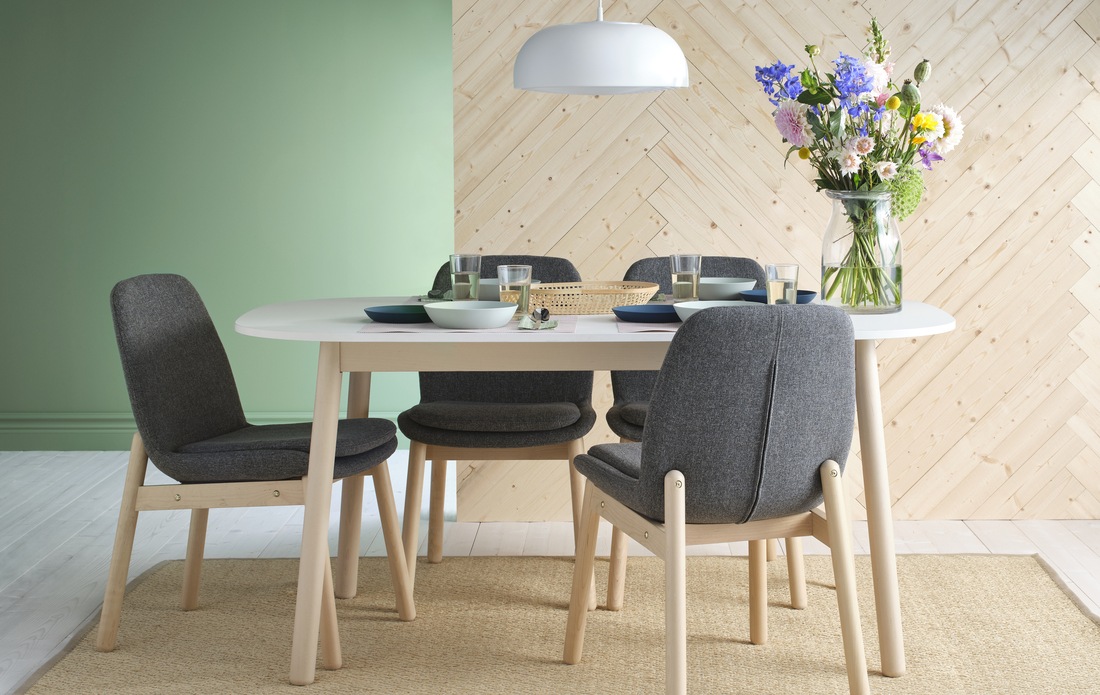
What makes a dining chair the right size?
The right dining chair size is the one that lets your feet rest on the floor, gives your thighs room under the table, supports your back, and still leaves enough space to pull the chair in and out.
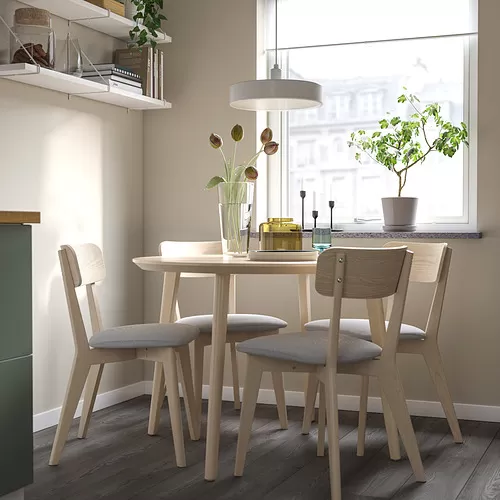
Before checking every measurement, start with these simple signs you can feel when you sit down.
Before checking every measurement, start here:
- Your feet rest on the floor: This helps your body feel steady while sitting. If your feet dangle, your thighs may start to feel tired sooner.
- Your thighs have room under the table: Aim for about 10–12 inches (25–30 cm) between the seat and the underside of the table, so your thighs do not feel squeezed.
- The seat height feels natural: A good starting point is about 16–19 inches (40–48 cm) from the floor to the seat. This helps your feet rest comfortably and keeps your body from leaning too far forward.
- Your back can rest comfortably: A slightly reclined backrest helps the body relax, especially during longer meals or after-dinner conversations.
- The chair moves easily around the table: This matters in smaller dining areas. A chair should feel comfortable when you sit, but also easy to use every day.
These checks are simple, but they can make a big difference in everyday meals.
Ideal dining chair sizes
Before going into each detail, use this table as a quick guide when reading dining chair specifications. Start with seat height and table clearance first, because those are usually the measurements you feel most quickly when you sit down.
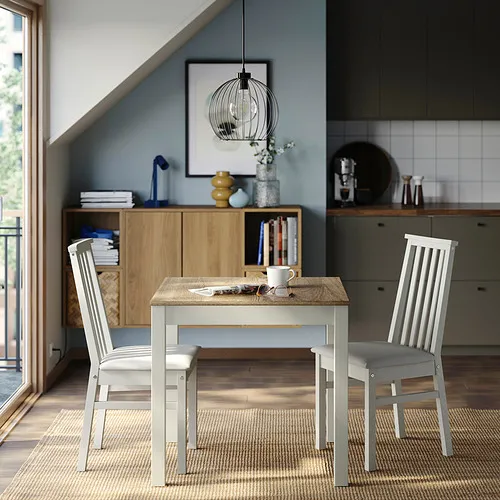
| What to check | Recommended size | Why it matters |
|---|---|---|
| Seat height | 16–19 in (40–48 cm) from floor to seat | Helps your feet rest on the floor and your body feel steady |
| Dining table height | 28–30 in (70–75 cm) from floor to tabletop | Helps you match the chair height with the table |
| Space between seat and underside of table | 10–12 in (25–30 cm) | Gives your thighs enough room |
| Seat depth | 15–18 in (39–45 cm), from front of seat to backrest | Supports your thighs while still letting your back reach the backrest |
| Seat width | 15–20 in (39–50 cm) for one person | Gives one adult enough space to sit comfortably |
| Sitting angle | Around 101–103 degrees, if listed | Supports the back without making the chair feel too reclined for dining |
| Overall chair depth | 17–20 in (42–51 cm), depending on legs and backrest | Helps you plan space when the chair is pulled out |
The right dining chair size is really about how the chair, table, and body work together. It is not only about how tall the chair is. It is also about whether the chair gives you enough room to sit, eat, move, and feel comfortable.
Think of these numbers as a small guide, not something you need to memorize. Start with seat height and the space under the table. Those two measurements usually make the biggest difference in everyday use.
How to read dining chair measurements
When reading dining chair specifications, start with the measurements that affect comfort most: seat height, table clearance, seat depth, seat width, backrest angle, and overall chair depth. Each detail helps in a small way, from giving your feet a steady place to rest to making the chair easier to use around the table.
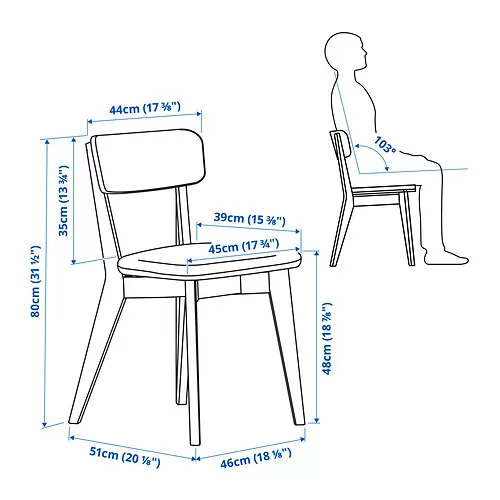
Caption: The LISABO sitting angle is about 103 degrees, with a gentle recline that lets your back rest comfortably without making the chair feel too laid-back for meals.
Seat height is the first number to check
Seat height is the distance from the floor to the surface you sit on. It is different from the total chair height. If a chair is listed as 31 inches (80 cm) tall, that usually means the height from the floor to the top of the backrest. For dining comfort, the seat height matters more.
A seat height of about 16–19 inches (40–48 cm) helps your feet rest on the floor. When your feet feel grounded, your body feels steadier and your thighs do not have to carry as much weight. If the chair is too high, your feet may dangle. If it is too low, you may lean toward the table.
Leave enough room between the seat and table
Enough room between the seat and table means about 10–12 in (25–30 cm) from the chair seat to the underside of the table. This is measured to the bottom edge of the table, not the tabletop.
That space helps your thighs sit comfortably when the chair is tucked in. If the space is too small, the chair can feel tight. If the space is too large, the table may feel too high, and your shoulders or back may feel less comfortable while eating.
Here is an easy way to check:
- Measure from the floor to the underside of your dining table.
- Subtract the height of the chair seat. The result should be around 10–12 in (25–30 cm). For example, 28 in (70 cm) under the table minus an 18 in (45 cm) seat height gives 10 in (25 cm) of clearance.
Seat depth supports the thighs and back
Seat depth is measured from the front edge of the seat to the backrest. A comfortable range is usually about 15–18 inches (39–45 cm).
If the seat is too deep, you may sit forward so your feet can rest more comfortably. That means your back may not reach the backrest. If the seat is too shallow, your thighs may not feel fully supported.
Seat width should fit the person and the room
For one adult, a comfortable seat width is usually about 15–20 inches (39–50 cm). A wider seat can feel roomier. A slimmer seat can work better in smaller dining areas, around round tables, or when several chairs need to fit around one table.
A slight backrest angle can make meals more comfortable
The sitting angle is the angle between the seat and the backrest. You do not need to measure this yourself, but some product specifications include it.
For dining chairs, a slight recline of around 101–103 degrees can support your back without making the chair feel too laid-back for eating.
Overall chair depth matters in smaller dining areas
Overall chair depth is different from seat depth. Seat depth is the area that supports your thighs. Overall chair depth measures the chair from the very front to the very back, including the backrest or back legs.
This matters when space is limited. A chair may have a comfortable seat depth but still need extra room when pulled out from the table.
Before choosing, picture how the chair works in daily use: can you pull it out, sit down, push it back in, and still move around the table comfortably?
Dining chair comfort indicators and measurements
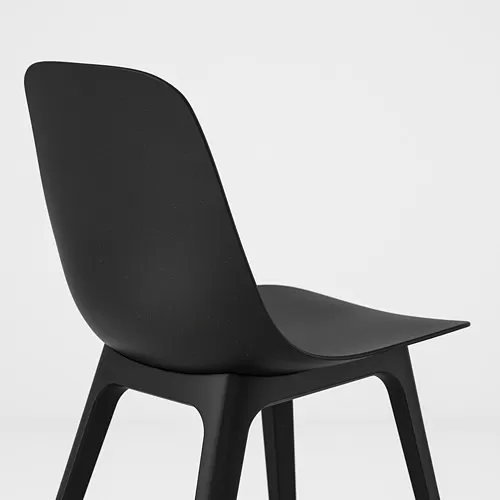
Seat height
- Recommended size
- 16–19 in (40–48 cm) from floor to seat
- Best for
- helping your feet rest comfortably
- Watch out for
- if the chair is too high, your feet may dangle. If it is too low, your body may lean toward the table.
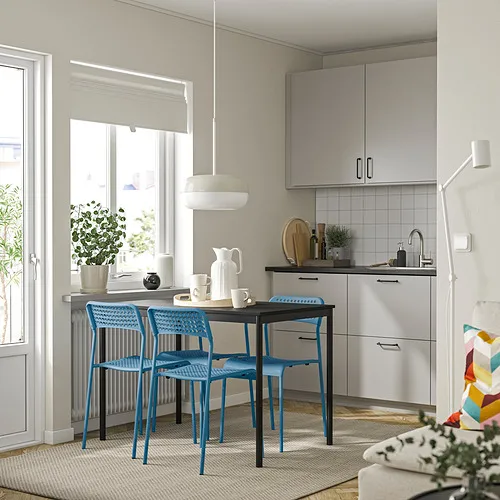
Space between seat and table
- Recommended size
- 10–12 in (25–30 cm) from the seat to the underside of the table
- Best for
- giving your thighs enough room
- Watch out for
- measure to the underside of the table, not the tabletop.
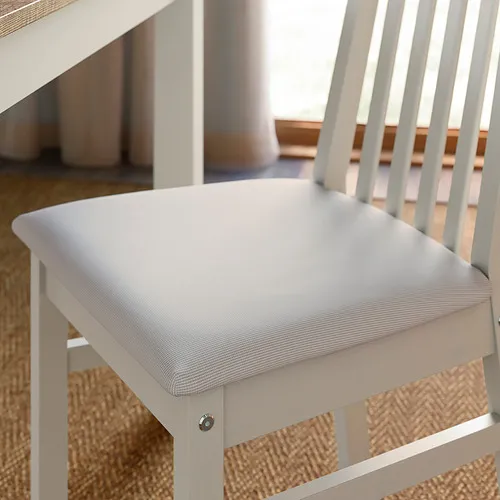
Seat depth
- Recommended size
- 15–18 in (39–45 cm)
- Best for
- supporting your thighs while still letting your back reach the backrest
- Watch out for
- a seat that is too deep can make you sit forward, so your back may not fully rest.
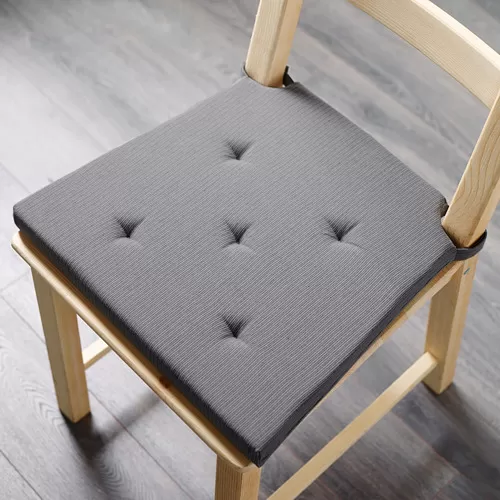
Seat width
- Recommended size
- 15–20 in (39–50 cm)
- Best for
- giving one adult enough room to sit comfortably
- Watch out for
- a slimmer seat can help a small dining area feel easier to move around in.
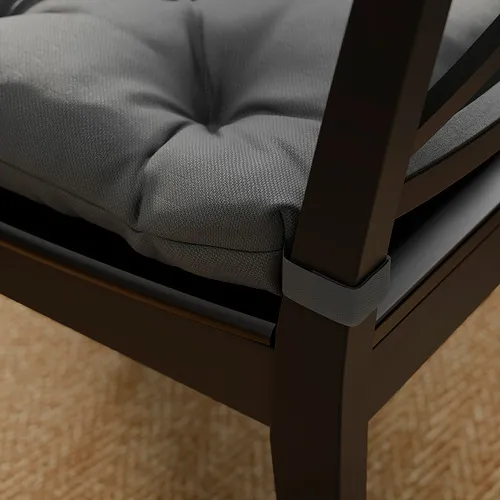
Sitting angle and backrest
- Recommended size
- around 101–103 degrees, if listed in the specifications
- Best for
- sitting upright for meals while still feeling supported when you lean back
- Watch out for
- a backrest that reclines too much may feel less suitable for dining.
See ÅLHULT dining chair
Recommended dining chair sizes by user height and table clearance
A seat height of about 16–17 inches (40–42 cm) often works well for people under 5'3" (160 cm). A seat height of 17–18 inches (42–45 cm) can feel balanced for people around 5'3" to 5'9" (160–175 cm). For people over 5'9" (175 cm), a seat height of 18–19 inches (45–48 cm) may feel roomier. Measure from the floor to the seat, not to the top of the backrest.

| User height | Recommended seat height | Why it may feel more comfortable |
|---|---|---|
| Under 5'3" (160 cm) | 16–17 in (40–42 cm) | Feet can rest more fully and knees do not feel too high |
| 5'3"–5'9" (160–175 cm) | 17–18 in (42–45 cm) | Often feels balanced with the feet, thighs, and a standard dining table |
| Over 5'9" (175 cm) | 18–19 in (45–48 cm) | Knees have more room and the sitting position feels less cramped |
Start with user height, then check the full fit
User height helps narrow down the seat height range before checking the rest of the chair. A seat that is too high can leave the feet hanging, while a seat that is too low can make the knees bend too much.
The same chair can feel just right for one person and a little too high or low for another. That is normal. These ranges are only a starting point, so you can find a chair that feels steadier and easier for everyday sitting.
The table height still matters
A comfortable chair still needs enough room under the dining table. Even when the seat height feels good for the body, the thighs may feel squeezed if the table is too low.
For example, an 18–19 inch (45–48 cm) seat may feel comfortable for some users. But if the dining table sits low, it is better to check the space between the seat and the underside of the table before deciding. A quick measurement here can save you from a chair that looks right, but feels a little tight at mealtimes.
The same chair can feel different depending on dining table height, especially when the space under the table is too tight or too far from the seat.
Match the seat height with the table height
The right dining chair size depends on two things working together: the seat height and the space under the table.
- The seat height fits the person using the chair
- The space under the table is about 10–12 in (25–30 cm)
Then, check whether the table has enough space for the number of people who will use it. This helps the chair feel right not only when you sit down, but also when everyone gathers around the table. For the next step, see dining table size by number of seats.
Shared family chairs work best in a flexible middle size
A seat height of about 17–18 inches (43–46 cm) is often a flexible middle range for many adults, as long as the table clearance still feels comfortable.
If the chair will be used by several family members, it does not have to feel perfect for everyone. A middle size can still feel comfortable enough for everyday meals, quick breakfasts, and longer conversations around the table.
A short sit test helps confirm the fit
Sit for a few minutes and check three things: your feet rest on the floor, your thighs have enough room under the table, and your body does not need to lean forward to reach the tabletop.
If everything feels easy and natural, the chair is probably in the right range. This is especially helpful when comparing chairs with different seat heights, backrest shapes, or cushions.
The same check can also make recommended dining chairs for a comfortable dining area easier to compare, because each option may support the body and fit the table in a slightly different way.
Are kids’ dining chair sizes different?
Yes. Kids’ dining chair sizes are different from adult dining chair sizes. For children around 6 months to 3 years old, a high chair with a seat height of about 20–24 inches (50–60 cm) is usually a safer fit. This helps children sit closer to the height of a standard dining table, which is usually about 28–30 inches (70–75 cm) tall.

A high chair usually also includes a backrest, body support, and a footrest to help children sit more steadily.
The goal is simple: children can join the same dining table while sitting in a position that feels safer and more supported. So it is not only about height. It is also about how the chair helps hold the child’s body.
For a kids’ dining chair, check:
- Seat height around 20–24 inches (50–60 cm) from the floor: This helps children sit closer to the dining table instead of feeling too low in a regular chair.
- A backrest that supports the back: A backrest helps children sit more upright, especially when they are still learning to hold their posture.
- Body support that helps keep children steady: This matters for younger children who may shift around while sitting.
- A footrest for little feet: When children have a place to rest their feet, sitting usually feels more stable and comfortable.
- An easy-to-clean surface: Mealtime can get messy. A wipeable surface can make everyday meals a little easier.
For children around 3 years and older who are starting to use a regular chair, use a similar comfort check as you would for adults: feet should rest on the floor or on a footrest, knees should not feel too high, and the body should not sit too far from the table.
Does the chair material affect how the size feels?
Chair material does not change the ideal size guide. Comfort is still mostly shaped by seat height, space under the table, backrest shape, and whether the chair has a cushion.
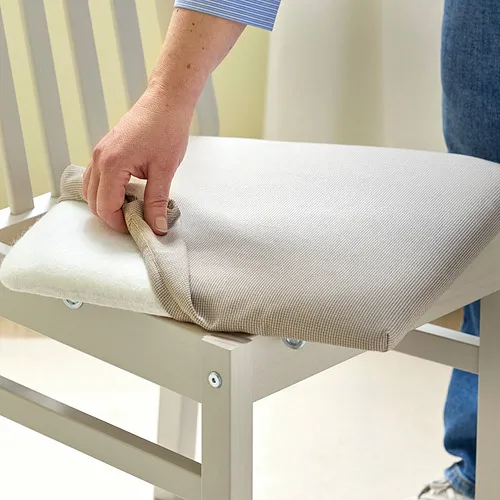
Caption: ÅLHULT dining chair comes with a cushioned seat and a removable cover.
Check the chair size before comparing finishes
Use these measurements as the main guide when choosing a dining chair:
- Seat height: about 16–19 in (40–48 cm) from floor to seat
- Space under the table: about 10–12 in (25–30 cm)
- Seat depth: about 15–18 in (39–45 cm)
- Seat width: about 15–20 in (39–50 cm)
- Backrest: supports the back without pushing the body too far forward
Check how the dining chair supports your back and thighs
When trying a chair, notice how it feels around your back and thighs. If your back does not reach the backrest easily, the seat may be too deep. If your thighs feel pressed or your feet do not rest comfortably, the seat height or table clearance may need another look.
A cushion can change how the seat height feels
A cushion can make the chair feel softer, but the seat height may feel slightly different once you sit down because the cushion follows the pressure of your body. So, do not only check the chair when it is empty. Sit for a moment and see whether your feet still rest on the floor and your thighs still have room under the table.
A chair without a cushion makes the size feel more direct
A chair without a cushion, such as wood, steel, or plastic, makes the measurements feel more direct. If it is slightly too high, your feet may feel tired sooner. If the seat is too deep, your back may have a harder time reaching the backrest.
For this kind of chair, getting the size right from the start can make everyday sitting feel easier.
For minimalist wooden chairs, check the cushion first
When choosing a minimalist wooden dining chair, check whether it has a cushion. A wooden chair without a cushion usually makes seat height, seat depth, and backrest angle feel more noticeable. If the chair has a cushion, test the seat height while you are actually sitting.
The simple check still matters most: feet resting, thighs comfortable, and no need to lean too far forward to eat.
Conclusion: the right size makes family meals feel more comfortable
A comfortable dining chair can start with a few simple checks: a seat height of about 16–19 inches (40–48 cm), about 10–12 inches (25–30 cm) of space under the table, and a sitting position that feels natural when you try it.

From there, notice the smaller details too: seat depth, seat width, backrest angle, legroom, and user height. These details help the chair feel right not only when it is placed beside the table, but also when it is used every day.
Still not sure? Start with the easiest step: measure the table, check the seat height, then sit for a few minutes. Your body can often tell you which chair feels truly comfortable.
With the right size, a dining chair can become a comfortable place for many small moments at home: quick breakfasts, family dinners, after-meal conversations, or sitting a little longer with a cup of tea.
Frequently asked questions about dining chair sizes
Start with the right size, then find the right fit
Explore dining chairs and dining tables that can help make everyday meals feel more comfortable at home.