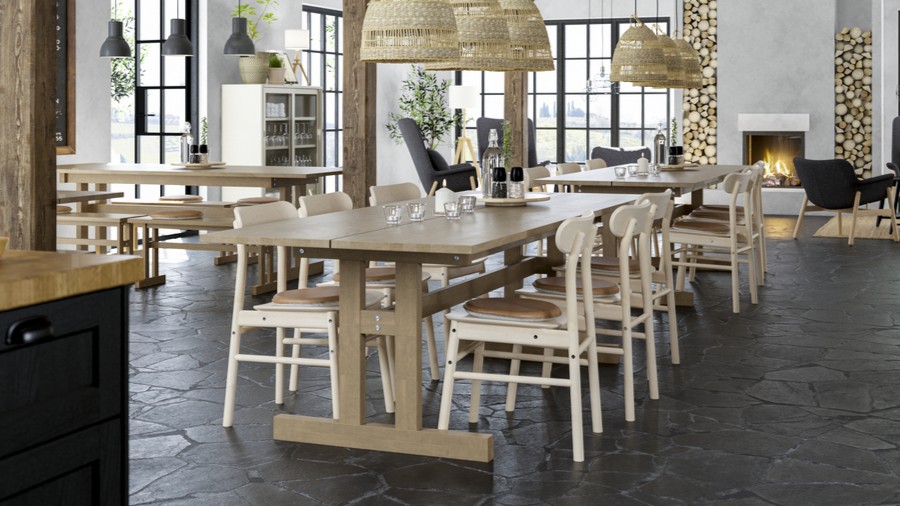
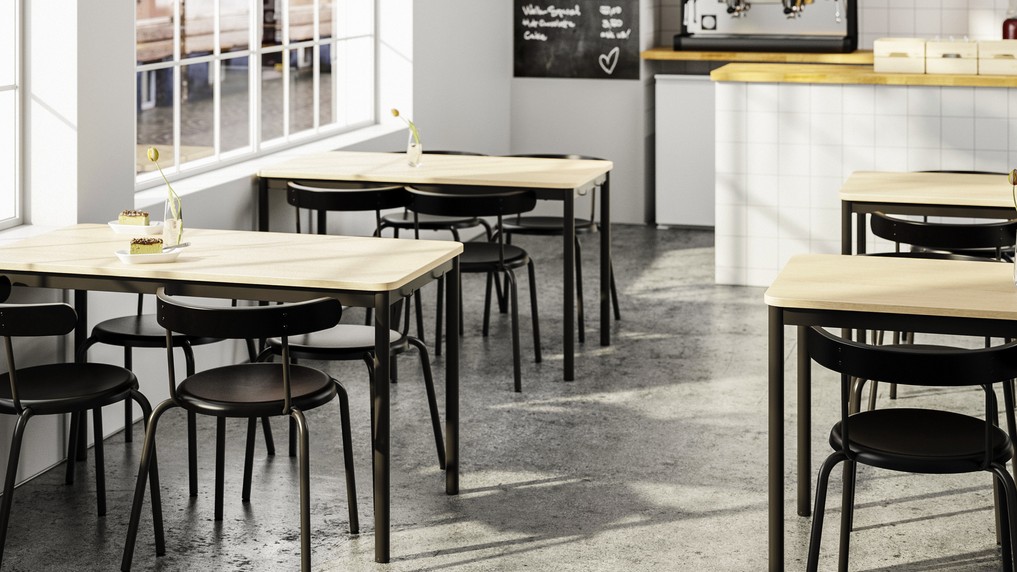
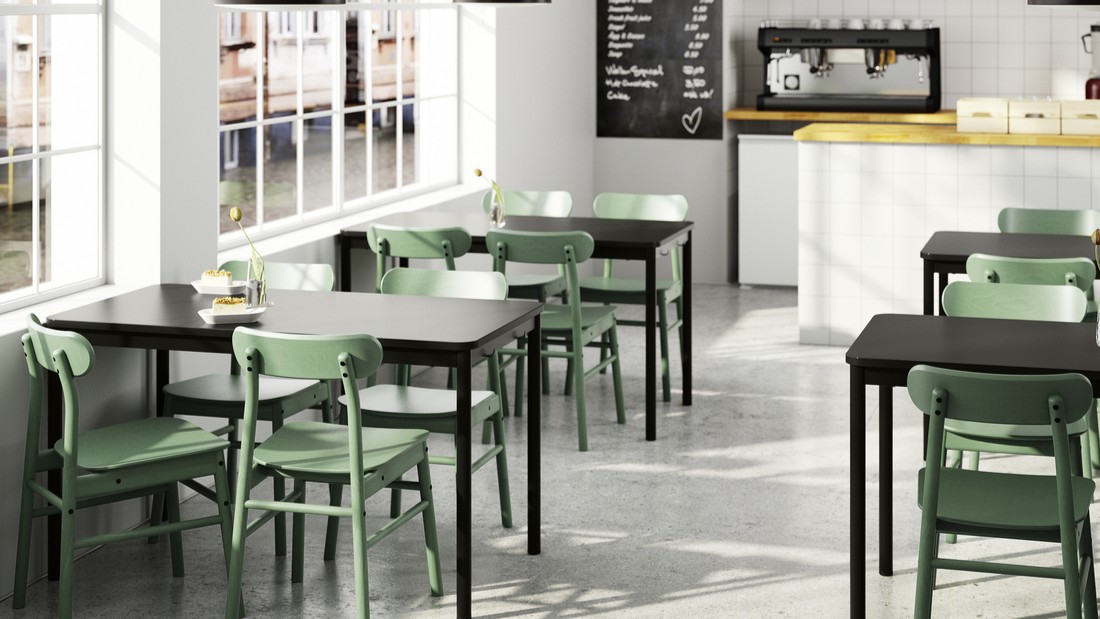
Does your restaurant feel crowded, with staff struggling to move between tables or guests feeling uncomfortable when pulling out their chairs? These issues often start with restaurant tables that do not match the available space, service style, or daily operational flow.
This guide explains how to choose restaurant tables, understand common table types and sizes, select suitable materials, and arrange tables to support efficient service and a comfortable dining experience.
What makes restaurant tables different from home dining tables?
Restaurant tables are operational furniture. Beyond appearance, they are designed for durability, stability, and easy maintenance. Unlike home dining tables that focus on personal style, restaurant tables must perform well under frequent use.
Key considerations include seating efficiency, staff circulation, user safety, and surfaces that are easy to clean. These factors directly affect service speed and guest satisfaction.
The role of restaurant tables in operations and guest experience
Restaurant tables connect kitchen operations, service flow, and guest comfort. The right table choice helps balance seating capacity with smooth movement for staff.
Operational function: capacity and service flow
Table size and shape influence how many guests can be served at one time. Modular tables make it easier to reconfigure the space when guest group sizes change.
Clear circulation paths allow staff to carry plates and glassware safely, reducing the risk of accidents during busy hours.
Guest comfort and personal space
From a guest’s perspective, tables should feel stable and provide enough legroom. Adequate spacing between tables allows chairs to be pulled out without disturbing others.
Stable tables help keep glasses and tableware secure, creating a more relaxed dining atmosphere.
Visual consistency and dining atmosphere
Tables also shape the visual identity of a restaurant. Consistent design supports a cohesive look and sets expectations for the dining experience.
Casual restaurants often choose sturdy, low-maintenance tables, while more formal concepts prefer generous proportions and refined finishes.
Types of restaurant tables by shape and capacity