
When moving into a boarding house for the first time, you need to know what facilities are already available, decide which items to bring, and consider where to store them once you arrive.
To help with the preparation, you can create a checklist of essentials to guide you in prioritizing the items you need to bring. With a more organized approach, you won’t have to bring too many things at once and can arrange your room according to your needs from day one.
You do not need to buy everything before moving. Check the facilities and room dimensions first, then prioritise the items you will use immediately. For a list of basic essentials, see IKEA's guide to must-have items for boarding house residents.
Check the room before making your moving checklist

If possible, visit the room before moving day or ask the property manager for photos and room measurements.
Do not focus only on the overall floor area. Check the positions of the door, windows, bed, wardrobe, desk, power outlets, and any empty areas that could be used for storage.
Take note of the dimensions of the furniture already provided. This information will help when you want to bring storage boxes or additional items, as you can match their dimensions to the space under the bed, on top of the wardrobe, or in an unused corner.
Before moving, check at least the following:
-
Furniture already provided in the room.
-
Available space for storage.
-
Number and location of power outlets.
-
Bathroom and kitchen facilities.
-
Space for drying clothes or storing laundry.
-
Rules regarding additional furniture and electronic appliances.
-
Access to the room, including stairs or lifts if you are bringing large items.
Sort your belongings into three priorities
One practical way to prepare for moving into a boarding house is to divide your belongings into three groups: items to bring from home, items to prepare before moving, and items that can be added later.
This approach can help prevent your room from becoming overcrowded on the first day.
1. Items you already have at home
Start with items that are still in good condition and easy to bring with you. Clothes, study supplies, toiletries, or some bedding may not need to be purchased again if you already have them.
Avoid bringing everything from your old room simply because it is available. Choose items based on how often you expect to use them while living in the boarding house.
For clothes, for example, you can adjust the amount according to your schedule and how often you plan to do laundry.
2. Items you need from the first day
The second group consists of essentials you will use as soon as you arrive. Prioritise items that support basic activities such as sleeping, showering, charging your devices, preparing simple meals, and storing clothes and personal belongings.
3. Items you can buy after a few days
Not every need has to be decided before you move. After living in the room for a few days, you may realise that you need an additional shelf, a larger storage box, an extra table, or another item.
Waiting before making some purchases also gives you time to understand how you actually use the space. You can identify which areas are used most often, which spots tend to become cluttered, and which belongings need dedicated storage.
Read also: Must-have items for boarding house residents: essentials for starting boarding house life
Use a packing system based on activities

Instead of placing your belongings randomly into bags, group your packing by activity or area of use. For example, separate clothes, toiletries, study supplies, bedding, and eating essentials.
This system makes unpacking easier because each group can be taken directly to the appropriate area. Add simple labels to boxes or bags, especially if you are bringing several containers that look similar.
You can also label containers with priorities such as “open on the first day” for essential items. Things you use less frequently can stay at the bottom of the pile or be unpacked after the main areas of your room have been organised.
Prepare one bag for the first day
You probably will not unpack every box immediately on moving day. Prepare one separate bag containing everything you are likely to need during your first few hours in the room.
This could include a change of clothes, toiletries, a charger, personal medication, a water bottle, a towel, and bedding essentials for your first night. Ideally, you should be able to get through your first night without opening all your other bags and boxes.
A dedicated first-day bag is also useful if you have a long journey or if the moving process continues into the evening. Keep this bag separate from the rest of your belongings so it is easy to find.
Choose containers that remain useful after moving
Boxes and bags used for moving are more practical when they can be reused as storage in your room. This can also reduce the amount of single-use packaging that takes up space after the move.
1. SAMLA box for sorting belongings by category
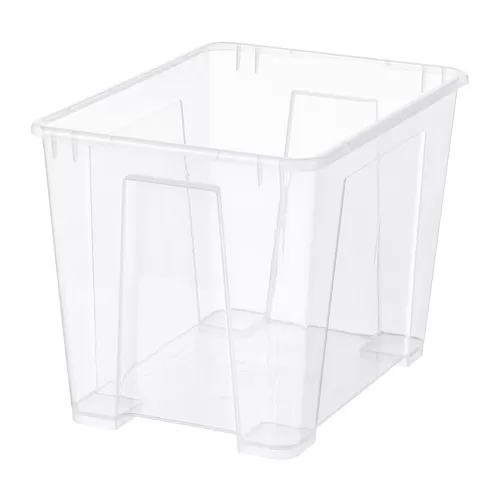
The transparent SAMLA box can be used to transport and store different belongings after you move.
Its transparent material makes it easier to see what is inside without opening every box. IKEA offers SAMLA in several sizes, allowing you to choose according to the type of belongings and available storage space.
Use a medium-sized box for cleaning supplies, books, or items you do not use every day. If your room has limited space, measure the area under the bed or wardrobe first so the box does not obstruct the space you need to move around.
2. FRAKTA bag for belongings you move frequently
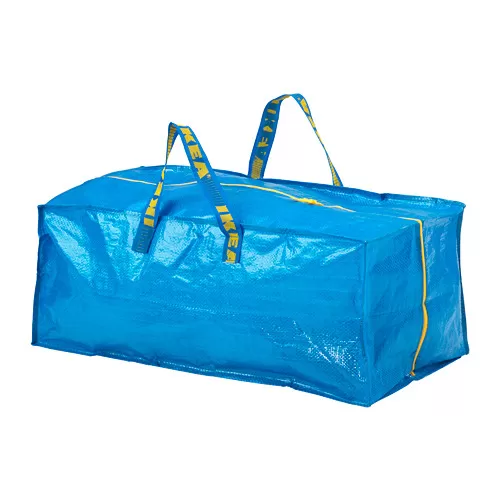
The FRAKTA bag can be used to carry clothes, textiles, laundry, and other belongings that do not require a rigid container. Once you have finished moving, the bag can be folded so it takes up less storage space.
Its flexible design also means you can reuse it for taking clothes to the laundry or carrying belongings when you go home for the weekend.
3. DIMPA storage bag for larger items
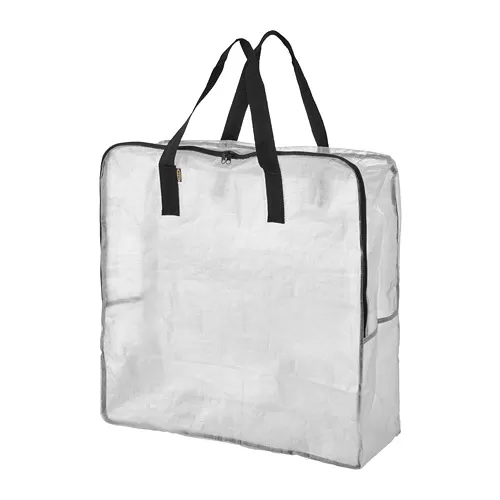
For blankets, bed linen, seasonal clothes, or other bulky items, the DIMPA storage bag can be a flexible storage option. The bag is transparent, has a zip closure, and can be folded flat when not in use.
These features make DIMPA useful when moving because you can see what is inside without opening the bag. Once you have settled into your boarding house, you can continue using the same bag to store belongings that are used less frequently.
4. SKUBB storage for organising clothes after you arrive
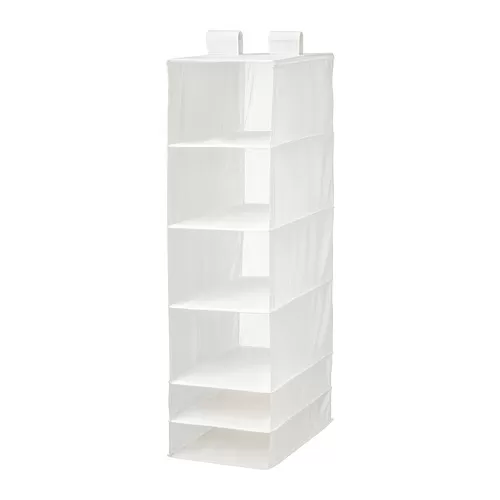
After unpacking your clothes, the SKUBB storage with 6 compartments can help divide them into separate sections. The product measures 35 × 45 × 125 cm and is designed as hanging storage with multiple compartments.
This type of solution can be useful if your room has a wardrobe with hanging space but only a few shelves. You can use the vertical space to store folded clothes or accessories without adding another piece of floor-standing furniture.
For more options, explore IKEA's boxes and baskets and choose storage sizes that suit the space available in your room.
Unpack gradually after arriving at your boarding house
Once you arrive, it can be tempting to open every box at once. However, doing so can quickly fill a small room with belongings and leave you with little space to move around.
Start with the sleeping area so you have somewhere to rest after moving. Next, organise toiletries and everyday clothes, followed by your study or work area. Boxes containing items you rarely use can be opened last.
Once the essentials are in place, look at any belongings that still do not have a designated spot. This can help you decide whether you actually need additional storage or whether reorganising the space you already have will be enough.
Do not rush to buy additional furniture
Photos and room measurements can help you prepare, but living in the room for a few days usually gives you a clearer understanding of what you actually need.
You may discover that the existing desk is sufficient, there is unused storage space under the bed, or certain belongings are rarely used.
For this reason, consider buying additional furniture such as large shelving units, extra tables, or storage units only after your daily routine begins to take shape. This can also reduce the risk of overcrowding the room.
If you need ideas for arranging a limited space, IKEA also has a guide to organising boarding house rooms, including ways to use vertical space, multifunctional furniture, and practical furniture placement.
Read also: Tips for arranging a small boarding house room with multifunctional furniture
Make a final checklist before leaving
On the night before moving, do one final check based on function rather than simply counting how many things you have. Make sure first-day essentials are easy to reach, all bags and boxes are labelled, and fragile items are packed separately.
Your final checklist can include:
-
Documents and personal belongings have been separated.
-
Your first-day bag is ready.
-
Clothes and textiles have been grouped together.
-
Boxes and bags have been labelled.
-
Electronic appliances comply with the boarding house rules.
-
Items you do not yet need have been removed from the list.
-
Storage dimensions match the available room space.
-
The address, access arrangements, and moving time have been confirmed.
The clearer your priorities are, the fewer things you will need to unpack and organise at the same time.
Start boarding house life with a more organised room
A boarding house moving checklist is not about bringing as many belongings as possible. The aim is to understand what is already available, identify what you need for your activities, and give each item an appropriate place once you arrive.
Start with first-day essentials, then gradually add other items after you understand your routine and the condition of your room. For storage needs, explore IKEA's boxes and baskets and bedroom ideas to find solutions that suit the available space.
FAQ about moving into a boarding house
Check the room facilities, dimensions, boarding house rules, and items already provided. Then create a list based on what you need from the first day and what can be added later.
No. Basic necessities should be ready, but additional furniture or storage can be considered after you have lived there for a few days and understand how you use the room.
Group belongings by activity, such as clothes, toiletries, study supplies, bedding, and eating essentials. Use labelled boxes or bags to make unpacking easier.
Prioritise toiletries, a change of clothes, a charger, personal medication, a towel, a water bottle, and bedding essentials you will use immediately.
Bring belongings based on how frequently you use them, choose containers that can be reused for storage, and avoid buying additional furniture until you understand your actual space requirements.