An aesthetic living room is one where the focal point, layout, furniture spacing, and wall decor work together to keep the floor clear and the room easy to use. This guide covers L-shaped layouts, sofa and table sizes, multifunctional pieces, and light storage.
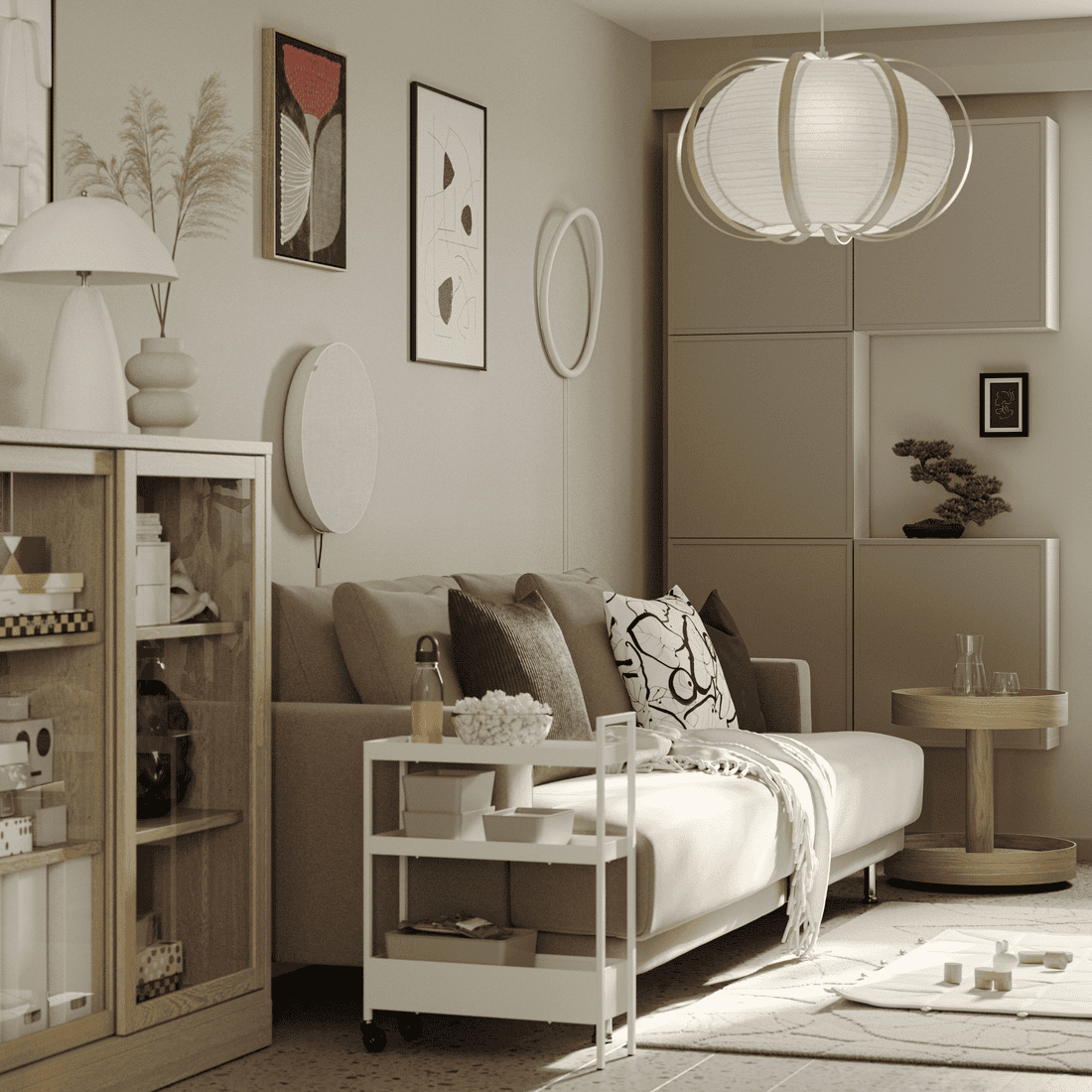
Caption: A sofa and furniture arranged along the wall can help a small living room keep more breathing room in the center.
1. Choose a focal point first
A focal point is the main feature that catches your eye first and helps guide the furniture around it. In a small living room, that might be the TV, a window, the main sofa, a decor shelf, or one piece of furniture with a color or shape you want to highlight.
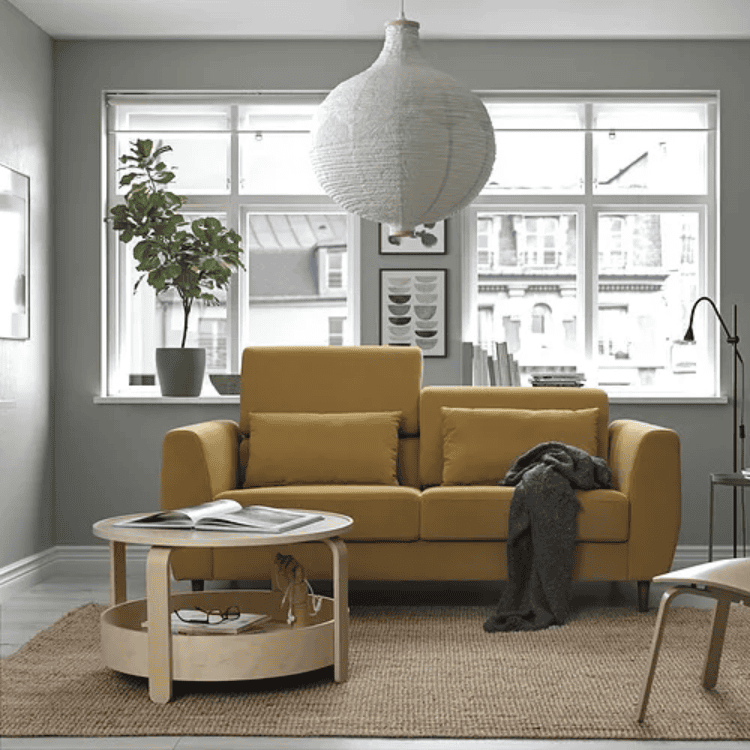
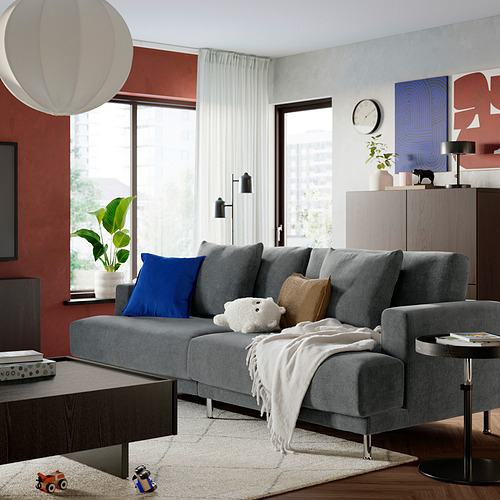
Caption: A sofa in a standout color, like the SLATORP two-seat sofa in yellow-brown, can become a simple focal point in a small living room. The other furniture can stay more neutral, so the room still feels balanced.
A focal point helps a stylish living room feel more put together because every piece has a reason to be where it is. The sofa is not just placed wherever there is space, the coffee table is not simply filling the middle, and the decor does not feel scattered around the room. Everything starts to work together around one main point.
Here are a few living room focal points to consider:
- TV, if the living room is often used for watching together. The sofa and chairs can face the TV, while the coffee table stays in a spot that is still easy to reach.
- Window, if you want the room to feel brighter and calmer. The seating area can face the natural light, with a small table or plant nearby to make the corner feel lived in.
- Bookshelf or display cabinet, if you want to bring more character into the room. This can work well if the living room also holds small collections, photos, books, or favorite pieces you enjoy seeing every day. A BILLY/OXBERG bookcase with glass doors can help display those pieces while keeping them more protected and visually contained.
- Main sofa, or a sofa with a different color or shape, if you want one simple piece to lead the look. For example, the SLATORP two-seat sofa in yellow-brown can draw attention without needing many extra decorations around it. You can keep nearby pieces, such as the coffee table, rug, TV unit, or shelves, in softer neutral tones so the room still feels light and easy to arrange.
Once you choose the focal point, let the other pieces support it. The sofa might face the TV, a small chair might move closer to the conversation area, or the table might shift to the side where it is easiest to reach. If SLATORP is the focal point, the layout can start from the sofa first, then the rest of the furniture can follow its position and color.
The focal point does not have to be dramatic. A bright window, a comfortable sofa, or one tidy shelf can be enough to give the living room a clear direction. From there, the room can look more intentional without needing much extra decor.
2. Use an L-shaped layout to open up the middle
An L-shaped layout is a seating arrangement that forms an L shape, usually with the sofa on one wall and a small chair, bench, or ottoman on another side. This setup can help a small living room layout work better because the seating stays gathered in one area, while the middle of the room is easier to move through.
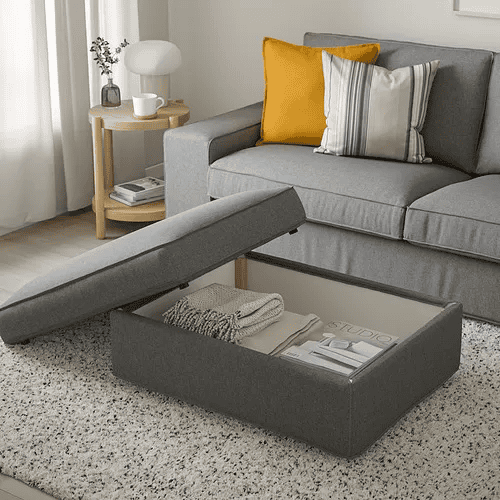
Caption: The KIVIK footstool can work well in an L-shaped layout because it can sit along the wall, move around easily, and serve as a table, seat, and storage.
This can help when the living room feels busy because chairs and tables are spread across too many sides. With an L-shaped layout, the walkway is easier to see. You still have a place to sit together, but the room does not have to feel packed.
Picture the main sofa against the longest wall. On the side, you can add a small chair, bench, or ottoman if there is enough room. The middle can hold a small coffee table, or stay a little clearer if that works better for daily use.
An L-shaped layout can also make a stylish living room look more organized because the furniture is not cutting across the room from too many directions. The seating area feels clear, the center feels easier to use, and the layout is simpler to understand when you walk in.
It is perfectly fine if not every piece fits. If one sofa and one small chair are enough for daily life, that can be just right. What matters most is that the room still works for sitting, talking, and moving around.
3. Keep larger pieces close to the walls
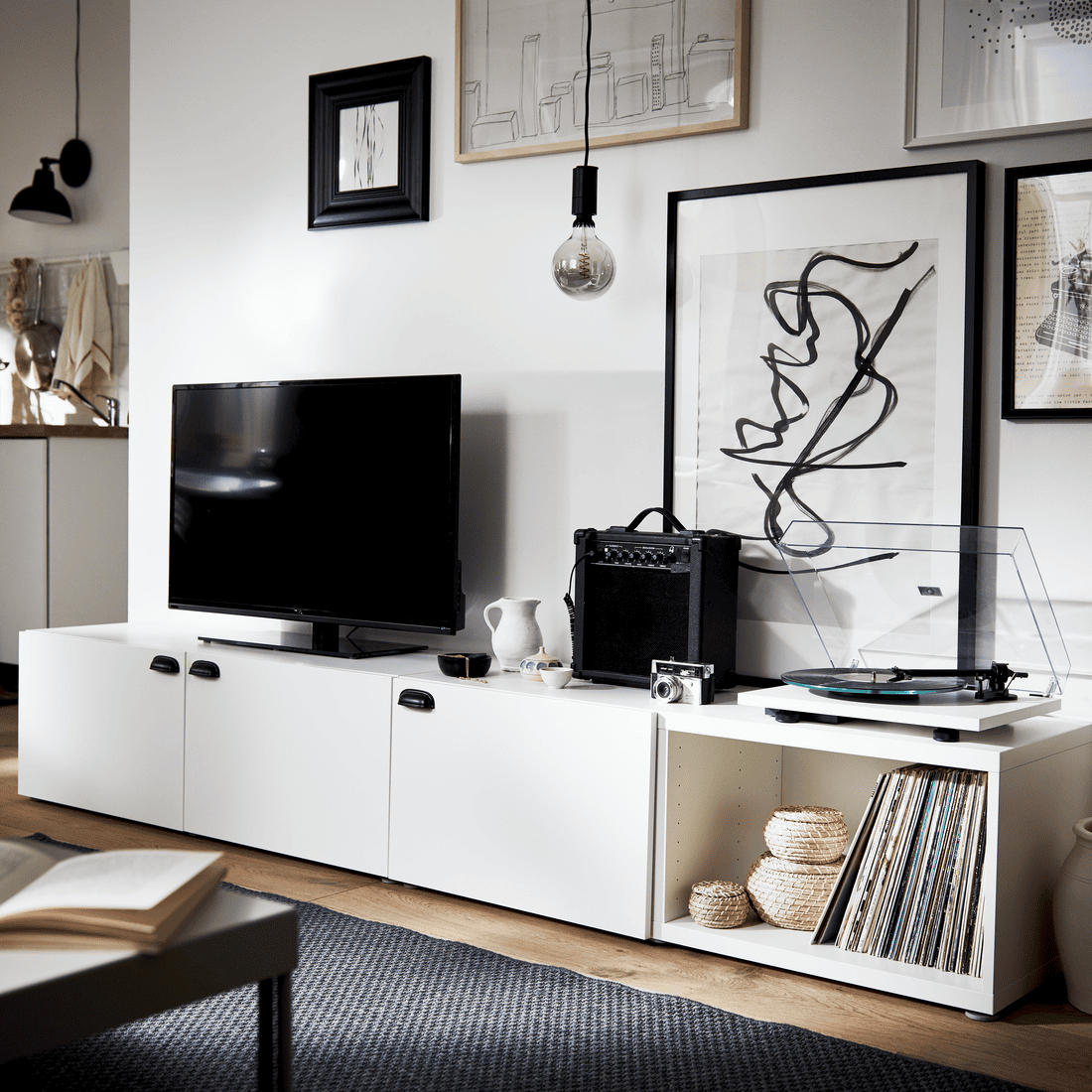
Keeping larger furniture close to the walls is a practical way to leave more usable space in the middle of the room. The sofa, TV unit, or low cabinet can sit along the sides, while the center stays easier to use for walking, sitting, or placing a small coffee table. This small shift can help a stylish living room feel less crowded without needing a full rearrange.
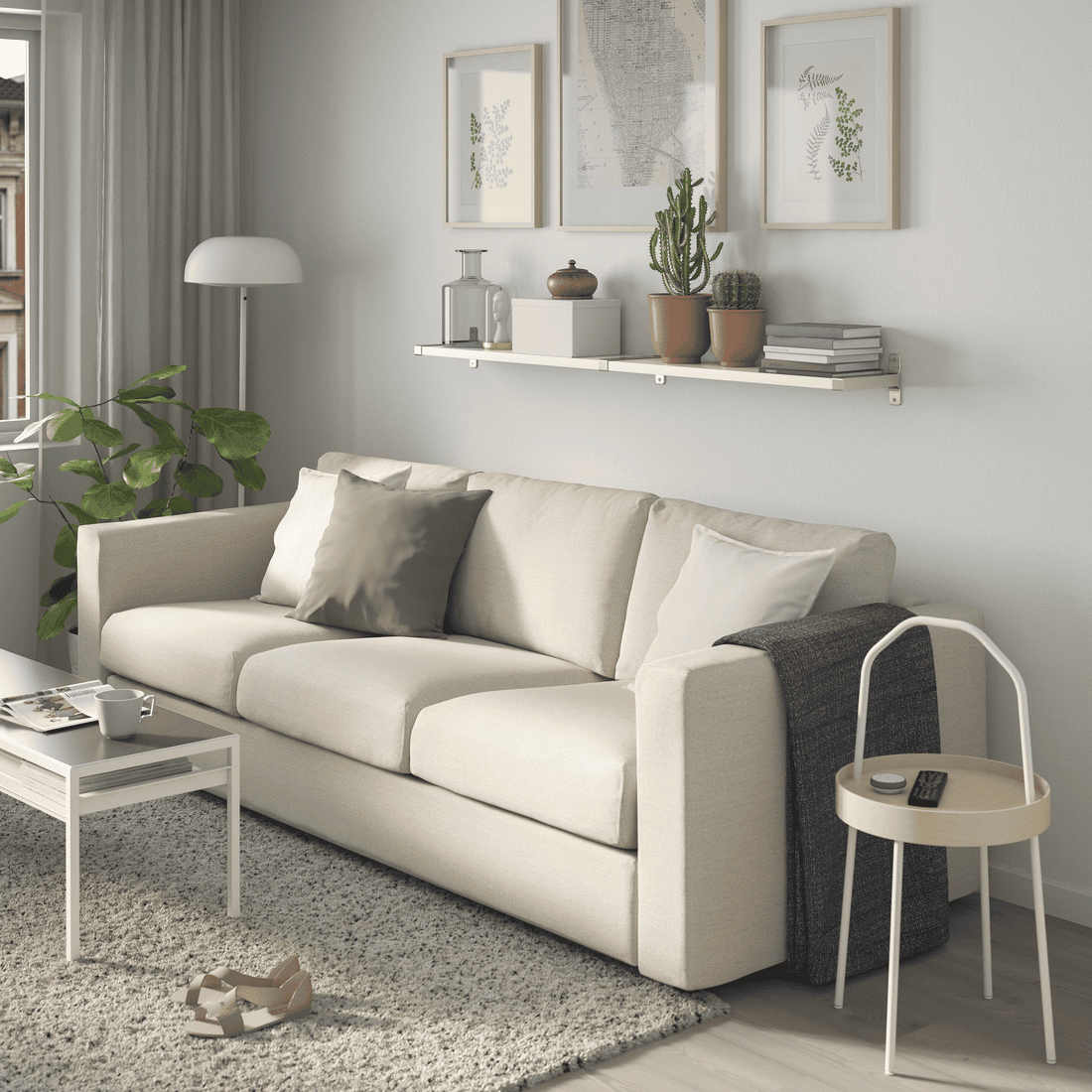
Caption: Keeping larger furniture close to the walls is a practical way to leave more usable space in the middle of the room.
Start with the biggest pieces first, such as:
- Sofa placed against or near the wall.
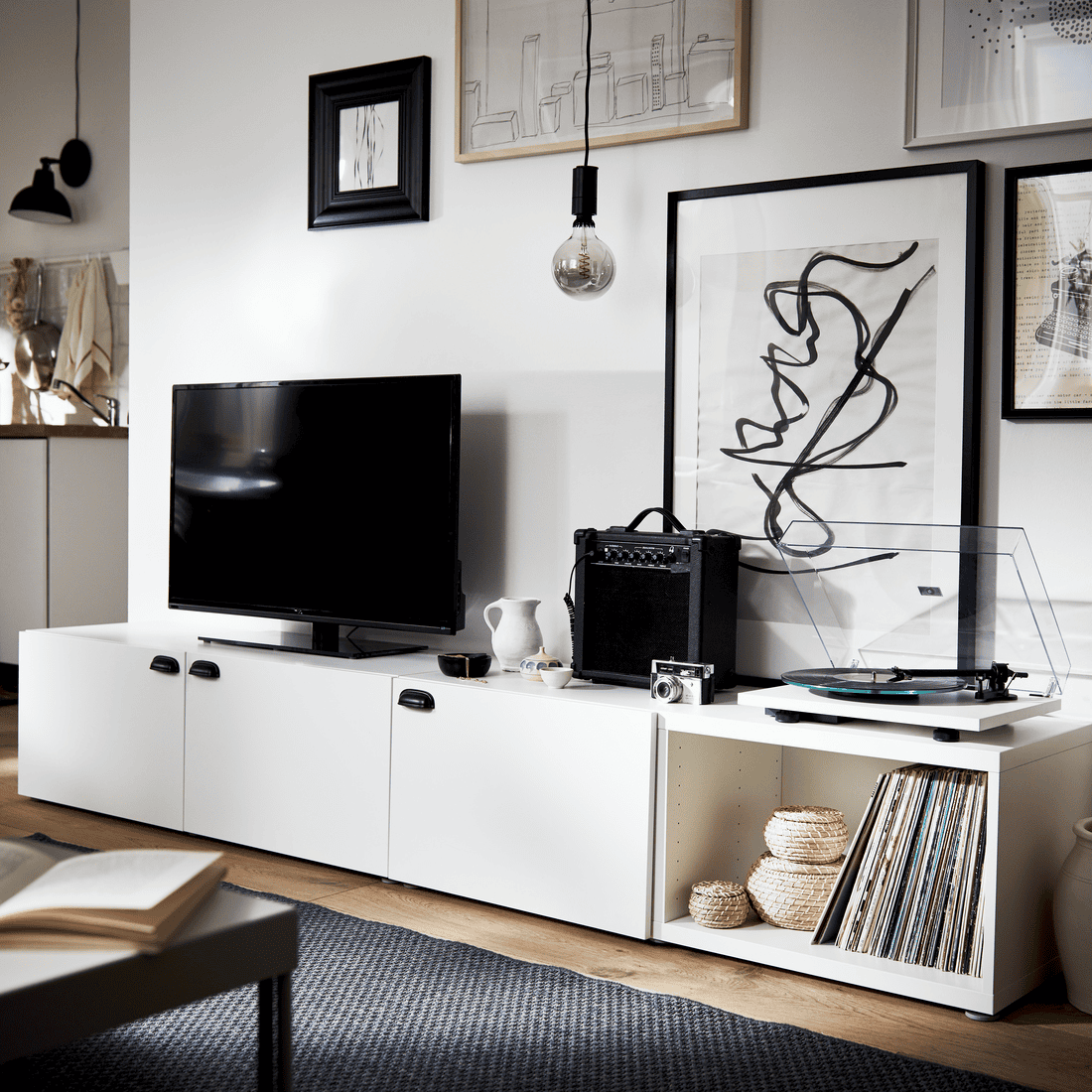
- Minimalist TV cabinet lined up with the wall.
- Small side table that is easy to move when needed.
For example, the sofa does not always have to float in the middle of the room. It can sit along the wall with a small coffee table nearby, and still feel comfortable and useful. The room keeps its function, but the center has more space to move.
This also makes the small living room layout easier to read. When you walk in, the seating area, storage area, and walkway feel more connected. The room looks tidier, but more importantly, it is easier to use every day.
For the TV unit, you can start by looking at different unique modern minimalist TV stand models then match the style with your room size, sofa position, and storage needs at home.
4. Leave enough space between furniture for easy movement
Furniture spacing is the open space between the sofa, table, chairs, and shelves that lets you sit down, stand up, reach for things, and walk through comfortably. In a small living room, even a little space between pieces can make daily routines feel easier.
As a simple guide:
- Leave about 24-32 inches (60-80 cm) for a walkway, so one person can pass through without turning sideways.
- Keep about 12-18 inches (30-45 cm) between the sofa and coffee table, so the table is easy to reach but your legs still have room.
- Keep the main path, such as the route from the entry to the sofa or from the sofa to another area, easy to walk through.
Small spacing changes can make the room feel calmer in daily use. Sitting down feels easier, standing up does not feel tight, and walking through the room does not turn into a tiny obstacle course.
Take another look at the paths in your living room. It is okay if the layout does not feel perfect yet. You can start by moving the table a few inches, tucking in a small chair, or giving the space in front of the sofa a little more room.
Quick checks to help the living room work better
Walkway
Circulation path
- Recommended space
- 24-32 inches (60-80 cm)
- Best for
- Giving one person enough room to walk through without turning sideways.
- Keep in mind
- The path from the entry to the sofa is usually the one most worth keeping clear.
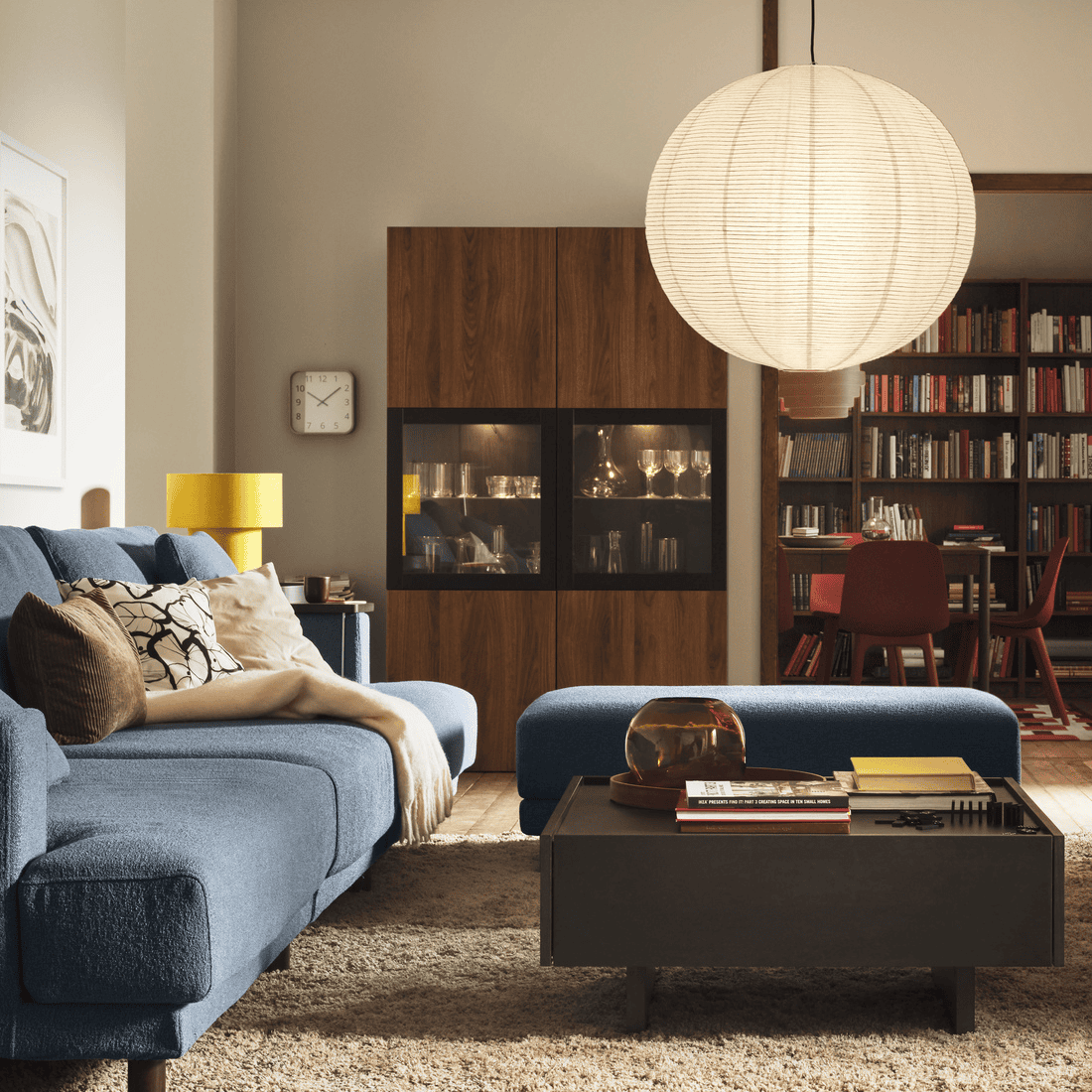
Sofa and coffee table spacing
Coffee table clearance
- Recommended space
- 12-18 inches (30-45 cm)
- Best for
- Keeping the table easy to reach without making the leg area feel tight.
- Keep in mind
- A coffee table that is too large can make the middle of the room fill up quickly.
5. Choose furniture sizes that still leave room to move
The right furniture size is not only about whether it fits in the living room. It should also leave enough space to walk, sit comfortably, open storage, and clean around corners without making every small task feel harder.
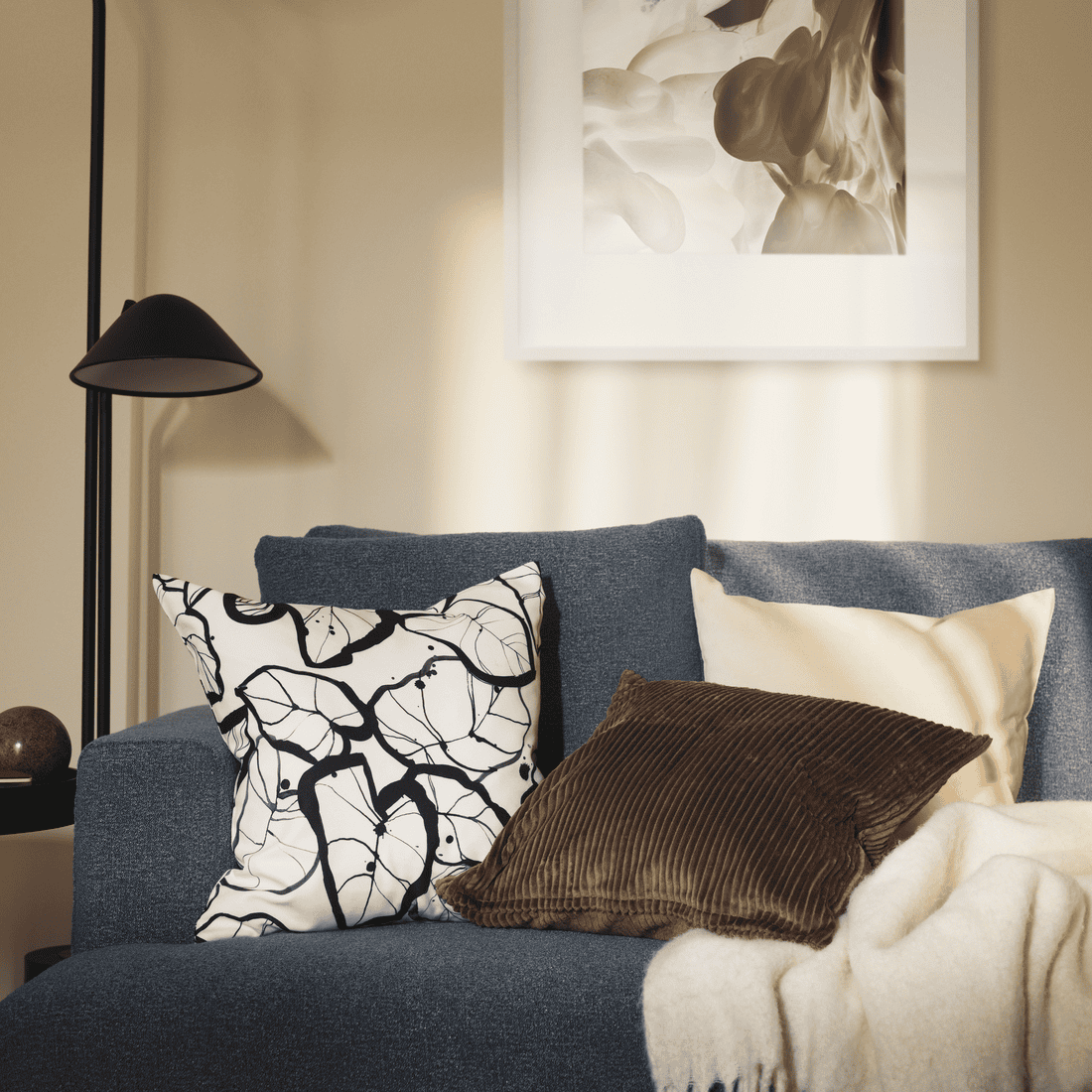
Caption: A 2-seat sofa fits small living rooms well, leaving space around it for paths and lighting.
For a small living room, a 2-seat sofa around 55-71 inches (140-180 cm) wide is often easier to arrange than a longer sofa that takes up most of one wall. A coffee table also works best when it is shorter than the sofa and no higher than the sofa seat, so drinks, books, and remotes are still easy to reach.
Before buying, picture the furniture in your room. Is there still a walkway of about 24-32 inches (60-80 cm)? Can you reach the coffee table from the sofa? Can a shelf or cabinet open without bumping into another piece?
6. Choose multifunctional furniture to cut down on extra pieces
Multifunctional furniture is furniture that does more than one job in one piece. In a small living room, that might mean a coffee table with storage, an ottoman that works as both seating and storage, or a TV unit with closed cabinets for cables and remotes.
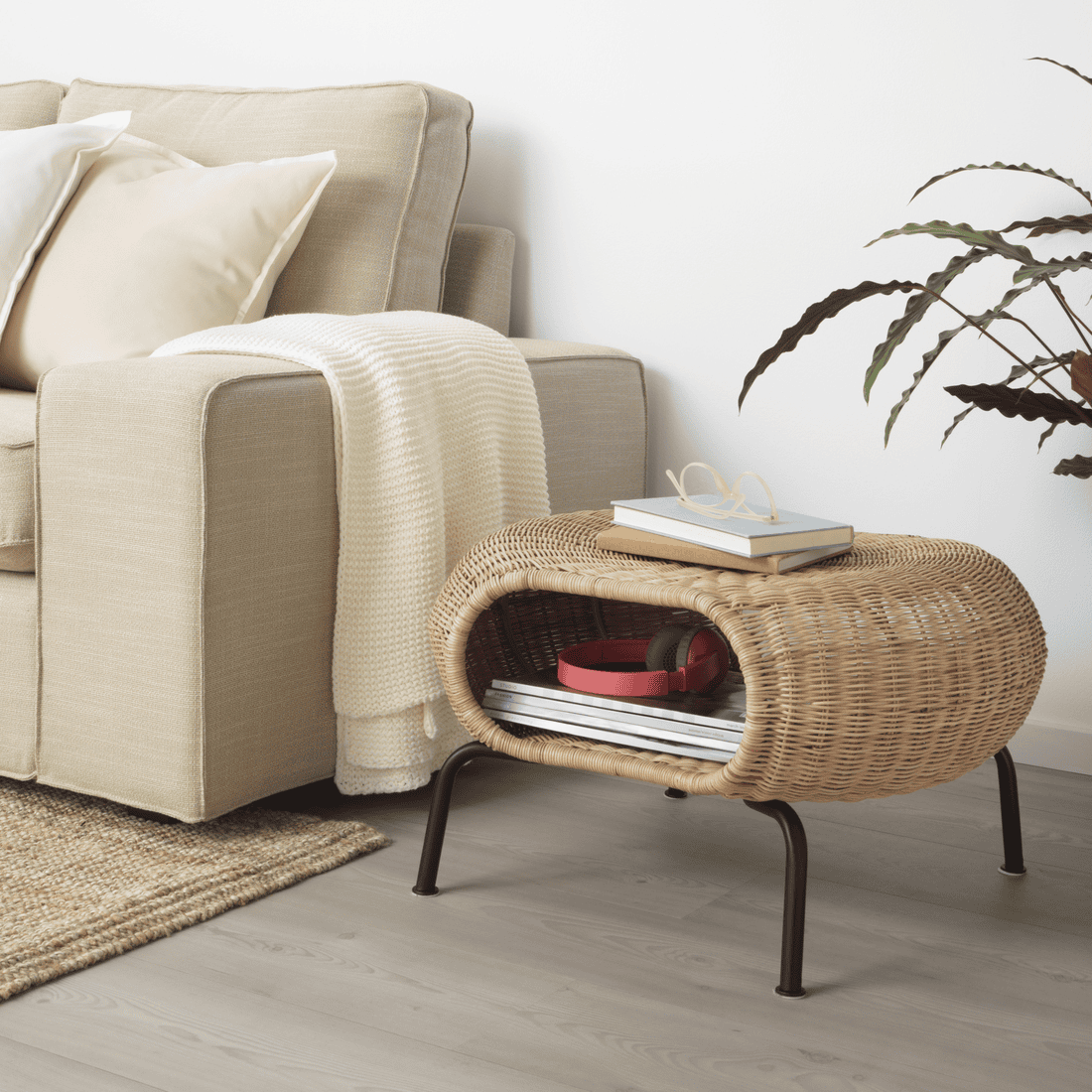
Caption: The GAMLEHULT storage table can work as a coffee table, temporary storage, and extra seating.
In a small living room, pieces like these can be helpful because they give everyday items a place to go without adding more furniture. You still have places to sit, store, and set things down, but the room does not have to carry too many separate small pieces.
A few examples to consider:
- Coffee table with drawers for remotes, magazines, or chargers.
- Storage ottoman for a small throw blanket or extra pillows.
- TV unit with closed cabinets for cables and small items.
- Lightweight side table that can move where it is needed.
- Small bench that can become extra seating when guests come over.
When one piece can do two jobs, the living room becomes easier to reset after daily use. The floor feels less busy, small items are easier to find, and the seating area stays ready for whatever the day brings.
7. Use wall space for light storage and living room wall decor
When floor space starts to feel limited, the walls can help with light storage. This keeps the living room feeling personal without asking the floor to hold too many things.
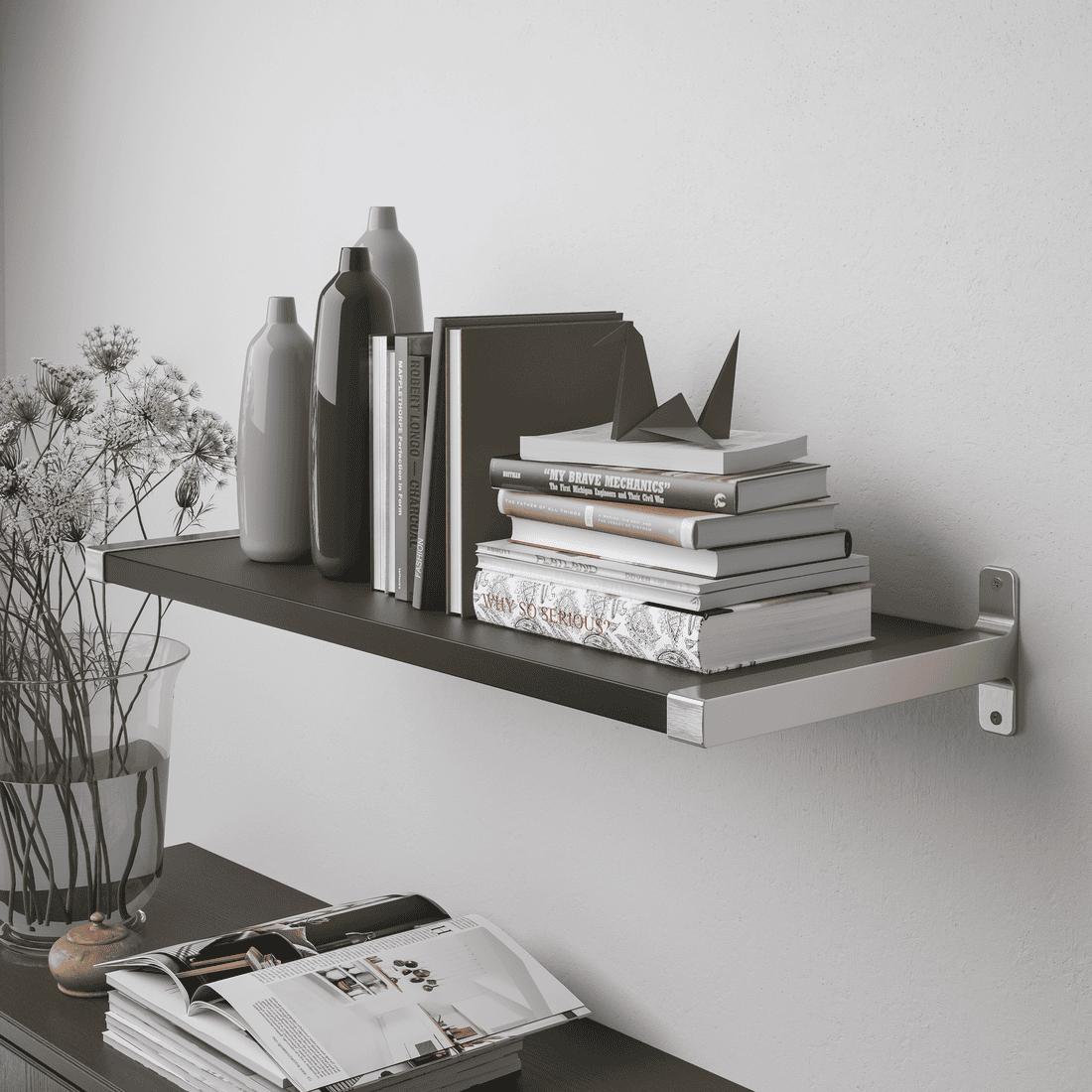
Caption: The BERGSHULT wall shelf can be used for storage and decor at the same time.
Start with something simple, like a wall shelf for small books, plants, framed photos, or favorite pieces you want to display. That way, living room wall decor does more than make the room look nice. It also gives small items a tidy place to land.
A few options to consider:
- MOSSLANDA picture ledge, for books, plants, candles, or a few favorite objects you would like to display.
- HAVREKROSS small wall shelf, for remotes, keys, and other everyday items that are easier to keep together.
- SINTANG minimalist mirror, to reflect light and add function to an empty section of wall.
- MÅNALG wall lamp, for adding light exactly where you need it without using extra floor space.
- LOMVIKEN frames, for displaying family photos, artwork, or prints as part of a simple gallery wall.
Even a little wall space can make a noticeable difference. The floor feels clearer, the seating area stays comfortable, and the living room is easier to reset after daily use.
How much space do you need to move through a living room?
An aesthetic living room stays easy to move through when the sofa, coffee table, shelves, chairs, and decor are placed around a clear walkway of about 24-32 inches (60-80 cm). The main path should let you move from the entry to the sofa, reach the coffee table, and pass through the room without turning every step into a little shuffle.
Caption: An L-shaped layout, with the sofa and furniture following the wall, can be one way to arrange furniture in a small living room.
Start with the part you notice every day: the walkway. Once the path feels easier, the rest of the layout becomes simpler to adjust. You can choose a focal point, try an L-shaped layout, set the right distance between the sofa and coffee table, and add living room wall decor that gives small things a place without taking over the floor.
Use this table as a simple starting point before you move anything. No need to redo the whole room at once. Pick the spot that gets in the way most often, then begin there.
| What to look at | A simple first step | What gets a little easier |
|---|---|---|
| Room direction | Pick one focal point, such as the TV, window, main sofa, or decor shelf | The layout has a place to start, so the sofa, table, and decor feel more connected |
| Seating area | Use an L-shaped layout, or let the sofa follow the wall | The center has more breathing room, which helps a small living room feel lighter |
| Walkway | Keep about 24-32 inches (60-80 cm) clear for walking | Moving from the door to the sofa, or through the room, feels more comfortable |
| Sofa and table | Choose pieces that fit while still leaving space around them | The room works better for sitting, reaching, cleaning, and everyday movement |
| Small items | Choose a table, ottoman, or TV unit with storage | The little things you use often have an easy place to land |
| Walls | Use shelves, mirrors, frames, or wall lamps | Living room wall decor can add character while keeping the floor less busy |
What makes a living room feel cramped and less put together?
A small living room usually feels cramped when the floor, walkway, and walls are all doing too much without a clear plan. The sofa, coffee table, shelves, decor, and small everyday items all need a place, so the room is easier to use when each piece has a clear function and position.
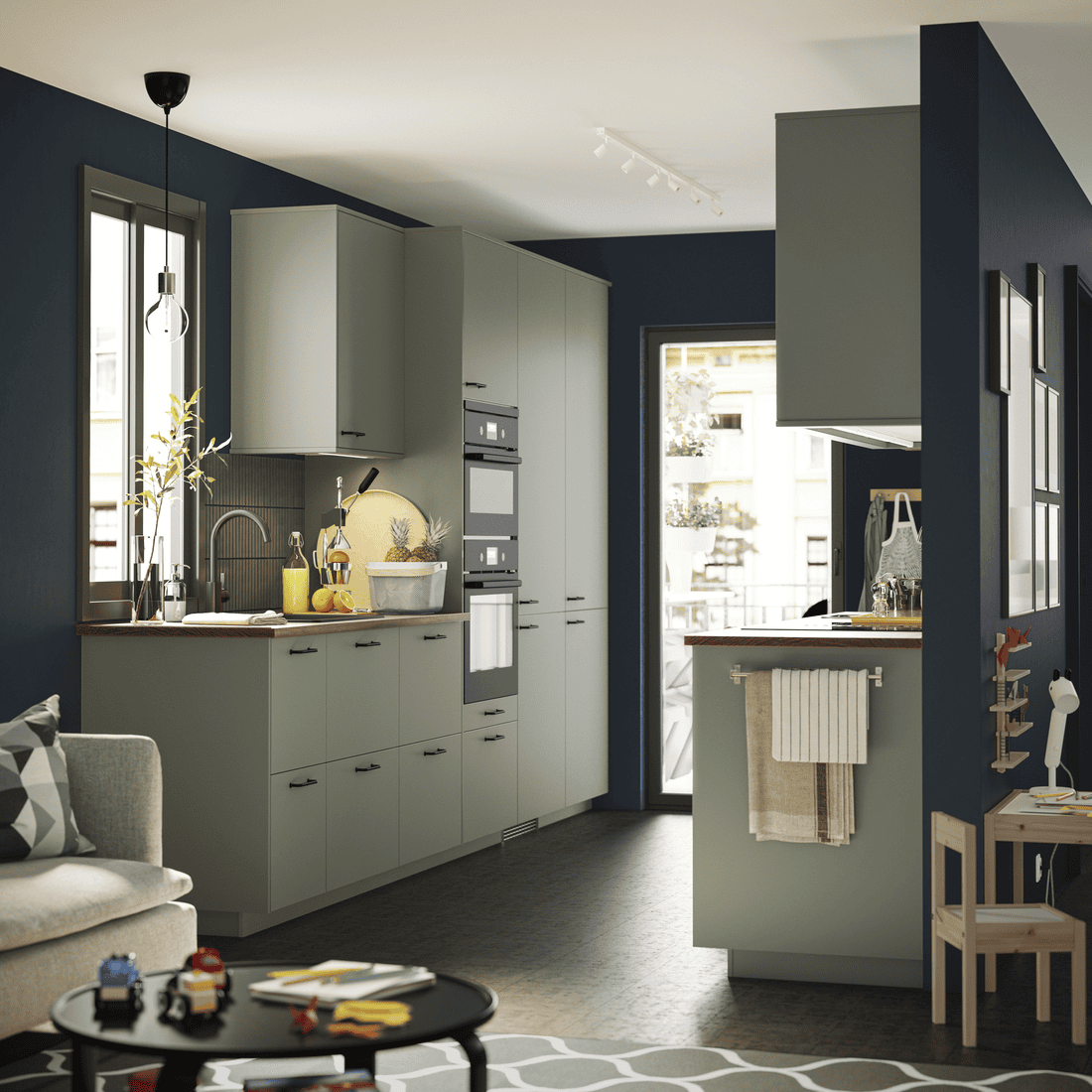
Caption: A clear walkway can help a small room feel more open, especially when the living room shares space with other activities at home.
The good news is, you do not need to change everything at once. Start with one area first, such as clearing the space in front of the sofa, choosing a more flexible table, or moving some light storage to the wall.
Too many large pieces are grouped in one area
Large furniture grouped in one area can make a small living room feel full because the sofa, extra chair, coffee table, and shelf all take up floor space. When everything sits close together, the path for walking or sitting can feel more limited.
Start with the pieces that do the most work. The sofa can stay as the main seat, while an ottoman, small bench, or folding chair can help when extra seating is needed. A coffee table with open and closed storage, like SKRUVBY, can hold remotes, chargers, and magazines close to where they are used.
A table or chair sits in the walkway
A table or chair in the walkway can make the room feel tight, even when the piece itself is not very large. You might notice it when you have to turn sideways, move a table, or walk around something just to get from the entry to the sofa.
A simple fix can start with the path you use most. Look at the route from the entry to the sofa, from the sofa to the table, and from the sofa to another room. If one spot feels too tight, try moving the table a few inches, placing a small chair closer to the wall, or choosing a lighter table.
Too many things stay on the floor
Too many things on the floor can make a small living room feel busy because everything uses the same lower part of the room. Standing shelves, floor lamps, plant pots, side tables, and small storage pieces can all be useful, but the room can feel lighter when some of those functions move to the wall.
You can give the wall a small role. A wall shelf can hold small books, plants, or favorite decor. A wall lamp can work as an alternative to a floor lamp. A mirror can also help the room feel brighter and more open.
Decor is spread across too many sides of the room
Too much decor across several sides of the room can make a small living room feel visually busy. Pillows, plants, framed photos, and small display pieces can all add character, but they are often easier to enjoy when the number and placement feel a little more considered.
Choose a few main decor moments you want to highlight. For example, one shelf for small display pieces, one wall for frames or a mirror, and a few pillows in colors that work well together. The room can still feel warm, but the overall look feels calmer.
An aesthetic living room starts with a layout that fits
An aesthetic living room starts with a layout that brings the main pieces together: a clear focal point, an L-shaped setup when it works, enough space between furniture, wall space for light storage, and multifunctional pieces that help reduce extra items on the floor.
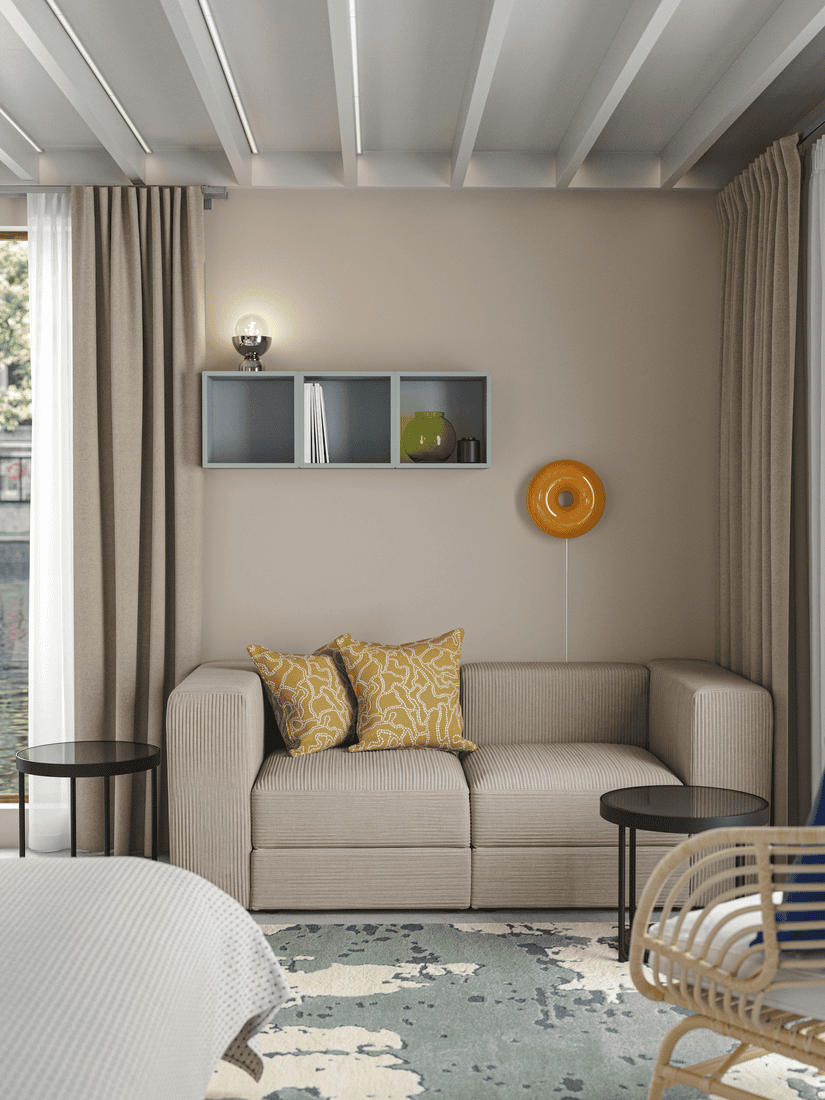
Caption: An aesthetic living room starts with a layout that brings the main pieces together: a clear focal point, an L-shaped setup, and enough space between furniture.
You can start with one small spot, like the coffee table, the space in front of the sofa, or a wall shelf for small decor and everyday items. Move one piece, clear one path, or give one item a better place to land. Little by little, the room becomes easier to enjoy, easier to reset, and stays ready for whatever you need to do next.
Frequently asked questions about arranging an aesthetic living room
Start with the area you use most every day