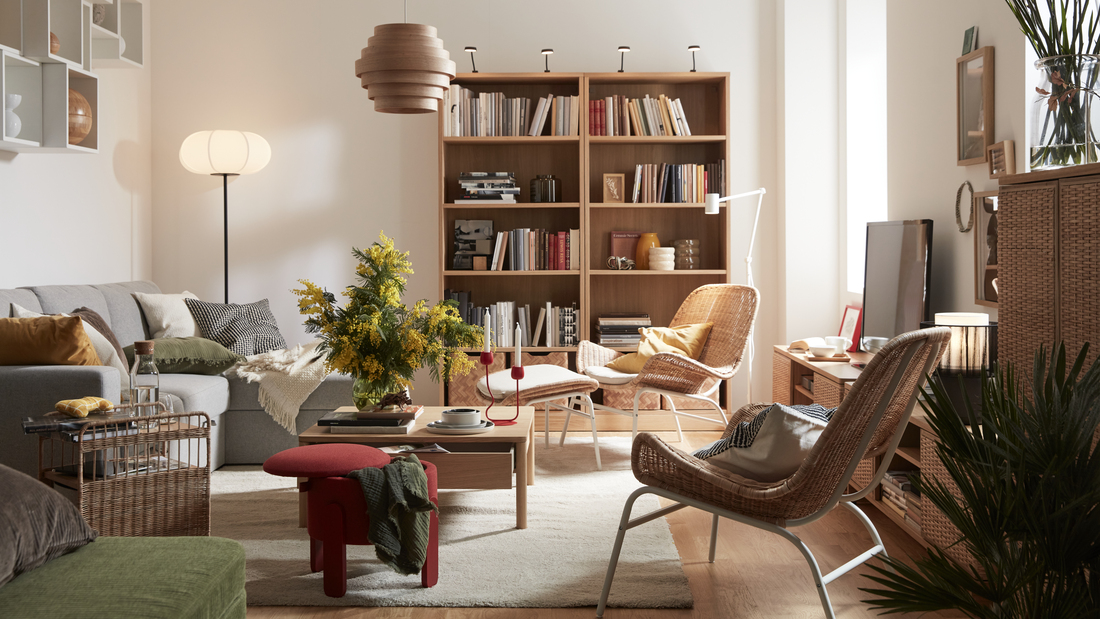
Does your room still look cluttered even though you have enough storage space? If this leaves you wondering why, the problem might be how you organize your belongings.
One storage concept you can consider is open shelving. This concept allows various household items to be stored without always having to keep them behind cabinet doors.
Interestingly, open shelves do more than simply provide storage space. Read on to discover how choosing the right furniture and arranging it appropriately can also make open shelving part of your room's decor.
Open shelves can be used in kitchens, living rooms, bedrooms, bathrooms, and workspaces.
What is open shelving?
Open shelving is a storage system that uses shelves without covers or cabinet doors, allowing the contents to remain visible. This concept can be applied through wall shelves, open bookcases, or storage units with multiple compartments.
Unlike closed cabinets, open shelves allow you to access items without opening a door. For example, you can store frequently used glasses and bowls in the kitchen, organize books in the living room, or place bathroom essentials on open shelves.
This concept is also related to making use of vertical space. Instead of relying solely on tabletops or floor space, you can use wall areas to create additional storage.
In modern interior design, open shelving is often combined with minimalist and Scandinavian styles that emphasize simple forms and everyday functionality.
What is the difference between open and closed shelving?
Both serve the purpose of storing items, but they have different characteristics.
| Aspect | Open shelving | Closed shelving |
|---|---|---|
| Access to items | Items are immediately visible and accessible | Requires opening doors or drawers |
| Appearance | Items become part of the decor | Stored items remain out of sight |
| Maintenance | Requires more frequent dusting | Contents are relatively more protected from dust |
| Function | Everyday essentials and display items | Personal belongings, spare items, or items less suitable for display |
| Visual impression | Can make a space feel more spacious when not overcrowded | Helps conceal a variety of items |
There is no need to rely on just one storage system. You can combine open shelves for frequently used items with closed cabinets for belongings that do not need to be displayed.
What are the benefits of open shelving at home?
Before choosing a shelving model, it is important to understand its benefits so that your storage solutions suit your everyday needs.
1. Makes everyday items easier to access
Open shelves help you locate items without searching inside cabinets. This is particularly useful for frequently used belongings such as books, glasses, towels, or stationery.
For greater convenience, place the items you use most often at an easily accessible height. Less frequently used items can be placed on upper shelves while still considering safety and weight.
2. Helps make use of wall space
Empty walls can provide additional storage without filling the floor with furniture. Wall shelves also allow you to position items according to the needs of the room.
For example, one or two shelves above a desk can be used to store notebooks and lightweight accessories. This leaves more desk space available for your activities.
3. Combines storage with decoration
Everyday belongings do not always need to be hidden. Books with attractive covers, small vases, baskets, and decorative objects can add character to open shelves.
You can group items according to their function, color, or size. This approach helps shelves look more organized without reducing their storage benefits.
4. Makes it easier to change your arrangements
Open shelves allow you to adjust the arrangement of your belongings as your needs change. You can replace decorations, move storage boxes, or reorganize items according to your habits.
With modular shelving systems, certain components can also be added or adjusted depending on the product's design and compatibility.
7 examples of open shelving for different rooms
Open shelving arrangements should consider daily activities, the types of items being stored, and the size of the room. Here are several examples you can adapt.
1. Open shelves in the living room for books and decorations
The living room often serves as a gathering place and a storage area for shared belongings. Open shelves can be used to organize books, small decorations, and boxes containing everyday essentials.
You can choose shelving with multiple compartments to separate display pieces from functional items. Leave some empty space so that each group of belongings remains clearly visible and the shelves do not look overcrowded.
Use the KALLAX shelving unit, 112 × 147 cm. This product can be positioned vertically or horizontally and fitted with certain inserts to create closed storage.

2. Open shelves in the kitchen for frequently used essentials
In the kitchen, open shelves can help keep glasses, bowls, and spice containers within easy reach when preparing meals. Arrange these items according to how frequently you use them to make cooking more convenient.
Avoid installing shelves too close to the stove if the items on them are likely to be exposed to oil and cooking splashes. These areas can cause kitchen essentials to become dirty more quickly and require additional cleaning.
Use the RAMSHULT/BERGSHULT wall shelf, 80 × 30 cm. This shelf can turn an empty wall into additional storage space, provided that installation and weight loads follow the product instructions.

Read also: 10 simple village kitchen design inspirations
3. Open bookshelves in the workspace
A workspace needs storage that makes it easy to access documents, reference books, and office supplies. Open bookshelves can help separate items into categories so that daily activities become more organized.
Use the middle shelves for frequently accessed items, while other sections can hold document boxes or lightweight decorations. You can also label the boxes to make finding items easier.
Use the BILLY bookcase, 80 × 28 × 106 cm. The BILLY bookcase features adjustable shelves that can accommodate books and items of various sizes.

4. Open shelves in the bathroom for toiletries
Small bathrooms often have limited floor space. Slim open shelving can help store shampoo, soap, and cleaning supplies without requiring large cabinets.
Choose shelves that are suitable for bathroom environments and easy to clean. You should also consider air circulation and position your essentials where they will not interfere with daily activities.
Use the VESKEN shelving unit, 37 × 23 × 101 cm. Its slim design is intended to accommodate various bathroom essentials in limited spaces.

5. Open shelves in the bedroom for additional storage
A bedroom can feel crowded when all belongings are placed on bedside tables or on top of wardrobes. Open shelving can provide an alternative storage solution for reading books, accessories, and boxes containing personal belongings.
If your bedroom is relatively small, consider shelves that are not excessively deep. Choose colors that complement other furniture to maintain a visually comfortable atmosphere.
Use the BAGGEBO bookcase, 50 × 25 × 160 cm. Its relatively slim depth can help make use of wall space without occupying too much floor area.

6. Open shelving to divide areas in a multifunctional room
In homes with multifunctional spaces, a single room may serve as a living area, workspace, and resting area. An open shelving unit can act as a visual divider while still providing storage.
Use some compartments for books or decorations, while others can be fitted with storage boxes. Choose a shelving unit that does not obstruct walkways, and make sure the furniture is secured according to its assembly instructions.
Use the KALLAX shelving unit, 182 × 182 cm. This unit can function as both a room divider and a storage area.

7. Open shelves in a multipurpose storage area
In a multipurpose storage area, shelves can be used to organize household essentials, supplies, and other belongings according to your needs.
Store items by category and place heavier objects on the lower shelves. Use storage boxes that fit the shelves to prevent smaller items from becoming scattered.
Use the IVAR shelving unit. The IVAR system features adjustable shelves and is worth considering for changing storage needs.

How to organize open shelving to keep it tidy and uncluttered
Having open shelves means that most of your belongings will be visible every day. Therefore, organizing these items is an important part of maintaining the room's appearance.
1. Group items according to their function
Instead of mixing different types of belongings, create groups based on their purpose. For example, dedicate one section to books, another to accessory boxes, and another to decorations.
Grouping items also helps you return them to their original places. This can make tidying your shelves a simpler task.
2. Use storage boxes or baskets
Not every item needs to be on display. Cables, stationery, small toys, and other accessories can be stored in boxes to give your shelves a more organized appearance.
You can use the DRÖNA series to help group belongings inside compatible shelving units. Check the dimensions of the boxes and compartments before purchasing.
3. Leave empty space between items
Filling every corner of a shelf may seem efficient, but it can make the arrangement look crowded. Try leaving some sections empty so that different groups of items are easier to distinguish.
You can also combine tall and short objects to create a more varied arrangement. For example, place several books upright and pair them with a small vase or basket.
4. Use complementary colors
For a calmer appearance, choose a few main colors that suit the atmosphere of the room. Neutral colors such as white, gray, and wood tones can be combined with decorative accents.
However, you do not have to use items in matching colors. Simply group similar colors together or use boxes to create a more consistent appearance among different belongings.
5. Combine open shelving with closed storage
The open shelving concept does not require every item to remain visible. Combining open shelves with drawers, cabinets, or closed boxes can make managing belongings easier.
For example, use open shelving sections for book collections and decorations, while personal documents or spare supplies are stored in drawers. This approach creates a balance between accessibility and an organized appearance.
Read also: Tips for creating additional storage space with IKEA products
Tips for choosing open shelves according to your room's needs
Before purchasing open shelves, consider the following factors to ensure that the product suits your habits and the conditions of your home.
1. Measure the available space
Check the width, height, and depth of the area where the shelves will be placed. Do not focus only on the furniture's dimensions, but also consider the space needed for walking and accessing belongings.
For wall shelves, consider the installation height so that they do not interfere with daily activities. Also make sure the wall material, mounting hardware, and load capacity comply with the product instructions.
2. Choose materials based on where the shelves will be used
Shelving materials should suit the conditions of the room. Bathroom shelves, for example, should use materials that are suitable for humid environments and easy to clean.
Meanwhile, shelves for books or decorations in the living room can be selected based on their size, material characteristics, and compatibility with other furniture. Remember to check the weight limit of each shelf.
3. Match the design to the types of items
Shelves used for books have different requirements from shelves intended for toiletries or decorations. Books require suitable shelf depth and load-bearing capacity, while small display items may only need slimmer wall shelves.
Also consider whether you need adjustable compartments, additional boxes, or a combination of closed storage options.
4. Pay attention to installation safety
Tall shelves or furniture that could tip over must be secured according to the manufacturer's instructions. Choose fasteners suitable for the wall type and do not exceed the specified load capacity.
Avoid placing heavy items on the upper shelves. In homes with young children, make sure the arrangement and installation do not create a risk of furniture falling or being used for climbing.
Mistakes to avoid when using open shelving
Open shelves can help create a practical storage system, but certain habits may make them less effective.
- Filling every shelf: Too many items can make shelves difficult to clean and create a crowded appearance.
- Not grouping belongings: Mixing different items makes them harder to find and return to their places.
- Ignoring dust and dirt: Open shelves require regular cleaning, especially in the kitchen.
- Choosing shelves without measuring the space: Oversized shelves can interfere with movement and daily activities.
- Ignoring weight limits: Placing heavy items without considering the shelf's strength can increase the risk of damage or accidents.
Try reviewing the contents of your shelves regularly. Move rarely used items into closed storage and keep the belongings that are genuinely useful for your everyday activities.
FAQ about open shelving
Open shelving is a storage concept that uses shelves without doors, allowing items to remain visible and directly accessible.
Yes, open shelving can be used in small homes as long as the size and placement are appropriate.
The disadvantages include greater exposure to dust, a potentially cluttered appearance when shelves are overcrowded, and the need for regular cleaning and organization.
Open shelves can be used in kitchens to store glasses, plates, or frequently used containers.
Group items by category, use storage boxes for smaller belongings, and leave empty space between display items.
Create a more organized space with open shelving from IKEA
Open shelving can be one way to organize belongings while adding character to a room. From living rooms and kitchens to bedrooms and multipurpose storage areas, open shelves can be adapted to your needs and habits.
The key is to prioritize the types of items you need to store, the available space, ease of maintenance, and safety. With thoughtful planning, open shelving can help you create a more organized home.
Discover a variety of shelves and storage solutions at IKEA Indonesia, from BILLY bookcases and versatile KALLAX units to shelving designed for smaller spaces. Explore the collection at IKEA.co.id and choose storage solutions that suit your home's needs.