When choosing a light bulb, many people still focus primarily on wattage. However, there is another measurement that actually plays a bigger role in determining how bright a light is: lumen.
Understanding what lumen means will help you choose the right lighting for every room, from the bedroom to the home office, without sacrificing energy efficiency.
So, what is lamp lumen, and why is it important to understand before buying a light bulb? Read on to learn how it can help you make a better lighting choice for your home.
What is lumen in lighting?
Lumen (lm) is the unit used to measure the total amount of light emitted by a lamp, also known as luminous flux.
Simply put, the higher the lumen value, the brighter the light produced. That's why, when choosing an LED bulb, checking the lumen rating gives you a much more accurate indication of brightness than looking at wattage alone.
For example, modern LED bulbs are capable of producing bright illumination while consuming relatively little electricity. In addition to providing optimal lighting, this series is also designed to be approximately 35% more energy-efficient than previous generations and offers a lifespan of up to around 25,000 hours.
What is the difference between lumen, watt, and Kelvin?
When looking at a light bulb's specifications, you will usually find three main pieces of information: lumen, watt, and Kelvin. Although they are related, each serves a different purpose.
Understanding these differences will help you choose lighting that is not only bright but also energy-efficient and comfortable for different areas of your home.
1. Lumen indicates brightness
Lumen (lm) measures the amount of light emitted by a bulb. The higher the lumen rating, the brighter the light.
For example, bulbs rated around 250–470 lumens are suitable for decorative lighting or bedside lamps, while bulbs with around 800 lumens or more are commonly used as the main source of illumination in rooms that require brighter lighting.
2. Watt indicates electricity consumption
Unlike lumen, watt (W) does not indicate brightness. Instead, it measures the amount of electrical power consumed by the bulb. Thanks to LED technology, low-wattage bulbs can now produce high lumen output.
This means you can enjoy bright lighting without using significantly more electricity, making LED bulbs a more energy-efficient choice for everyday use.
3. Kelvin indicates light color
Kelvin (K) measures the color temperature of a light source. For example, 2700K (Warm White) produces a warm, yellowish glow that is ideal for bedrooms and living rooms.
Meanwhile, 4000K–5000K (Cool White/Daylight) produces a brighter white light that helps improve focus, making it suitable for home offices, study areas, and kitchens.
Some TRÅDFRI smart bulbs even allow you to adjust the color temperature to suit different activities.
Guide to choosing the right lumen level for each room
Every room has different lighting requirements. Therefore, you do not need to use the same lumen level throughout your home.
Matching the brightness to the function of each room will make everyday activities more comfortable while helping improve energy efficiency. IKEA also recommends choosing light bulbs based on their lumen output and then matching them with the appropriate color temperature (Kelvin) and fitting type.
1. Bedroom
The bedroom is a space for rest, so the lighting should not be overly bright. Choose a bulb with a moderate lumen output paired with Warm White (2700K) lighting to create a warm and relaxing atmosphere.
For bedside lamps or night lights, you can also choose bulbs with a lower lumen rating to ensure the light remains comfortable for your eyes.
2. Living room
The living room is typically used for a variety of activities, from gathering with family and watching television to reading. Therefore, choose a lumen level that matches the size of the room and the number of lighting fixtures.
If your living room is spacious, consider combining a ceiling light as the primary light source with floor lamps or table lamps to create more comfortable layered lighting.
3. Kitchen
The kitchen requires brighter lighting to ensure food preparation can be carried out safely and comfortably. Choose bulbs with a higher lumen output and use Cool White or Daylight lighting so countertops, ingredients, and cooking utensils are easier to see.
4. Home office or study area
For activities that require concentration, such as working, studying, or reading documents, choose lighting with sufficient lumen output and a color temperature of around 4000K–5000K.
This combination helps keep the workspace bright and comfortable, making everyday tasks easier to perform.
5. Accent and decorative lighting
Not every light fixture needs to produce very bright illumination. Accent lights, decorative lamps, or spotlights only require a lower lumen output because their primary purpose is to highlight interior elements or create a particular atmosphere.
Choosing the appropriate lumen level helps enhance the appearance of your room without making it feel overly bright.
IKEA LED bulb recommendations based on your lumen needs
Choosing a light bulb is not only about brightness but also about matching it to the function of the room, the fitting type, and the features you need. IKEA offers a wide range of LED bulbs with different lumen levels for both everyday lighting and smart lighting systems.
You can explore various lighting options in the IKEA light bulb collection. Here are some recommended choices.
1. SOLHETTA for everyday use
The SOLHETTA series is an excellent choice if you are looking for energy-efficient LED bulbs for daily use. Compared to previous generations of IKEA LED bulbs, SOLHETTA is designed to be approximately 35% more energy-efficient and has a lifespan of up to 25,000 hours.
In addition, these bulbs are available in several fitting types, including E27, E14, and GU10, making them compatible with a wide variety of light fixtures throughout your home.
The available lumen options are also quite diverse. You can choose 250–470 lumens for bedside or decorative lighting, 806 lumens for medium-sized rooms as the main light source, or 1,055 lumens if you need brighter illumination for a living room or workspace.
With these options, you can easily adjust the brightness level without consuming unnecessary electricity.
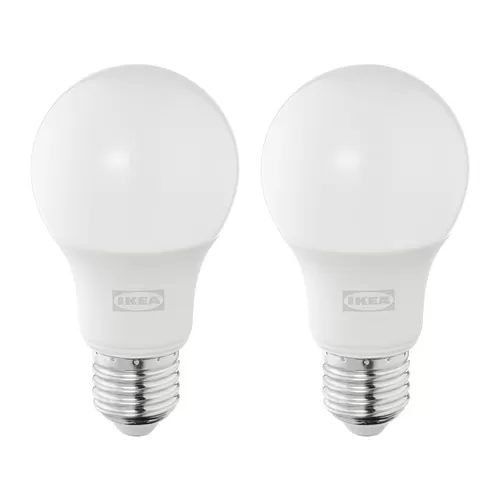
See the SOLHETTA E27 LED bulb in the image:
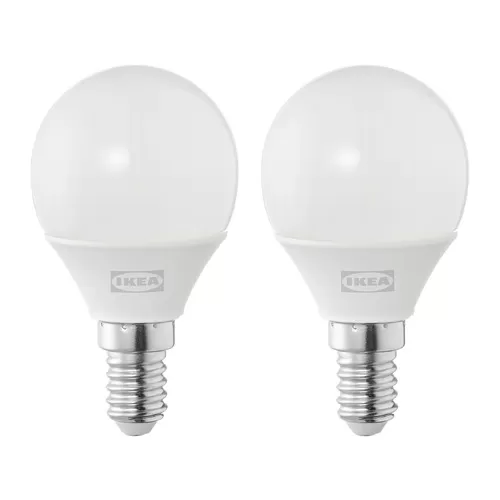
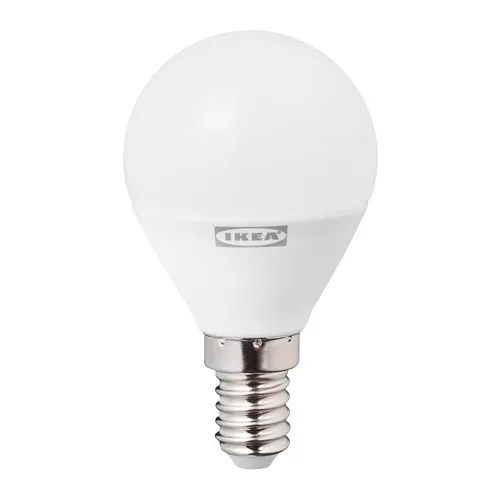
See the SOLHETTA E14 LED bulb in the image:
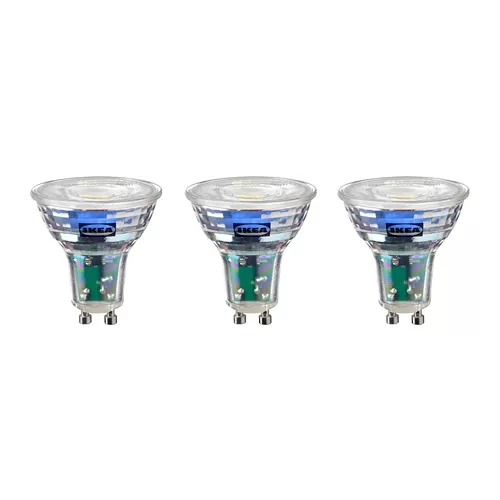
See the SOLHETTA GU10 LED bulb in the image:
2. TRÅDFRI for smart lighting
If you are looking for more flexible lighting, the TRÅDFRI series offers smart lighting features that can be controlled wirelessly.
These bulbs allow you to dim the light, change the color temperature from warm white to brighter white, and adjust the room's atmosphere using a remote control or the compatible IKEA Home Smart app.
These features make TRÅDFRI suitable for living rooms, home offices, and bedrooms. For example, you can use warm lighting while relaxing in the evening and switch to brighter white light when working or reading.
With just one bulb, you can adapt the lighting to different activities without having to replace the bulb.
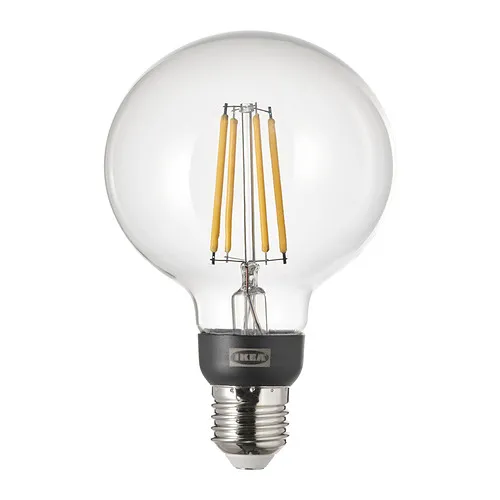
See the TRÅDFRI E27 470-lumen Warm White LED bulb in the image:
See the TRÅDFRI E14 470-lumen White Spectrum LED bulb in the image:
Also read: 7 Ways to Make a Small Living Room Look Stylish and Spacious
Common mistakes people make when choosing lamp lumens
Understanding lumen alone is not enough if you still choose light bulbs the wrong way. Many people select bulbs based only on wattage or appearance without considering the lighting requirements of each room. To achieve better lighting results, avoid these common mistakes.
Focusing only on wattage
One of the most common misconceptions is believing that a higher wattage always means a brighter bulb. With LED lighting, this is no longer true. Brightness is determined by the lumen value, while wattage only indicates how much electricity the bulb consumes.
Therefore, choosing bulbs based on lumen will help you achieve the right level of brightness while improving energy efficiency.
Ignoring the size of the room
Using a low-lumen bulb in a large room can make the space feel dim. On the other hand, using a very high-lumen bulb in a small room may create lighting that feels overly harsh. Consider the room size, the number of light fixtures, and the activities performed there to create balanced and even illumination.
Overlooking light color
Besides lumen, color temperature (Kelvin) also affects the comfort of a room. Warm White (around 2700K) is ideal for relaxing spaces such as bedrooms and living rooms, while Cool White or Daylight is better suited for home offices, study areas, and kitchens.
Combining the right lumen output with the appropriate Kelvin rating creates lighting that is both comfortable and functional for different daily activities.
Choosing excessively high lumen levels for relaxing spaces
Many people use high-lumen bulbs throughout the house in the hope of making every room brighter. However, relaxing spaces do not always require intense lighting.
Selecting an appropriate lumen level helps create a more comfortable atmosphere while avoiding unnecessary energy consumption.
Also read: What Is a Pocket Spring? Discover the Ideal Mattress Choice for You and Your Partner
Find the right IKEA LED bulb for your home's lighting needs
Now that you understand what lumen means, you can choose light bulbs with greater confidence. Lumen determines the brightness of the light, Kelvin defines its color temperature, and watt indicates electricity consumption.
By considering these three factors together, you can create lighting that is comfortable, energy-efficient, and suitable for the function of every room in your home.
IKEA offers a wide selection of LED bulbs, ranging from the energy-efficient SOLHETTA series to TRÅDFRI with smart lighting features. The variety of fitting types, lumen levels, and color temperatures makes it easy to find the right lighting solution for your everyday needs.
The SOLHETTA series is even designed to be approximately 35% more energy-efficient than previous generations of IKEA LED bulbs while providing a lifespan of up to 25,000 hours. Find the right IKEA LED bulbs for every room in your home at IKEA.co.id.
FAQ
The required lumen level depends on the size of the room and the number of lighting fixtures. For a living room, choose lighting that is bright enough for activities such as gathering with family or watching television. You can also combine ceiling lights with table lamps or floor lamps to create more even illumination.
No. Lumen measures the brightness of the light, while electricity consumption is determined by wattage. Modern LED bulbs can produce high lumen output while using relatively little electricity, making them much more energy-efficient than conventional bulbs.
If your goal is to determine how bright a light bulb is, lumen is more important because it measures the amount of light produced. Watt, on the other hand, only indicates how much electrical power the bulb consumes.
No. Lumen measures the brightness of the light, while Kelvin indicates the color temperature. For example, 2700K produces a warm Warm White glow, whereas 4000K–5000K produces bright white light that is ideal for working or studying.
For everyday lighting, you can choose the SOLHETTA series, which is available in various lumen levels and fitting types such as E27, E14, and GU10. If you prefer smart lighting with adjustable brightness and color temperature, the TRÅDFRI series is an excellent option.