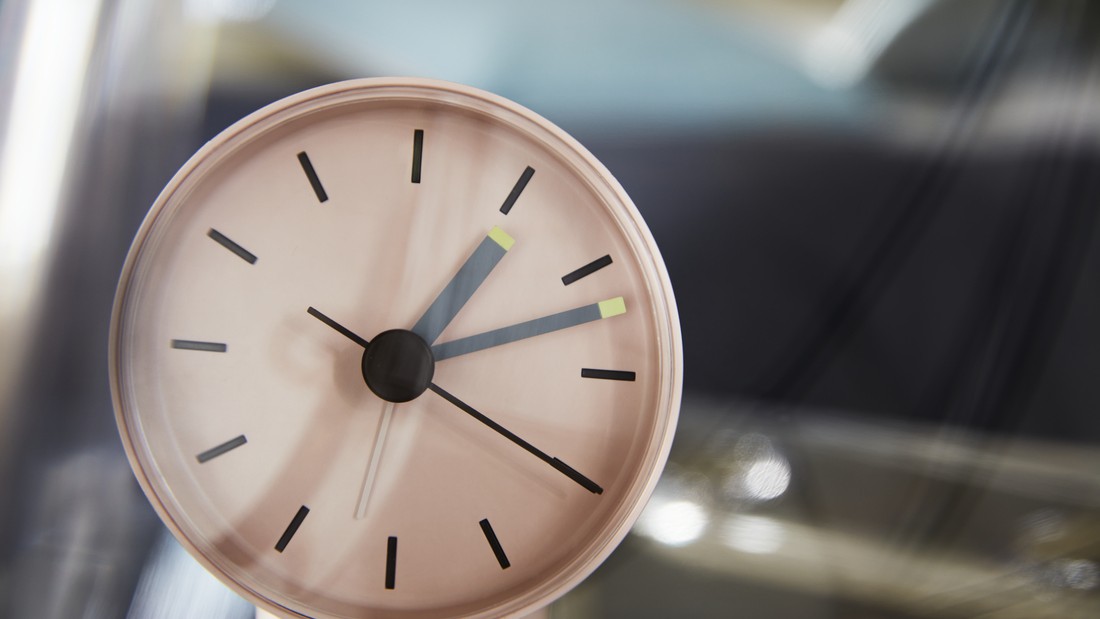
Analog clocks are gradually becoming less common as people become more accustomed to checking the time on smartphones and digital clocks. This shift has reduced the use of analog clocks, and some children now still find it difficult to read the position of the clock hands.
Unlike digital clocks, which display the time in numbers, analog clocks use the position of the hands to indicate the time. Once you understand the function of each hand and how to read its position, telling the time becomes easier.
an analog clock is not only used to tell time. Its size, shape, and design can also affect the look of a room, so you can choose a clock based on your needs and interior style.
An introduction to analog clocks
An analog clock is a clock that tells time using hands on a dial or clock face. In a typical model, the dial has numbers from 1 to 12 as time markers.
The short hand shows the hour, while the long hand shows the minutes. Some models also have a second hand that moves faster as it completes each rotation.
The movement of the hands is controlled by a clock mechanism that operates at regular intervals. Many analog clocks use batteries as their power source, allowing the hands to keep moving and indicate the time.
Parts of an analog clock
To understand how to read an analog clock, you first need to recognize its main parts. Here are the main parts of an analog clock and their basic functions:
-
Dial: the surface where the numbers and time markers are displayed.
-
Numbers 1–12: indicate the hours in one rotation.
-
Minute markers: help you read the minutes between the numbers.
-
Hour hand: shows the hour.
-
Minute hand: shows the minutes.
-
Second hand: shows the seconds, if available.
-
Clock mechanism: moves the hands.
-
Battery: provides power for many analog clock models.
Some clocks use standard numbers, while others use Roman numerals. There are also models without numbers that use simple line markers on the dial. These differences offer a variety of designs that can be matched to the look of your room.
Also read: Here are the differences between digital and analog alarm clocks
How to read an analog clock
Reading an analog clock becomes easier once you understand the function of the hour and minute hands. Here is how to read the hour, minutes, and seconds:
1. Look at the hour hand
The short hand shows the hour. If it is positioned between two numbers, use the number it has just passed as the hour.
2. Look at the minute hand
The long hand shows the minutes. Each number on the dial generally represents a 5-minute interval. So, number 1 means 5 minutes, number 2 means 10 minutes, number 3 means 15 minutes, and so on.
3. Look at the second hand if needed
The second hand moves the fastest and completes one rotation in 60 seconds. It helps you see changes in seconds more precisely, although it is not always necessary for telling the time during everyday activities.
Recommended analog clocks for your room
When choosing an analog clock for your room, consider the size of the space, your needs, and your decorating style. IKEA offers a variety of clocks in different designs and sizes to suit different rooms at home.
1. KORVTRÄD wall clock
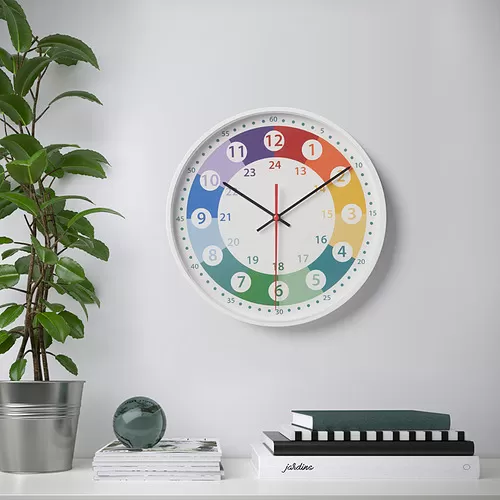
KORVTRÄD has a diameter of 28 cm and features large, easy-to-read numbers. Its dial uses different colors for each quarter and clearly displays the hours, minutes, and seconds.
Its quartz mechanism also operates silently, making it suitable for rooms where you prefer a quieter atmosphere.
2. KOPPARDUVA wall clock
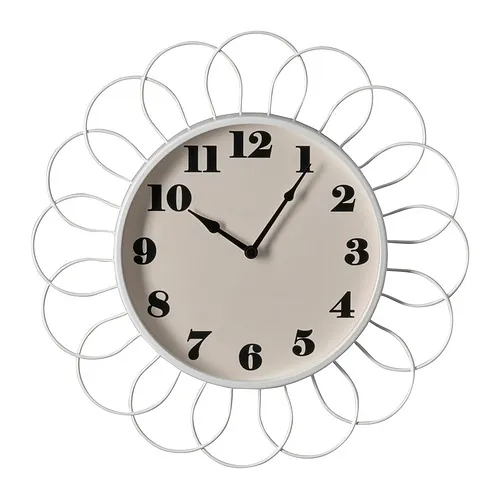
KOPPARDUVA has a diameter of 29 cm with a white and cream color combination. Its design has a classic and traditional feel, while its quartz mechanism operates without a ticking sound.
The frame is made of steel with an epoxy/polyester powder coating and has a glass front cover.
3. TALLSPARV wall clock
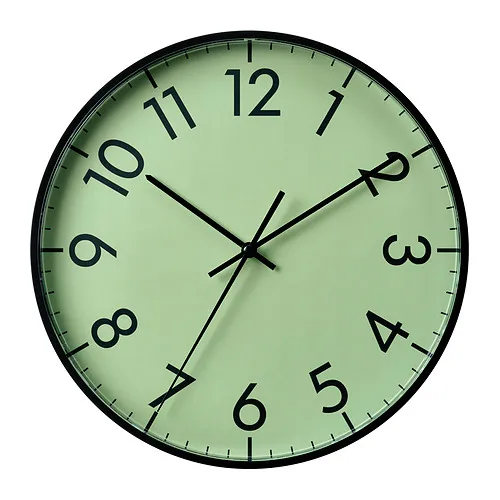
TALLSPARV has a diameter of 28 cm with a minimalist design in black and green. It uses a quartz mechanism and operates silently, making it suitable for rooms where a quieter atmosphere is preferred.
The frame is made of polystyrene plastic containing at least 20% recycled material.
4. JÄNKIG wall clock
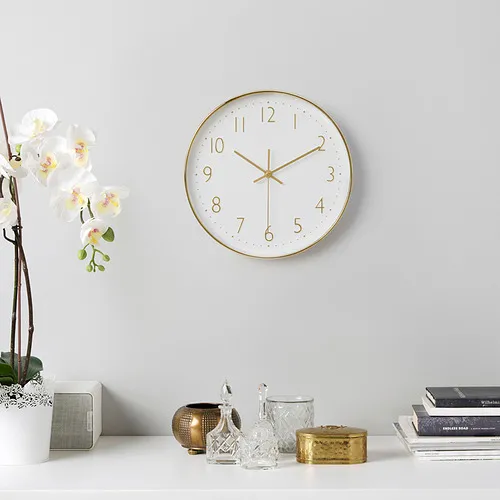
JÄNKIG has a diameter of 30 cm and a gold color that creates a more noticeable accent on the wall. With a depth of 4.3 cm, it remains relatively compact for use as a decorative accent.
This model can be an option if you prefer an analog clock with a more decorative look.
5. BRAVUR wall clock
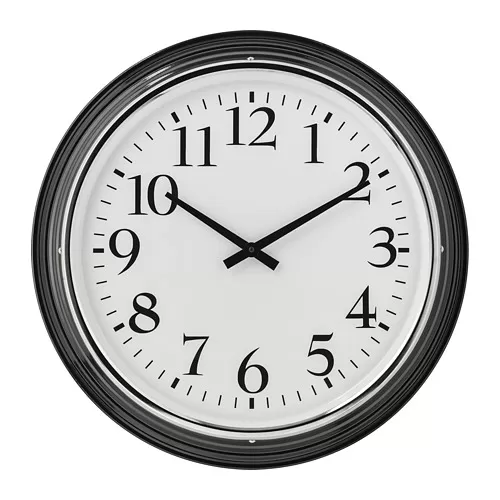
BRAVUR has a diameter of 59 cm with a simple black design. It uses a quartz mechanism and operates without a ticking sound. The frame is made of steel with an epoxy/polyester powder coating, while the front is made of glass.
Choose an analog clock based on your room
Size, readability, and design can affect whether a clock feels right in a particular room. Here are some things to consider before choosing an analog clock:
-
Match the size to the wall: choose a clock that is proportional to the wall and viewing distance. A clock that is too small may be difficult to read, while one that is too large can make the wall feel crowded.
-
Consider readability: choose numbers and hands that are easy to distinguish, especially if the clock will be viewed from a distance.
-
Match your room style: simple shapes and neutral colors are easier to pair with different interiors, while more distinctive designs can become a decorative accent.
-
Consider the installation location: choose a position based on the activities in the room so the clock is easy to see when you need it.
Also read: Wall decoration ideas to enhance your home interior
Keep track of time in a simple way
An analog clock helps you tell the time in a simple way while also becoming part of your home decor. Choose a size, design, and appearance that suit your needs so the clock remains easy to use and fits naturally into the room.
If you’re looking for a clock to complement your space, IKEA offers a variety of clocks for home styling and decoration that can be tailored to your needs and interior style.
Visit IKEA.co.id to discover more inspiration and solutions that can help make everyday activities at home more comfortable.
FAQ
An analog clock is a clock that tells time using hands on a dial. The hour hand shows the hour, while the minute hand shows the minutes and the second hand shows the seconds, if available.
An analog clock shows the time through the position of its hands, while a digital clock displays the time as numbers. Analog clocks can also become part of the decor because they are available in a variety of designs.
Start by looking at the hour hand to determine the hour, then look at the minute hand to determine the minutes. Each number on the dial generally represents a 5-minute interval.
Yes. Analog clocks are available in a variety of designs, from minimalist to classic, making them easy to pair with different interior styles. Besides telling time, a clock can also become part of a room's decor.
Consider the size, readability of the numbers and hands, design, materials, and installation position. For a bedroom or quiet space, you may also want to consider a clock with a mechanism that does not produce a ticking sound.