Finding the right place for a washing machine involves more than identifying an empty corner. Appliance dimensions, water supply, drainage, power requirements, ventilation and door clearance should all be considered so that doing laundry remains practical and comfortable.
In a small home or apartment, a dedicated laundry room may not be available. Depending on the appliance instructions and the home's installation conditions, the washing machine might need to sit near a bathroom, in a utility area close to the kitchen or in another suitable part of the home.
Once the location has been established, shelving and vertical storage can make use of the wall space above or beside the machine while keeping laundry supplies organised.
The right washing machine location depends on room dimensions, water and drainage access, power requirements, ventilation and the installation instructions for the individual appliance. If a washing machine is placed in or near a bathroom, first make sure the room and installation conditions are compatible with the appliance. Shelving can then provide useful vertical storage, as long as it does not obstruct the appliance door, controls, hoses, ventilation or maintenance access.
What Should You Check Before Choosing a Washing Machine Location?
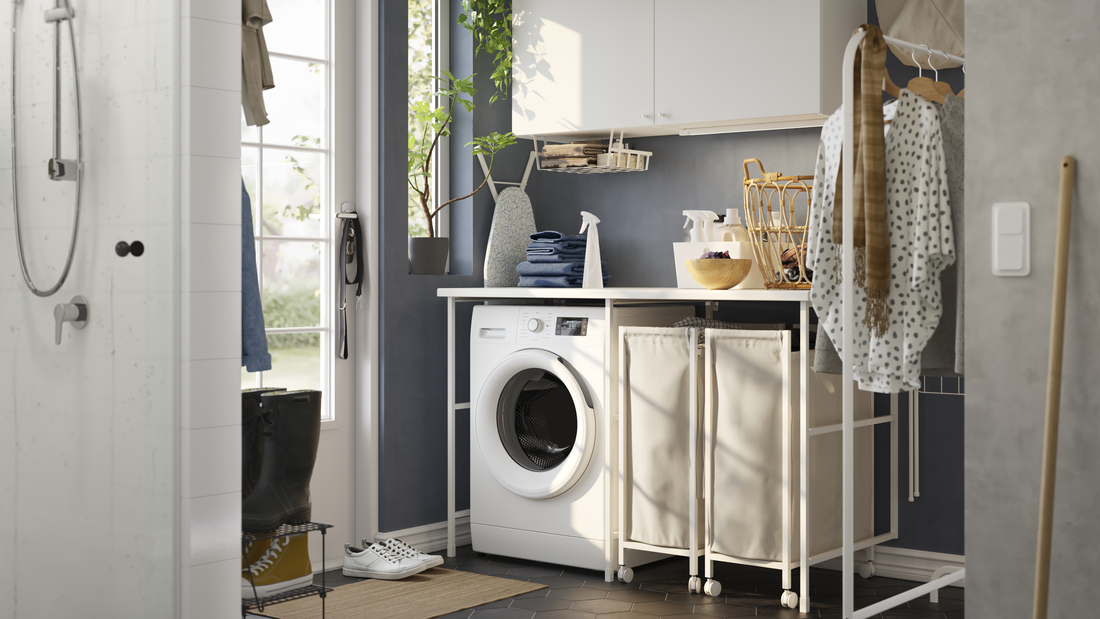
Begin by measuring both the appliance and the available area.
Do not consider width and height alone. Check the machine depth, space required for hoses and pipes, clearance beside or behind the appliance and the area needed to open the door.
A front-loading machine needs enough clear space in front, while a top-loading model requires sufficient room above the appliance.
The location must also suit the washing machine's individual installation requirements. Check the manufacturer's instructions for water, drainage and electricity before deciding where to install it.
Consider the condition of the room as well. The appliance should stand on a suitable, stable surface and in an environment that meets its ventilation and operating requirements.
If changes to plumbing, drainage or electrical systems are needed, use an appropriately qualified professional and follow applicable requirements.
1. A Dedicated Laundry Area with Storage Above the Machine
A dedicated laundry area makes it easier to group washing, sorting and storage functions in one place.
Position the machine below and use shelving or wall cabinets above for detergent, additional laundry supplies or lightweight storage baskets.
An ENHET storage combination can provide inspiration for making better use of vertical space around the laundry zone.
Keep frequently used products within comfortable reach, while less frequently used refills can be stored higher up.
Organising the area around the laundry workflow can make washing clothes feel more practical and prevent supplies from spreading across the room.
2. A Utility Corner Near the Bathroom
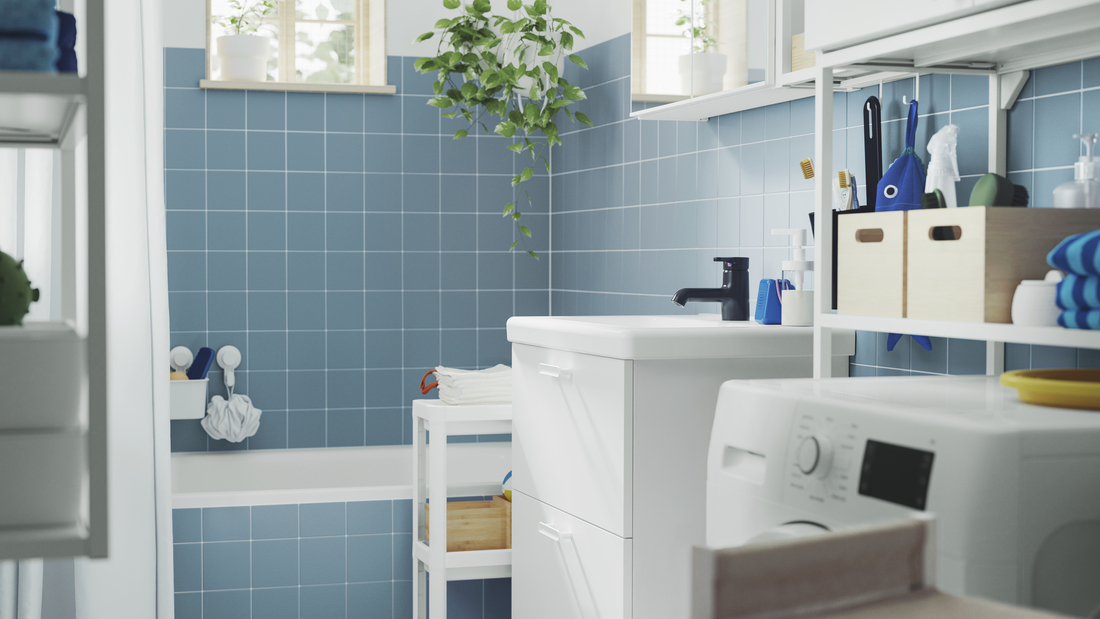
An unused corner near the bathroom may become a compact laundry zone when the home's installation and appliance requirements allow it.
This position can be practical where appropriate water and drainage connections are already nearby.
In a narrow area, vertical shelving can provide storage without using much additional floor space.
Make sure shelves do not block the washing machine door, lid, control panel, hoses or maintenance access.
With careful planning, a previously unused corner can perform a useful laundry function without requiring a separate room.
3. A Washing Machine in a Small Bathroom
Placing a washing machine in a bathroom can be a useful space-saving option in some homes, but not every bathroom or appliance is suitable for this arrangement.
Always check the washing machine installation instructions first. The selected position should provide appropriate access to water, drainage and power while allowing the bathroom itself to remain usable.
Where the room layout permits, position the machine away from direct splashes and make sure ventilation is adequate.
Humidity also needs consideration. A bathroom that remains continuously wet or poorly ventilated may be more difficult to keep dry and can encourage damp conditions around surrounding furniture.
Use storage specifically suitable for the room conditions. An ENHET wall shelf frame, for example, can help utilise the wall above a laundry zone when appropriate for the installation.
Related read: Functional and space-saving bathroom and laundry room design.
4. A Washing Machine Under a Laundry Counter
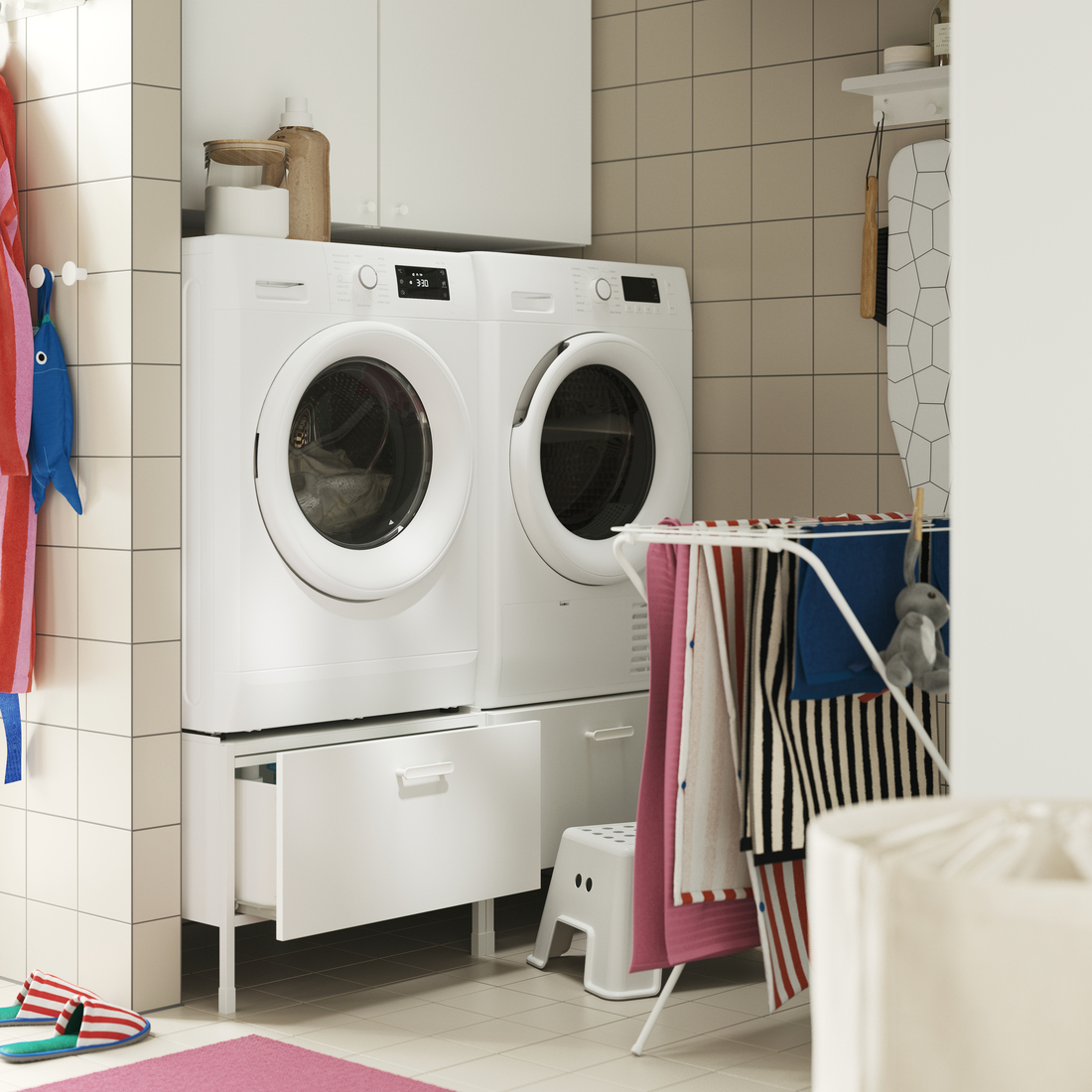
For compatible front-loading machines, the area above the appliance may be used as a practical work surface.
A counter can provide room for sorting clean laundry, folding clothes or temporarily placing a laundry basket.
This arrangement is particularly useful in small homes because the same footprint supports several laundry activities.
However, avoid building a counter too closely around the appliance without checking the manufacturer's requirements. Different machines may need specific clearance, airflow and servicing space.
Measure carefully before planning the surrounding furniture so the appliance can continue to function and remain accessible as intended.
5. Wall Cabinets and Shelves Around the Washing Machine
Combining open shelving with closed cabinets can help create a more organised laundry area.
Open shelves work well for frequently used detergent and small baskets, while closed cabinets can hide bulk supplies and reduce visual clutter.
An ENHET storage combination can be used as inspiration for creating storage above the washing area.
Other options such as a JONAXEL shelving unit or BOAXEL storage system may also suit certain room conditions.
Always keep appliance access clear and follow the stated load and installation limits of the storage product.
6. A Utility Area Near the Kitchen
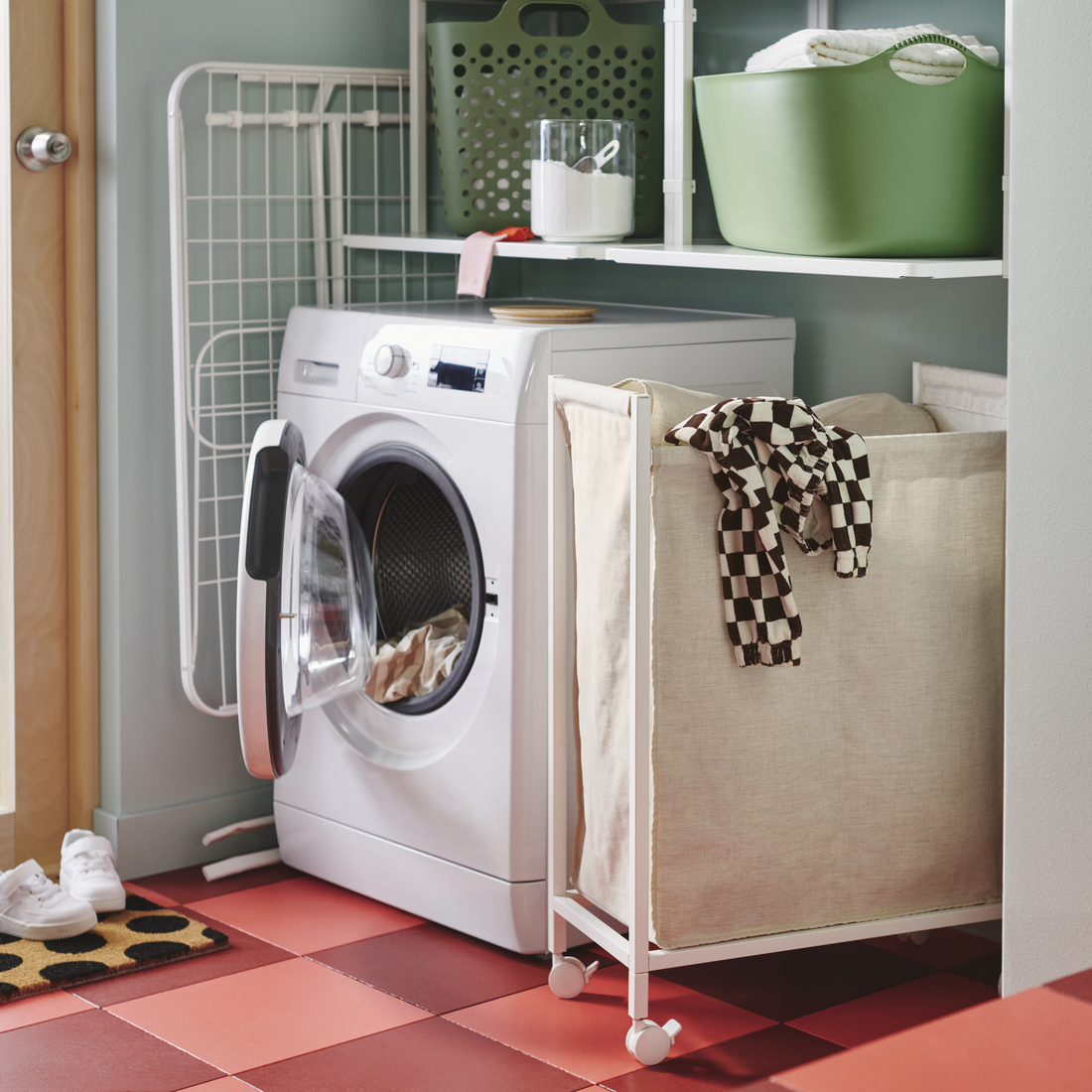
In apartments and compact homes, a service area near the kitchen can sometimes provide an efficient place for laundry when the installation conditions are suitable.
Position the washing machine in a clearly defined utility zone and use the wall above it for storage where practical.
This can save space by avoiding the need for a separate laundry room.
Keep the laundry function organised so that detergent, dirty clothes and household supplies do not spread into the main cooking area.
A closed laundry basket can help contain clothes, while shelving keeps washing products grouped together.
The objective is to create a functional utility zone without compromising the main purpose of the kitchen.
7. A Protected Balcony or Semi-Outdoor Utility Area
A covered balcony or protected service terrace is sometimes used as a laundry area in homes without dedicated indoor space.
However, washing machines should not automatically be assumed suitable for all outdoor conditions.
Check the appliance manufacturer's instructions regarding exposure to weather, humidity and temperature.
If the location is appropriate, keep the appliance protected from rain and direct environmental exposure, and make sure it stands on a stable surface.
Laundry products and surrounding storage should also be selected with the local conditions in mind.
A well-planned semi-outdoor utility area can free up valuable interior space while keeping the washing function separate from living areas.
How to Organise a Washing Machine in a Bathroom
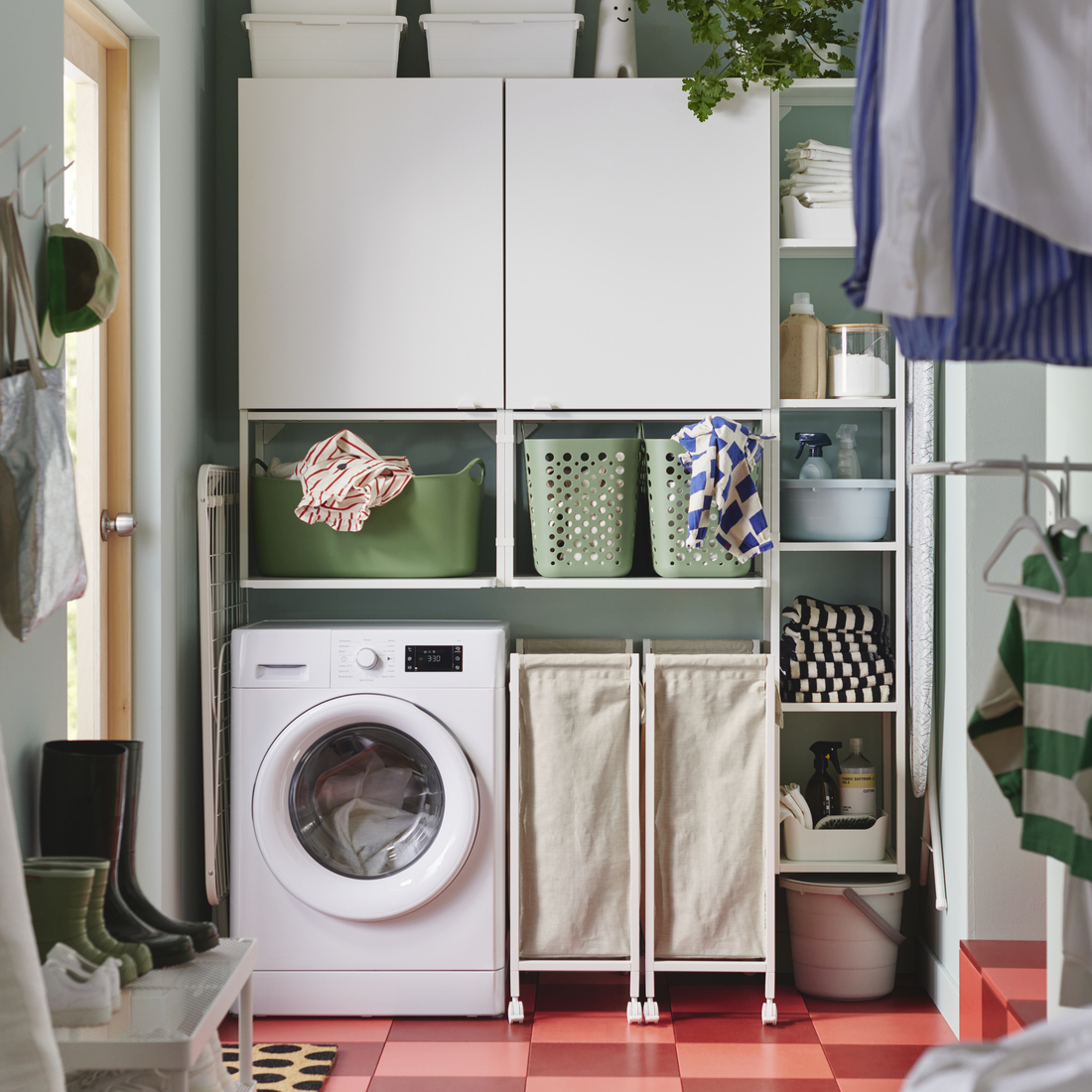
When a washing machine is located in a bathroom, creating a clearly defined laundry zone helps keep the two functions organised.
Group the appliance, laundry basket, detergent and storage within one area instead of scattering supplies around the room.
Make use of the wall above the machine with suitable shelving or cabinetry where appropriate. Avoid placing heavy items high above the appliance or overfilling shelves.
The machine door or lid must still open fully, and controls, pipes, hoses, ventilation areas and maintenance access should remain unobstructed.
For more inspiration on combining both functions in one room, related read: Bathroom-laundry combo ideas for easy organisation.
How to Choose Washing Machine Shelving for Your Space
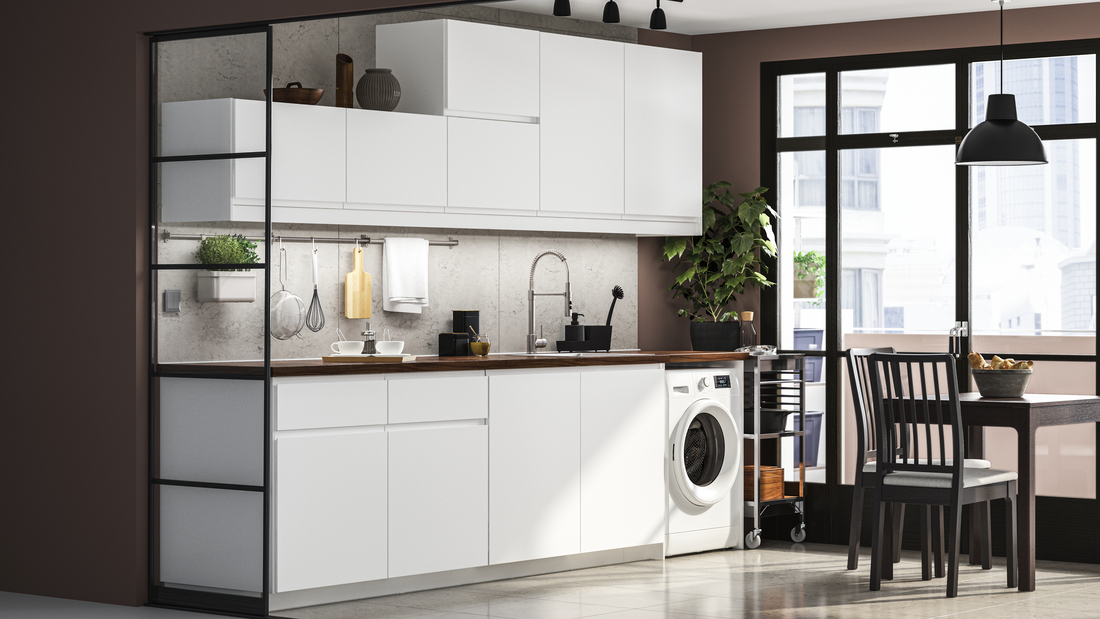
Laundry shelving should be selected according to the room layout and appliance dimensions rather than appearance alone.
Wall-mounted storage is useful when floor space is limited. Always install it according to the product instructions and make sure the wall is suitable for the chosen system.
Where wall installation is not practical, a freestanding shelving unit beside the washing machine can provide an alternative.
Combining open and closed storage can also create a cleaner visual appearance. Frequently used products can remain accessible on open shelves, while additional supplies stay inside cabinets.
Measure the washing machine, door clearance, hose routes and surrounding area before choosing storage.
Explore IKEA open storage systems for additional ways to make use of vertical space.
Organise Storage Around the Laundry Workflow
A laundry area becomes easier to use when storage follows the order of everyday tasks.
Keep a dirty-laundry basket beside or below the main storage area. Frequently used detergent should be within easy reach, while refills can be stored higher up if appropriate for the shelf capacity.
After washing, leave space for clean laundry or drying accessories. If ironing and folding happen in the same area, organise those items separately so the surface does not become cluttered.
Explore IKEA laundry and laundry accessories to support sorting, washing, drying and organising clothes.
Always store detergents and household chemicals according to their product instructions and away from children where required.
Create a More Organised Laundry Area with IKEA
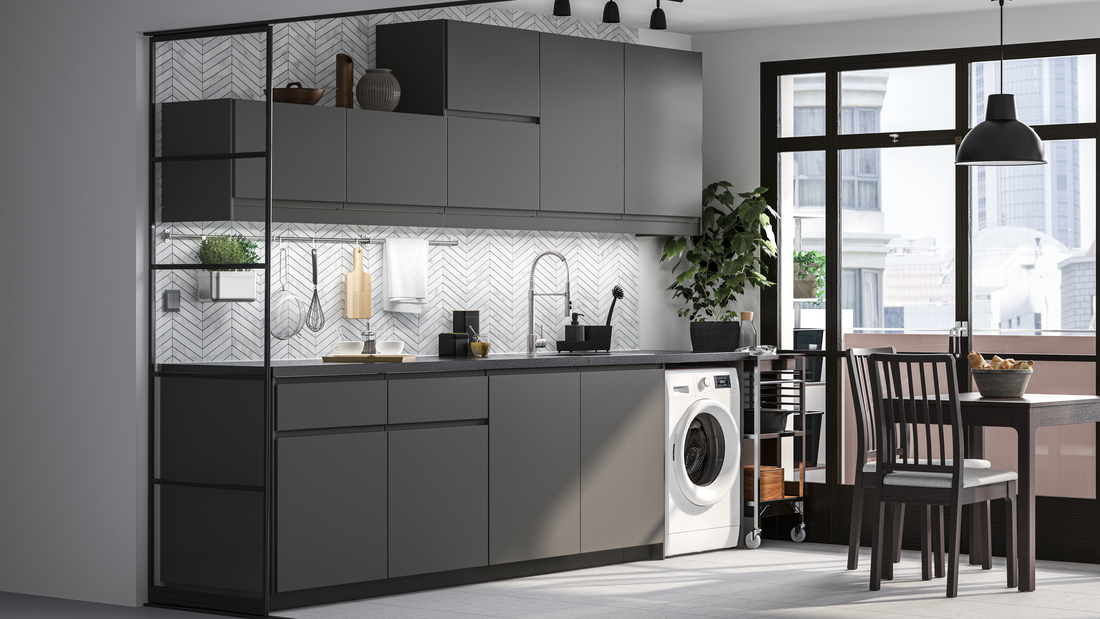
Make better use of the area around your washing machine with storage that suits your home.
An ENHET storage combination or ENHET wall shelf frame can help create additional storage around a compact laundry zone.
You can also explore the JONAXEL shelving unit, BOAXEL storage system and IKEA laundry and laundry accessories for organising washing, drying and folding.
Always check product dimensions, intended use, installation instructions and load limits before choosing a storage solution.
FAQ About Washing Machine Placement and Storage
There is no single location that works for every home. Choose a space that meets the appliance installation requirements and provides suitable access to water, drainage, power, ventilation and operating space. A dedicated laundry room is convenient, but other suitable utility areas may also work.
It may be possible in some situations, but this depends on the appliance instructions and room conditions. Check the manufacturer's installation requirements and make sure the location does not expose the appliance to conditions that are not permitted.
Create one clear laundry zone, make use of vertical storage and keep the appliance door, controls, hoses and maintenance access unobstructed. Use shelving or cabinets that are appropriate for the room conditions.
There is no universal shelf size. Measure the appliance width, height and depth as well as the surrounding clearance, door movement, hoses and service access before selecting storage.
Laundry detergent, lightweight baskets and household supplies can be stored according to the shelf's stated load capacity. Keep frequently used products within easy reach and follow storage instructions for household chemicals.
Yes. Vertical shelving can reduce the amount of additional floor space needed in a small apartment. Make sure any wall-mounted system is suitable for the wall and allowed by the building conditions.
Open shelves provide quick access to frequently used products, while cabinets hide additional supplies and reduce visible clutter. Combining both can support different storage needs.