Have you ever felt that the trash bins at home fill up quickly, unpleasant odors appear, or the environment looks dirty because all waste is mixed together? Without realizing it, every daily activity produces different types of waste.
Unfortunately, many people still do not sort waste according to its type. As a result, the waste management process becomes less effective and the amount of waste accumulating in landfills continues to increase.
In fact, by understanding the different types of waste and how to sort them, you can help reduce waste volume, support the recycling process, and keep the environment clean and healthy. To understand it further, see the discussion below.
Types of waste in general
In general, waste classification is arranged based on its characteristics and its sources. In practice, waste can be divided into several groups to make it easier to manage and reuse.
Through this classification, the waste management process becomes easier to carry out. Each type of waste has different characteristics, requiring different handling methods and trash bins. Below are the common types of waste you should know.
Please note: Understanding the different types of waste can help you sort and manage waste more appropriately while supporting recycling and maintaining environmental cleanliness.
Read also: Types of household essentials you must have at home
Organic waste
Organic waste is waste that decomposes naturally, rots easily, and generally breaks down quickly compared to inorganic waste.
Because it decomposes easily, organic waste at home can be reused and even processed into biogas, compost fertilizer, or animal feed. Examples of organic waste include:
-
Food scraps
-
Fruits and vegetables
-
Dry leaves
-
Tree branches
-
Coffee and tea grounds
-
Plant residues
Most of these examples are commonly found in daily life. If separated properly, the process is relatively simple because the waste can be processed into compost, used as animal feed such as for chickens, and help produce natural fertilizer.
Inorganic waste
In general, inorganic waste is waste that comes from non-natural materials, industrial products, or man-made materials, so it takes longer to decompose naturally compared to organic waste.
However, this type of waste actually has the potential to be reused because most of it can enter the recycling process. In fact, many examples of inorganic waste have economic value and can be collected at waste banks.
Examples of inorganic waste:
-
Plastic bottles
-
Glass bottles
-
Plastic packaging
-
Cans
-
Cardboard
-
Metal
-
Styrofoam
-
Paper
Because it can be recycled, this recyclable waste should be separated from the beginning. This step can help optimize waste utilization, support recycling, and reduce the amount of waste ending up in disposal sites.
Residual and hazardous waste (B3)
In addition to organic and inorganic waste, there are other categories namely residual waste and hazardous waste (B3). These groups require special attention because not all materials can be reprocessed.
Hazardous waste (B3) is waste containing dangerous materials that may pollute the environment if not managed properly. Examples include oil, batteries, paint, and electronic waste.
Examples of residual and hazardous waste:
-
Disposable diapers
-
Used tissues
-
Disposable masks
-
Cigarette butts
-
Batteries
-
Used oil
-
Damaged lamps
-
Electronic waste
These types of waste should be separated from the beginning to avoid environmental pollution. If mixed and disposed of improperly, such waste can affect soil quality, water quality, and living organisms around it.
Recommended trash bins to help with waste sorting
After understanding the types of waste, the next step is preparing containers for waste sorting. Using separate trash bins will simplify the waste management process while helping save storage space.
To support waste sorting, IKEA offers various trash bin options with different sizes, models, and functions that can be adjusted according to the area of use at home.
To find products that suit your needs, you can check IKEA trash bin collections with various sizes and attractive designs. Below are several product recommendations that can help manage household waste.
1. KNÖCKLA
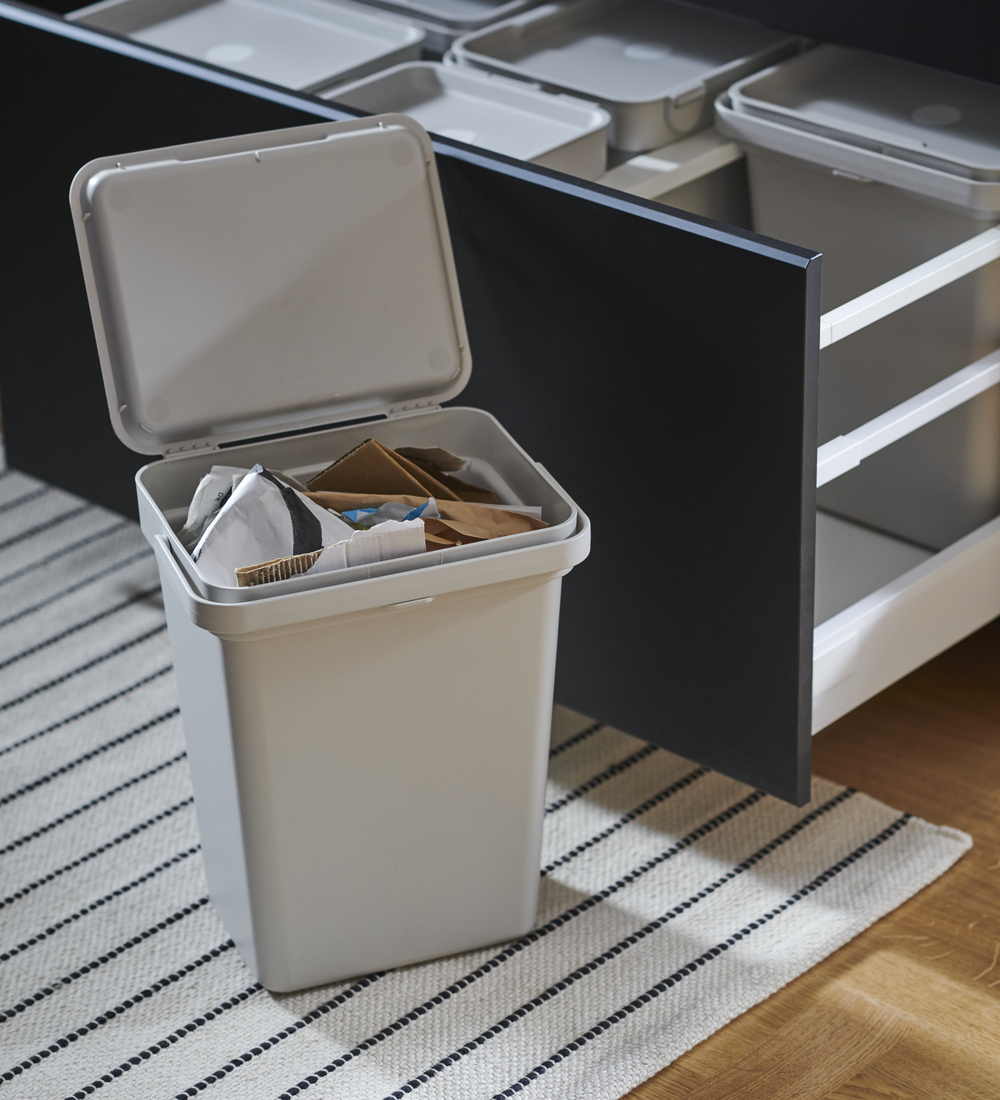
KNÖCKLA comes with a capacity of 25 liters, suitable for daily household waste needs, especially in kitchen areas.
This product is designed with two inner containers, making it easier to separate organic and inorganic waste in one place without needing additional bins.
Its fairly large capacity makes KNÖCKLA suitable for storing daily household waste while helping keep the kitchen area tidy and organized. The advantages of KNÖCKLA include:
-
Has 2 containers for waste separation
-
Equipped with a pedal for better hygiene
-
Easy to move
-
Easy to clean
-
Durable material
-
Suitable for kitchen waste management
With its multifunctional design and large capacity, KNÖCKLA is suitable for helping separate waste so that household waste management activities become more practical every day.
2. HÅLLBAR
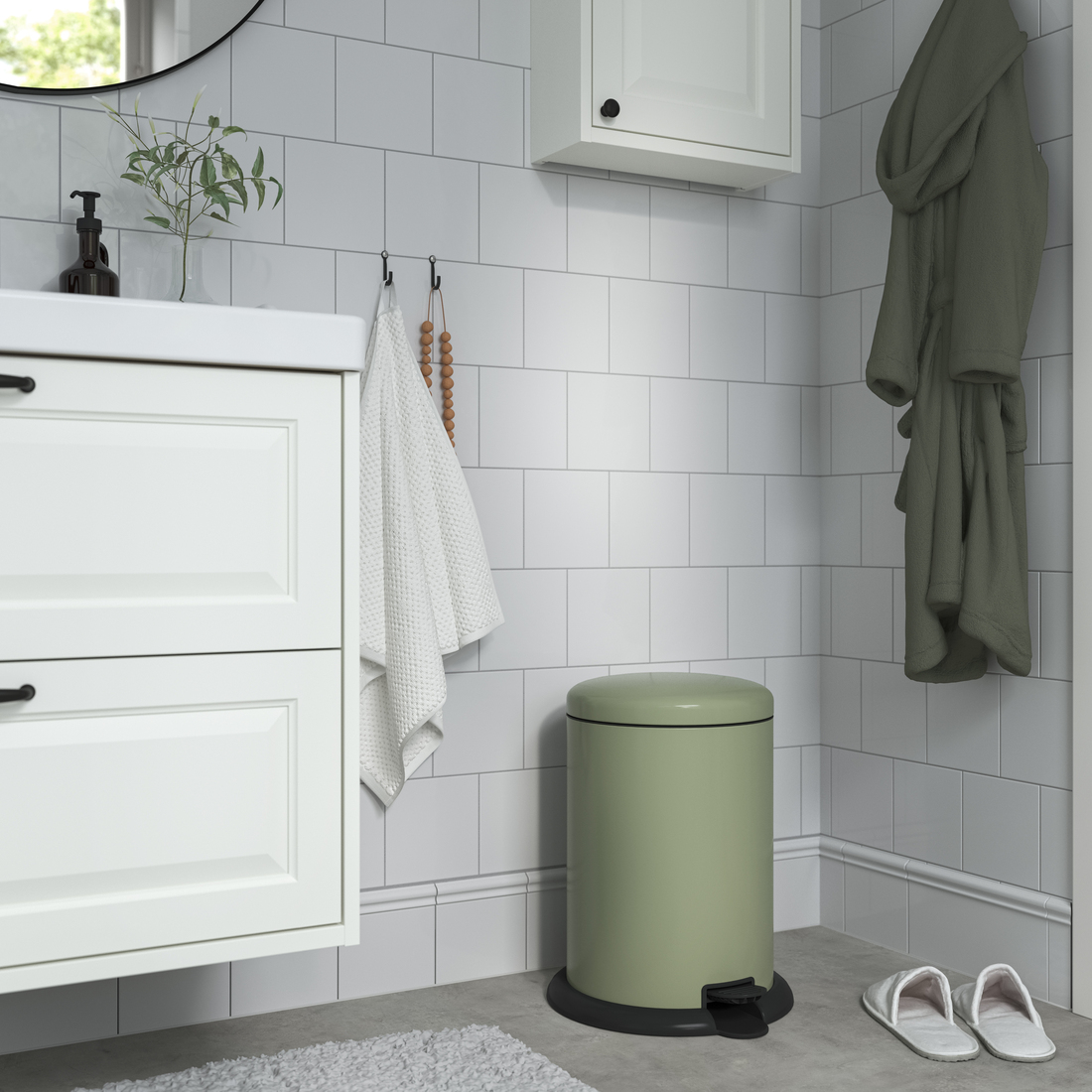
HÅLLBAR has a capacity of 10 liters, suitable for storing small waste such as plastic packaging, paper, cleaning products, and other light waste.
Its compact size makes this product ideal for areas with limited space.
In addition to its practical capacity, the HÅLLBAR design can also be stacked, helping save space while making it easier to sort waste by type. The advantages of HÅLLBAR include:
-
Stackable to save space
-
Equipped with a removable lid
-
Easy to clean
-
Has a foldable handle
-
Uses recycled materials
-
Suitable for various types of waste
With its compact size and flexible design, HÅLLBAR is suitable for helping keep household waste management organized even in limited spaces.
3. KNODD
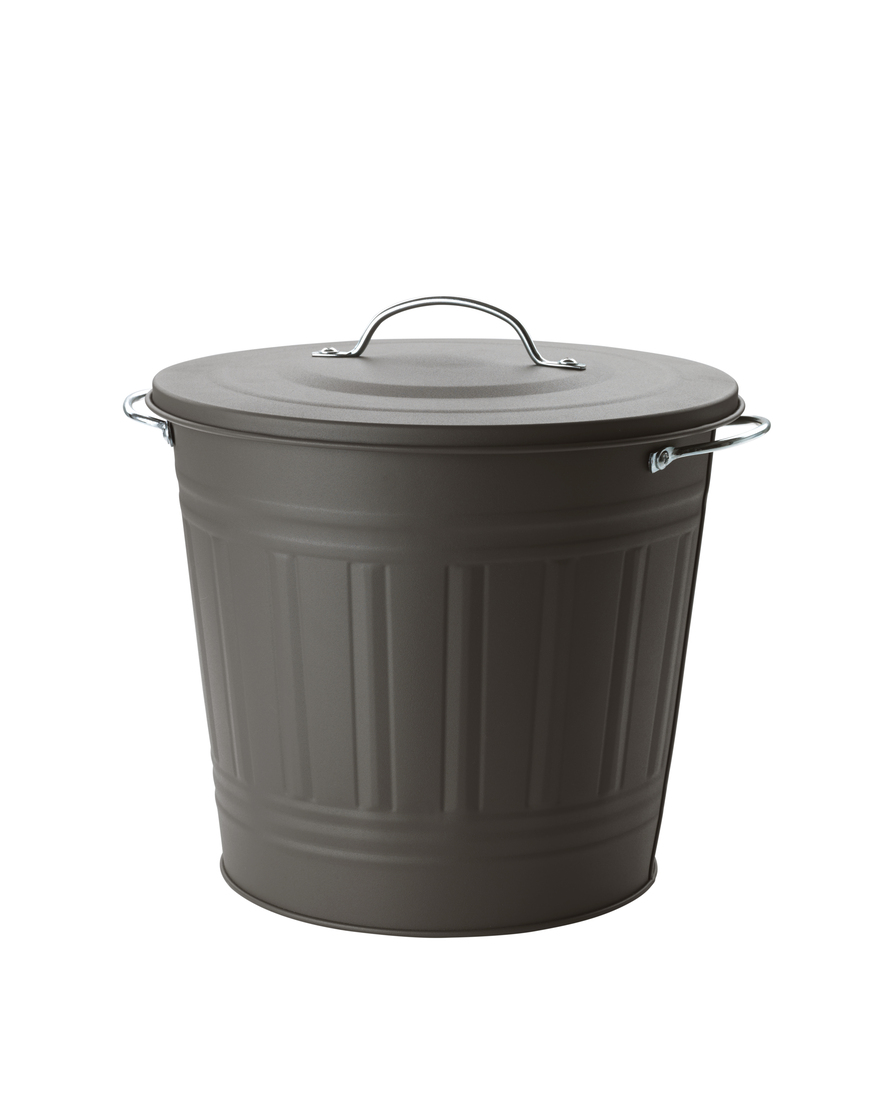
KNODD comes with a large capacity of 40 liters, making it suitable for households with higher waste volumes.
This capacity makes it ideal for service areas, large kitchens, and semi-outdoor spaces. Besides functioning as a trash bin, KNODD is also multifunctional because it can be used as storage for other household items.
Advantages of KNODD:
-
Large 40-liter capacity
-
Sturdy handles
-
Lid can be attached to the side of the bin
-
Suitable for humid areas
-
Durable steel material
-
Modern minimalist design
With its large capacity, KNODD helps prevent waste from piling up too quickly while supporting better household waste management.
4. STENTRAPPA
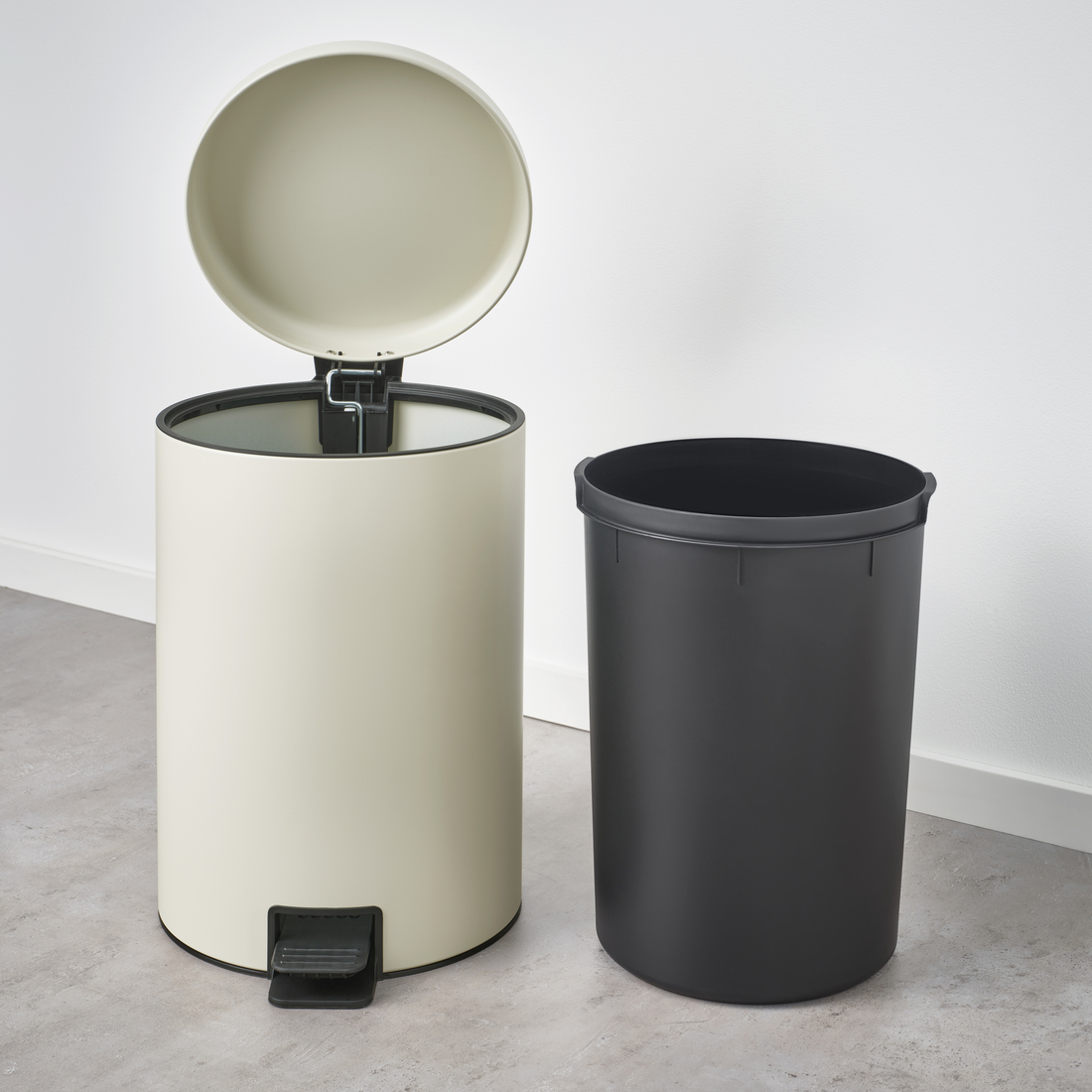
STENTRAPPA has a capacity of 18 liters, making it suitable for various areas at home such as kitchens, bathrooms, and workspaces. This size is enough to hold daily waste without taking up too much space.
In addition to its ideal capacity, STENTRAPPA is also equipped with a soft-closing system so the lid closes gently and provides comfort during use. The advantages of STENTRAPPA include:
-
Soft-closing lid
-
Removable inner bucket
-
Easy to move
-
Anti-slip feet
-
Suitable for humid areas
-
Modern and elegant appearance
With its minimalist design and functional capacity, STENTRAPPA is suitable for helping maintain cleanliness in household areas every day.
5. GÅNGSKYFFEL
GÅNGSKYFFEL also comes with a capacity of 18 liters, suitable for various household needs. This capacity is flexible enough to be placed in kitchens, bathrooms, and household service areas.
Besides its decorative appearance, this product is designed to make waste sorting activities more convenient through features that simplify daily use. The advantages of GÅNGSKYFFEL include:
-
Soft-closing lid
-
Easy to move
-
Removable inner bucket
-
Anti-slip feet
-
Suitable for kitchens and bathrooms
-
Durable material
With its modern design and capacity suitable for daily use, GÅNGSKYFFEL helps keep home areas tidy while supporting waste sorting habits.
Read also: Clean house down to every corner
Create a cleaner home with proper waste management
Understanding the different types of waste helps you recognize how waste based on its characteristics can be managed differently. In general, waste can be categorized based on its source and characteristics, ranging from household waste to certain types of waste.
Besides choosing suitable trash bins, you can also complete other household cleaning equipment needs by visiting or shopping at IKEA.co.id. Discover various storage products and household equipment to help keep your home clean and comfortable every day.