Often, tidying up is seen as a parent's responsibility or a task that burdens the child after playing. However, if viewed as a natural part of the play cycle, children learn that play not only begins but also ends in an orderly way. This way, cleaning up is no longer a burden.
Children see it as part of the complete game, where they “finish” their play themselves, rather than just a task for adults.
Features of toy storage that support children's independence
Before choosing toy storage, let’s look at what makes a system easy and enjoyable for children.
Height that suits the child
Child centric furniture means shelves or cabinets are sized according to the child’s height. This allows children to take and return toys independently.
This “I can do it” experience gives them control and motivation to tidy up, making it an activity they do because they are capable, not because it is forced.
Read Also: The Role of Dolls in a Child's Development and Learning Space - IKEA Indonesia
Open, lightweight, and easy to use design
Choosing storage boxes made of lightweight materials, such as plastic or fabric with handles, greatly helps children tidy up. Boxes that are easy to pull or lift allow children to interact freely with their storage.
Avoid cabinets with heavy doors or complex mechanisms, which can frustrate children quickly. With child friendly storage, tidying becomes more enjoyable and naturally part of their daily routine.
Fun visual labeling system
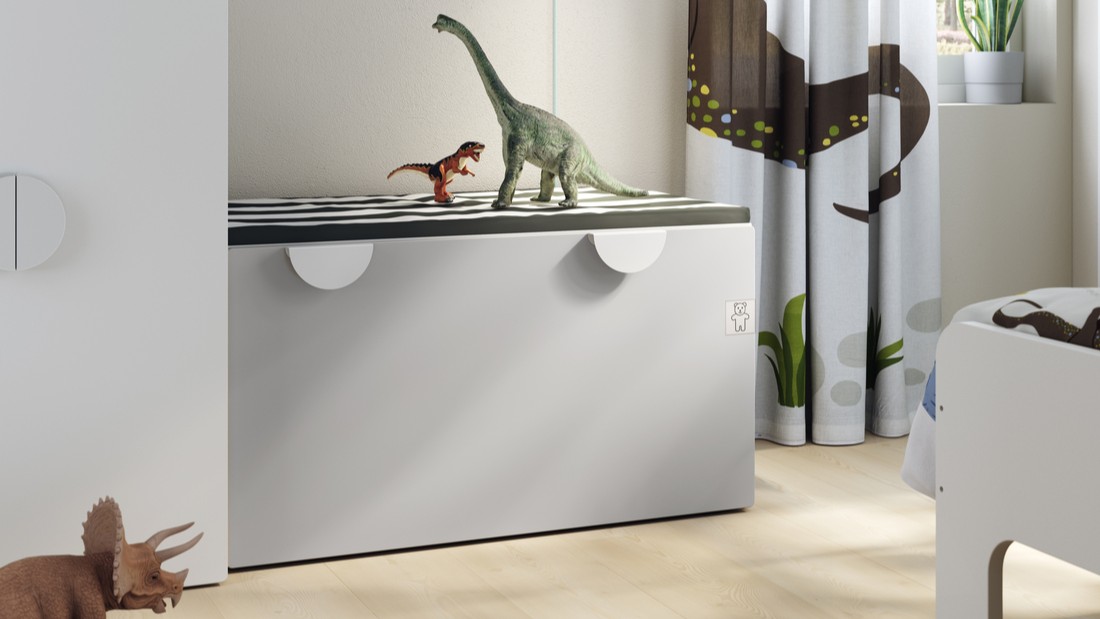
Boxes or drawers labeled with pictures of cars, blocks, or dolls are much more effective for children who cannot read yet.
Tidying up then becomes a matching game. Children can quickly recognize the “home” for each toy. This system reinforces category understanding while supporting fine motor skills and visual recognition.
Inspirational ideas from IKEA to create an independent play zone
IKEA Indonesia provides practical solutions to help you organize play areas while encouraging children to tidy their own toys and play more independently.
Modular systems that grow with the child
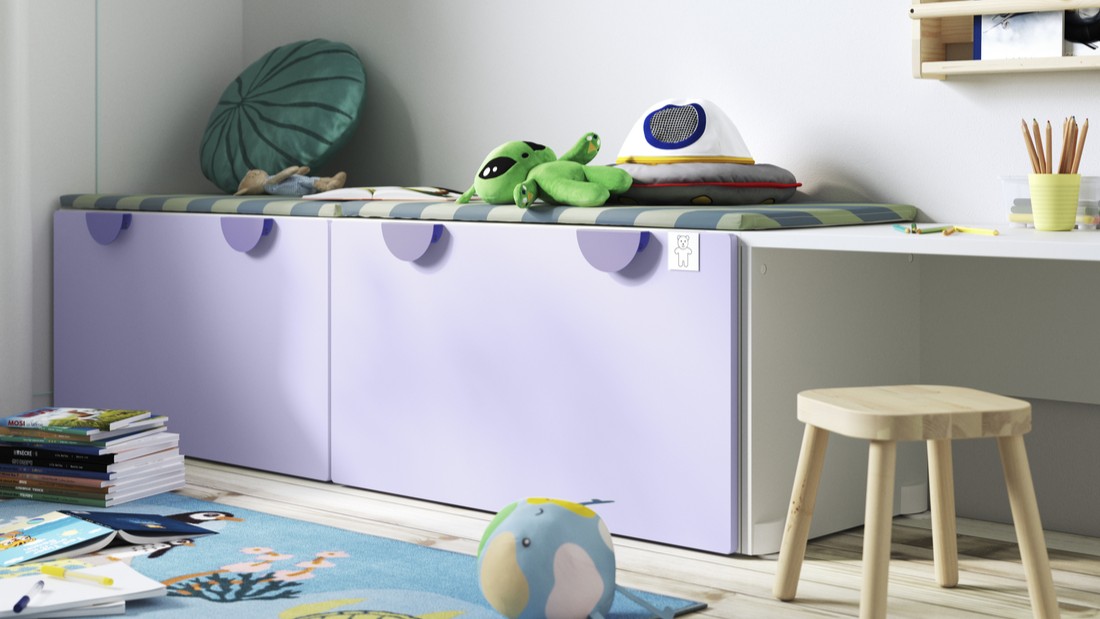
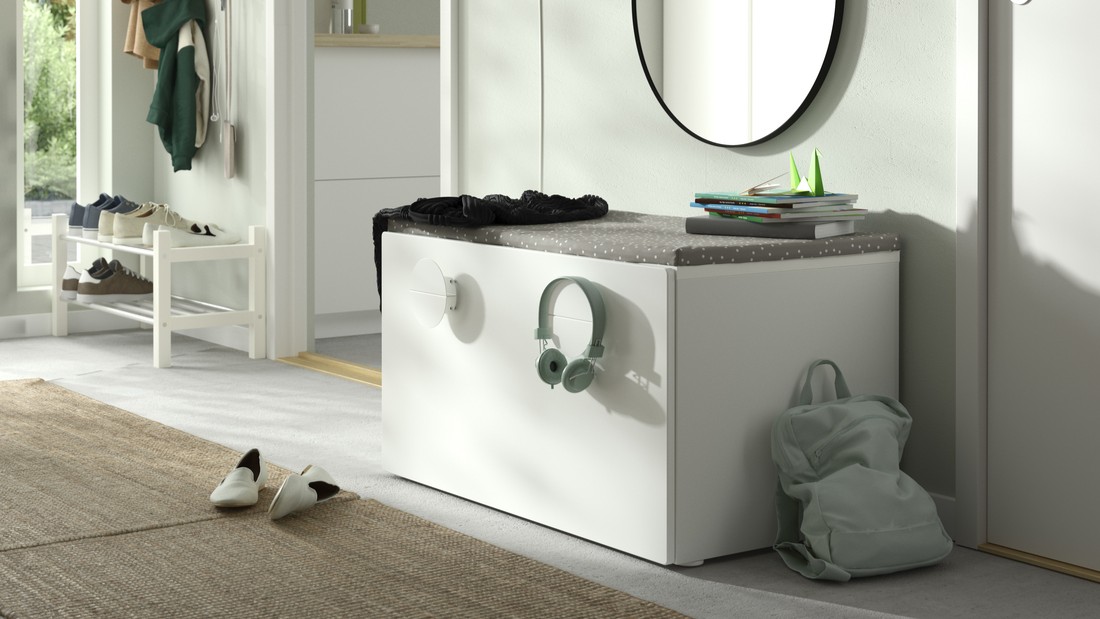
Modular toy storage systems offer flexible and reliable storage. You can arrange boxes of various sizes and colors according to the child’s height or stack them as needed.
For toddlers, boxes are placed on lower rails for easy access, and as they grow, you can add units, swap boxes, or add bookshelves. This way, the storage system can be adapted and used as your child grows.
Open shelves to display favorite toys
Not all toys need to be kept in closed boxes. Open shelves or cubbies are a smart way for children to maintain order while displaying their favorite toys.
Open shelves double as a display, giving children pride in their play area and motivating them to tidy up. This teaches children to organize toys in a designated area without it feeling like a boring chore.
Practical tips to make tidying a fun habit
To ensure storage systems are used and enjoyable, here are tips to make tidying fun for both children and parents.
Apply the one toy out, one toy in concept
One reason toys scatter is that children take out too many toys at once. Teach them to tidy one set of toys, such as blocks, before opening another, like a puzzle.
This rule, delivered positively and consistently, prevents messes, builds focus, self discipline, and helps children appreciate their toys more.
Turn tidying into a game
Tidying up can be made fun. Use music or a timer, for example, “Let’s clean up before the song ends!” or create light challenges, like who can put five cars in the box the fastest. This approach turns tidying into a fun activity, so children learn to clean up without feeling forced.
Create a fun and tidy play zone with IKEA toy storage