The back-to-school season is a transition moment for the whole family, including reorganizing a child’s room that is often filled with books, toys, and school supplies. Without proper organization, the space can feel cramped and disrupt focus while studying.
Through decluttering, you can create a cleaner and more comfortable environment. Interestingly, these small changes can have a big impact on daily routines. Let’s explore the following tips to get started with simple steps.
1. Start with small, consistent steps
Decluttering a child’s room doesn’t have to be done all at once. In fact, starting with small steps will feel lighter and easier for both you and your child. Here’s how to begin:
Choose the right time for decluttering
Choosing the right time can help the decluttering process run more smoothly. You can take advantage of weekends or the period before the new school year when things feel more relaxed.
Involve your child in this process so they feel they have a role in organizing their own space. This way, they will better understand the importance of keeping things tidy and feel more motivated to maintain it.
Use a simple sorting method
To make the process easier, use a simple sorting method by dividing items into three categories: keep, donate, and discard. This approach helps children learn to make decisions about their belongings.
You can also teach the value of sharing through items that are still in good condition. With a clear system, your child’s room will be more organized and ready to support daily learning activities.
2. Create a storage system that is easy for children to access
After decluttering, the next step is to create a storage system that is truly child-friendly by doing the following:
Use vertical storage
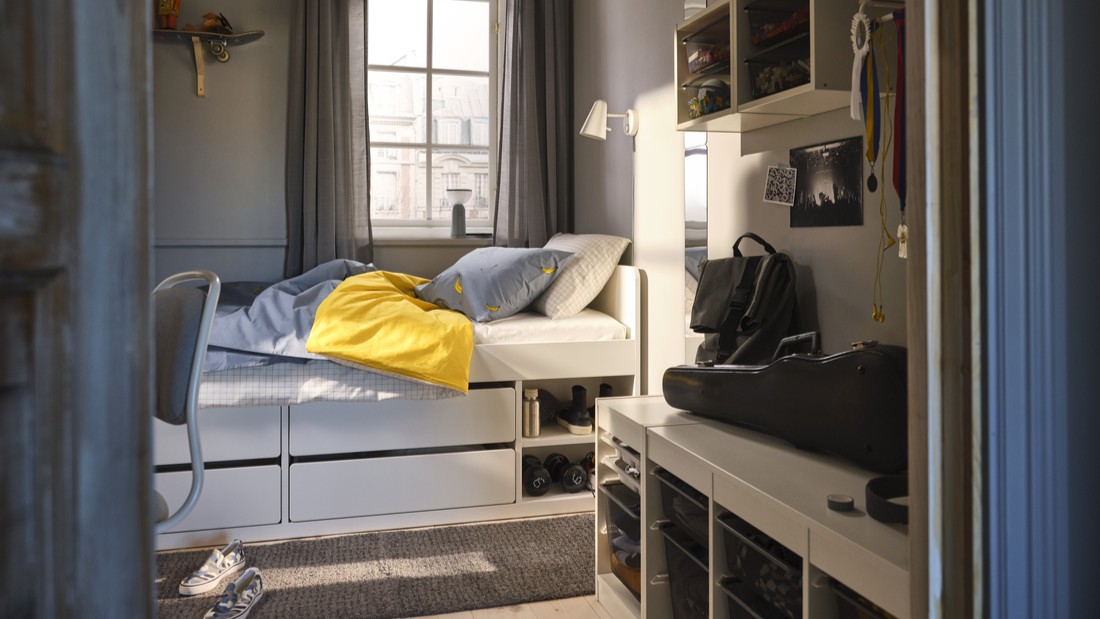
To maximize space, you can use wall areas as vertical storage solutions. BURHULT wall shelves can be used to store books, stationery, and frequently used school supplies.
In addition to organizing items, this method saves floor space so the room feels more spacious and comfortable. Vertical arrangement also makes it easier to group items by function, helping children find what they need more easily.
Use multifunctional storage boxes
GNABBAS storage boxes are a practical solution for storing various items, from toys and art supplies to school equipment. With one container for each category, children can learn to recognize the “home” of each item.
Using storage boxes also makes tidying up quicker after studying or playing. You can choose boxes with simple designs that match the room’s look, keeping the space neat and enjoyable.
3. Separate study and play areas
This separation helps reduce distractions and creates an environment that supports concentration, allowing children to carry out activities in a more structured way. Here’s how:
Set up a functional study desk
The study desk becomes the center of activity when children do homework or read. Choose functional desks such as MICKE or LAGKAPTEN/ALEX that are designed to support daily learning needs.
Make sure the desk has enough space to store books, stationery, and other supplies so everything is within reach. With a tidy desk, children can study more comfortably and stay focused.
Read also: Tips for choosing a comfortable study desk for children to support learning enthusiasm at home
Choose a comfortable study chair