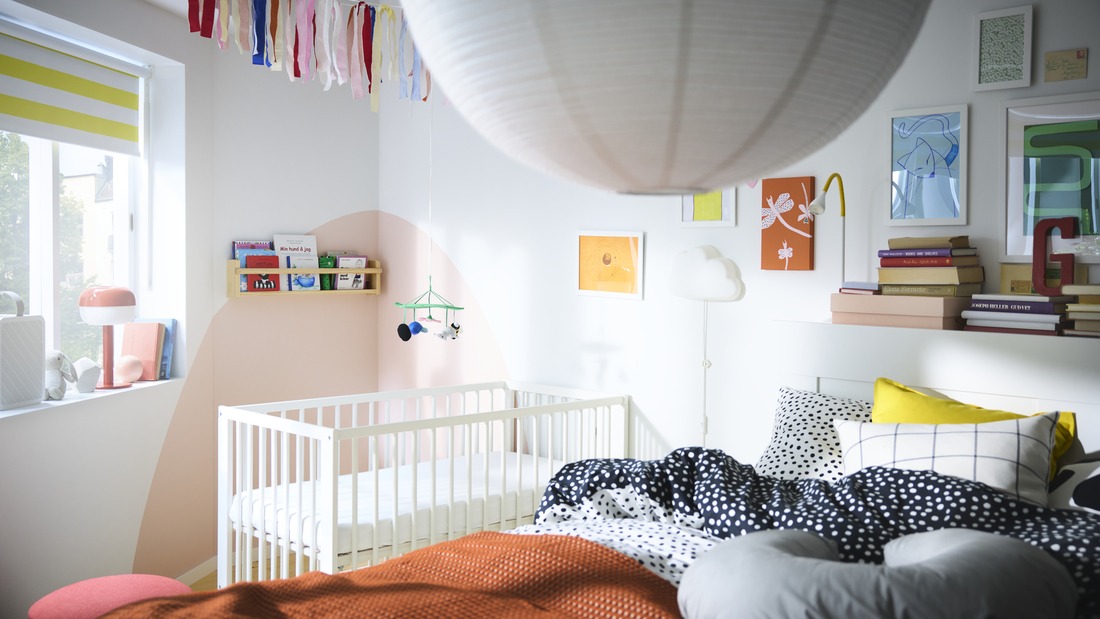
Does your home feel increasingly cramped as more belongings accumulate? Shoes pile up near the entrance, kitchen essentials crowd the countertops, and wardrobes have run out of available space.
However, adding another large cabinet is not always the answer. With the right storage solutions for small spaces, you can make use of vertical areas, room corners, and previously overlooked spaces without filling the entire floor with furniture.
Organize storage according to how frequently items are used. Everyday essentials should be easy to reach, while seasonal items can be stored out of sight.
10 small space storage ideas you can try
1. Make use of walls with vertical storage shelves

Empty walls can provide additional storage without requiring multiple cabinets on the floor. Vertically arranged shelves help maximize room height, especially in small bedrooms, home offices, and living rooms.
You can use tiered shelves to store books, accessory boxes, and everyday essentials. Choose a shelf depth that suits the items being stored so the shelves do not extend too far into walkways.
Use BILLY, a bookcase available in slim designs, including a 40 × 28 × 202 cm variant. For tall units, follow the assembly instructions and use appropriate safety fittings or wall anchors.
2. Use storage boxes to organize small items

Small items often make a room look cluttered because they are scattered across different surfaces. Chargers, stationery, documents, and accessories should be grouped into storage boxes to keep them organized.
Choose boxes that fit the dimensions of your shelves or cabinets. Boxes with lids can store items that are rarely used, while open boxes make it easier to access everyday essentials.
Some practical ways to use them include:
-
Small boxes for cables and electronic accessories.
-
Medium-sized boxes for documents or accessories.
-
Fabric boxes for toys, textiles, and lightweight items.
-
Boxes with lids for items that need protection from dust.
Use KUGGIS storage boxes with lids and DRÖNA fabric storage boxes, which are compatible with various KALLAX shelving configurations.
Read also: Smart storage solutions: Everything in its place
3. Optimize under-bed space for hidden storage


The space beneath a bed is often underutilized. However, this area can store spare bedsheets, blankets, seasonal clothing, or other essentials that are not needed every day.
You can choose low-profile storage boxes that slide out easily or use a bed frame with built-in drawers. Make sure the height of the boxes matches the clearance between the floor and the underside of the bed, leaving additional room for easy movement.
Use SAMLA in low-profile sizes or BRUKSVARA, a bed frame with three storage boxes. Check the dimensions and compatibility of each product before purchasing.
Avoid blocking ventilation required by the bed frame or mattress, and do not store damp items.
4. Choose wheeled trolleys for flexible storage

Not every storage solution needs to be permanently installed. Wheeled trolleys offer flexibility because they can be moved whenever you need additional space for other activities.
In a small kitchen, a trolley can hold cooking utensils, dried spices, or tableware. In a home office, you can use it to store stationery, documents, and hobby supplies.
Use RÅSKOG and NISSAFORS. Both trolley series come in different sizes that can be adapted to the available space.
Measure the width of the pathways where the trolley will move, and avoid placing heavy items unevenly.
5. Maximize room corners with slim shelving units


Room corners are often considered too small to be useful. However, areas beside wardrobes, near desks, or between furniture pieces can provide additional storage when the shelving dimensions are suitable.
Use slim shelves with limited depth to avoid obstructing movement. For bathrooms, choose materials suitable for humid conditions and follow the product care instructions.
Use VESKEN to organize bathroom essentials or BAGGEBO, a 50 × 25 × 160 cm bookcase for dry areas.
This arrangement is useful for rooms with limited floor space but some unused space along the walls.
6. Use pegboards to organize wall accessories

Desks can quickly become cluttered when stationery, scissors, cables, and small accessories are placed together. One way to address this is to move some items onto a vertical surface using a pegboard.
The board can be equipped with suitable containers, hooks, and accessories. You can rearrange their positions according to your needs without purchasing multiple separate storage units.
Use SKÅDIS, a pegboard available in several sizes, including 36 × 56 cm.
Use the board for small items and follow its weight limits and installation instructions.
Read also: Smart ways to embrace compact living in an apartment
7. Combine open shelving with closed storage

Open shelving makes it easy to see your belongings, but displaying too many items can make a room feel visually busy. In contrast, closed storage helps conceal smaller items that do not need to remain visible.
Combining both options allows you to display books, decorative plants, or favorite collections while keeping documents and other belongings inside boxes or enclosed compartments.
Use KALLAX, which can be combined with compatible door inserts, drawer inserts, or storage boxes.
For a more organized appearance, group items by category and avoid filling every shelf compartment with decorations.
8. Organize the entrance area with slim shoe cabinets


The area near the entrance often becomes a collection point for shoes, bags, keys, and other belongings. Without proper organization, these items can obstruct movement and make the home appear less tidy.
A slim shoe cabinet can help store footwear without taking up as much floor space as a conventional cabinet. Add hooks for bags or jackets if the wall conditions and spacing between furniture allow.
Use TRONES, a slim shoe cabinet with a depth of approximately 18 cm in certain variants, or MACKAPÄR for open shoe storage.
Always leave enough space to open doors and move around comfortably.
9. Use multifunctional furniture to reduce the need for additional pieces


When floor space is limited, furniture that serves multiple purposes can reduce the need for additional pieces. Examples include tables with storage compartments, sofas with extra storage, or beds with drawers.
In a small living room, a storage table can hold blankets or lightweight items used regularly. For studio apartments, a sofa bed with storage can combine seating, sleeping, and storage functions within one area.
Use KVISTBRO, a storage table, as well as sofa bed options with compartments, such as LINDÅKRA.
Match your choices to your daily needs. Multifunctional furniture does not always save space if its physical dimensions are too large for your room.
10. Add drawer and wardrobe organizers to manage storage capacity


Sometimes, storage problems are not caused by wardrobes being too small, but by their interiors not being properly organized. Stacked clothing, mixed accessories, and drawers without dividers can make available space difficult to use.
Use organizers to separate different categories of belongings. Inside wardrobes, compartment boxes can help group socks, underwear, and accessories.
Meanwhile, dividers or small containers can help organize stationery and household essentials. Use SKUBB for clothing storage and NOJIG for organizing small items.
How to choose storage solutions for different rooms
Every room has different activities and types of belongings. Therefore, storage systems should be tailored to specific needs rather than using the same type of shelving throughout the entire home.
|
Area |
Common problem |
Storage solution to try |
|---|---|---|
|
Small bedroom |
Clothes and bedsheets piling up |
|
|
Living room |
Books, toys, and accessories mixed together |
KALLAX with DRÖNA boxes |
|
Small kitchen |
Countertops crowded with essentials |
|
|
Bathroom |
Bottles and toiletries scattered around |
|
|
Home office |
Desk crowded with stationery and cables |
|
|
Entrance area |
Shoes obstructing walkways |
This table can serve as a starting point before deciding on the size and number of storage units you need.
Mistakes to avoid when organizing small spaces
Having plenty of storage does not automatically make a home feel more spacious. If storage units are poorly positioned, additional shelving can actually reduce the available room for movement.
Some common mistakes to avoid include:
-
Buying furniture before measuring: Shelves with unsuitable dimensions can block doors, windows, or walkways.
-
Filling every corner: Not every empty space needs to be occupied by furniture.
-
Stacking items too high: Heavy items should be stored on lower levels, and tall units must be secured according to the instructions.
-
Failing to group belongings: Mixing different items makes them harder to find.
-
Ignoring daily habits: Storage that is difficult to access tends to be less practical for frequently used items.
Prioritize how you move around and use the room. Once walkways, doors, and furniture access feel comfortable, identify any remaining areas that can be used for storage.
Simple tips to keep a small home tidy
Once your storage system is in place, the next step is maintaining the arrangement. You do not need to reorganize your entire home every day when each item already has a designated place.
Start with these simple habits:
-
Return items to their designated places after use.
-
Check the contents of storage boxes regularly.
-
Separate everyday essentials from seasonal belongings.
-
Avoid adding more storage boxes before reviewing what you already have.
-
Label closed boxes when their contents are not easily identifiable.
With this approach, storage spaces become easier to manage rather than simply serving as places to accumulate more belongings.
FAQ about storage solutions for small spaces
Use vertical space with wall shelves, make use of the area beneath the bed, and organize belongings with storage boxes.
Slim shelves, tall shelving units, and wall-mounted shelves are worth considering because they do not always require much floor space.
Start by removing unnecessary items and keeping tabletops and other surfaces tidy.
Yes, open shelving can work well in small homes when belongings are arranged neatly.
Multifunctional furniture can reduce the need for several separate pieces of furniture.
Create a tidier home with the right storage solutions
Limited space can still support a wide range of activities when every item has a suitable place. Vertical shelves, storage boxes, wheeled trolleys, and multifunctional furniture can help maximize available space without requiring major changes.
Start with one area that frequently feels cluttered, then choose storage solutions that match its dimensions and your daily habits.
Explore a variety of shelves, storage boxes, and storage furniture at IKEA Indonesia, or discover more organization inspiration through the IKEA Organize Your Living collection. Choose solutions that help you create more room for the activities you enjoy.