A well-sized kitchen gives you room to prep, cook, open cabinets, and move with ease. Use this guide for counter height, upper cabinet spacing, walkways, windows, one-wall layouts, L-shaped kitchens, and compact 2 x 3 m or 3 x 3 m rooms.
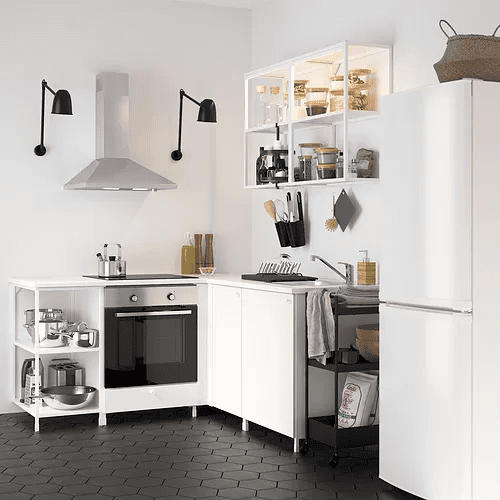
Caption: The right kitchen size helps cooking, washing, storing, and moving around feel a little easier every day.
Start with room to move: counters, drawers, fridge, and chairs
A kitchen works better when there is enough room for the things you do every day: chopping at the counter, opening drawers, reaching the fridge, pulling out a chair, and walking through without feeling squeezed.
So before adding more cabinets, look at the space around them too. That open space can make cooking feel easier, especially in a compact home.
Here are a few helpful starting points:
- Counter height: about 34-36 inches (86-91 cm) from the floor.
- Counter depth: about 24-28 inches (60-70 cm).
- Space between the counter and upper cabinets: about 18-24 inches (45-60 cm).
- Open space in front of cabinets: at least 36 inches (90 cm).
- For a kitchen used by more than one person, 40-48 inches (100-120 cm) can feel more comfortable.
Think of these numbers as a guide, not a strict rule. After that, look at how your own kitchen works: where the door opens, where the window sits, where the sink and stove need to go, and how people usually move from cooking to serving.
Kitchen measurements to know: counter height, upper cabinets, and walkways
Start with the measurements you will notice most while using the kitchen: counter height, counter depth, upper cabinet spacing, base cabinet depth, and the walkway in front of the cabinets. These numbers help you see whether there is enough room to prep, wash, open storage, and move between the kitchen and dining area.
| What to measure | Helpful size range | Why it helps |
|---|---|---|
| Counter height | 34-36 in (86-91 cm) from the floor | Keeps prep, washing, and cooking at a comfortable working height |
| Counter depth | 24-28 in (60-70 cm) | Leaves space for a cutting board, sink, stove, and small prep area |
| Space between counter and upper cabinets | 18-24 in (45-60 cm) | Keeps the counter usable while still making upper cabinets reachable |
| Base cabinet depth | around 24 in (60 cm) | Helps you estimate how much room is left in front of the cabinets |
| Open space in front of cabinets | at least 36 in (90 cm) | Gives room to stand, open doors, and pass through |
| Work aisle for one person | around 40-41 in (100-105 cm) | Makes cooking, washing, and opening drawers feel easier |
| Work aisle for two people | around 48 in (120 cm) | Gives two people more room to cook or move at the same time |
| Fridge or oven space | around 24 in (60 cm) | Helps larger appliances fit without crowding the walkway |
| Dishwasher space | around 18-24 in (45-60 cm) | Lets the door open while staying easy to reach |
Wall length tells you what can fit. The open space tells you how the kitchen may feel. A quick way to picture it is to measure the room width, set aside about 24 inches (60 cm) for the base cabinets, then look at what remains for standing, opening, and walking.
Measure the room first: walls, doors, windows, and utility points
Start by measuring the parts of the room that will shape the kitchen: the walls, doors, windows, outlets, water line, gas line, and the path people use most. You do not need a perfect floor plan yet. A tape measure, paper, and pencil are enough to help you understand what can fit before you choose cabinets.
Start with the room size: length, width, and height
Measure the length, width, and height of the kitchen. The length and width help you see whether a one-wall, L-shaped, or two-sided layout could work. The height helps you picture where upper cabinets might sit so they feel balanced and still within reach.
For room size, meters usually make the most sense, such as 2 x 3 m or 3 x 3 m. For smaller details, use centimeters or inches, such as cabinet depth, counter height, upper cabinet spacing, and door width.
Mark the doors, windows, and utility points
Before choosing a cabinet layout, mark the doors, windows, outlets, water line, and gas line. These small points can gently guide where the sink, stove, fridge, and upper cabinets should go.
If there is a window, measure the sill height from the floor. This helps you decide whether the space below it can hold a counter or sink, or whether it should stay more open so light and air can still come in.
Tape out the cabinet depth on the floor
Base cabinets are usually around 24 inches (60 cm) deep. Try marking that distance from the wall with paper tape, string, or a light object on the floor. Then stand in front of it and see how the space feels.
This small test makes the room easier to imagine before you choose anything. A kitchen may look roomy in numbers, but it can feel different once you picture an open drawer, a fridge door, or a dining chair sharing the same area.
Use the detailed measuring guide as the next step
Once you know the room shape and the layout that feels most suitable, IKEA Indonesia’s detailed kitchen measuring guide can help you go deeper. Read the guide on how to measure a kitchen set.
For this guide, begin with the easy things to see: room size, doors, windows, and the everyday path from storage to washing, prepping, cooking, and putting things away. When that path feels simple, the kitchen size is already moving in a good direction.
Kitchen sizes by room shape
Different rooms ask for different kitchen layouts: a 2 x 3 m kitchen may feel best with one clear cabinet run, while a 3 x 3 m kitchen may give you room to consider an L-shaped layout or a light two-sided setup.
| Room shape or size | Layout to consider | Good starting point | Check this before deciding |
|---|---|---|---|
| 2 x 3 m kitchen | One-wall kitchen or mini kitchen | Keep cabinets on one wall so the room stays easier to move through | Make sure the open space in front of the cabinets still feels usable |
| 3 x 3 m kitchen | One-wall, L-shaped, or light two-sided layout | A 24 in (60 cm) cabinet run still leaves generous middle space | Check doors, windows, fridge, and nearby dining furniture |
| Long kitchen | One-wall kitchen | Works well along a long wall near the dining area | Leave room for chairs or the fridge door to open comfortably |
| Corner kitchen | L-shaped kitchen | Uses two connected walls for cooking, washing, and storage | Check that corner drawers and cabinet doors can open comfortably |
| Two-sided kitchen | Galley or parallel cabinets | Works best with about 40-48 in (100-120 cm) in the middle | Under 36 in (90 cm), the aisle may start to feel close |
| Open kitchen near dining area | One-wall or open L-shaped layout | Works when cooking and dining share one room | Include the space needed when chairs are pulled out |
In a 2 x 3 m kitchen, a one-wall layout often keeps things simple. With base cabinets around 24 inches (60 cm) deep, the rest of the room can stay open enough for standing, opening cabinet doors, and carrying food to the table.
In a 3 x 3 m kitchen, you usually have more room to choose. A one-wall, L-shaped, or light two-sided kitchen can all work well when the fridge, dining table, chairs, back door, and extra shelves are included in the plan.
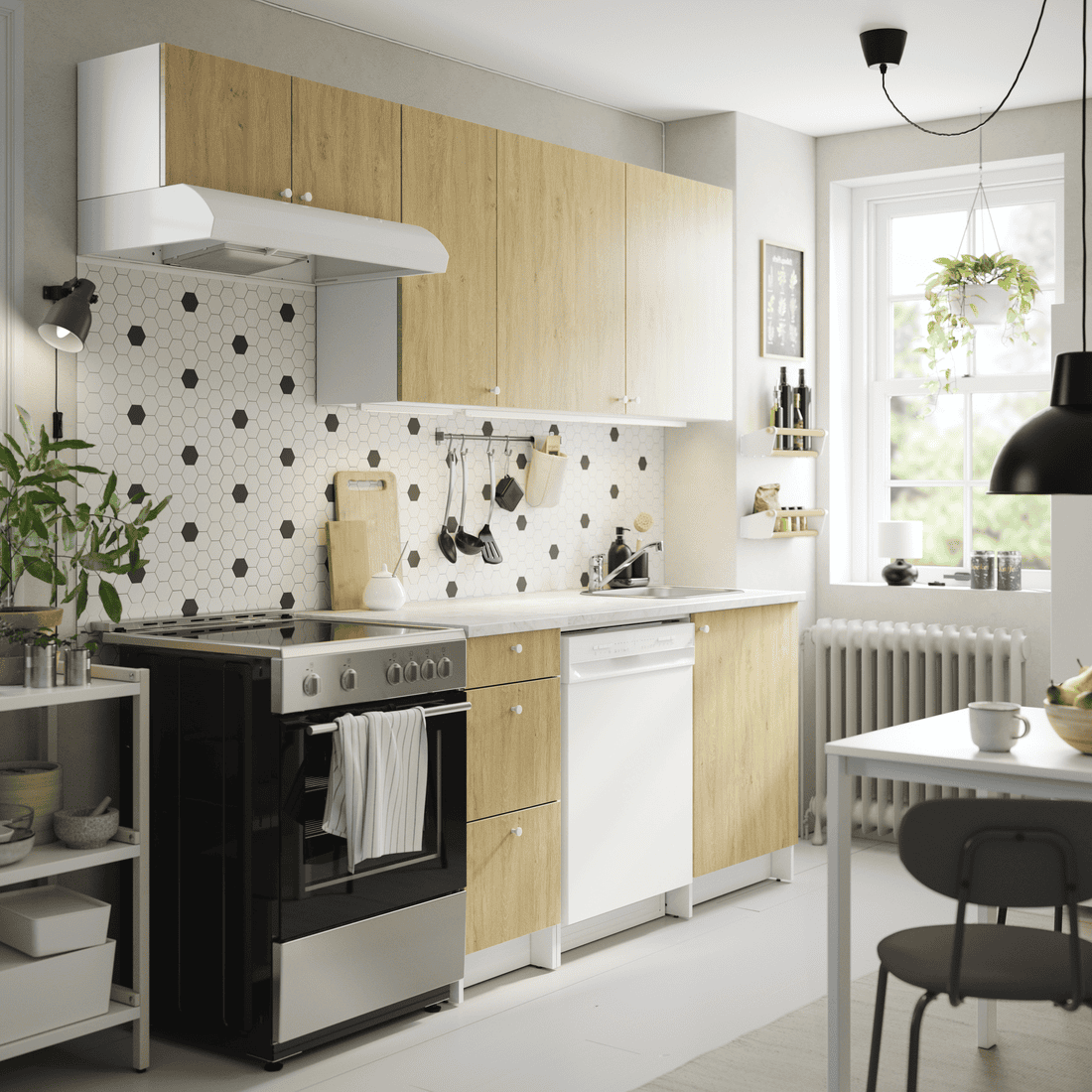
Caption: A linear KNOXHULT kitchen set can help keep a compact kitchen simple, with the main work areas arranged along one wall.
Which layout fits your kitchen: one-wall, L-shaped, or two-sided?
The right layout depends on your room shape, wall length, doors, windows, and the way you move from storage to washing, prep, cooking, and putting things away. That routine can help you choose a layout that supports daily movement, instead of simply filling the room with cabinets.
A one-wall kitchen keeps everything in one line
A one-wall kitchen is often the easiest to plan. The main work areas sit along one side, so it can suit small kitchens, long rooms, apartments, or homes where the kitchen and dining area share the same space.
Try arranging the work areas in a simple order. The fridge or pantry can sit at one end, prep space can stay near the middle, and the sink and stove can stay close enough to make cooking feel easy. A little open counter space between the sink and stove can make a big difference. It gives you a landing spot for a cutting board, ingredients, or plates before the food goes to the table.
An L-shaped kitchen can make a corner more useful
An L-shaped kitchen set helps use corner space by placing cabinets along two adjoining walls, with one side for washing and storage and the other for cooking and prep. This layout can make the kitchen workflow feel more natural because the sink, stove, worktop, drawers, and storage all stay within easier reach.
The corner still needs a closer check. Make sure cabinet doors, drawers, and corner shelves can open without bumping into each other, especially near the stove, sink, or prep area. If one side sits near a window, it can also be a helpful spot for tasks that need more light, such as washing vegetables or preparing ingredients.
Before deciding on the cabinet layout, you can map the kitchen shape in the IKEA Kitchen Planner. It helps you see the wall size, corner position, cabinets, drawers, and work areas more clearly before choosing an L-shaped kitchen set for your space.
A two-sided kitchen works best with a comfortable aisle
A two-sided kitchen works best when the middle aisle leaves enough room to open drawers, turn around, and move between the stove, sink, storage, and larger appliances. If two rows of base cabinets face each other, each about 24 inches (60 cm) deep, try to keep around 40-48 inches (100-120 cm) in the middle so cooking does not feel too tight.
That space gives you room to open drawers, turn around, and move while cooking. With a little more space in the middle, the kitchen can feel calm and easy to use, even when several things are happening at once.
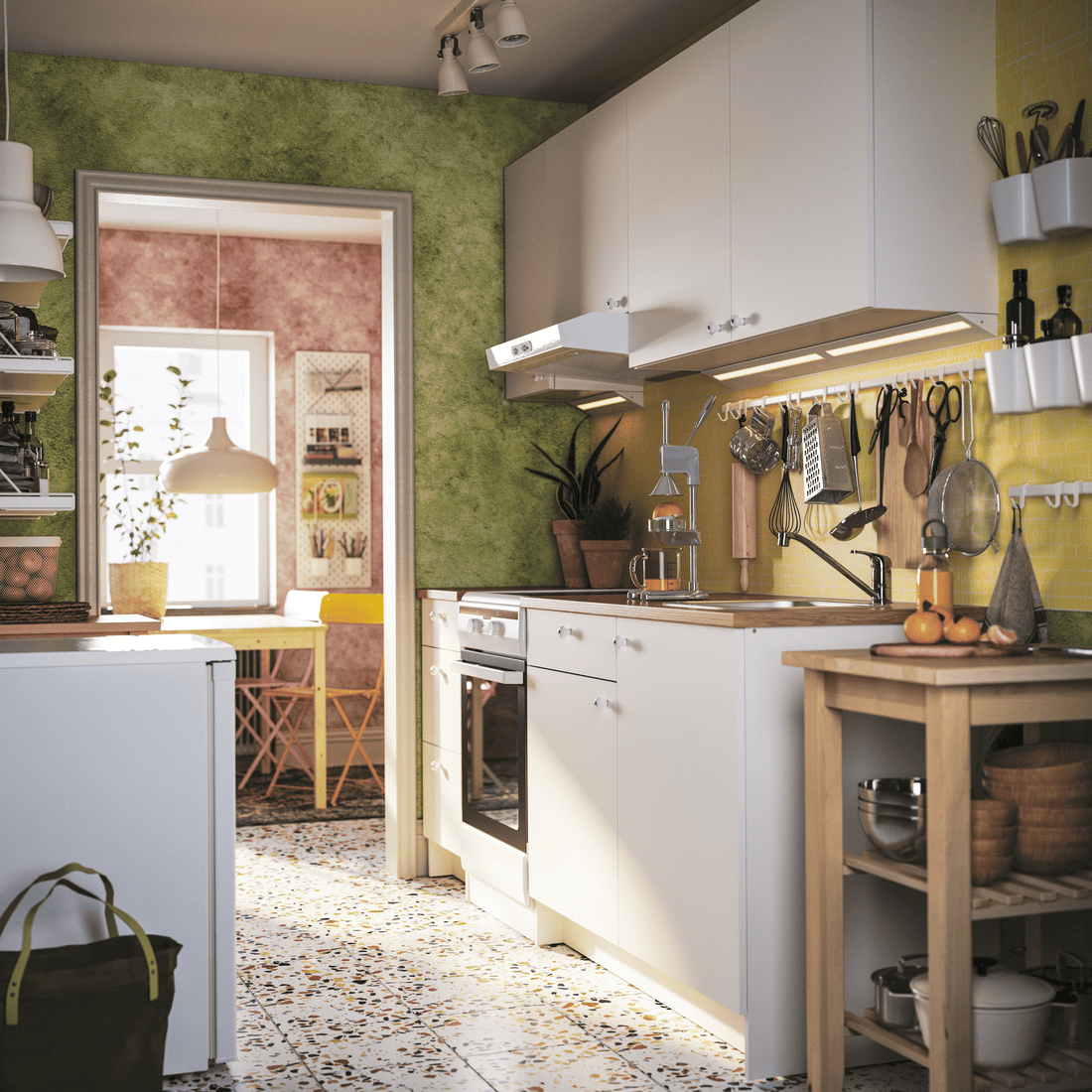
Caption: A two-sided KNOXHULT layout works best when the middle aisle still leaves room to open drawers and move comfortably.
Plan the moving parts: fridge doors, drawers, chairs, and windows
The moving parts in a kitchen need their own clearance because fridge doors, lower drawers, dining chairs, windows, and walk-through paths all compete for space during cooking.
Picture the kitchen on a normal cooking day
Instead of measuring only the wall, picture the kitchen while it is being used. The fridge door opens, someone stands at the sink, a drawer comes out, and someone else walks by with plates. This helps you notice whether the open space feels easy enough for everyday use. If several activities meet in the same spot, a shorter cabinet run or simpler layout may make the kitchen feel more comfortable.
Let the window stay useful
If the kitchen is at the back of the house, the window often brings in important light and air. Keep that area easy to open, easy to clean, and not fully covered by upper cabinets. A spot near the window can work well for a sink, light prep space, or a small easy-to-clean shelf. If the window is opened often, place the stove where cooking still feels steady and comfortable.
Give dining chairs space to move
If the dining table sits close to the kitchen, include the chair space in your measurements. In a compact home, the kitchen and dining area often share the same path. For a dining area near the kitchen, chair size also affects how easy the room feels to use. Check the chair height, table clearance, and space behind the chair so both areas can work comfortably together. Learn more about selecting the right chair size.
Plan for doors and drawers when they are open
A fridge, oven, large drawer, and cabinet door all need space when opened. Before deciding the final layout, picture which way each one opens. This small step helps you place cabinets and appliances so they can work well together. Taking out ingredients, opening drawers, and washing dishes can feel smoother when those openings are part of the plan from the start.
Match cabinet materials to the kitchen conditions
Kitchen cabinet materials should fit the room, not just the look. Areas near water, heat, or humidity usually need more attention when it comes to installation, care, and cleaning. For more context on furniture materials, see our guide on what particle board is.
Size checks that help a kitchen feel right
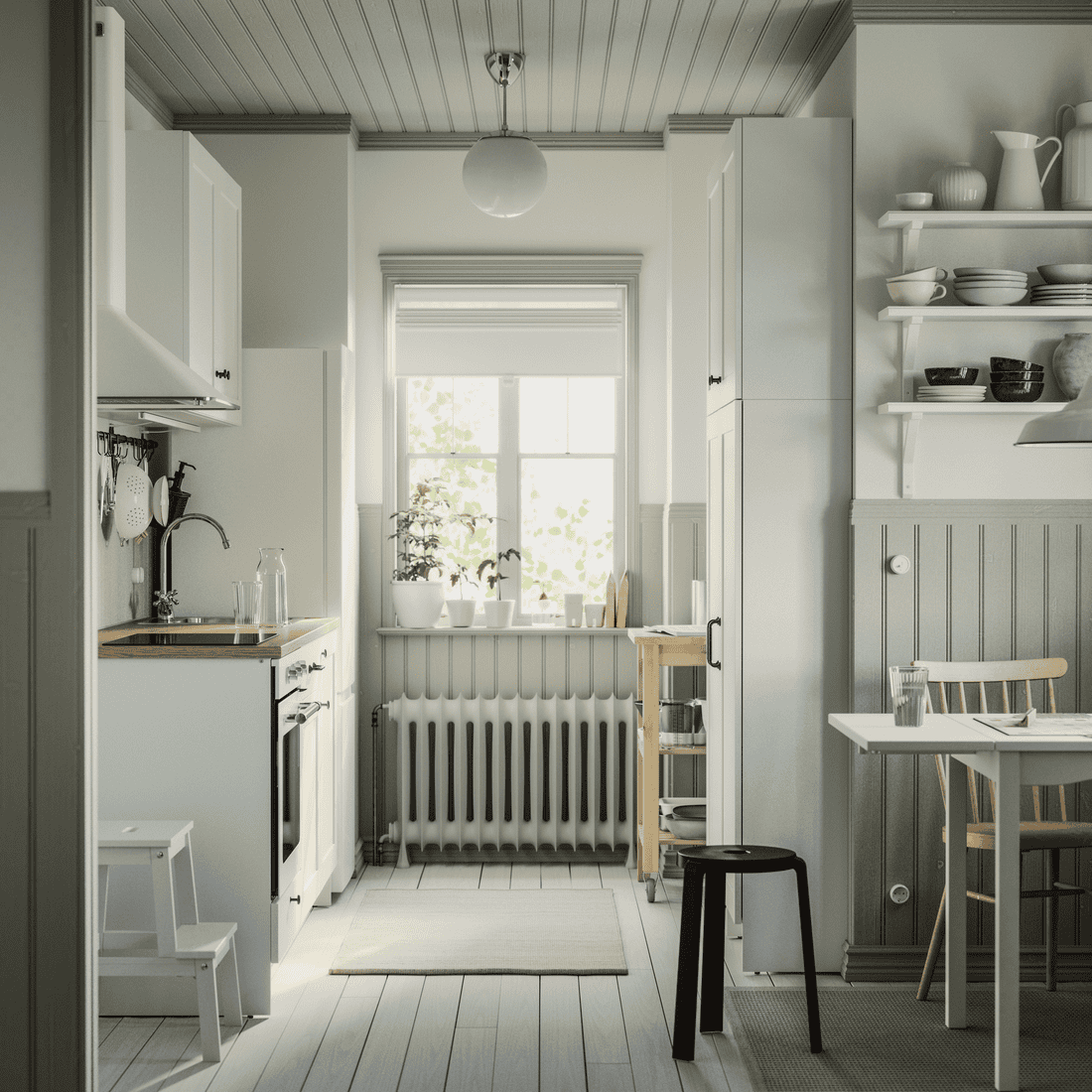
Clear space in front of cabinets
Walkway
- Recommended size
- At least 36 inches (90 cm), or around 40-48 inches (100-120 cm) for more comfort.
- Best for
- Standing at the counter, opening drawers, and moving while cooking.
- Keep in mind
- A dining table, chairs, or fridge door in the same area can make the walkway feel more active.
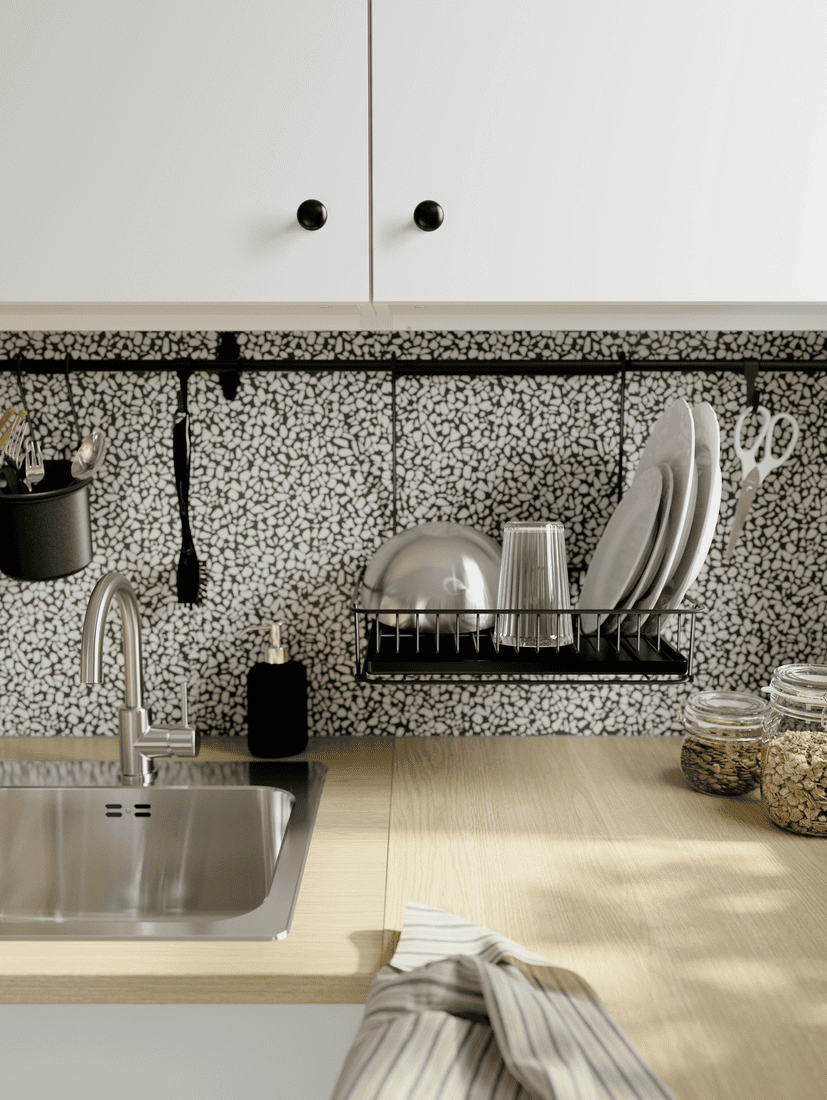
Space between upper cabinets and counter
Upper spacing
- Recommended size
- About 18-24 inches (45-60 cm) from the countertop to the bottom of the upper cabinets.
- Best for
- Keeping the counter easy to use without placing upper cabinets too high.
- Keep in mind
- User height and frequently used items, so upper cabinets still stay within comfortable reach.
Prep space near the sink or stove
Prep area
- Recommended size
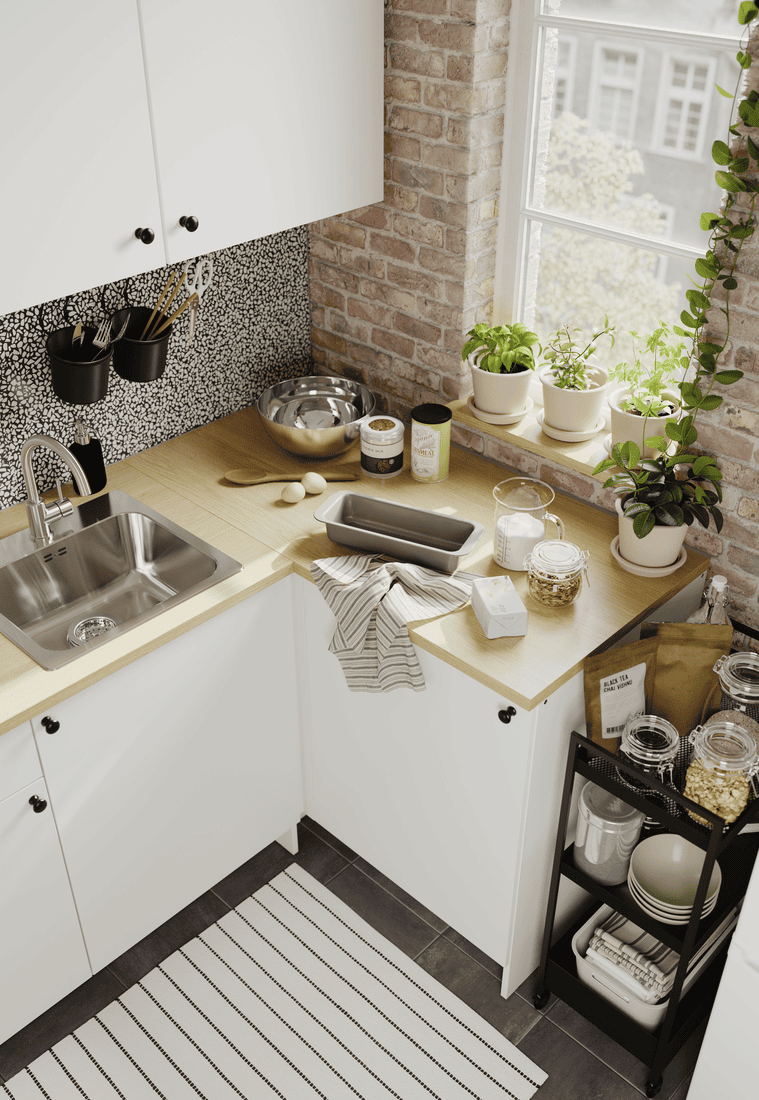
- Leave enough open counter space for a cutting board and ingredients.
- Best for
- Washing, chopping, and cooking without too much back-and-forth movement.
- Keep in mind
- A small landing spot near the sink or stove can help the counter stay easier to use during cooking.
Drawer and appliance openings
Drawer & door openings
- Recommended size
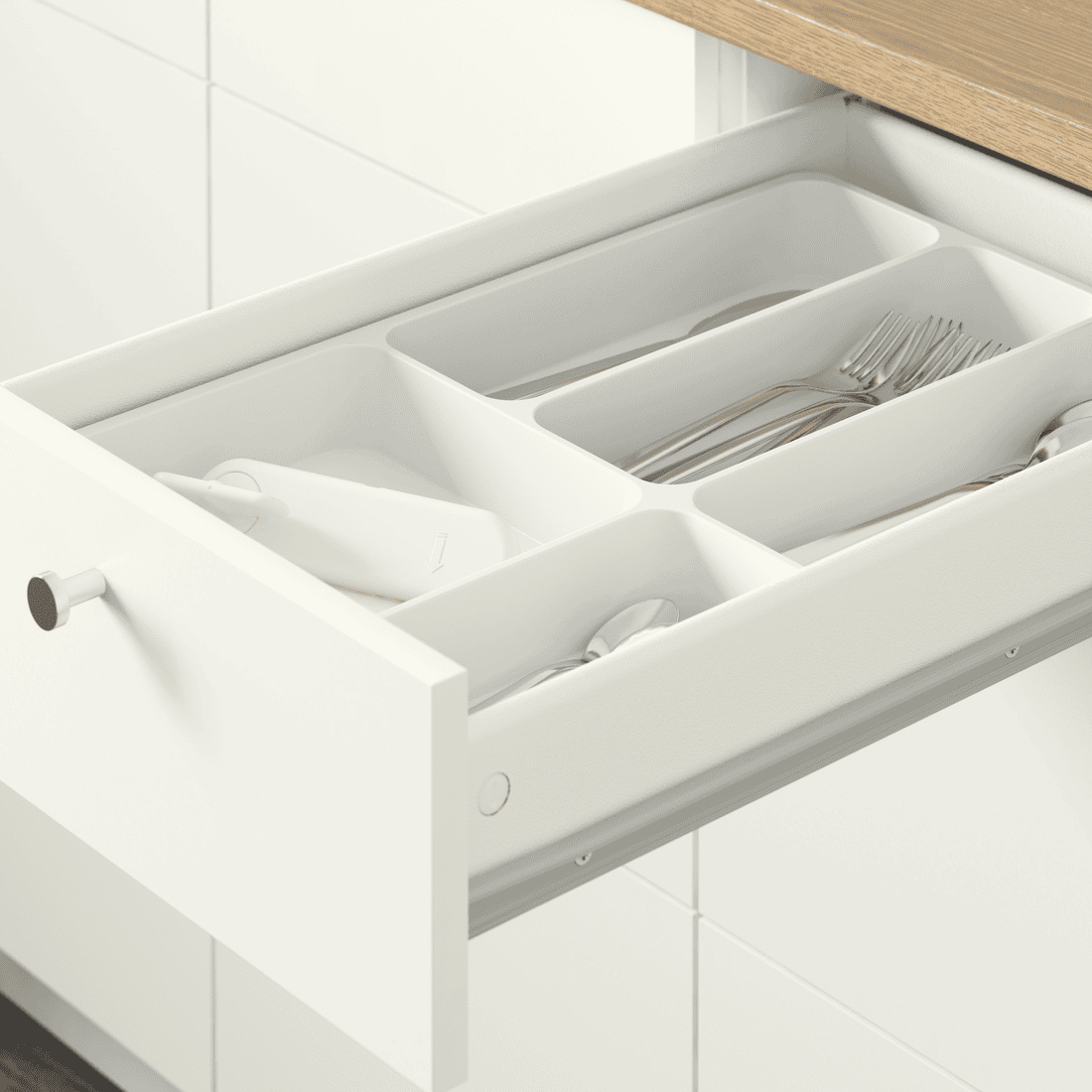
- Check the fridge door, oven door, dishwasher door, and large drawers before choosing the layout.
- Best for
- Keeping doors and drawers from getting in each other’s way.
- Keep in mind
- Measure the space with doors open, not only when everything is closed.
IKEA kitchen options for different spaces
Once you know the room size, it gets easier to narrow the choices. A mini kitchen may be enough for a small extra space, while a more fixed kitchen may need base cabinets, wall cabinets, or a mix of open and closed storage.
| IKEA option | Best for | How it fits the room |
|---|---|---|
| KNOXHULT | A fixed kitchen that can grow in stages | Works well once you know the wall length, sink position, and whether you need base or wall cabinets |
| SUNNERSTA | Small kitchens, mini kitchens, temporary homes, or extra kitchen areas | Good when the kitchen needs are simple and you want something light and movable |
| ENHET | Kitchens that need open and closed storage | Helpful when you want cabinets, storage, countertop, sink, and accessories that can adjust over time |
KNOXHULT can work well when you want to build the kitchen little by little. Start with base cabinets, then add wall cabinets or other pieces when you need more storage.
SUNNERSTA can fit a mini kitchen, small home, weekend home, or extra kitchen area. Its open, lightweight setup works well for simple routines like making drinks, preparing light meals, or washing a few dishes.
ENHET is useful when you want a more flexible setup. Open storage keeps everyday items easy to reach, while closed storage helps keep extra supplies and less-used tools tucked away.
Put the kitchen plan together: layout, clearance, and storage. A good kitchen size starts with a few simple checks: measure the wall, mark the doors and windows, then look at the open space left after the cabinets are placed. From there, it becomes easier to choose a one-wall, L-shaped, two-sided, or mini kitchen.
In a small kitchen, open space can matter more than adding more cabinets. In a 3 x 3 m kitchen, you may have more layout choices, as long as the fridge, dining table, window, and cabinet openings are included in the plan. Start with the areas used most: washing, prepping, cooking, and storing. Once that routine feels clear, extra storage can be added step by step.
Frequently asked questions about kitchen set sizes
Start with the room, then find the right fit