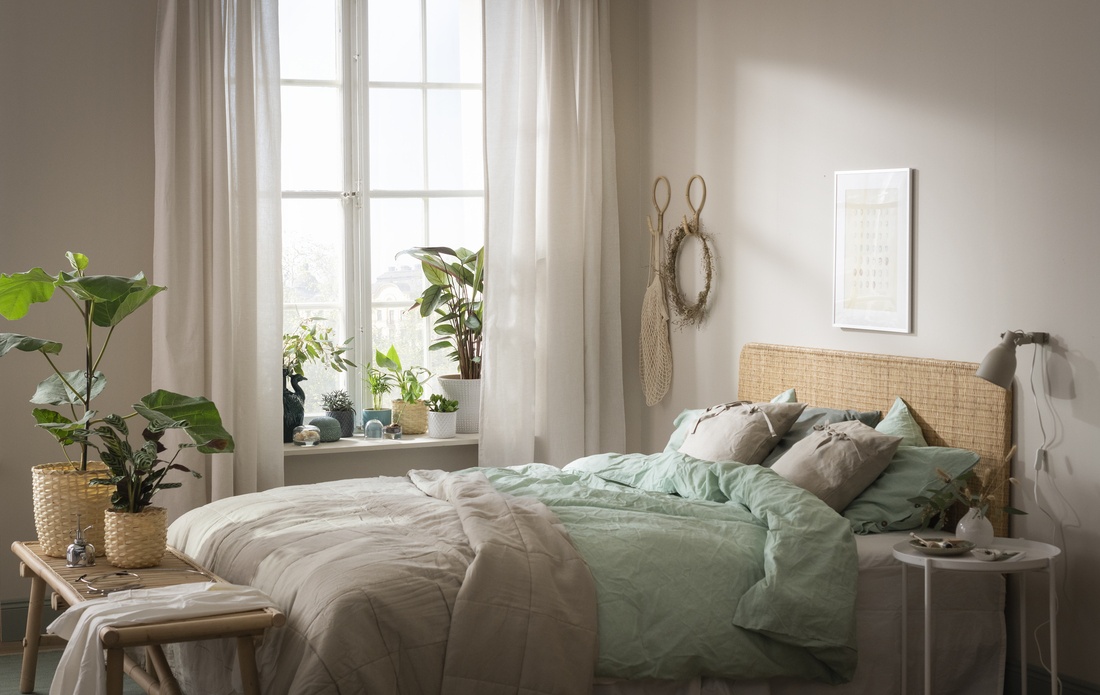
Indoor plants can be a simple way to add colour, texture, and a natural feel without filling your home with too many decorations.
You can use live plants if the lighting conditions and your available care time allow, or choose artificial plants for areas that are harder to reach or receive minimal light.
From small plants on shelves to large leaves in the corner of the living room, the choice of size and placement will determine the final look. Discover the types of plants and ways to arrange them according to the needs of your space.
live plants and artificial plants have different functions. Live plants require suitable lighting conditions, water, and growing media, while artificial plants primarily serve as decoration. For dark areas, high shelves, or corners that are difficult to maintain, artificial plants can be a more practical choice.
Choose live plants or artificial plants?
Live plants are suitable if you enjoy taking care of plants and have an area with adequate lighting conditions.
Each type has different needs, so window position, humidity, watering frequency, and growing media should be considered before making your choice.
Artificial plants offer a different approach. You do not need to adjust watering or lighting for their growth, making their placement more flexible.
Both options can also be combined. Live plants can be placed in areas that support their growth, while artificial plants can fill more enclosed areas where you do not need to worry about their growing conditions.
Read also: recommendations for indoor plants
10 types of indoor plants for decor inspiration
Complete your room decor with a combination of vases and decorative plants that suit your interior style. For inspiration, discover 10 types of indoor plants that can enhance different corners of your home while creating a fresher atmosphere.
1. Monstera for corners that need a large accent
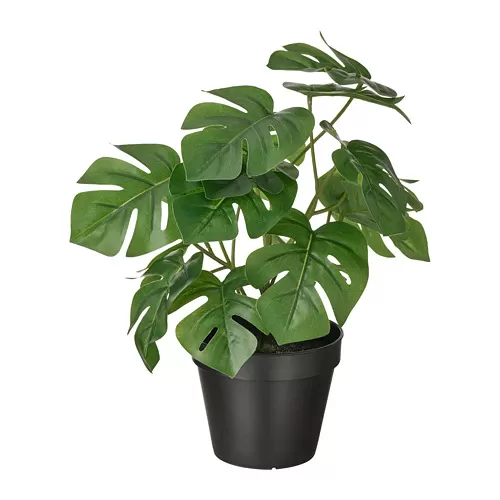
Monstera leaves have a broad silhouette with a shape that can easily become a visual accent. Plants like this are suitable for placement next to a sofa, low cabinet, or an empty corner of the living room.
When using artificial plants, adjust their scale to the furniture. For tables or shelves, use a more compact version. For the floor, a height of around 80–100 cm can create a clearer visual presence without requiring many additional decorations.
FEJKA monstera is available in options including a 12 cm diameter pot with a plant height of 32 cm and a 19 cm pot version with a height of around 90 cm. With these different scales, you can use the smaller monstera on a shelf and the taller version as a floor accent.
2. Philodendron for adding leaf patterns
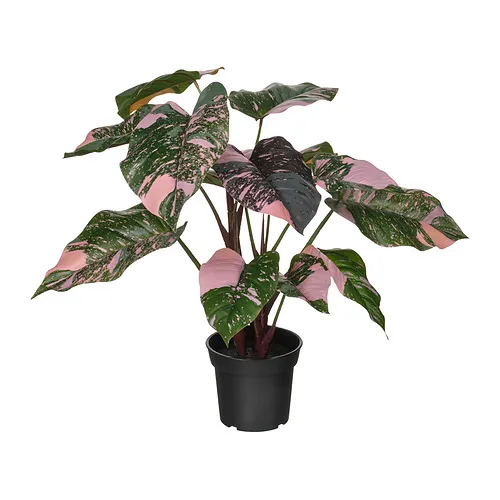
Philodendron has decorative leaf shapes that are suitable when a room needs a little variation in form without adding too many colours. Place a small or medium-sized plant on a cabinet, side table, or open shelf.
For minimalist interiors, try pairing green leaves with white, cream, grey, or earth-toned pots. This approach keeps the plant as a natural accent without making the room's colour palette feel too busy.
3. Alocasia for creating a tropical accent
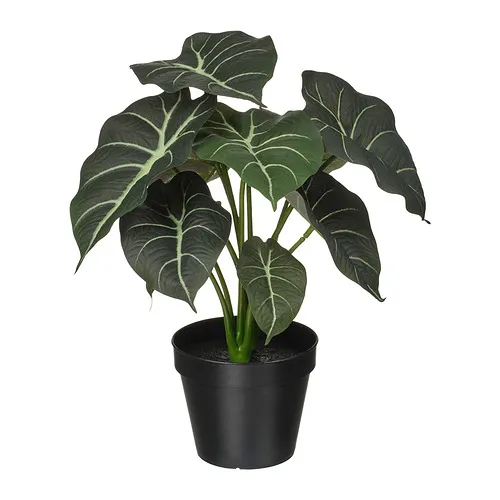
Alocasia is known for its broad leaves with a strong silhouette. Since its shape is quite prominent, you do not need to use many plants at once.
Use a single pot as an accent on a side table, console, or shelf with some empty space around it. FEJKA Alocasia uses a 12 cm diameter pot, making its scale easier to place on medium-sized furniture.
4. Ferns for adding soft texture
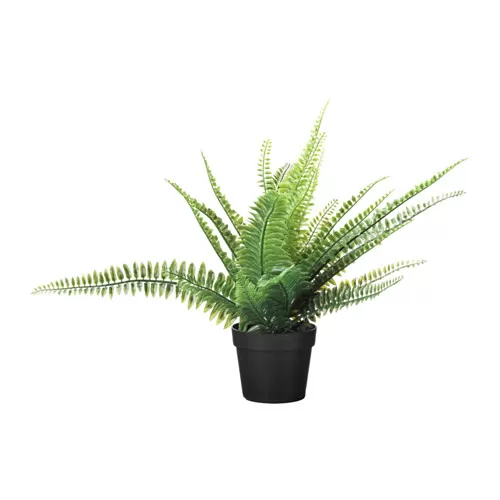
The denser, thinner leaves of ferns can soften furniture with many straight lines. This shape pairs well with wooden shelving, simple tables, or Scandinavian-inspired interiors.
FEJKA fern has a 9 cm diameter pot and a height of around 34 cm. A size like this is suitable for a side table or open shelf without taking up too much surface space.
5. Succulents for tables and limited spaces
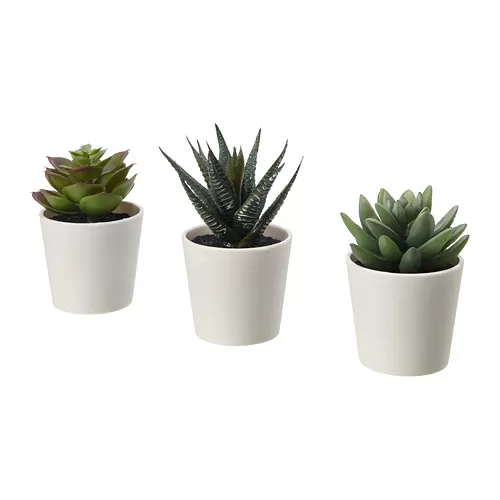
If you live in an apartment, boarding room, or home with limited tabletop space, smaller plants are easier to arrange than floor plants.
Group two or three succulents of different heights on a tray or shelf. This creates an interesting small composition without overcrowding the table.
The FEJKA set of three succulents has pots measuring around 6 cm and a height of approximately 12 cm, making them suitable for compact areas.
6. Orchids for adding a light floral accent
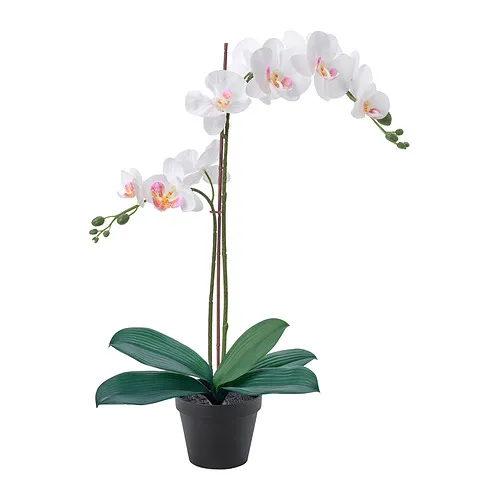
Orchids can provide variation through their flowers and slimmer stem shapes, making them suitable when you want to add a decorative touch without making an area feel too full.
The white FEJKA orchid has a 12 cm diameter pot with a plant height of around 58 cm. Its proportions make it suitable for placement on a cabinet, console table, side table, or dressing table with a sufficiently spacious surface.
The neutral colour of the flowers also makes it relatively easy to pair with minimalist interiors, from wooden furniture to softly coloured accessories.
7. Grass for adding texture to tables and shelves
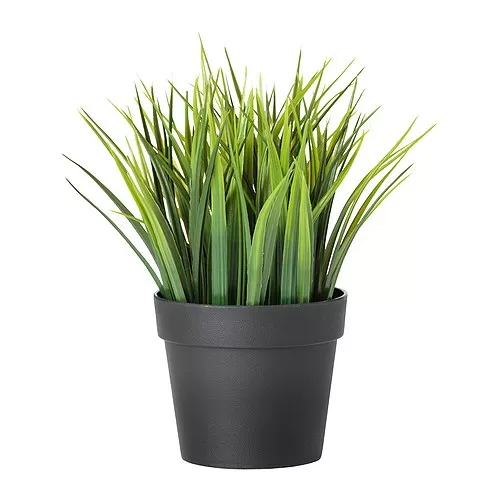
Grass-shaped plants offer a different character from monstera, philodendron, or broad-leaf plants. Their small, dense leaves can provide green texture without taking up too much visual space.
FEJKA grass has a 9 cm diameter pot and a height of around 21 cm. Its size is suitable for open shelves, desks, wall shelves, or bathroom cabinets. You can also use two or three small plants at different heights to create a composition.
8. Rosemary for the kitchen and dining area
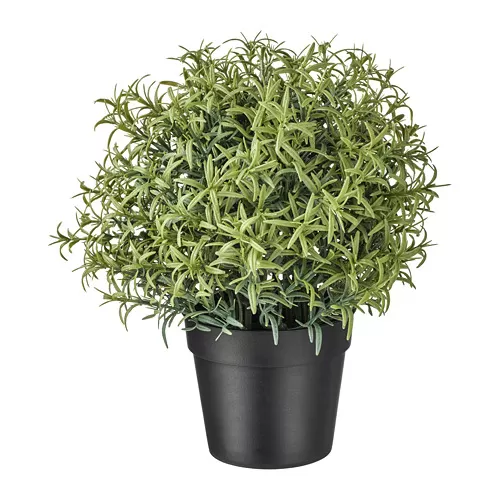
Rosemary has small leaves with a relatively light appearance. This type of plant can add a touch of green to the kitchen or dining area.
However, distinguish between the functions of live and artificial versions. Artificial rosemary only serves as decoration and cannot be used as a cooking ingredient. Place it on an open shelf, cabinet, or table area where it will not interfere with cooking activities.
9. Trailing plants for making use of vertical space
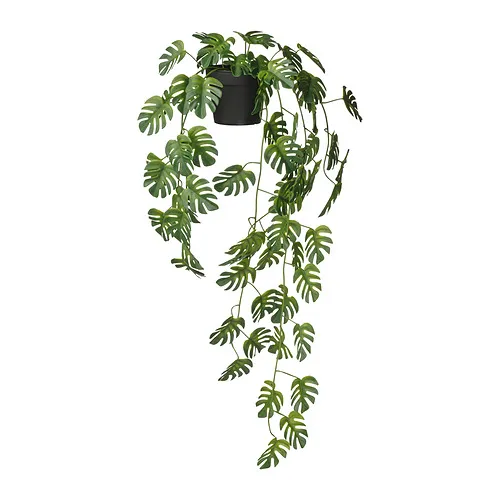
Not all plants need to take up floor or tabletop space. Trailing plants can be placed on upper shelves, allowing the leaves to fill vertical areas that would otherwise remain empty.
FEJKA hanging monstera with a 9 cm pot has an overall height of around 63 cm. This scale can be used on a high shelf to create a trailing effect without requiring additional floor space.
10. Strelitzia Nicolai for filling a room corner
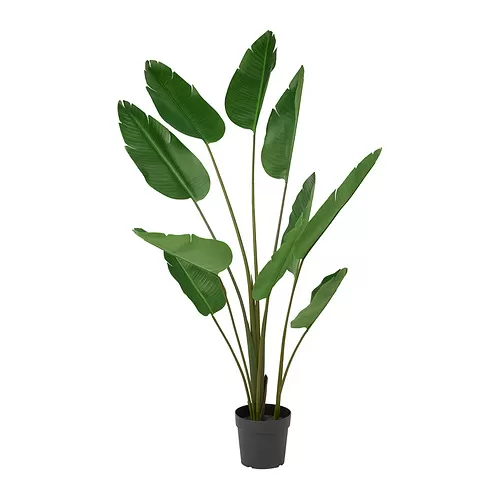
For a sufficiently spacious living room corner, a tall plant can help fill vertical space without requiring many additional decorations.
FEJKA Strelitzia Nicolai has broad, elongated leaves that create a strong accent, allowing it to be used as a single main element next to a sofa, cabinet, or reading chair.
How to choose indoor plants based on placement
1. For tables and shelves
Plants with pots measuring around 6–12 cm can be a good starting point for bookshelves, desks, or side tables. Make sure there is still enough space for the furniture's primary function.
On open shelves, avoid filling every level with plants. Leave some areas empty and combine plants with books, frames, or storage boxes to create a more relaxed composition.
2. For living room corners
Floor areas generally require a larger scale so that plants do not appear lost between sofas and cabinets. Plants around 70–100 cm tall can be used as an initial reference for standard-sized living room furniture.
You do not have to use these measurements as a fixed rule. Consider the height of the sofa, the width of the corner, and the distance from walkways so that the plant does not obstruct movement.
3. For walls and narrow areas
If floor space is limited, make use of vertical surfaces. Hanging plants or artificial plant panels can be used on empty walls, especially when you want to add texture without introducing additional furniture.
4. For rooms with minimal light
Live plants still require conditions appropriate for their species. If a corner receives almost no natural light, do not choose a live plant based solely on its appearance.
For areas such as corridors, shelves far from windows, or certain parts of the bathroom, artificial plants are more flexible because they do not depend on light to grow. You can still create a natural impression through the composition of leaves, pots, and room lighting.
Tips for arranging decorative plants in a minimalist home
Start with scale rather than quantity. For a small room, one tall plant and one or two tabletop plants often look more intentional than many pots of nearly the same size.
Use different heights to create a more dynamic composition. You can place one plant on the floor, another on top of a cabinet, and a trailing plant on a higher shelf.
The colour of the pots can also help unify the overall look. White, cream, and grey provide a simple backdrop, while terracotta, rattan, or textured materials can bring a warmer feel.
To make artificial plants look more natural, place them in locations that visually make sense for plants, such as near a window, on a table, or next to wooden materials.
Read also: aesthetic living room decor inspiration
How to care for artificial plants to keep them looking neat
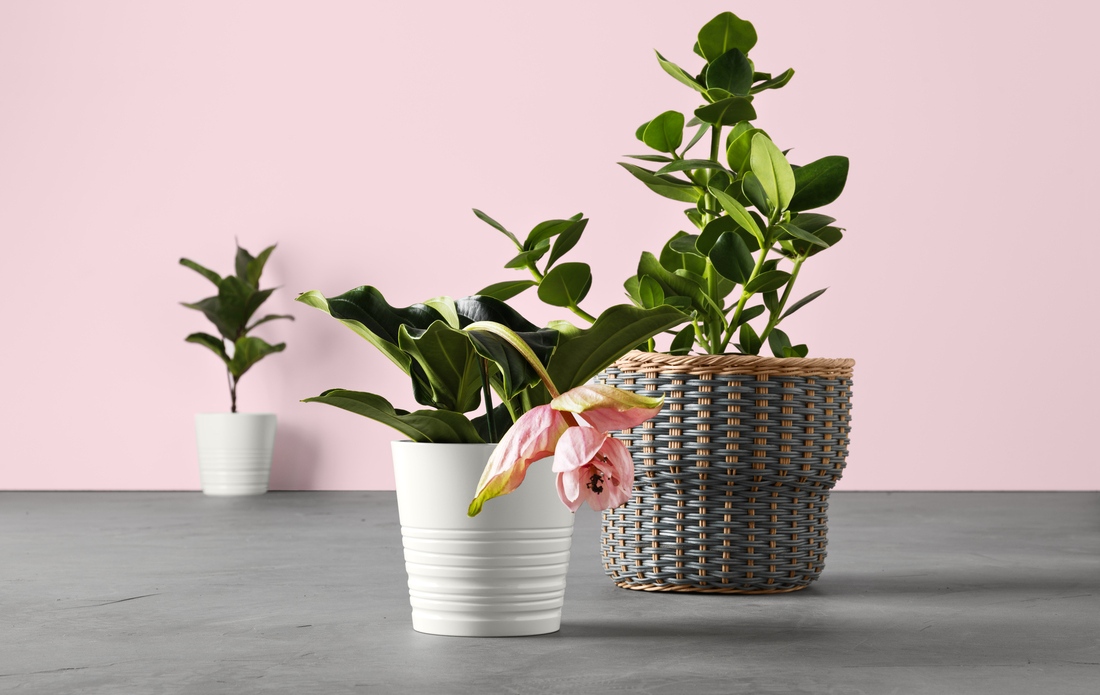
Artificial plants do not require watering, but that does not mean they need no care. Dust accumulating on the leaves can make their colours appear duller.
Clean the surfaces regularly with a dry cloth, damp cloth, or duster according to the product instructions. Some FEJKA products are recommended to be cleaned with a dry or damp cloth depending on their material.
While cleaning, take the opportunity to readjust the position of the leaves and stems. Slight variations in direction can make the composition look more natural than an arrangement that is too symmetrical.
Find green decor for your space at IKEA
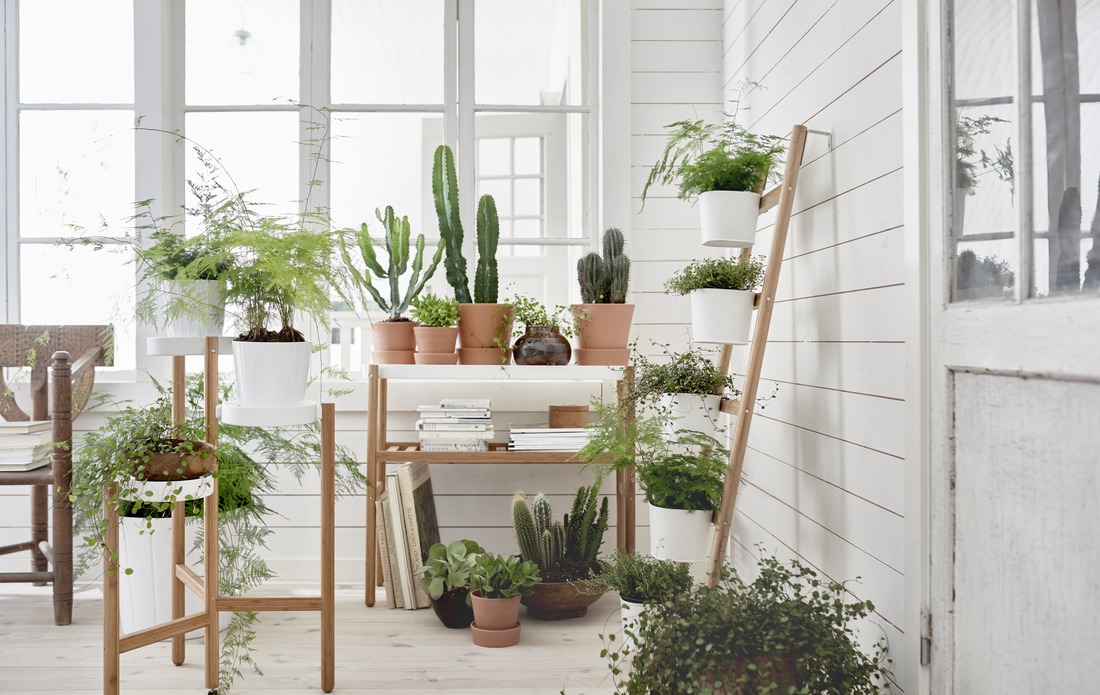
Indoor plants do not have to fill every corner of your home. Start by identifying an area that feels empty, then choose a plant scale that is balanced with the table, shelf, sofa, or cabinet around it.
If you want a touch of green without the routine of caring for live plants, explore the IKEA artificial plant collection to find a variety of sizes and shapes that can be adapted to your home.
Pair them with plant pots, shelving, lighting, and other decorations to make each corner feel more personal while remaining functional. Visit IKEA.co.id and discover inspiration and decorating solutions that can help you bring a touch of greenery into your home.