To help you understand the various zones that can be implemented for an open office layout, here are the explanations.
Utilizing the principle of functional zone separation
To achieve a balance between interaction and concentration, one way is to divide the space based on function, known as the Activity Based Working principle. This means each area is created to support a specific activity.
For example, a collaboration zone with large tables and whiteboards for brainstorming, a socialization area with comfortable sofas for breaks or casual conversations, and, no less importantly, focus zones or private booths for tasks requiring high concentration.
With such an arrangement, employees can choose the place that best suits their current work. Noise and distractions are also more controlled, productivity increases, and office space can be utilized more effectively. This method ensures the open office remains comfortable while supporting various work styles.
Smart solution: Using flexible partitions and acoustic materials
Creating a comfortable workspace doesn't always mean building permanent walls. With flexible partition solutions and sound dampening materials, you can separate work areas without losing the open feel.
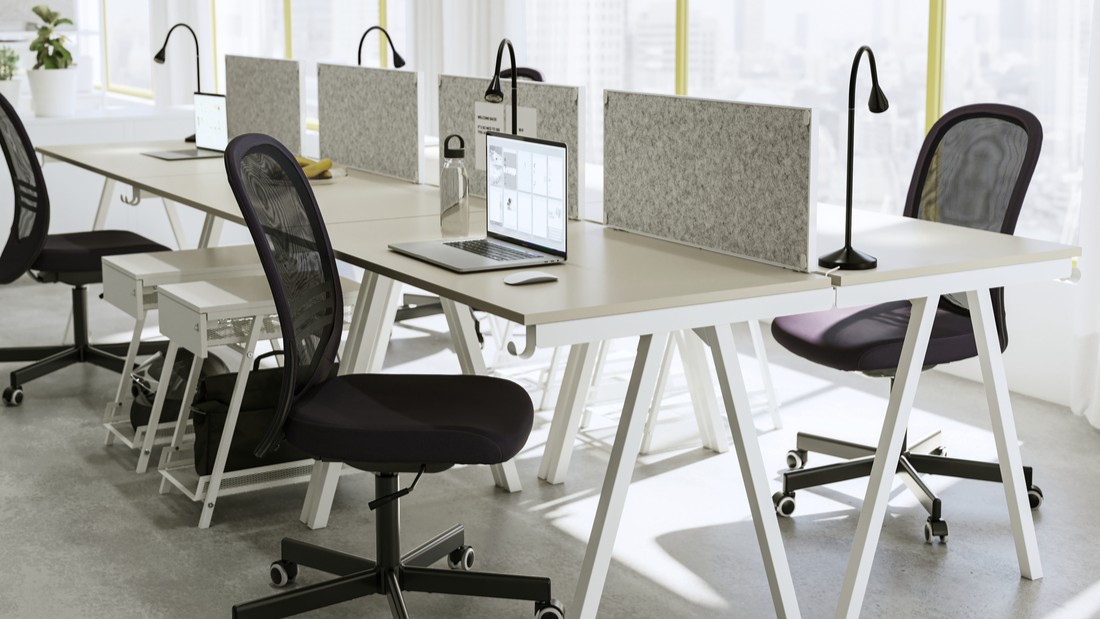
Use acoustic desk screens or freestanding partitions that are easy to move according to daily activity needs. Besides helping to reduce noise, these partitions also maintain visual privacy while appearing light and modern.
Sound-absorbing curtains can also be a practical alternative for dividing areas without sacrificing natural light.
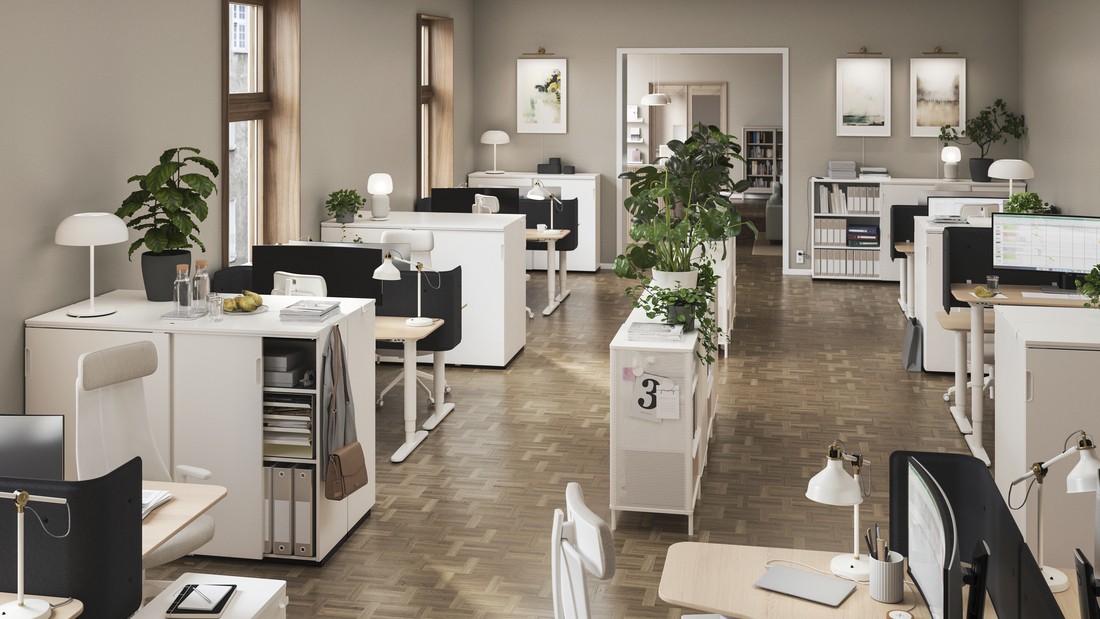
You can also utilize tall open shelving or modular shelves filled with green plants to make the work atmosphere feel fresher and more natural. This approach keeps the space flexible, comfortable, and easy to adjust as team needs change.
Selecting furniture that supports comfort and layout flexibility
Furniture is an important element in creating comfort and efficiency in an open office. Choose tables and chairs that support layout flexibility while promoting user health.
For example, ergonomic desks that can be height adjusted help employees switch easily from sitting to standing positions, keeping the body active and reducing fatigue.
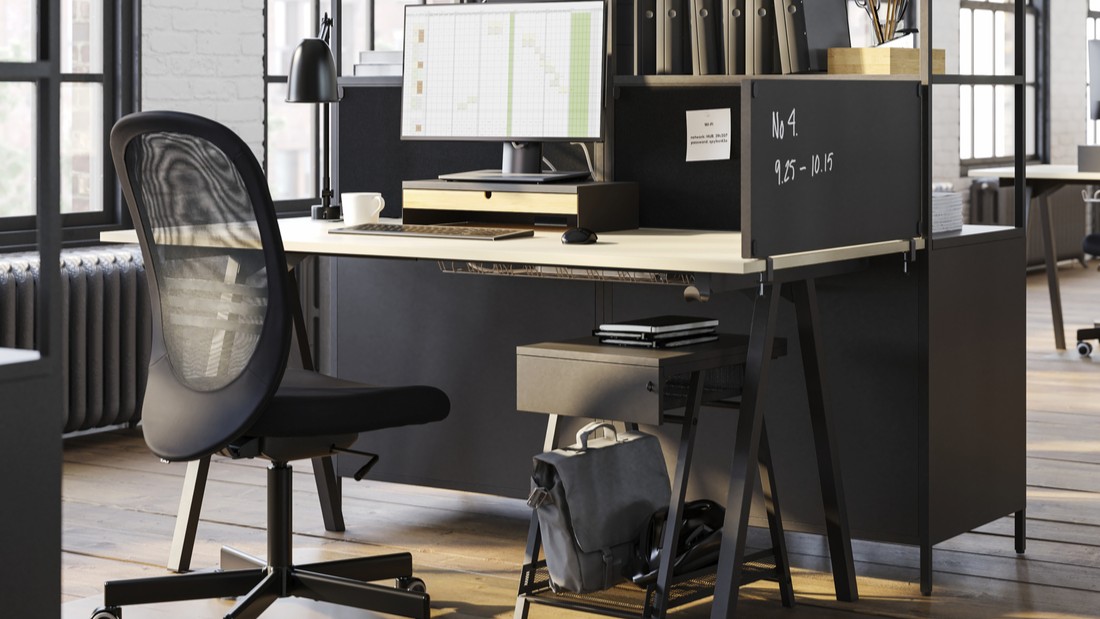
Modular shelving systems can also be a smart solution. Their easy to reconfigure design makes it simple to adjust the layout according to team needs or project changes.
No less important, ensure the office chairs used have comfortable backrests and support proper posture, so employees can work more focused and productively without the distraction of aches.
Boosting mood and productivity with interior design
The right interior design can make the work atmosphere feel more lively and pleasant. An open office space will feel fresher if it gets enough natural light and good airflow. Also, equip each work area with functional lighting so the room remains bright and comfortable, even at night.
Adding natural touches like houseplants on shelves or in desk corners can help create a sense of calm while refreshing the eyes. Neutral colors and soft textures on furniture or acoustic partitions also help bring a warm and soothing impression.
When the work environment feels comfortable and balanced, employee mood also improves, resulting in a more energetic, focused, and productive team every day.
Realize your ideal open office space with IKEA Interior Design Services