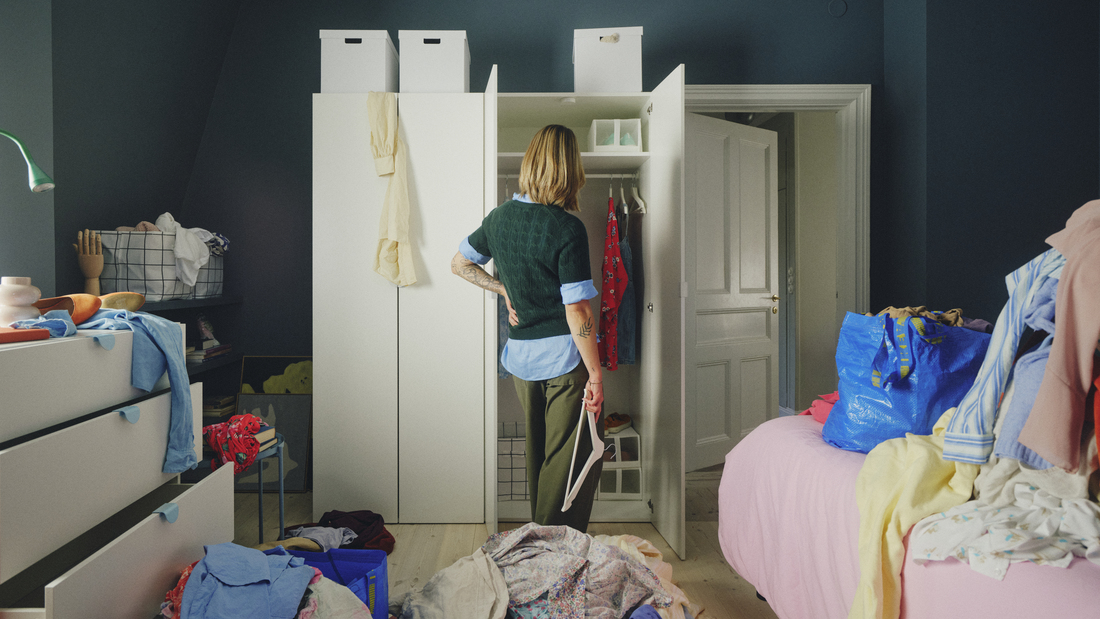
Are your wardrobe doors becoming difficult to close, clothes piling up on one shelf, and socks constantly disappearing among stacks of clothing? This can happen even when you feel your wardrobe is already large enough.
Often, the problem is not just the size of your wardrobe but also how you organize the storage space inside it. With the right wardrobe storage solutions, you can make better use of shelves, drawers, and hanging areas in a more organized way.
Let's explore the following ways to organize your wardrobe!
An organized wardrobe does not always require more shelves or storage space. The key is to divide the available space based on clothing types, frequency of use, and item sizes.
Why is it important to organize wardrobe storage properly?
An organized storage system can help you spend less time looking for clothes, prevent piles from becoming messy, and make use of spaces that were previously underutilized.
For example, a drawer filled with socks, underwear, and accessories without dividers will be more difficult to reorganize after use. In contrast, dividing the drawer into compartments allows each category of items to have its own designated space.
Storage solutions should also match your habits. If you own more shirts and workwear, you may need to prioritize hanging space. However, if your collection mainly consists of T-shirts, casual pants, and loungewear, shelves and drawers can become the main focus of your organization.
10 ways to organize your wardrobe and save space
Here are several ways you can organize the inside of your wardrobe, whether you have a small wardrobe, a two-door wardrobe, or a larger storage system.
1. Group clothes by type and frequency of use
The first step in organizing your wardrobe is to take everything out and group your belongings into categories. Separate workwear, casual clothing, sleepwear, accessories, and clothes that are only worn on certain occasions.
Next, consider how often each category is used. Everyday clothes should be placed on easily accessible shelves or hangers, while clothing for special occasions can be stored on upper shelves or in areas that are opened less frequently.
You can also arrange clothes by color to make them easier to find. However, color coordination should be an additional step after organizing items by function, so the arrangement remains practical for everyday activities.
2. Use storage boxes for smaller items
Accessories and small clothing items often make drawers look messy because they can easily move around. Without dividers, taking out one item may also disturb the position of other belongings nearby.
To solve this, use storage boxes with several compartments. Each section can be dedicated to socks, underwear, belts, or other small accessories.
Products such as the SKUBB set of 6 boxes can help separate drawer contents by category. With boxes in various sizes, you can organize several groups of items without installing permanent dividers.
Make sure to measure the inside of your drawer before choosing the number and size of boxes. Leave enough space so the boxes can be easily removed when the drawer needs cleaning.

3. Maximize vertical space with additional hanging shelves
Wardrobes with a single hanging rail often leave unused space beneath shorter garments. This area can actually be used to store items that do not need to be hung on hangers.
One solution is to add hanging storage with multiple levels. These shelves can be used for T-shirts, casual clothing, or fabrics that are more suitable for folded storage.
The SKUBB storage with 6 compartments can be hung from a wardrobe rail to create several additional storage spaces. This product can also be folded when not in use, making it easier to rearrange the wardrobe interior.

Before installing it, consider the height of the hanging area and the length of the clothes already stored there. Avoid placing additional hanging shelves too close to the bottom of the wardrobe so the lower compartments remain easily accessible.
Read also: IKEA hanging wardrobes, space-saving solutions for minimalist homes.
4. Apply the vertical folding technique
Stacks of T-shirts that are too high often make it difficult to take clothes from the bottom. When you pull a T-shirt from the middle of the pile, the other clothes may shift and become disorganized.
As an alternative, try the vertical folding technique, also known as file folding. This technique allows clothes to stand side by side inside a drawer, making several options visible when the drawer is opened.
Start by folding the clothing into a rectangular shape, then fold it again until its size matches the height of the drawer. Arrange the clothes side by side and use dividers if necessary to keep them in place.
This technique is particularly suitable for T-shirts, shorts, sleepwear, and certain types of underwear. For fabrics that wrinkle easily, consider storing them on hangers.
5. Add drawer dividers to separate accessories
Drawer dividers help create clearly defined storage areas for smaller items. They also make it easier to maintain the arrangement when taking out or putting items back.
For example, one section can be used for socks, another for underwear, and the remaining space for accessories such as scarves or belts. With this grouping system, items do not need to be piled together in one large space.
You can use the SKUBB box with compartments as a storage option that can be moved and rearranged according to your needs.

For the PAX wardrobe system, IKEA also offers KOMPLEMENT accessories, including various inserts and interior organization options. Make sure the product dimensions and compatibility match your wardrobe system before purchasing.
6. Store rarely used clothes separately in closed storage boxes
Not all clothes need to be placed on easily accessible shelves. Thick jackets, travel clothing, or items that are rarely worn can be stored separately so they do not take up the main wardrobe space.
Use closed storage boxes to group these items. Before storing them, make sure the clothes are clean and completely dry, especially if they will be kept for an extended period.
The PÄRKLA storage bag can be used to store seasonal clothing, bed linen, and other textiles. It can also be folded flat when not in use.

You can add short labels such as "jackets," "travel clothes," or "spare bed linen" so the contents can be easily identified without opening every box.
7. Use the bottom shelves to store shoes
The bottom of a wardrobe often becomes a place where shoes are mixed with bags or other belongings. If left unorganized, this area can look crowded even when the number of stored items is relatively small.
You can organize it by creating a dedicated zone for shoes. Separate frequently worn shoes from those used for special occasions, then arrange them by size and type.
The MURVEL shoe organizer can be an option for storing shoes vertically, allowing horizontal shelf space to be used more efficiently.

Make sure shoes are clean and dry before placing them inside your wardrobe. If possible, use shelves that are separate from clean textiles to help maintain the cleanliness of the storage area.
8. Organize hanging space based on clothing length
Clothes of different lengths can make the lower part of a wardrobe difficult to utilize. Long dresses, jackets, shirts, and trousers also require different amounts of hanging space.
You can divide the hanging rail into several zones. Place longer garments on one side and shorter garments on the other, allowing the space beneath shirts to be used for additional storage if room permits.
Use hangers that suit the type of clothing. Hangers with shoulder support are suitable for certain garments such as suits or shirts, while trouser hangers help keep trousers organized without stacking them.
The IKEA PAX collection offers interior organization options such as hanging rails, shelves, and drawers that can be adjusted to your wardrobe configuration. Consider your actual storage needs before deciding which combination of accessories to use.

9. Use the top shelf for items that are rarely accessed
The top shelf is often used to place items randomly because it is difficult to reach. As a result, belongings pile up and become difficult to identify when needed.
To make use of this area, choose storage boxes that match the depth and height of the shelf. Items such as spare bed linen, travel accessories, and rarely worn clothing can be grouped into separate boxes.
One option is the IKEA STUK storage box, which comes with a label holder and handles for easier access.

Store lightweight items on the upper shelves so they are easier to take down. Avoid stacking boxes too high or exceeding the shelf's weight capacity, and use a stable step stool when retrieving items from elevated positions.
Read also: Smart ways to organize the inside of a PAX wardrobe.
10. Adjust your storage system to your wardrobe size and needs
Storage solutions that work for a large wardrobe may not be suitable for a smaller one. Therefore, it is important to understand the available space and your storage habits before adding accessories.
Start by measuring the width, height, and depth of the wardrobe interior. Then, determine how much space is needed for hanging clothes, folded garments, and smaller items.
For small wardrobes, prioritize hanging shelves and compartment boxes so the available capacity can be used efficiently. Meanwhile, larger wardrobes can accommodate a combination of drawers, pull-out shelves, and hanging areas to create a more structured storage system.
Do not forget to consider the clearance needed when opening doors and pulling out drawers. Overcrowded storage can make everyday activities more difficult, even if all your belongings fit inside the wardrobe.
How to choose wardrobe organizers based on your needs
After learning the different ways to organize your wardrobe, the next step is choosing suitable storage accessories. Not every type of organizer needs to be used at the same time, as each serves a different purpose.
|
Needs |
Storage type |
IKEA product |
|---|---|---|
|
Socks and underwear |
Drawer divider boxes |
|
|
T-shirts and folded clothes |
Multi-level hanging shelves |
|
|
Small accessories |
Compartment storage box |
|
|
Rarely used clothing |
Closed storage box or bag |
|
|
Items on the top shelf |
Storage box with label |
|
|
Shoes inside the wardrobe |
Vertical shoe storage |
|
|
Wardrobe with a flexible interior |
Shelves, drawers, and inserts |
Before purchasing, check the product dimensions, storage capacity, and available space inside your wardrobe. Choosing fewer accessories that suit your needs often makes it easier to maintain an organized space.
Mistakes to avoid when organizing your wardrobe
Common mistakes include:
-
Adding storage boxes before sorting clothes. As a result, items that are rarely used continue to take up space, only now they have been moved into new boxes.
-
Stacking clothes too high, mixing several categories in one drawer, and storing frequently used items in hard-to-reach places.
To help maintain an organized wardrobe, check its contents regularly. You do not have to reorganize everything at once; simply start with one drawer or one shelf, then move on to other areas as time allows.
FAQs about how to organize your wardrobe
Start by sorting clothes according to your needs, then make use of vertical space with additional hanging shelves.
Common types of wardrobe organizers include drawer dividers, storage boxes, hanging shelves, clothes hangers, and shoe organizers.
Separate clothes by type and store each category in its designated place. For folded clothing, the vertical folding technique can help maintain the arrangement, making clothes easier to see and retrieve.
You can start by making better use of the space you already have, such as adding drawer divider boxes, grouping clothes based on frequency of use, and utilizing the top shelf. If needed, add storage accessories that match your wardrobe dimensions.
There is no single schedule that works for every household. You can briefly check your wardrobe contents every week and carry out a more thorough sorting process every few months or whenever your clothing needs change.
Find suitable wardrobe storage solutions at IKEA
Organizing your wardrobe does not always have to begin with buying new furniture. Sometimes, simple changes such as adding drawer dividers, hanging shelves, or storage boxes can help you use your available space more efficiently.
IKEA offers a variety of storage accessories that can be adjusted to your clothing types, wardrobe size, and everyday needs. Find wardrobe storage solutions that suit your needs at IKEA.
Want to make your wardrobe easier to navigate and reorganize? Explore the IKEA clothes and shoe organization collection and discover more storage inspiration at IKEA.co.id.