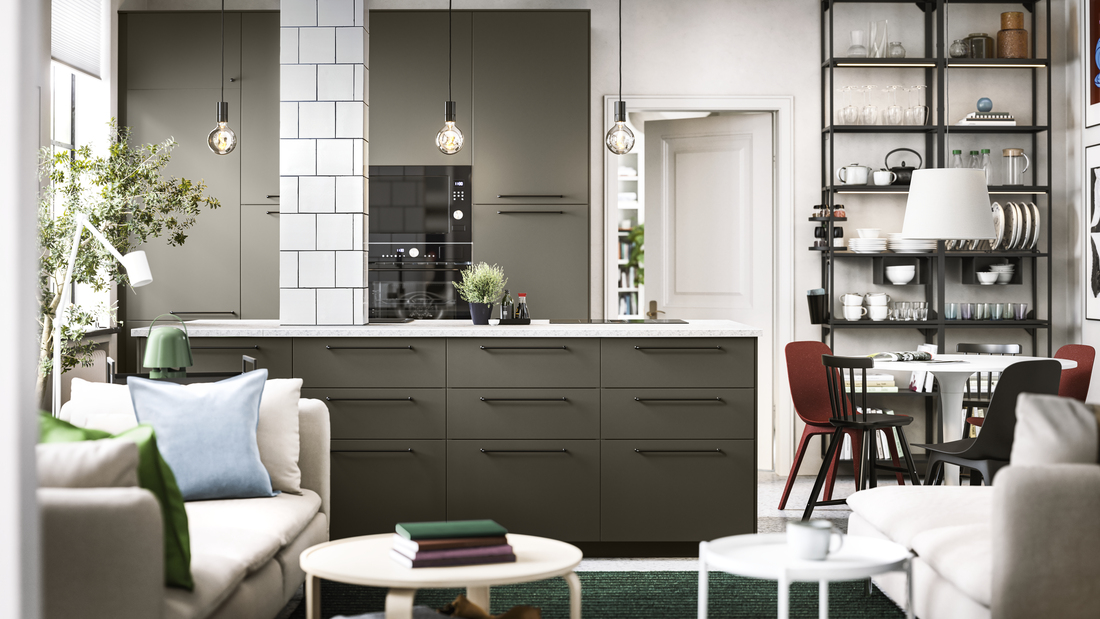
The cabinets are assembled, the layout of the kitchen is envisioned, but one crucial step remains: mounting them to the wall. Wall cabinets help turn empty space into useful storage without cluttering the floor.
However, installation needs to be done carefully so that the cabinets are level, easily reachable, and securely mounted. Let's understand the basic steps before you get started.
How to hang kitchen cabinets in 7 steps
In general, hanging kitchen cabinets starts with determining the layout, identifying the wall material, marking positions, installing the support system, hanging the frame, ensuring the cabinets are level, and finally securing them.
These steps are best completed before filling the cabinets with kitchenware. Here is a step-by-step basic guide for you.
1. Determine the position and height of the cabinets
Start by deciding which area of the wall to use. Take into account the location of base cabinets, countertops, stove, sink, and the clearance needed for cabinet doors to open without obstruction.
Use a tape measure and a spirit level to draw a horizontal reference line. Do not rely solely on ceiling or floor lines, as they might not be perfectly level. Measuring accurately from the beginning ensures multiple cabinets line up neatly when installed side by side.
2. Identify the wall type before drilling
Concrete, brick, and drywall have different properties and fastener requirements. Therefore, screws or wall plugs cannot be selected based on cabinet size alone.
This is a critical step because wall cabinets must support the weight of both the cabinet itself and the items stored inside.
3. Mark the mounting points carefully
Once the position is determined, mark the mounting points according to the product assembly instructions. Ensure the marked line remains horizontal before drilling holes.
For systems using a suspension rail, this step determines the overall alignment of the cabinets. A tilted rail will cause the entire row of cabinets to look misaligned.
4. Install the rail or support hardware
A suspension rail helps align and attach cabinets to the wall. It serves as a component that simplifies the mounting process onto the wall.
5. Hang the cabinet frames
Once the support system is securely mounted and level, place the cabinet frame according to the assembly instructions. If the cabinet is large or heavy, do not force yourself to install it alone.
Cabinets should ideally remain empty so they are easier to lift and adjust. Components such as shelves, doors, or accessories can be installed after the frame is properly positioned, provided the assembly instructions permit it.
6. Level and connect the cabinets
If you are installing multiple cabinets side by side, double-check the top, bottom, and side alignment of each frame. Ensure the gaps between cabinets are consistent before tightening all fasteners.
This step also helps the doors look neat when installed. On some systems, hinge positions can still be adjusted so that the height, depth, or position of the doors can be fine-tuned after mounting.
7. Check stability before using the cabinets
After installation is complete, recheck every connection and cabinet stability before filling them. Avoid immediately loading cabinets with heavy items.
Follow the weight limits and instructions for each product. For example, the ENHET wall frame with shelves (40 x 30 x 75 cm) has a maximum load capacity of 8 kg per shelf, according to IKEA Indonesia product information.
Read also: Aesthetic kitchen cabinet ideas for a more enjoyable cooking experience
IKEA wall cabinet options for your kitchen needs
After understanding how to install them, you can choose storage types based on room size and items to store. Explore the IKEA kitchen cabinet category to view closed and open storage options.
1. METOD for modular kitchen layouts
METOD wall cabinets are suitable if you want a modular kitchen system with customizable configurations. The cabinet frame is 18 mm thick and can be paired with the METOD suspension rail for wall mounting.
METOD also comes in various wall cabinet dimensions. These options make it easy to optimize vertical space, whether for storing plates, glasses, ingredients, or cooking equipment.

2. ENHET for compact closed storage
The ENHET wall cabinet with door measures 60 x 32 x 75 cm and features two adjustable shelves. Cabinets like this help conceal smaller items, keeping the kitchen looking calm and organized.

3. KNOXHULT for wall cabinets in a single package
The KNOXHULT wall cabinet with door comes complete with cabinet, door, shelf, hinges, and fittings. The variant listed on IKEA Indonesia measures 80 x 31 x 75 cm and must still be secured to the wall using appropriate mounting devices.

4. Open ENHET for frequently used items
For easier access, the ENHET wall frame with shelves can be an alternative. The open design makes it easy to see jars, tableware, or everyday items without having to open doors.
This 40 x 30 x 75 cm frame can also be linked to multiple frames using the included clip fittings.

5. KUNGSFORS for open wall storage
If you need open storage for cookware, the KUNGSFORS suspension rail with shelf and rail offers a stainless steel system that can be combined with other products in the same series.
This configuration uses shelves and hanging rails to make full use of the kitchen wall space. Wall mounting screws are sold separately and must be chosen to suit your home's wall structure.

Tips for a more comfortable wall cabinet layout
In addition to being sturdy, cabinet placement should support your cooking routine. Store frequently used items on easily accessible shelves, while rarely used gear can be placed higher up.
Closed cabinets can be used to reduce visual clutter, while open shelves provide quick access. Combining both creates a dynamic storage mix without making any wall feel heavy.
Read also: Recommended kitchen cabinets for an organized home
FAQ about hanging kitchen cabinets
Wall cabinets must be securely mounted using fasteners that suit the wall construction and product assembly instructions.
No. Concrete, brick, and drywall may require different types of screws or wall plugs.
METOD can be fitted with a suspension rail to help align and mount the cabinet on the wall.
Installation depends on cabinet size, wall type, and your level of experience. For heavy cabinets or unknown wall conditions, hiring a professional is the safer choice.
Maximize your kitchen walls with the right storage
Hanging kitchen cabinets properly is not just about making them look straight. You also need to consider wall material, support systems, connection strength, and placement to ensure the kitchen remains convenient for daily use.
From the modular METOD system, ENHET and KNOXHULT cabinets, to open storage like KUNGSFORS, you can tailor solutions to your kitchen space and daily routine. Explore IKEA Indonesia's range of kitchen cabinets to find the perfect storage combination for your wall space.