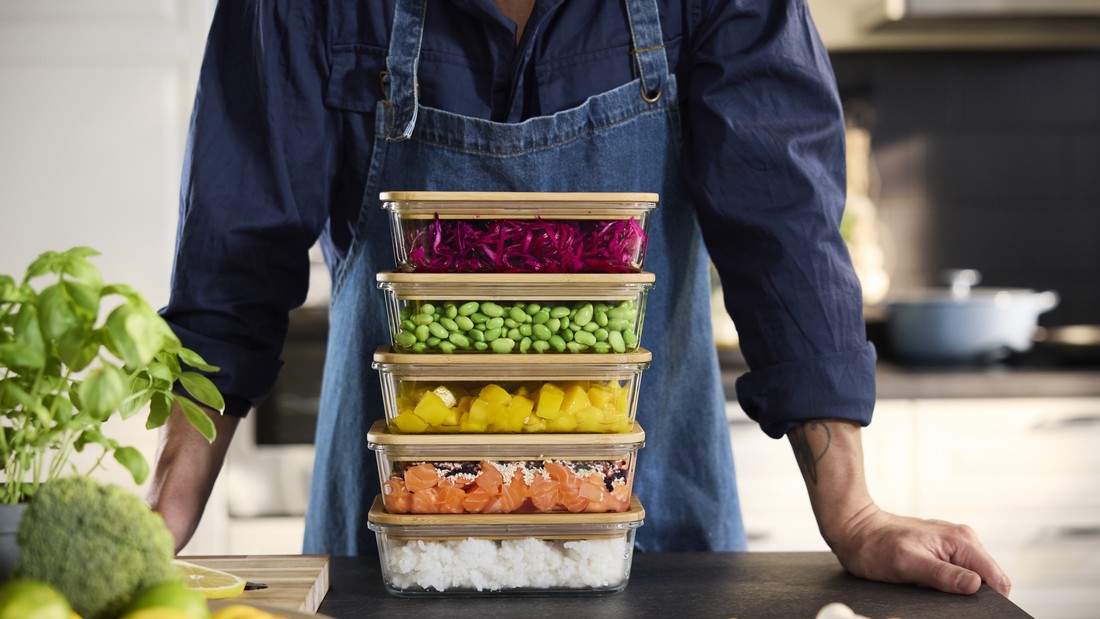
Ants that frequently appear in your home are usually attracted to food scraps, sugary drinks, or damp areas. Their presence can affect cleanliness, especially when they have established trails leading to the kitchen or food storage areas.
There are several ways to get rid of ants, ranging from natural ingredients to insect-killing products.
Each method works differently and has varying levels of effectiveness, so it is important to choose a method that suits your home's conditions. Let's take a look at the methods below.
Keeping your home clean and storing food in sealed containers are important steps to reduce the things that attract ants. Choose an ant-control method based on your home's conditions and use ant-killing products according to the safety instructions on the packaging.
How to get rid of ants naturally and with chemical methods
Getting rid of ants can start with simple ingredients available at home or methods that require specialized products. Here are several options that can help reduce ants while also disrupting their trails.
1. White vinegar and acidic solutions
White vinegar contains acetic acid, which can help remove the scent trails ants use to follow a path. This method is suitable for areas frequently visited by ants to help disrupt their movement patterns.
Mix white vinegar and water in a 1:1 ratio in a spray bottle. Spray or wipe the mixture along ant trails, tables, window frames, and other frequently visited areas, then repeat after cleaning the surface.
2. Herbs and kitchen spices
Some herbs and spices have strong scents that can interfere with ants' sense of smell. These ingredients can be used as simple barriers in areas that frequently become ant entry routes.
Cinnamon can be sprinkled along ant trails or into cracks, while chili, pepper, black pepper, and cloves can be placed in areas prone to ant activity. Coffee grounds can also be used as an additional measure, although the effectiveness of these ingredients may vary depending on the conditions of each home.
3. Citrus (lemon or orange peels)
The citrus scent from lemons and orange peels can help disrupt ants' sense of smell. This can be a simple option for kitchens or other areas frequently visited by ants.
Squeeze lemon or orange juice, mix it with water, and spray the solution along ant trails. Orange peels can also be placed in kitchen corners or near ant trails, then replaced as soon as they begin to rot.
4. Essential oils
Some essential oils, such as peppermint and cinnamon oil, have strong scents that may help repel ants. They are more suitable as a repellent or supplementary method rather than the only solution for dealing with the source of an infestation.
Mix 10–20 drops of peppermint oil with about 2 cups of water in a spray bottle. Spray the mixture on window frames, doors, or ant trails, then use it carefully and keep it away from children and pets, especially cats.
5. Other natural ingredients
Ingredients such as garlic, betel leaves, flour, and talcum powder are also commonly used as home remedies to disrupt ant trails. Their effectiveness may vary, so they are best used as supplementary measures.
Garlic or betel leaves can be crushed and placed in areas frequently visited by ants. Flour and talcum powder can be used as barriers around certain gaps, then cleaned regularly to prevent the area from becoming dirty.
6. Hot water and liquid detergent
Hot water can be used on visible ant nests outdoors to kill ants that come into direct contact with it. Use this method carefully, as hot water can cause burns and damage plants or certain surfaces.
Liquid detergent mixed with water can also help remove ant trails from surfaces. Spray the mixture along ant trails, then wipe the area clean to remove any remaining scent that other ants may follow.
7. Insecticide chalk
Insecticide chalk can be used by drawing a line around areas where ants enter the home. These products work according to their active ingredients, so they should be used according to the instructions on the packaging.
Apply the chalk to cracks or entry points frequently used by ants. Avoid using it near food, eating utensils, children, and pets unless the product label specifically states that it is safe for such areas.
8. Diatomaceous earth
Food-grade diatomaceous earth (DE) can be sprinkled lightly along trails and cracks frequently used by ants. DE particles work by disrupting the protective outer layer of insects, which can cause them to lose moisture.
Make sure to use food-grade DE and keep the area dry to maintain its effectiveness. Wear a mask when applying it to avoid inhaling the dust, and keep it out of the reach of children and pets.
9. Boric acid or borax
Boric acid can be used as bait that ants carry back to their nest. This method requires special care because boric acid and borax can be harmful if ingested in certain amounts.
Use the product according to the instructions on the label and place the bait somewhere inaccessible to children and pets. Avoid placing it near food and use a closed bait station if available.
IKEA product recommendations to help prevent ants
Keeping food covered can help reduce sources that attract ants into your home.
IKEA offers a variety of food storage containers that help keep food organized, maintain a clean area, and reduce exposure to uncovered food. Here are some recommendations:
1. IKEA 365+
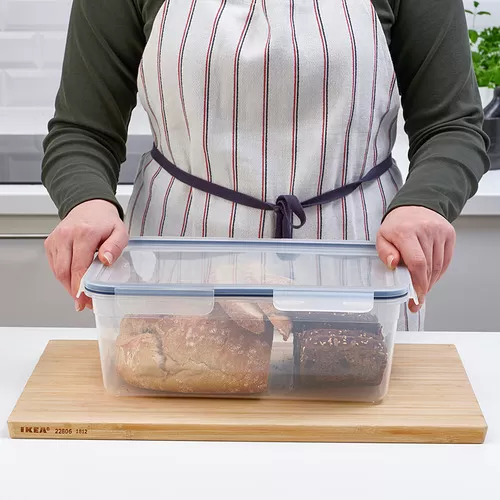
IKEA 365+ helps you store dry food in cabinets or drawers in a more organized way. It is available in various sizes and can be stacked, making storage space more efficient.
The snap-and-lock lid closes securely, making it suitable for storing and carrying food. The transparent container also makes it easy to see the contents without having to open each container.
2. PRUTA
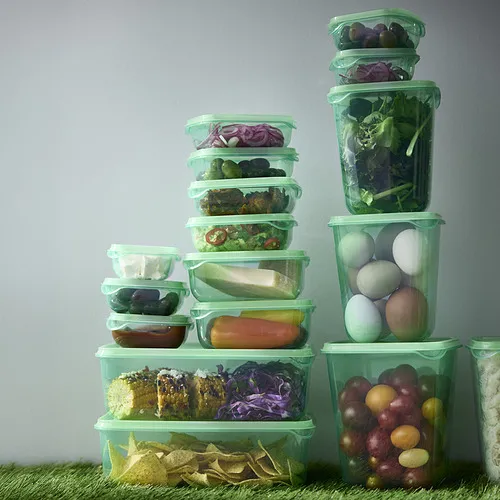
PRUTA is available in several sizes for storing different types of food, from snacks to larger portions. These containers help store leftovers so they are not left uncovered in the kitchen.
Their stackable design helps save space in kitchen cabinets. The transparent containers also make the contents easier to see, helping you keep food stored in a more organized manner.
3. SPLITTERNY
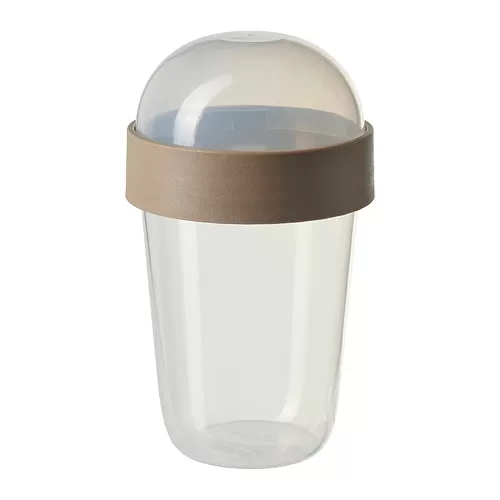
SPLITTERNY is designed as a practical snack container for travel. It can be used to store fruit, nuts, and other dry food ingredients.
Storing food in a closed container helps reduce spills while traveling. Its practical size also makes it convenient for carrying snacks, making it easier to keep food neat and organized.
4. HAVSTOBIS

HAVSTOBIS can be used to store snacks, salads, small dishes, and leftovers. It is available in various sizes with different lid options to suit different storage needs.
The transparent container makes it easy to see the contents without opening it first. The glass material does not easily absorb odors or become discolored by foods such as tomato sauce, making it easier to clean.
The containers can be stacked to save space in cabinets and refrigerators. However, they are not leakproof, so they should not be used to carry liquid foods such as soup in a bag.
5. BESTÄMMA
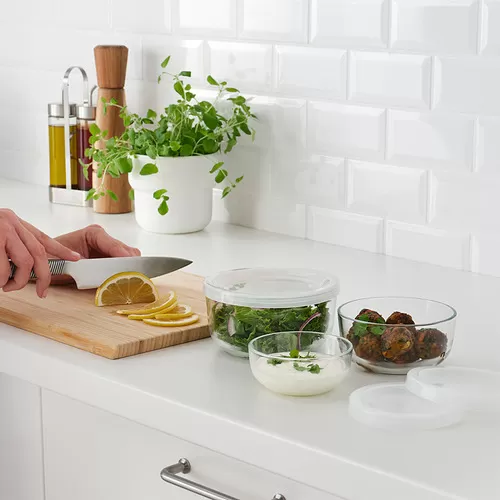
BESTÄMMA helps store leftovers so they can be organized and consumed more easily later. Some of the containers can be stacked, helping save storage space in the refrigerator.
The glass material does not easily absorb odors or become discolored, making the containers easier to clean. Their transparent design also makes it easy to see stored food without having to open the container.
Read also: How to deal with termites in bedroom, living room, and kitchen
Prevent ants from coming back with proper food storage
There are several ways to get rid of ants, including cleaning ant trails, sealing entry points, keeping the kitchen clean, and storing food in sealed containers.
IKEA offers a variety of food storage containers that help keep food neatly stored, keeping your home cleaner and making it less attractive to ants.
Explore various food storage solutions for your home at IKEA.co.id and choose containers that suit your kitchen storage needs.
FAQ
Ants may appear when they find a suitable source of food, water, or shelter. Changes in weather can also cause ants to move and search for new locations.
Ants can return if sources of food, water, or entry points are still available. Cleaning the area and sealing entry points can help reduce the likelihood of ants returning.
Follow the ants' trail slowly to observe the direction they are moving. Nests are often located in wall cracks, under floors, damp areas, or protected areas outside the house.
Food scraps, spilled sugary drinks, trash cans, and damp areas can attract ants. Homes with many entry points or cracks also make it easier for ants to reach food sources.
The amount of time varies depending on the number of ants, the location of the nest, and the method used. If the source of the colony is not addressed, ants may return even after their numbers temporarily decrease.