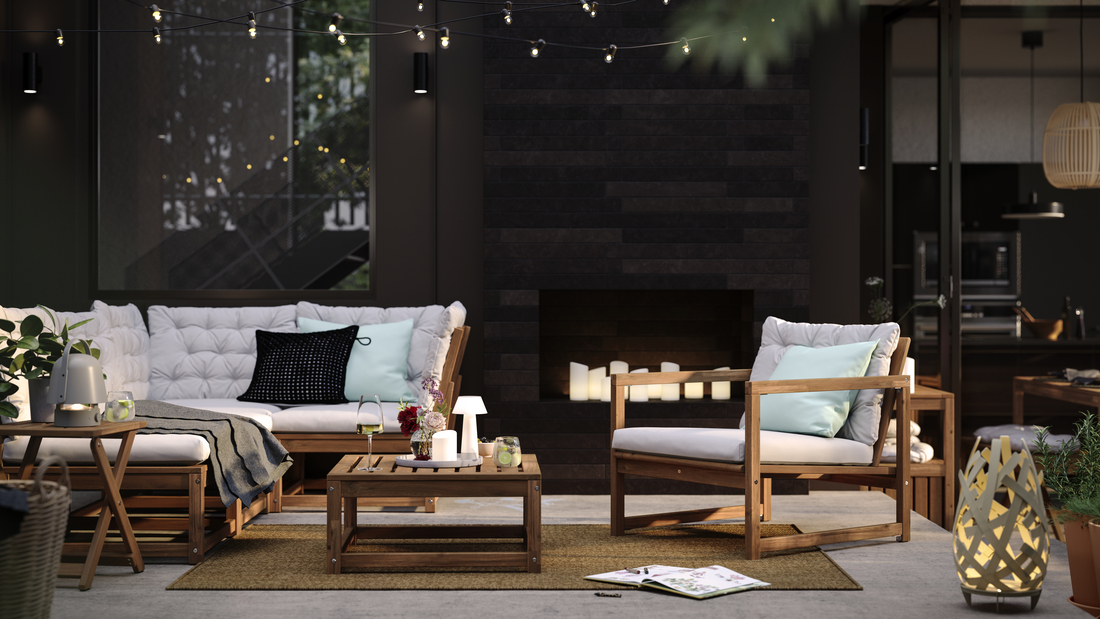
LED lights are available in various wattages, from 5 watts, 8 watts, and 10 watts to higher options. Wattage can be one consideration when choosing a light, but it does not always determine how bright the room will be.
In addition to wattage, lighting needs are influenced by the size of the room, the activities taking place, the number of light sources, and the color of the light used.
Therefore, when choosing light wattage, also consider lumens and the condition of the room to ensure the lighting feels suitable and comfortable. Here is a complete guide.
Understand the difference between watts, lumens, and lux
Before determining the wattage of a light, there are three terms you need to understand. Together, they can help you determine your lighting needs more accurately.
- Watt (W): indicates the electrical power used by the light.
- Lumen (lm): indicates the amount of light emitted by the light.
- Lux (lx): indicates the amount of light received by a particular area.
So, a light with a higher wattage is not automatically the best choice. To compare brightness, lumens are more relevant, while wattage helps you understand energy consumption.
How many watts for an LED light in each room?
Every room in a home has a different function. Bedrooms, living rooms, kitchens, and workspaces do not necessarily require the same level of lighting. Here is a guide to LED light wattage for several rooms in your home.
Bedroom
Bedrooms generally need comfortable lighting for relaxation. As a starting point, a bedroom under 10 m² can use 5–10 watts of LED lighting, a 10–20 m² bedroom around 10–15 watts, and a bedroom over 20 m² around 15–20 watts.
These figures are not absolute guidelines. The number of light sources, light placement, and activities such as reading can also affect your lighting needs.
Living room and family room
Living rooms and family rooms need sufficient lighting for gathering and everyday activities. For a 10 m² room, a starting point is around 10–20 watts of LED lighting, while a 15–20 m² room may need around 15–40 watts, and a larger room around 25–50 watts.
These lighting needs can be distributed across several light sources to create more even illumination.
Kitchen and workspace
Kitchens and workspaces need clearer lighting for activities that require attention to detail. You can consider around 15–30 watts of LED lighting for a kitchen and 10–20 watts for a workspace, then adjust based on the size of the area and the number of lights.
In addition to wattage, consider lumens and light distribution so the area is not too dim or glaring. For lighting needs, the range can be around 300–500 lumens per m² for kitchens and 400–500 lumens per m² for workspaces.
Bathroom and circulation areas
Bathrooms, hallways, and circulation areas need sufficient lighting for everyday activities. As a starting point, around 5–10 watts of LED lighting can be considered for smaller areas, with adjustments based on the size and lighting requirements.
Also read: What is lamp lumen? Understand its meaning and how to determine light brightness
Adjust lighting needs to the room size
Once you understand the room's function, consider the area size, number of light sources, and required brightness. Here are several things you can consider:
- Match the room size. Larger rooms generally need more light, but they do not always require a single high-wattage light.
- Pay attention to lumens. Use lumens as a reference for brightness, because wattage indicates energy consumption rather than how bright the light will be.
- Consider the number of light sources. Several light sources can help distribute illumination more evenly than relying on a single light.
- Consider light placement. Proper placement can help reduce dark areas and glare.
- Consider the interior colors. Light-colored surfaces can help reflect light, making the room feel brighter.
This means you do not need to focus on a single wattage figure. Adjust the lumens, number of lights, installation position, and room function so the lighting remains comfortable for everyday activities.
LED light recommendations for different needs
After understanding how to choose wattage and lumens, you can compare products based on wattage, brightness, light color, and lamp function.
IKEA provides a variety of LED light options, from bulbs to panels and wall lights with integrated LEDs for all your room lighting needs. Here are some options.
1. TRÅDFRI LED bulb E27 806 lumen

For rooms that need bright yet flexible lighting, TRÅDFRI LED bulb E27 806 lumen uses 8 watts and produces 806 lumens.
Its color temperature can be changed between 2200K, 2700K, and 4000K, while the brightness can also be dimmed wirelessly.
2. PHILIPS LED bulb, 8W E27 3000K 230V

If you are looking for an LED light with straightforward specifications, PHILIPS LED bulb 8W E27 3000K uses 8 watts and produces 770 lumens. This product has an E27 fitting, CRI 90, and an estimated lifespan of around 15,000 hours.
3. SOLHETTA LED bulb E14 250 lumen, round opal white

For softer lighting, SOLHETTA LED E14 250 lumen uses 1.8 watts and produces 250 lumens with a warm white color temperature of 2700K.
The bulb has a CRI of 90 and an estimated lifespan of around 25,000 hours, making it suitable for lights that require a lower level of illumination.
4. LEDSJÖ LED wall lamp, stainless steel

Not all LED lights come in the form of bulbs. LEDSJÖ LED wall lamp uses an integrated LED with a power consumption of 9 watts and produces 720 lumens. Its light color is 2700K, and the lamp has an IP44 rating and has been tested for use in bathrooms.
5. FLASKPOST LED cabinet/wall lamp, chrome-plated, 82 cm

For areas that require more focused lighting, FLASKPOST LED cabinet/wall lamp 82 cm uses an integrated LED with a power consumption of 11 watts and produces 1,100 lumens.
Its 2700K color temperature provides warm white light, while the lamp head can be directed according to your needs.
Choose the right light color for your activities
In addition to wattage and lumens, also consider the color temperature measured in Kelvin. Light color can influence the atmosphere as well as comfort when performing activities in a room. Here are three common light color options:
- Warm white (2700–3000K): produces warm, yellowish-white light that feels comfortable and relaxing. Suitable for bedrooms, family rooms, or relaxation areas.
- Neutral white (around 4000K): provides more neutral and clear lighting. This option is suitable for kitchens, dining rooms, or work areas that require sufficiently clear illumination.
- Cool white or daylight (5000K and above): produces brighter and crisper white light. It can be used in areas that require greater visibility and focus.
Also read: LED light bulb recommendations 2026: A guide to choosing the right bulbs for your home
Avoid mistakes when choosing light wattage
After understanding the relationship between wattage, lumens, and room function, you can avoid the following common mistakes:
- Assuming that higher wattage always means brighter light.
- Not checking lumens before buying a light.
- Using the same standard for every room even though their activities are different.
- Ignoring the room size and number of light sources.
- Choosing a light color without considering the activities performed in the room.
This way, you are not simply looking for the brightest light, but for lighting that feels right for your everyday needs.
Find LED lights that suit your home
Choosing the right LED light is not only about wattage. Room size, activities, number of light sources, lumens, and light color should also be considered so the lighting remains comfortable for everyday use.
IKEA provides a variety of LED light options with different wattages, brightness levels, and light characteristics. Match your choice to the needs of each room so the lighting feels just right without using excessive energy.
Visit IKEA.co.id to discover more lighting options and inspiration that can help you arrange your home according to your everyday needs.
FAQ
A 10-watt LED light can be used in various rooms, but its suitability depends on the lumens, room size, number of light sources, and activities taking place in the room.
Not always. Wattage indicates the electrical power used, while lumens indicate the amount of light produced. Because LED efficiency varies, a lower-wattage light can still produce sufficient brightness.
As a general guide from IKEA, a bedroom under 10 m² can use around 5–10 watts of LED lighting, while a 10–20 m² bedroom can use around 10–15 watts. Actual needs should still be adjusted based on activities and the number of light sources.
You can estimate the total lumen requirement by multiplying the room area in square meters by the target lux level. Once you have the total lumens, adjust the number of lights based on the lumens produced by each product.
Consider lumens, room size, activities, number of light sources, light color, and fitting type. Combining these factors can help you determine lighting that is more suitable than simply looking at wattage.