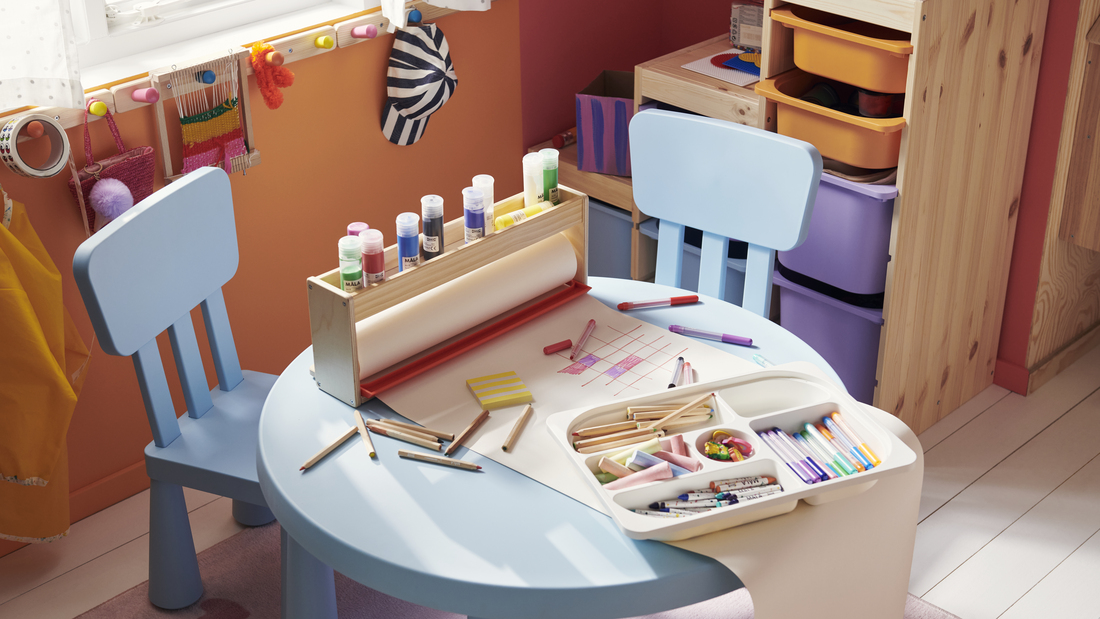
Children aged 4–5 are actively exploring their surroundings through movement, imagination, and new experiences. Creative play can be a fun way to help children learn while developing skills appropriate for their stage of growth and development.
You do not need expensive toys, as parents can use simple household items instead. From role-playing to creating artwork, every activity can give children an opportunity to explore and be creative. Let’s take a look at the ideas below.
Creative play does not have to be expensive or require special toys to benefit children. Simple materials with proper guidance can become fun learning tools for children aged 4–5.
Characteristics of creative play suitable for children aged 4–5
Creative play for children aged 4–5 should give them room to explore without too many rules. Simple household materials can also be used as long as they are safe and children receive appropriate supervision.
Here are the key characteristics:
-
Uses safe and easily accessible materials.
-
Encourages children to use their imagination and create something.
-
Involves movement, touch, sound, or colors.
-
Allows children to choose and try things independently.
-
Does not focus on achieving a perfect result.
-
Matches the child’s abilities and interests.
-
Can be played without using screens.
-
Gives children opportunities to tell stories and communicate.
10 Creative play ideas for children aged 4–5
There are many simple games and activities that can be done at home without special equipment. Here are 10 ideas that can help develop children’s imagination, motor skills, language, creativity, and thinking abilities.
1. Role-playing
Role-playing helps children use their imagination while imitating situations they encounter in everyday life. This activity can also develop speaking, communication, sharing, and empathy skills.
Materials: Fabric, hats, bags, spoons, cardboard boxes, or safe household items.
Steps:
-
Choose a play theme together with your child.
-
Choose roles such as a doctor, cashier, teacher, or family member.
-
Set up a corner of the house as a play area.
-
Let your child choose their own role.
-
Encourage your child to create a simple story.
-
Ask open-ended questions during the game.
-
Switch roles so your child can try different characters.
2. Playing with dolls or pretend cooking
Playing with dolls and pretend cooking allows children to learn through activities that are familiar from everyday life. Children can develop language and empathy skills through conversations and interactions between characters.
Materials: Dolls, pots, spoons, plates, paper, or safe household items.
Steps:
-
Set up an area as a kitchen or dollhouse.
-
Choose the dolls or characters to play with.
-
Create a simple story together with your child.
-
Encourage your child to prepare pretend food.
-
Encourage your child to speak as each character.
-
Let your child decide how the story develops.
-
Switch roles so your child can try different characters.
3. Turning a cardboard box into a tv or stage
An old cardboard box can be transformed into a simple television or stage for pretend play. Children can act as singers, hosts, or story characters to build confidence and self-expression.
Materials: Large cardboard box, markers, fabric, and scissors with adult supervision.
Steps:
-
Prepare a cardboard box that is large enough.
-
Cut a screen-shaped opening on the front.
-
Decorate the cardboard box together with your child.
-
Use fabric as stage curtains.
-
Let your child choose the show they want to perform.
-
Let your child tell stories, sing, or role-play.
-
Give your child praise after the performance.
4. Folding origami
Simple origami can help children develop concentration, hand-eye coordination, and patience. Children can also explore different shapes without having to follow overly complicated patterns.
Materials: Colored paper, scissors, and glue.
Steps:
-
Choose paper that is easy to fold.
-
Show your child how to fold a simple shape.
-
Start with shapes such as a boat or bird.
-
Help your child follow each fold slowly.
-
Let your child try other shapes freely.
-
Add drawings or decorations to the origami.
-
Display the finished creations where they can be easily seen.
5. Painting and mixing colors
Painting gives children an opportunity to learn about colors while expressing their ideas through pictures. Mixing colors can also make the learning process feel like a fun experiment.
Materials: Watercolors or food coloring, paper, brushes, and stamps made from potatoes or vegetables.
Steps:
-
Prepare the paper and painting supplies.
-
Place several colors on a palette.
-
Show your child how to mix two colors.
-
Let your child experiment with creating new colors.
-
Encourage your child to paint with a brush or their fingers.
-
Use vegetable pieces as stamps.
-
Ask your child to tell you about the picture they created.
6. Playing with clay or playdough
Playdough provides a sensory experience through squeezing, pressing, rolling, and shaping. This activity can also help strengthen the hand muscles needed for various fine motor skills.
Materials: Playdough, flour for making homemade playdough, leaves, paper, or other large and safe objects.
Steps:
-
Prepare playdough in several colors.
-
Encourage your child to squeeze and roll the playdough.
-
Make simple shapes such as animals or food.
-
Use molds to create different shapes.
-
Add leaves or paper as decorations.
-
Let your child create shapes based on their imagination.
-
Ask your child to tell you about their creation.
7. Playing with puzzles
Puzzles encourage children to match shapes and put pieces together to form a complete picture. This game can help develop spatial skills, memory, concentration, and problem-solving abilities.
Materials: An age-appropriate puzzle with around 6–12 pieces or homemade memory cards.
Steps:
-
Choose a puzzle with an appropriate level of difficulty.
-
Place all the pieces in the play area.
-
Encourage your child to find matching pieces.
-
Assemble the puzzle step by step.
-
Offer help if your child begins to have difficulty.
-
Use matching cards for a memory game.
-
Gradually increase the level of difficulty.
8. Making a volcano with natural materials
Simple experiments can introduce children to the concept of cause and effect through hands-on experiences. This activity can also be developed into a sensory game and an opportunity to explore the environment while prioritizing safety.
Materials: Baking soda, vinegar, a container, household objects, a blindfold, and large toy objects for sorting activities.
Steps:
-
Place baking soda in a small container.
-
Slowly pour in the vinegar with adult assistance.
-
Observe the bubbles that appear.
-
Ask your child what they can see.
-
Encourage your child to guess objects by touch.
-
Create a game where your child finds objects based on color or shape.
-
Encourage your child to group objects according to their categories.
9. Playing traditional games (hopscotch or congklak)
Traditional games can be a great activity that combines movement, simple rules, and social interaction. Hopscotch helps develop balance, while congklak can introduce counting and taking turns.
Materials: Chalk and a flat surface for hopscotch, or a congklak board with appropriately sized playing pieces.
Steps:
-
Draw a hopscotch pattern using chalk.
-
Show your child how to jump according to the pattern.
-
Start with simple rules.
-
Take turns playing with your child.
-
Use congklak to introduce counting.
-
Help your child understand the rules of the game.
-
Adjust the activity according to the available space and your child’s abilities.
10. Playing musical instruments
Playing music helps children learn about rhythm through sound and body movement. Children can also make simple musical instruments themselves to develop creativity and motor coordination.
Materials: Cardboard, rubber bands, bottles filled with rice, pots, or spoons.
Steps:
-
Make a simple musical instrument together with your child.
-
Use cardboard and rubber bands to make a toy guitar.
-
Fill a bottle with a small amount of rice to make a maraca.
-
Encourage your child to follow simple beats.
-
Play your child’s favorite songs.
-
Add movements such as dancing or jumping.
-
Give your child an opportunity to create their own rhythm.
Read also: Minimalist gaming desk setup inspiration for modern gamers
Recommended toys for 4–5-year-olds at IKEA
Toys can provide children with opportunities to play while also helping them develop a variety of skills. The right toys should be age-appropriate and give children room to draw, shape, build, or create something of their own.
IKEA offers a variety of toys and activity supplies suitable for children aged 4–5 years. Here are some recommendations.
1. MÅLA chalk
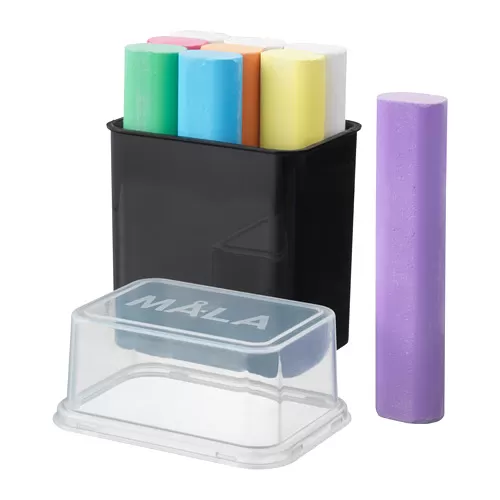
MÅLA large chalk is easier for small hands to grip while drawing or writing. The MÅLA series is also designed to support children’s creative activities, using materials that are safe when used according to the product instructions.
Drawing activities can help children develop hand-eye coordination. They can also express their ideas through shapes, lines, and simple pictures.
2. BLÅVINGAD playdough cutters
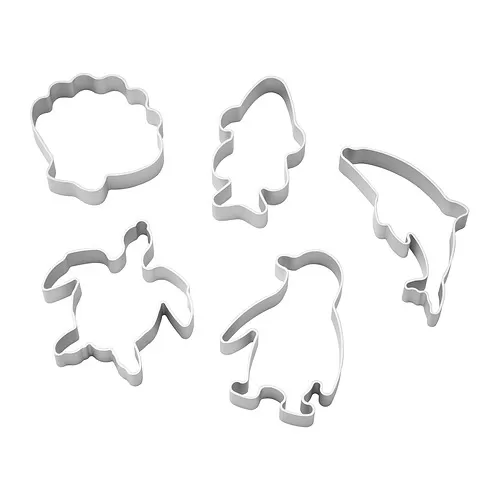
BLÅVINGAD playdough cutters feature shapes inspired by underwater life, such as turtles, penguins, fish, dolphins, and shells. Children can use these shapes to create different designs while they play.
The cutters are designed to be easy for small hands to use. Pressing and shaping playdough can help develop fine motor skills and hand-eye coordination.
3. MÅLA cardboard town template
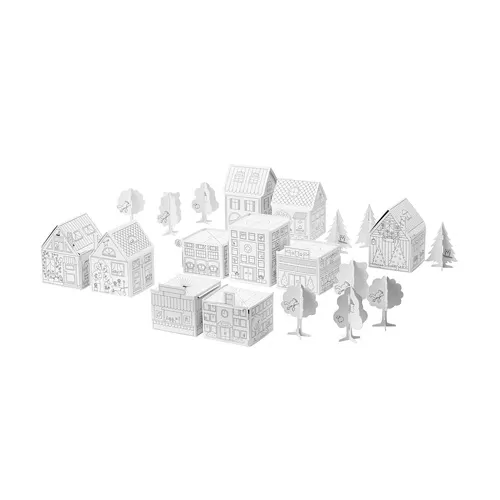
The MÅLA cardboard town template allows children to create a miniature town with different elements such as houses, schools, shops, stations, and trees. Children can fold, paint, and arrange the pieces to build their own little town.
This activity is suitable for children who enjoy arts and crafts. The process of creating and assembling the pieces can also help develop creativity and fine motor skills.
4. MÅLA coloured paper
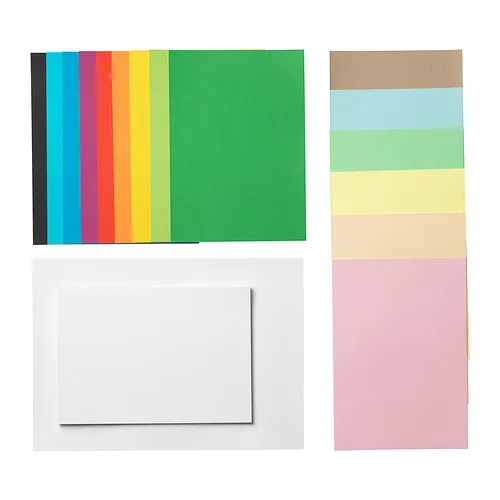
MÅLA coloured paper can be used for various creative activities, such as drawing, painting, cutting, and making crafts. The selection of sizes and colours gives children plenty of room to explore different ideas.
The paper is thick enough to be used with watercolours or other types of paint as needed. Children can also combine it with other materials to create a wider variety of artwork.
5. SANDLÖPARE colouring paper roll
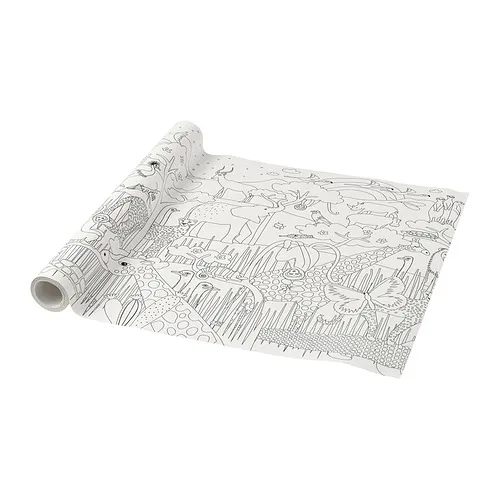
The SANDLÖPARE colouring paper roll provides a long drawing surface featuring illustrations of animals and plants. Children can roll out the paper and colour the illustrations using markers or watercolours.
The large drawing area allows children to get creative together with friends or parents. Colouring can also be a relaxing activity that encourages children to express their ideas through colours and pictures.
Read also: Creative Educational Games for Toddlers: Play While Sharpening the Mind
Why creative play is important for children aged 4–5?
Creative play gives children the opportunity to learn through hands-on experiences. Each activity can provide different forms of stimulation that support children’s physical, cognitive, social, and creative development. Here are some of the key benefits:
-
Fine and gross motor skills: Helps develop hand coordination, muscle strength, balance, and body movement.
-
Cognitive and problem-solving skills: Develops children’s ability to think, remember, sequence, and find solutions.
-
Social-emotional skills: Encourages empathy, communication, cooperation, and self-confidence.
-
Imagination and creativity: Encourages children to come up with ideas, create stories, and express themselves freely.
Developmental stages and characteristics of children aged 4–5
Children aged 4–5 generally become more skilled at physical activities such as running, jumping, climbing, and catching a ball.
Their fine motor skills also continue to develop through activities such as drawing, cutting, arranging objects, and completing tasks that require hand-eye coordination.
Cognitive and language skills develop rapidly at this age. Children begin to recognise colours, shapes, basic numbers, and sequences, as well as solve simple problems.
They also become increasingly interested in using their imagination, telling stories, engaging in pretend play, following simple rules, sharing, cooperating with others, and learning to manage their emotions.
Tips for parents to make the most of creative play
Parental guidance can make playtime more enjoyable and better suited to a child’s abilities. Give children room to explore while continuing to pay attention to safety and signs that they may be getting tired or losing interest.
Here are some tips:
-
Start with activities the child is already familiar with, then gradually increase the level of difficulty.
-
Let children choose the activities they enjoy and give them the freedom to explore.
-
Give specific praise for their effort and the process, rather than focusing only on the result.
-
Rotate activities regularly to keep children interested.
-
Adjust play sessions to around 15–30 minutes depending on the child’s condition and attention span.
-
Choose safe, non-toxic materials without small parts that could easily be swallowed.
-
Supervise children when they use scissors, paint, or other materials that require adult assistance.
-
Allow time for breaks and do not force children to continue playing when they become tired or frustrated.
Find the right creative activities for children aged 4–5
Creative play helps children aged 4–5 learn through enjoyable activities that are appropriate for their developmental stage. Parents can use simple materials available at home or choose toys that support creativity, motor skills, and imagination.
IKEA offers a variety of toys and activity supplies to support more creative playtime for children. Discover a wide selection of children’s products at IKEA.co.id and choose activities that suit your child’s interests and needs.
FAQ
Suitable activities include drawing, playing with playdough, making crafts, pretend play, and putting together puzzles. Choose activities that match the child’s abilities and can be done with parental supervision.
Start with activities that match your child’s interests, such as drawing their favourite characters or engaging in pretend play. Offer several activity options so your child feels they have some choice over what they want to do.
Playtime can be adjusted according to each child’s attention span and condition. Short sessions of around 15–30 minutes can be a good option, followed by a break or a change of activity when the child starts to lose interest.
Not always. Cardboard, paper, fabric, leaves, or other safe household items can be used for creative play. The most important thing is to choose age-appropriate activities that give children opportunities to explore.
Pay attention to activities that make your child enthusiastic, keep them engaged for longer, or that they frequently want to repeat. Children’s interests can change over time, so parents can regularly introduce a variety of activities.