Combining study and play areas can create a more flexible environment for children. You can clearly divide the space, for example placing a MICKE study desk and a ORFJALL chair on one side, and a carpet with toys on the other.
Use TROFAST storage boxes to organize toys neatly. This approach helps children understand the difference between study time and playtime while keeping them comfortable in the same space.
Study space design ideas in a child’s bedroom
If space is limited, the child’s bedroom can be a solution for creating a dedicated study area. Place the study desk near a window to get optimal natural lighting.
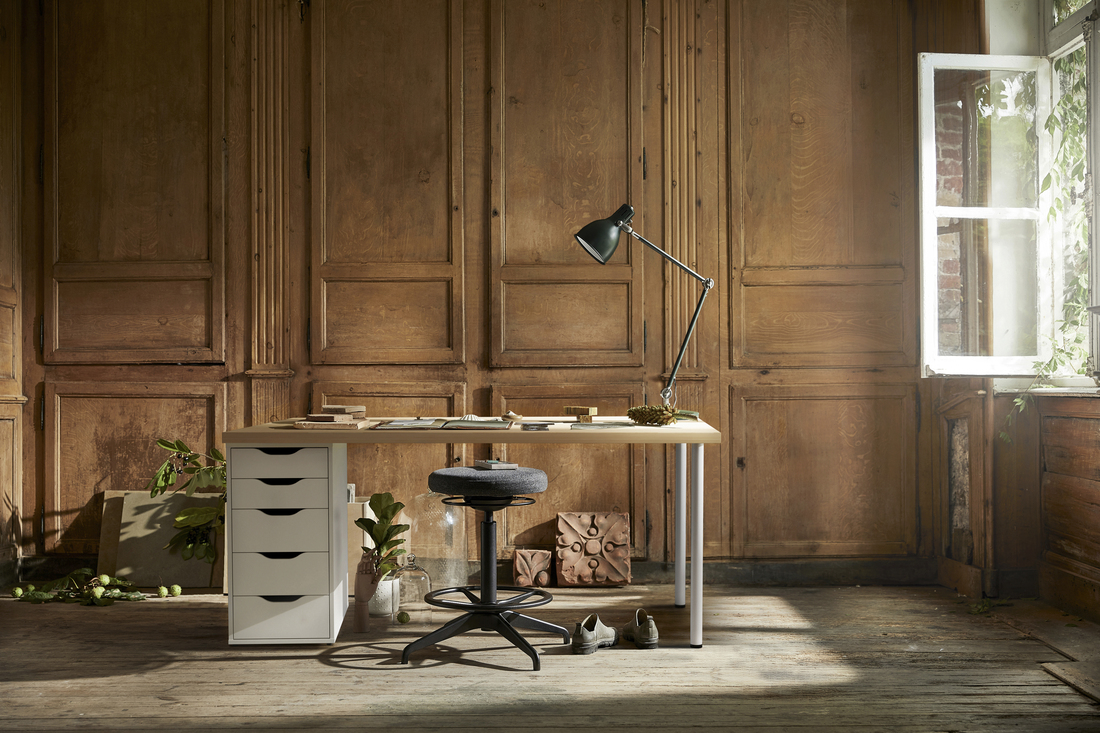
Use LACK wall shelves to store books without taking up much space. You can also add ALEX drawers under the desk to keep study supplies neat and easy to reach.
Decorations to create a fun learning atmosphere
Decorating a study space can help create a more lively and enjoyable atmosphere. You can add a TERTIAL desk lamp for comfortable lighting while studying.
Use a soft BUSSFIL rug to make children feel more comfortable, and add creative elements like MÅLA easel to support both learning and play. The right decoration not only enhances the space but also encourages imagination and learning enthusiasm.
Involving children in designing their study space
Involving children in creating their study space can be a simple step with a big impact. When children participate, they feel more connected to the space.
Let children choose their study room theme
Every child has different interests and imagination, so involve them in choosing the study room theme. Let them pick colors, decorations, or concepts they like, such as minimalist, nature-inspired, or their favorite characters.
Involve children in decorating the study space
Besides choosing a theme, encourage children to help decorate their study area. For example, arranging supplies on the desk, organizing books on shelves, or placing storage boxes as they like.
You can also add creative elements like MÅLA boards or drawing canvas so children can express their ideas and imagination. This activity helps them feel closer to the space they use every day.
Building a sense of responsibility for the study space
When children are involved in organizing their study space, they also learn to take responsibility for keeping it tidy. Encourage them to return books to shelves or organize items in drawers after use.
Helping children feel comfortable and own their space
A study space designed together creates a stronger sense of ownership. Children will feel more comfortable, engaged, and focused while studying at home. With the right furniture and personal touches, the study space becomes more than just a place to learn—it supports their growth and creativity.
Read also: Creative ways to make a child’s daily schedule with IKEA products
It’s time to prepare a study space for children at home