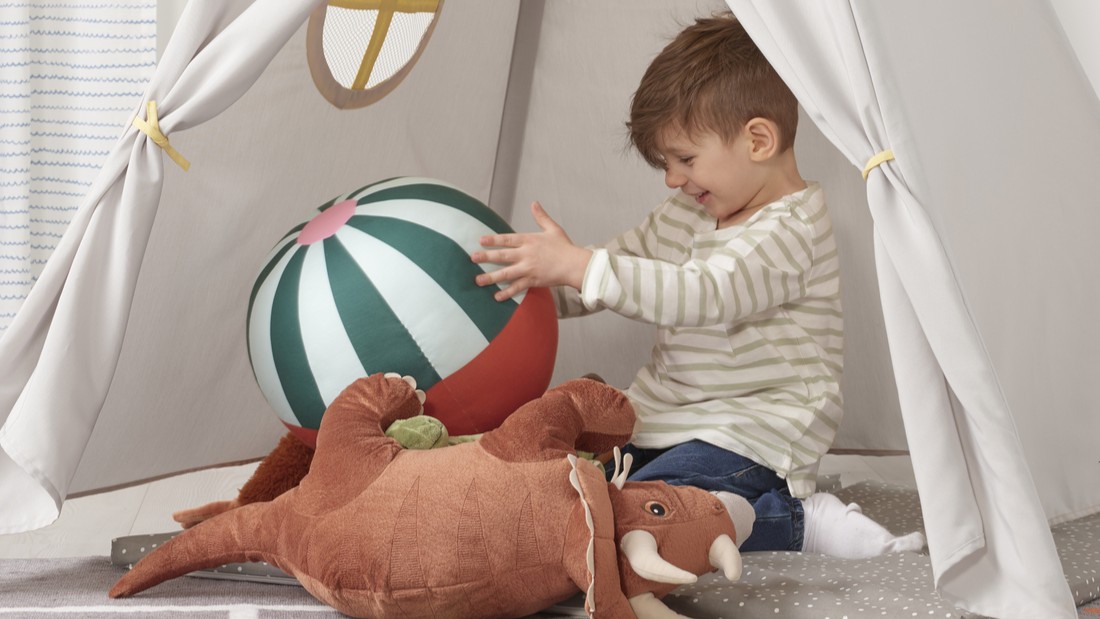
A garden or home yard can become an additional space for children to move, explore, and enjoy creative activities outdoors. You do not need to have a large yard to create a children's playground at home.
With the right division of areas, appropriately sized children's furniture, and practical storage, even a small corner of the yard can be used for various activities. From drawing to gardening, an outdoor area can provide a different play environment from an indoor playroom.
A children's playground does not have to be filled with lots of large play equipment. Open space for movement, a table for creative activities, seating, and easily accessible storage can already help create a more flexible play area.
Benefits of creating an outdoor play area for children
An outdoor play area gives children the opportunity to enjoy activities that are different from their indoor routines. In the yard, children can move more freely, play with objects from nature, draw, do creative activities, or spend time with family members.
You can make this area an extension of the indoor playroom. There is no need to turn the entire yard into a play area. Choose one suitable zone, then fill it with items that can be used for several activities at once.
This approach also helps the yard remain functional for other family members. Once playtime is over, lightweight furniture can be moved and play equipment can be stored away so the area can be used for other activities.
Read also: 10 inspiring children's playroom ideas for a comfortable and creative space at home
Choose a location for the children's playground that is easy to supervise
Before adding furniture or play equipment, first consider the location of the play area. Choose a part of the yard that can be seen from areas of the home frequently used by adults so children's activities are easier to supervise.
Also pay attention to the condition of the surface. A relatively level area will be easier to arrange with tables, chairs, or other play equipment. Avoid placing furniture in frequently used pathways so it does not obstruct children's movement.
You can also consider how conditions in the yard change throughout the day. An area that is shaded in the morning may not remain shaded in the afternoon or evening. Therefore, the position of the play zone should be adjusted according to the time when children use it most often.
Divide the playground into several simple zones
Instead of filling the yard with lots of items, you can create several small zones based on activities. This division makes the children's playground feel more organised while helping children understand the purpose of each area.
Not every zone needs to be available at the same time. Choose them based on the child's age, interests, and the size of your yard.
1. Area for drawing and creative activities
A child-sized table and chairs can become the centre of flexible activities. Children can use them for drawing, making crafts, playing with natural objects found in the yard, or enjoying snacks after playing.
If the yard is limited in size, choose a table that is not too large and is easy to move. Lightweight furniture makes it easier to change the play area arrangement according to children's activities.
You can also provide a dedicated box for paper, coloured pencils, chalk, or other creative supplies. Once the activity is finished, store away any items that are not designed to remain outdoors.
2. Gardening corner with children
A playground does not always have to include a slide or large play equipment. Several plant pots can become part of children's activities while introducing them to the process of caring for plants.
You can choose one corner of the yard and invite children to water plants, observe new leaves growing, or help move soil using equipment appropriate for their age.
Use pots that are positioned securely and make sure the surrounding pathway remains easy to access. This way, gardening can become part of the play experience without taking up too much space.
3. Imaginative play area
Empty space can actually be an important element in a children's playground at home. Children can turn it into a picnic area, a pretend shop, a place to create stories, or another type of play based on their imagination.
You can provide a small table, chairs, or several easy-to-move objects as support. There is no need to give every piece of furniture a fixed purpose.
A table used for drawing today can become a picnic table or part of role-playing activities on another occasion.
4. Zone for active movement
Leave part of the yard free from too much furniture. An open area gives children space to move, jump, play with a ball, or enjoy various simple games.
In a small yard, portable furniture can help. Once seated activities are finished, a lightweight table or stool can be moved so the open space for movement becomes available again.
Make sure items that are not being used are not scattered along the play area. Keeping the movement zone tidy also reduces the possibility of children tripping over items left behind.
5. A corner for resting
After plenty of movement, children also need a place to sit and rest. Place one or two small chairs in a more shaded area so children can take a break, read a book, enjoy a snack, or chat with family.
You can arrange this zone next to the activity table so the same furniture can serve several purposes. This way, the yard can remain spacious without requiring too much furniture.
Use furniture suitable for children's outdoor activities
Furniture is one of the important elements in creating a children's playground. In addition to considering its size, check whether the product is designed or stated to be suitable for outdoor use.
1. MAMMUT children's table
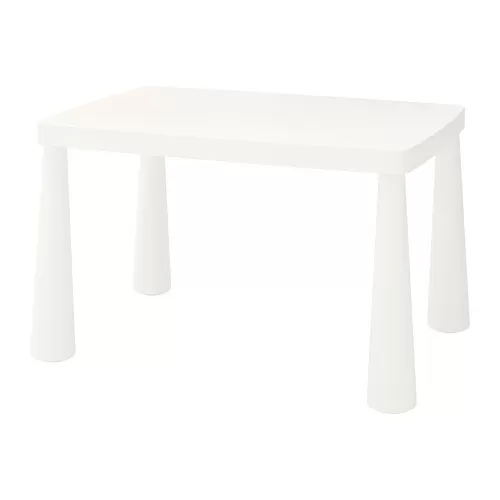
For an activity table, the MAMMUT children's table can be used both indoors and outdoors. This table is suitable for activities such as playing, drawing, making crafts, or having a picnic in the garden.
The plastic material also has UV protection, and the furniture is lightweight, making it easy to move.
2. MAMMUT children's chair
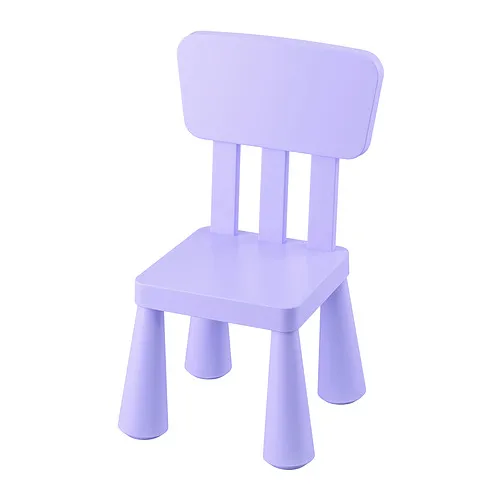
Pair it with a MAMMUT children's chair, which is also designed for indoor and outdoor use. The chair is lightweight, making it easy to move when you want to change the playground arrangement. This product is recommended for children aged 3–6 years.
3. MAMMUT children's stool
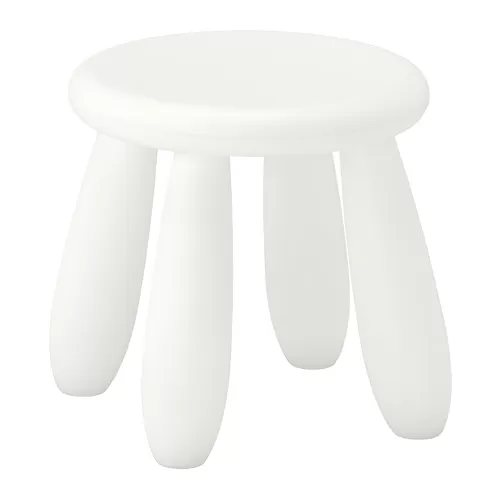
For a yard that needs additional seating in a more compact size, the MAMMUT children's stool can be another option. This product is also intended for indoor and outdoor use and has a seat height of 30 cm.
4. UTTER children's table
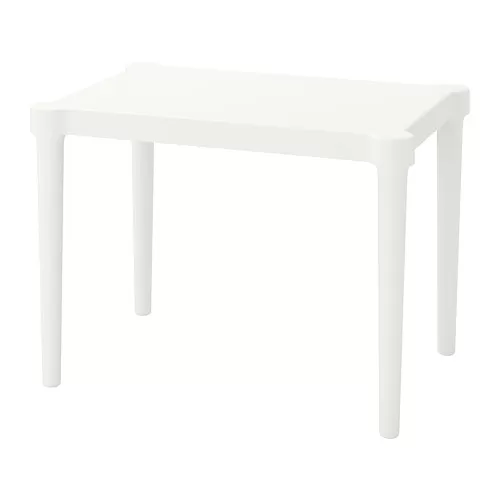
Another option is the UTTER children's table. This product is suitable for playing, drawing, crafts, or small picnics and is made for outdoor use.
Its design is also lightweight and stackable, making it easier to store when you want to clear the area. Discover more small children's furniture for eating and studying at IKEA to complement children's activities at home.
Set up a storage system to make play equipment easy to tidy away
Toys, drawing supplies, balls, and activity equipment can quickly make the yard feel crowded. Therefore, decide from the beginning where everything will go after it has been used.
For equipment that needs to be stored indoors after playtime, you can place a storage solution close to the access point to the yard.
TROFAST boxes, for example, offer low storage so children can more easily take out and put away their belongings. The boxes can also be arranged on several levels according to your needs.
Place the storage system indoors or in an area that complies with the product instructions, then use boxes or containers to carry equipment into the yard when it is time to play.
Involve children when tidying up. Group items according to activity, for example, one container for drawing supplies, one for physical play, and another for gardening equipment. A simple system helps children recognise the proper place for each item.
Read also: Toy storage inspiration for a tidier home
Choose activities according to the size of the yard
A small yard does not mean that activity options have to be limited. The key is to avoid too much permanent furniture and choose activities with equipment that is easy to move.
In a small yard, one children's table can be used alternately for drawing, sensory play, crafts, or picnics. Once the table is moved, the same space can be used for active play.
If the yard is larger, you can separate the creative zone from the movement zone. However, continue to provide an open pathway so children and other family members can move around comfortably.
With this flexible approach, the children's playground can develop along with the child's interests without needing to be renovated every time their needs change.
Connect indoor and outdoor play spaces
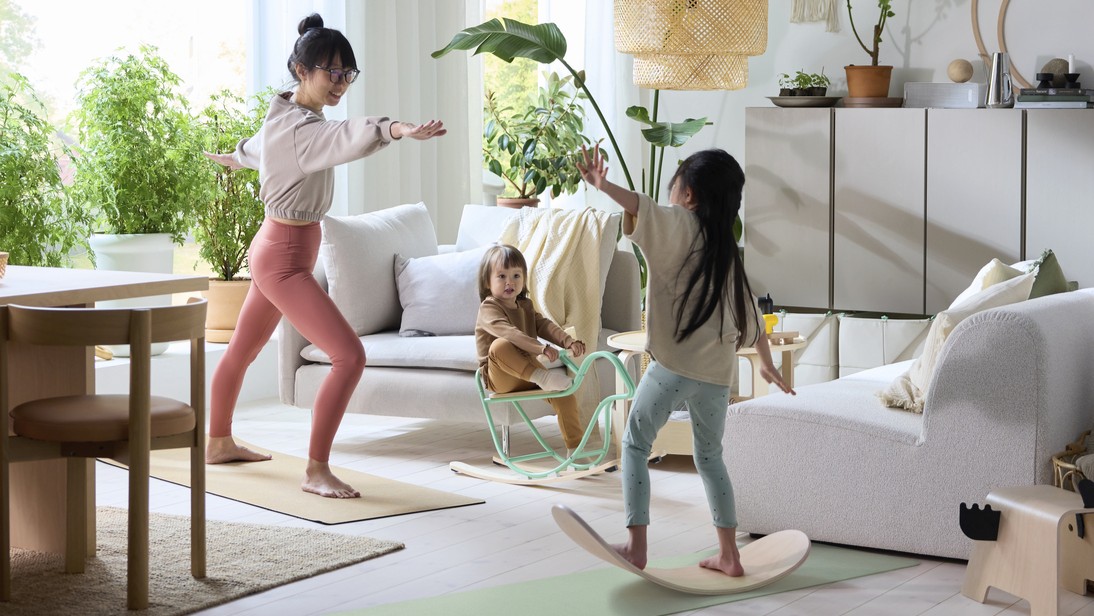
Indoor and outdoor play areas do not need to be created as two completely separate spaces. Instead, they can complement each other.
Toys that require a dry surface and enclosed storage can remain in the indoor playroom. Meanwhile, activities that require more room for movement can be moved to the yard.
You can also use lightweight furniture that is suitable for both areas. The MAMMUT series discussed earlier, for example, is designed for both indoor and outdoor use, so its tables or chairs can be moved according to children's activities.
This means you do not have to provide two different sets of furniture for every activity while also helping make the use of space more flexible.
Create a playground that can change with children's activities
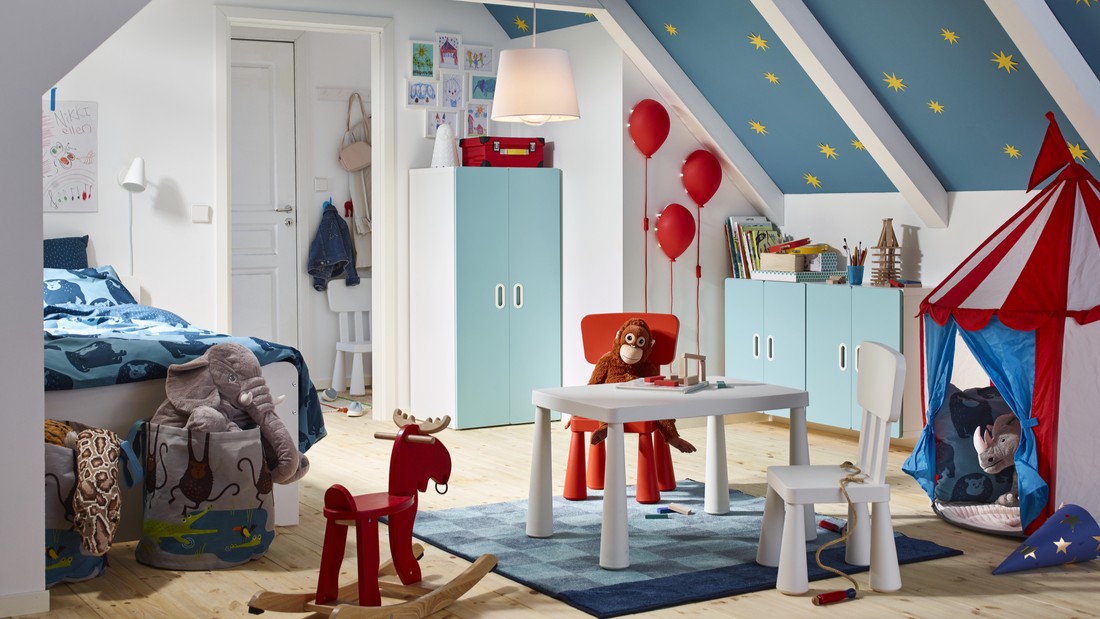
A children's playground at home does not have to look like a large playground. Even a small yard can become a space for moving, creating, gardening, or simply enjoying the outdoors with family.
Start with the activities children do most often. Provide enough open space, add furniture that suits their size, then determine a storage area so the space can easily be returned to a tidy condition after use.
Explore the IKEA children's product collection and discover furniture and accessories that can help you create a play area that suits your family's needs at IKEA.co.id.
FAQ about children's playgrounds at home
No. You can use a small part of the yard by choosing compact furniture and leaving open space for movement.
You can start with an area for movement, a children's table and seating, as well as equipment for activities the child enjoys. Add elements gradually according to the available space.
Group equipment according to the type of activity and determine where it should be stored after use. Items that are not suitable for being left outdoors should be returned to an indoor storage area.
Choose furniture that is appropriately sized for children and make sure the product information states that it can be used outdoors if you plan to place it in the yard.
Not always. They can complement each other. Creative activities or certain types of play can take place indoors, while activities that require more room for movement can be done in the yard.