This sorting process helps you understand actual needs while avoiding unnecessary accumulation. Here’s how:
1. Sort toys based on frequency of use
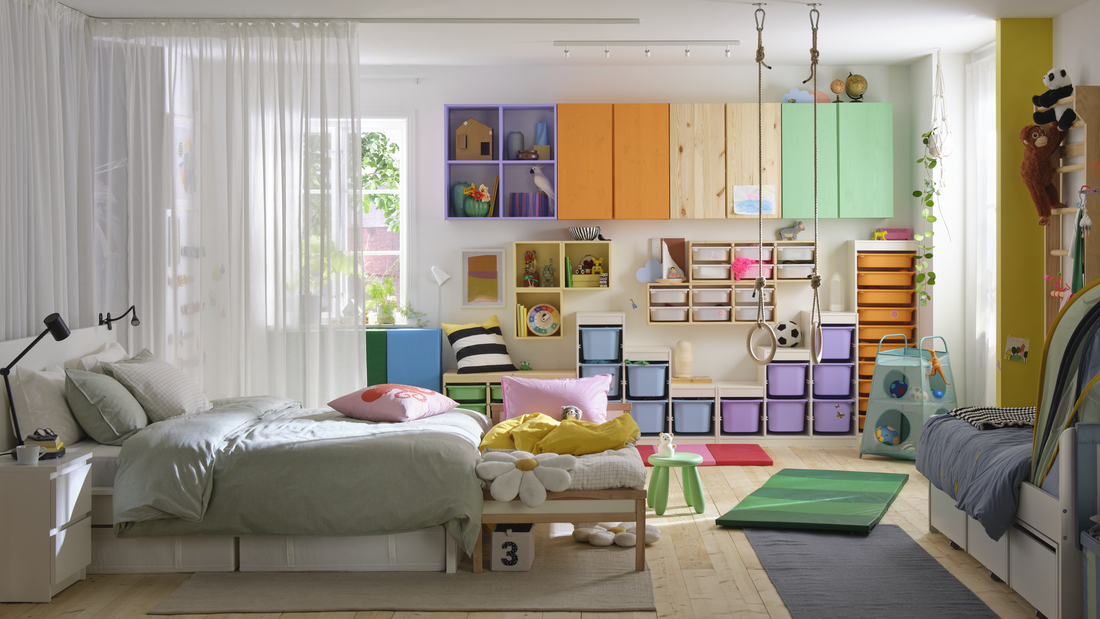
Group toys based on how often they are used. Separate everyday toys from those used occasionally. Frequently used toys should be placed in easily accessible areas, such as storage boxes, so children can take and return them easily.
Meanwhile, rarely used toys can be stored in higher or closed spaces. This not only makes access easier but also keeps the room looking tidy. This simple system helps children understand where to find and return their toys without confusion.
2. Reduce unused toys
Over time, the number of toys usually increases, while not all remain relevant. You can start reducing toys that are rarely used, damaged, or no longer age-appropriate. This step creates space for school essentials such as books, bags, or stationery.
Usable toys can be donated to benefit others, while those you want to keep can be stored in designated boxes. By reducing the number of items, you create more space and make the next organization process easier.
3. Involve children in the decluttering process
Involving children in sorting toys is an important step that often has long-term impact. You can invite them to choose which toys they still want to use and which can be stored or given away. This approach helps children feel responsible for maintaining their space.
Read also: Tips for Decluttering a Child’s Room
Tips for combining play and study areas in one space
Not all homes have separate rooms for play and study. The key is creating a balance between free play and focused learning.
Separate play and study zones
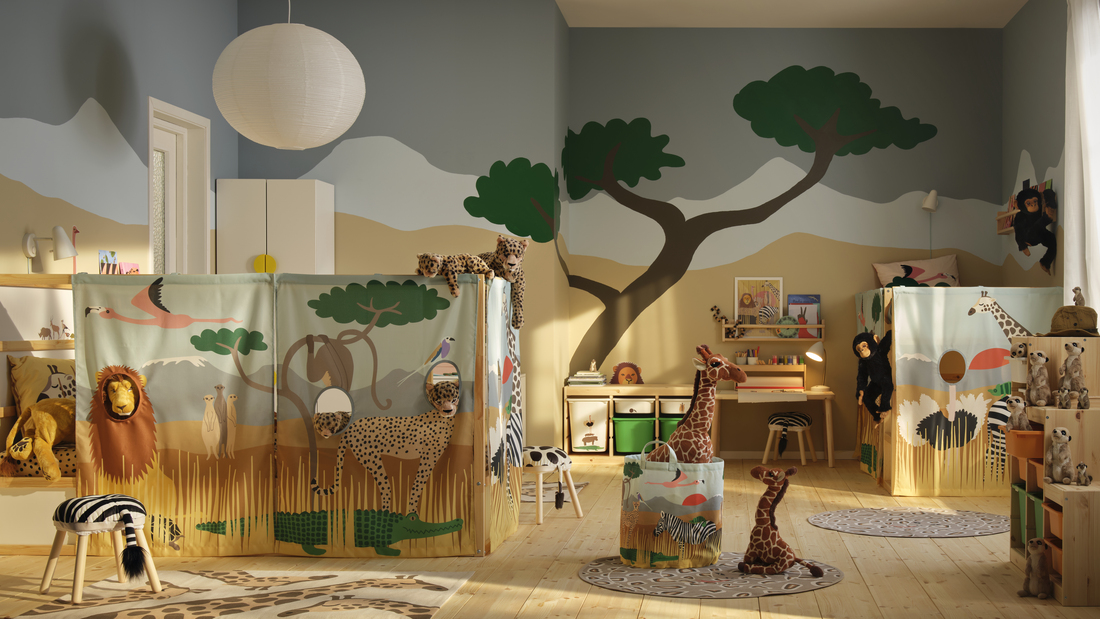
Even within one room, it’s important to create clear boundaries between play and study areas. You can use positioning, rugs, or even color differences to help children recognize each zone’s function. This approach helps children understand when it’s time to play and when it’s time to study.
With simple but consistent separation, distractions can be significantly reduced. Children will find it easier to concentrate while studying because they are not disturbed by nearby toys. This also helps build more structured daily habits at home.
Use a multifunctional study desk
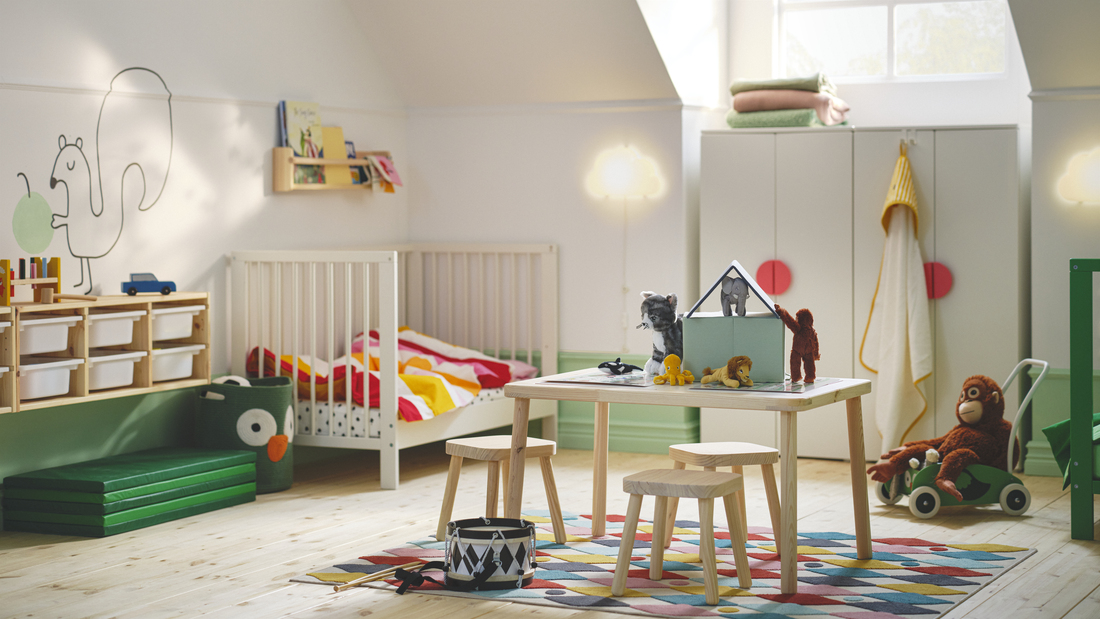
Choosing a flexible desk is essential for limited spaces. Desks like MICKE or LAGKAPTEN/ALEX can be used not only for studying but also for creative activities such as drawing or crafting. This dual function makes the space more efficient without reducing comfort.
A multifunctional desk makes it easier to organize children’s needs in one place. Books, stationery, and creative tools can be stored neatly and within reach.
Complete with a comfortable chair
Comfort while sitting is essential so children can focus better. Chairs like ORFJALL or MAMMUT are designed to support a stable sitting position while remaining flexible for various activities. With the right chair, children can sit longer without getting tired quickly.
In addition to supporting posture, lightweight chairs make it easy for children to move between study and play areas. This flexibility creates a dynamic space without disrupting daily activities. With the right desk and chair combination, you can create a balanced environment for both learning and playing.
The importance of building a routine of tidying up toys
Neat storage works best when paired with consistent routines. This also has long-term impact, helping children develop tidiness habits.
1. Set a specific time to tidy up
To stay consistent, you can set a specific time to tidy up toys, such as after playing or before bedtime. With a clear schedule, children will better understand when to clean up without repeated reminders. This routine also helps create a more organized daily flow.
When done regularly, tidying up no longer feels like an extra task but becomes part of a habit. Children will naturally end playtime by putting toys back in place, keeping the home tidy every day.
2. Place storage within easy reach
Accessibility is key for encouraging independence. Make sure storage boxes, shelves, or containers are placed at a height suitable for children. This way, they can easily take and return toys.
Proper placement also reduces the habit of piling toys in one corner. Children will be more motivated to store items immediately after use. This simple system makes tidying feel easier and requires less parental assistance.
3. Make tidying up a fun activity
To increase enthusiasm, you can turn tidying into a fun activity. Use a playful approach, such as simple games or small challenges while cleaning up. This helps children see tidying as part of play rather than an obligation.
Involving the whole family can also create a warmer atmosphere. When done together, tidying becomes a positive bonding moment. Gradually, children will get used to maintaining their own space while understanding that the home is shared and cared for together.
Organize your home with better storage systems