An ergonomic chair is a work chair with adjustable support, such as a backrest, seat height, armrests, tilt function, or lumbar support. This guide compares 9 IKEA chairs by features, materials, price, and fit for work-from-home routines.
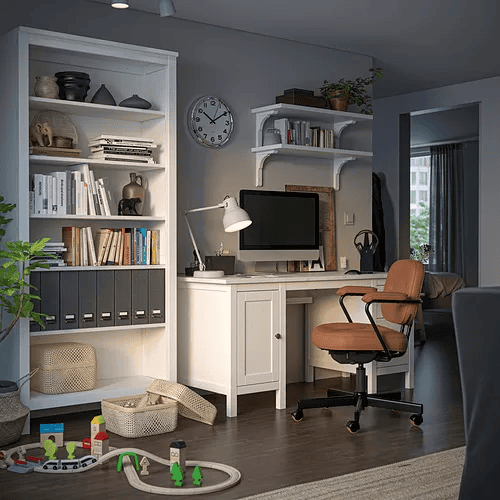
Ergonomic chair recommendations & price for working from home
There are 9 ergonomic chairs from IKEA that work well for working from home thanks to a variety of combined features: adjustable seat height, backrests, armrests, tilt function, flexible casters, and lumbar support. From best-selling online favorites like FLINTAN, MARKUS, and ALEFJÄLL, to compact and active-sitting options.
1. FLINTAN, a popular chair for everyday working from home
If back support and armrests are high on your list, FLINTAN is a good place to start. It has a high backrest, armrests, casters, adjustable seat height, and tilt function. Its main materials include 100% polyester, polyurethane foam, steel, and wood veneer.
The mesh back helps your back feel a little cooler while you work. It also looks visually light, which can be useful if your desk sits in a bedroom corner or living room.
FLINTAN can be a simple step up from a regular chair. The beige option feels softer for a home setting, while black is easy to match with a neutral desk setup.
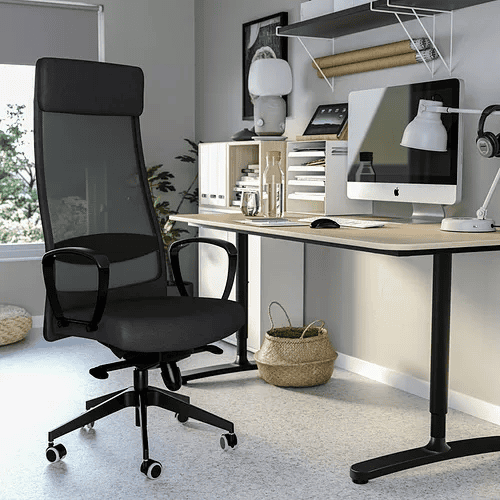
2. MARKUS, a high-back chair for longer work sessions
MARKUS is a good option if you like a chair with a headrest. It also has a high backrest, armrests, adjustable seat height, and tilt function. Its main materials include 100% polyester, polyurethane foam, steel, and aluminum.
The high back and headrest help support your upper body when you sit for longer stretches. The mesh back also helps with airflow, especially if the chair is used for a few hours at a time.
This chair works well when your home workspace is part of your daily routine. It still looks simple, but gives more support for typing, meetings, and longer focus time.
3. ALEFJÄLL, a comfortable chair that feels warmer at home
ALEFJÄLL has a medium backrest, armrests, tilt function, lumbar support, and adjustable seat depth. Its main materials include pigmented cow leather, 100% polyester, and polyurethane foam.
The padded seat and leather surface make it feel warmer than a very technical-looking work chair. That can help your workspace feel more connected to a bedroom, living room, or reading corner.
A work chair does not always have to make your home feel like an office. Sometimes, the right chair is one that supports you and still feels like it belongs in the room.
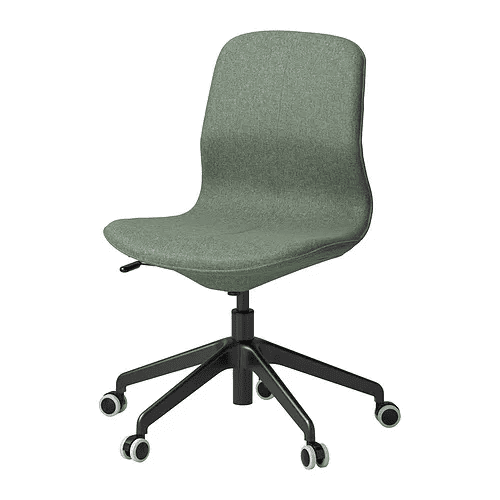
4. LÅNGFJÄLL, a minimal chair for a tidier workspace
LÅNGFJÄLL has a medium backrest, a joined seat and backrest, adjustable seat height, and tilt function. Its main materials include 100% polyester, high-resilience polyurethane foam, steel, and aluminum.
This version does not have armrests, so it feels a little lighter in the room. That can help if your desk is in a visible spot, such as a bedroom corner, living room, or near the dining table.
For home use, LÅNGFJÄLL can be a good fit if you want a work chair that still gives support, but does not make the room feel too much like an office.
5. TROLLBERGET, an active sitting chair for higher desks
TROLLBERGET is a sit-stand support without a backrest or armrests. Its main materials include pigmented cow leather, wood veneer, and high-resilience polyurethane foam.
This type of chair works best with a higher desk or a routine that does not require sitting for long periods. Think short meetings, reading documents, or quick work sessions at a taller work surface.
For long hours at your main desk, it is worth checking whether your body still needs back support. It is perfectly fine to use an active sitting chair as an extra option, rather than your only work chair.
6. LIDKULLEN, a more compact active sitting option
LIDKULLEN is an active sitting chair without a backrest or armrests. Its main materials include polyester, cold foam, and eucalyptus plywood.
Its compact shape makes it easier to place in a small room and tuck into different corners when not in use. It can work as an extra chair for a higher desk, a flexible work area, or tasks that do not always need back support.
7. SMÖRKULL, a simple work chair with armrests
SMÖRKULL has padding on both the seat and backrest, so it can feel softer for working at home. It also has a medium backrest, armrests, casters, adjustable seat height, and a tilt function. Its main materials include 100% polyester, high-resilience polyurethane foam, and steel.
Its shape is straightforward and does not draw too much attention. SMÖRKULL can be a good option if you want a comfortable work chair with useful basics, while still keeping your work corner calm and easy to match with the room.
8. JÄRVFJÄLLET, a chair with all-around support
If one chair needs to handle many parts of your day, JÄRVFJÄLLET can feel more supportive. The headrest helps when you want to lean back for a moment, while the lumbar support helps the lower back feel more stable.
JÄRVFJÄLLET has a high backrest, headrest, armrests, lumbar support, adjustable seat height, and tilt function. Its main materials include pigmented cow leather, 100% polyester, and high-resilience polyurethane foam.
The chair works well for longer WFH routines, from typing and meetings to reading and getting back into focus. It has more features, but still makes sense for home because one chair can cover many needs without adding more furniture to the workspace.
9. HATTEFJÄLL, a softer-looking chair for home interiors
With its softer shape and neutral color options, HATTEFJÄLL helps a work corner feel less out of place at home. It has a medium backrest, armrests, casters, adjustable seat height, and a tilt function. Its main materials include 100% polyester, high-resilience polyurethane foam, wood veneer, and steel.
The rounded shape and beige-white color option give it a softer look for home. It can work well if your workspace is in a room that also needs to feel restful, relaxed, or shared with other daily activities.
How to choose a chair for working from home
Choosing a chair for WFH starts with three things: your body feels supported, the chair height works with your desk, and the chair still fits your room. After that, you can look at extra features like armrests, a headrest, tilt function, and materials.
At home, every workspace is a little different. You might have a dedicated room, a bedroom corner, or a dining table that becomes a work desk during the day. That is okay. The goal is to choose a chair that helps you sit more steadily without making your home feel crowded.
| Product | Backrest | Armrests | Can tilt | Main materials |
|---|---|---|---|---|
| FLINTAN | High | Yes | Yes | 100% polyester mesh/fabric, polyurethane foam, steel, layer-glued wood veneer, plastic |
| MARKUS | High + headrest | Yes | Yes | Steel, polypropylene plastic, synthetic rubber, polyurethane foam, layer-glued wood veneer, aluminum, 100% polyester |
| ALEFJÄLL | Medium | Yes | Yes | Treated embossed pigmented cow leather, 100% polyester, steel, polyurethane foam, plastic |
| LÅNGFJÄLL | Medium | No | Yes | 100% polyester, steel, high-resilience polyurethane foam, aluminum, polypropylene plastic, synthetic rubber |
| TROLLBERGET | None | No | No | Layer-glued wood veneer, high-resilience polyurethane foam, steel, synthetic rubber, treated embossed pigmented cow leather |
| LIDKULLEN | None | No | No | High-resilience polyurethane foam, moulded eucalyptus plywood, steel, aluminum, synthetic rubber, 100% polyester |
| SMÖRKULL | Medium | Yes | Yes | 100% polyester, high-resilience polyurethane foam, steel, polypropylene plastic, ABS plastic |
| JÄRVFJÄLLET | High + headrest | Yes | Yes | Synthetic rubber, reinforced polyamide plastic, steel, 100% polyester, treated embossed pigmented cow leather, layer-glued wood veneer, high-resilience polyurethane foam, aluminum |
| HATTEFJÄLL | Medium | Yes | Yes | Reinforced polyamide plastic, synthetic rubber, layer-glued wood veneer, steel, aluminum, high-resilience polyurethane foam, 100% polyester |
Match the chair with your desk
The chair height should help your hands sit comfortably while you type. When you sit down, your shoulders should feel relaxed, your elbows should not lift too high, and your feet should be able to rest on the floor.
If your desk height cannot be adjusted, an adjustable chair can help more. This applies to a work desk, study table, or even a dining table that you sometimes use for WFH.
It is a small check, but it can make working at home feel much easier.
Check the space around the chair
The chair should leave enough room to pull out, push in, and turn. This matters when your workspace is in a bedroom, living room, or dining area.
A high backrest can feel comfortable for longer work sessions, but the chair still needs to fit the room. For a small space, check the chair width, depth, and distance from the wall or nearby furniture. A home workspace does not have to be big, but it should give you enough room to move.
Choose features based on how long you work
Your work hours can help decide which ergonomic features matter most. For example:
- Short work sessions: opening your laptop for a quick task, joining a short meeting, reading a document, or replying to email. Adjustable seat height and a backrest are often enough to help.
- A few hours of work: typing, studying, joining back-to-back meetings, or working through a desk task. Armrests and a tilt function can help your shoulders relax and make it easier to shift position.
- A full workday: sitting in front of a laptop for long stretches, focusing deeply, or moving between typing, meetings, and reading. A headrest, lumbar support, and a higher backrest can give more complete support.
You do not have to choose the chair with the most features. Start with what your body notices first: feet on the floor, back supported, shoulders not feeling tense, and a chair that feels comfortable for the way you work.
Chair with a backrest or without one?
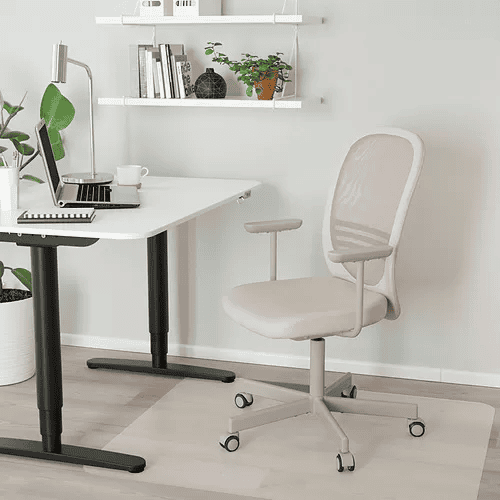
Chair with a backrest
Full back support
- Best for
- working for a few hours, online meetings, or longer typing sessions.
- Watch out for
- a backrest helps support your body when you sit for longer periods. For daily work, a high backrest or headrest can add support when you want to lean back for a moment.
Chair without a backrest (active sitting)
Active sitting support
- Best for
- higher desks, short tasks, or switching between sitting and standing.
- Watch out for
- an active sitting chair works best as an extra option. For long hours at your main desk, a chair with a backrest usually gives more support.
Choose a material that works well at home
Chair material affects how the chair feels, how warm or cool it feels, how it looks, and how easy it is to care for. Common work chair materials include:
- Mesh: feels lighter and helps airflow around the back.
- Polyester fabric: feels soft, blends easily with home interiors, and can give a warmer look.
- Pigmented leather: gives a neater, more premium look and can feel more decorative in a home workspace.
- Polyurethane foam or cold foam: adds cushioning so the seat feels softer.
- Steel, aluminum, or wood veneer: often used in the frame, legs, or structure to help the chair feel sturdy.
A comfortable material still needs the right chair shape. A chair can look good in your home workspace, but it should also support your body while you work.
How to make your work chair more comfortable for longer days
A work chair feels more comfortable when the desk, lighting, and space around it also help. After choosing a chair, check your desk position, screen distance, and the room around your chair.
Keep the desk and chair balanced
The desk and chair should help your body sit without strain. When your hands are on the desk, your shoulders should feel relaxed and your feet should be able to rest on the floor.
Leave room to move
The area around the chair should be wide enough to pull, push, and turn the chair. Check the space behind the chair, beside the desk, and along the path you use to move around the workspace.
Even a small room can work well. The key is choosing a chair that fits the space and does not get in the way of other things you do at home.
Add light and small storage
A desk lamp and a small organizer can make your workspace feel more ready to use. Good lighting makes the screen and desk easier to see, while small storage keeps work items close by.
You do not need to add too much. Choose the few things that help your desk stay bright, tidy, and easy to use every day.
Frequently asked questions about ergonomic chairs
Find the right chair for your workspace