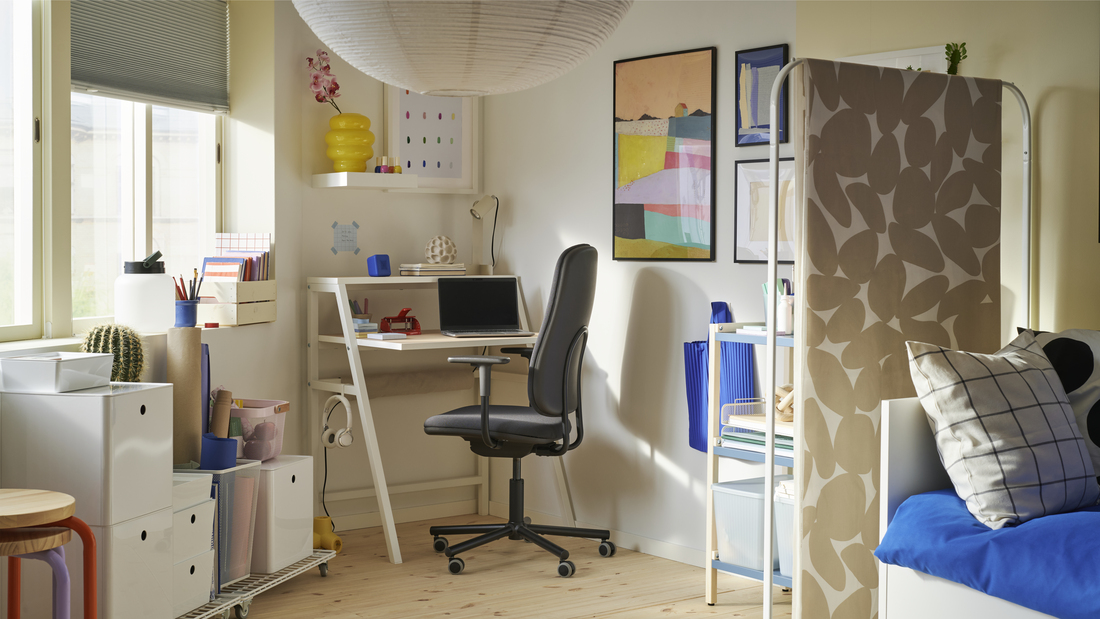
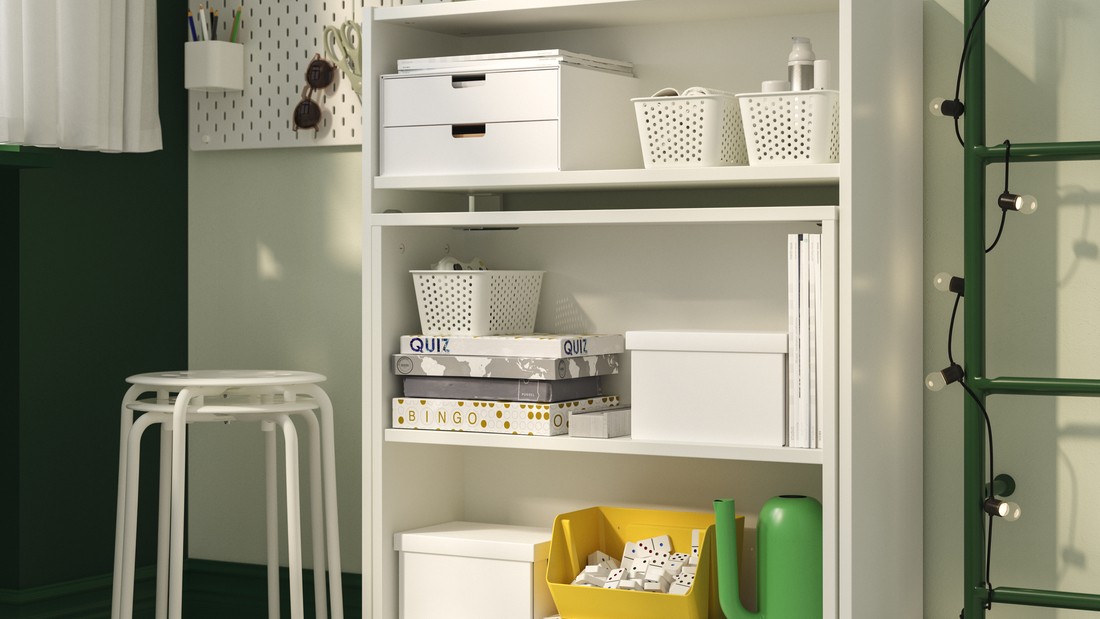
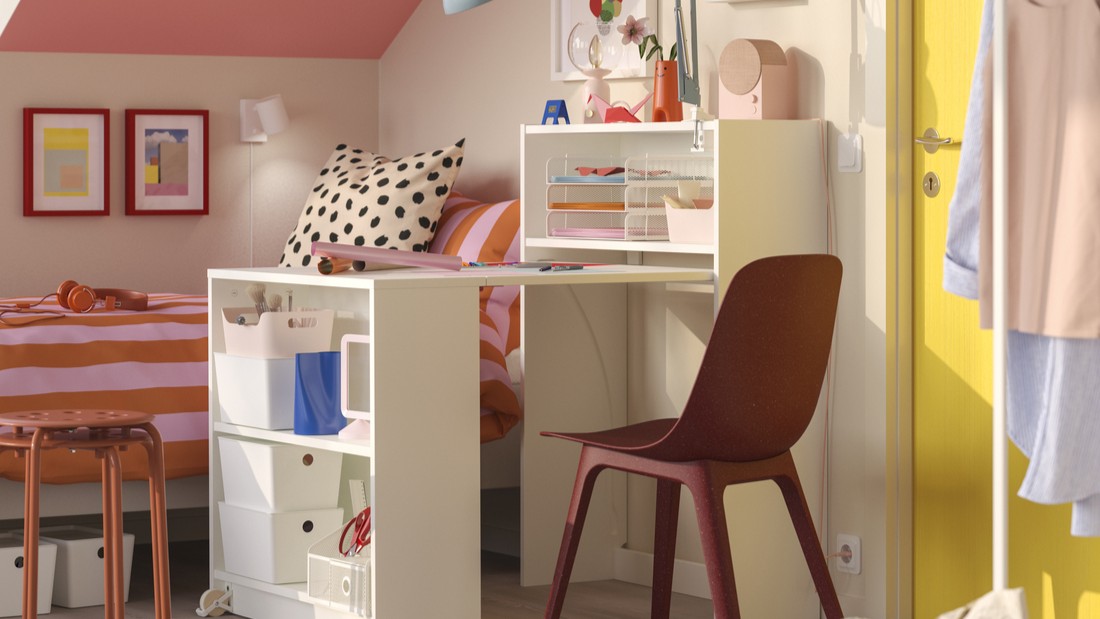
A well-organized study area can help you build more consistent learning habits for your child. One important element that is often overlooked is a wooden bookshelf, which not only functions as storage but also enhances the look of the space to feel warmer and tidier.
As family routines evolve, the need for a more flexible space becomes increasingly important. With the right arrangement, you can create a study area that supports daily activities. Explore the ideas and tips below to optimize its role in your home.
Inspiration for using wooden bookshelves in children’s study spaces
Wooden bookshelves can be arranged in various ways to suit your child’s learning needs while adapting to the dynamics of your home. With the range of designs available, you can create a study area that is not only tidy but also flexible for everyday family activities.
1. Compact bookshelf for flexible study spaces
For limited spaces or simple study corners, a compact option like BAGGEBO can be a practical choice. Its small size makes it easy to place in different areas, including a child’s bedroom or the living room.
This shelf is ideal for storing daily school books, stationery, and drawing tools such as MÅLA. With easy access, children can learn to take and tidy up their belongings independently, helping build better habits.
2. Tall bookshelf for larger collections
If you need more storage capacity, BILLY or its slimmer version can be a suitable solution. A tall shelf helps you organize books by category, from school materials to leisure reading.
Vertical storage also makes the room feel more spacious, making it ideal for children’s rooms that need to stay airy. You can add storage boxes on different levels to maintain a neat and organized look.
3. Bookshelf with doors for a cleaner and protected look
To keep books protected from dust while maintaining a calm appearance, you can choose a bookshelf with doors such as BILLY/OXBERG or its slimmer version.
The glass panel combination balances functionality and aesthetics, allowing books to remain visible without making the space feel crowded. This option is ideal for creating a focused and less visually distracting study environment.
4. Bookshelf with drawers for additional storage
Besides books, children’s study needs often include many small items. A BILLY bookshelf with drawers helps store stationery, paper, and other school supplies in one place.
The drawers make it easier to keep the study area tidy without adding extra furniture. With a more structured storage system, study time can become more efficient.
5. Corner solution to maximize every space
Corners are often underutilized areas in a home. With a BILLY corner bookshelf combination, you can turn this space into functional storage.
This solution is especially useful for homes with limited space, as it makes use of previously unused areas. You can also transform it into a cozy reading corner for your child.
6. Bookshelf with desk for an integrated study area
If you want a more centralized study space, a BILLY bookshelf with a desk or foldable desk version can be an interesting option.
This combination allows you to store books while providing a study surface in one unit. The foldable desk adds flexibility, as it can be folded away when not in use to save space.
7. Bookshelf and foldable desk combination for multifunctional spaces
For more dynamic needs, you can consider combinations like BILLY/BERGSHULT or BILLY/HÖGBO. These solutions combine bookshelves with foldable desks that adapt to daily activities, from studying to creative work.
With an integrated design, the study space feels tidier and easier to rearrange according to family needs.
Tips for choosing the right wooden bookshelf for study needs