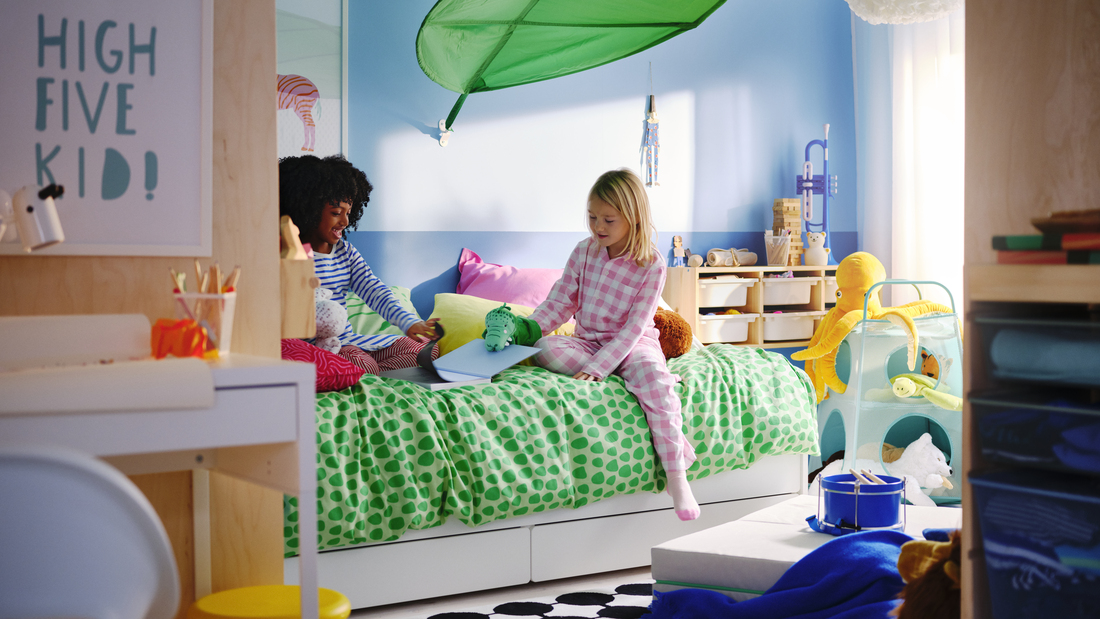
Have you ever seen a pillow turn into a fort or the living room suddenly become a restaurant because of your little one's idea? For children, simple objects can open the door to unexpected stories.
With supporting space and activities, you can help that imagination continue to grow. Let's find out how through fun daily activities.
Imagination can grow through opportunities for free play, role-play, movement, and creating stories without always having to follow a single way of playing.
Why is imagination important for children?
Imagination helps children explore ideas they have never experienced directly. When pretending to be a chef, building a house out of blocks, or giving a voice to a stuffed toy, children learn to develop stories while adapting their actions to the situations they create.
Role-playing activities can also relate to the development of social skills. For example, the DUKTIG game encourages children to imitate adult activities and make their own roles, which can help develop social skills.
Therefore, boosting imagination does not always have to be done through structured learning activities. The home can become a space for exploration through simple games that give children the opportunity to choose, try, and develop their own ideas.
Read also: Children's toy storage ideas
Ways to boost children's imagination in daily life
1. Provide time for free play
Not all games require step-by-step instructions. You can provide several simple toys or objects, then let the child determine what they want to make and how the story develops.
Cardboard boxes, cloth, blocks, or dolls can change functions according to the child's ideas. When there is no single end result that must be achieved, children have a broader opportunity to try new possibilities.
2. Invite children to create role-playing games
Activities like playing restaurant, shop, school, or cooking can turn everyday experiences into a new story.
You can join the play without dictating the entire plot. Instead of telling them what to do, try asking, "What is the restaurant selling today?" or "Who is coming to visit?"
Open-ended questions give children the opportunity to become story creators, while you simply become one of the characters in it.
3. Use objects with more than one play function
A single object does not have to be used the same way every day. A small chair can become a vehicle in a game, a cloth can become a cape or a tent roof, while food-shaped toys can become part of a child's pretend restaurant.
This concept is often called open-ended play, which is play that opens up more than one possibility of use or story. With this approach, children can keep finding new ways to use the same object.
4. Make drawing the beginning of a story
After a child draws, do not stop at asking about what is on the paper. You can continue by asking the character's name, where they live, or what happens next.
From a single drawing, children can create their own characters and storylines. Drawing tools can also become a bridge between ideas in their minds and stories that can be shared with you.
To bring a creative corner home, you can also look at IKEA children's toys and creativity items and adapt them to activities your child enjoys.
5. Continue the story after reading a book
Reading together can be the starting point for imaginative play. After a story is finished, try asking what would happen if the character chose a different path or visited a new place.
You can also ask the child to make their own version of the ending. This way, reading activities evolve into more interactive storytelling activities without requiring many extra supplies.
IKEA toy recommendations to stimulate imaginative play
To support children's imagination and play, IKEA's physical and imaginative play range provides various options that can be used for moving around, role-playing, and creating stories.
Here are some products you can consider to support play-based learning methods.
1. DUKTIG to create a child's version of a restaurant
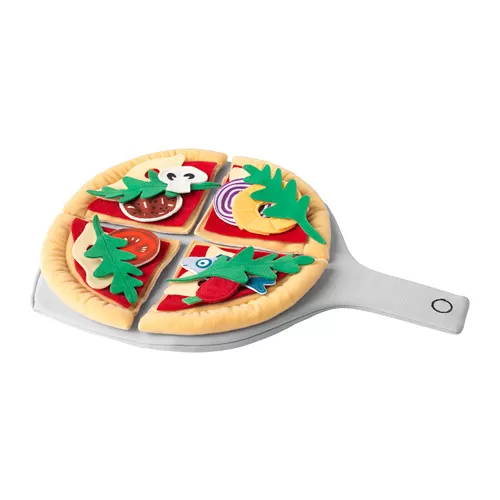
The DUKTIG 24-piece pizza set gives children the opportunity to create topping combinations while pretending to open a restaurant. This game encourages role-play, helps social skills, and trains motor skills and hand-eye coordination.
You can pair it with the DUKTIG fabric vegetable set so children can create menus, play the chef, or serve customers. Simple games like this transform experiences they see every day into their own version of stories.
2. DUKTIG kitchen utensils to imitate everyday activities
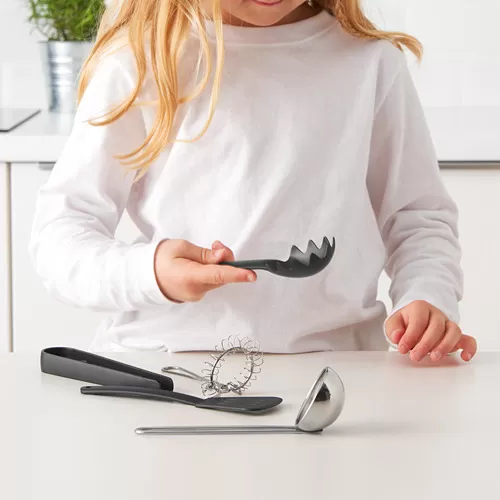
The DUKTIG 5-piece toy kitchen utensil set consists of a spatula, pasta spoon, tongs, ladle, and whisk. This product is recommended for children from age three and is intended as a toy, not real cooking utensils.
Shapes resembling everyday tools can support pretend play. Children can pretend to prepare breakfast, open a stall, or cook imaginary dishes while creating various roles.
3. GREJSIMOJS rocking-bird to move while imagining
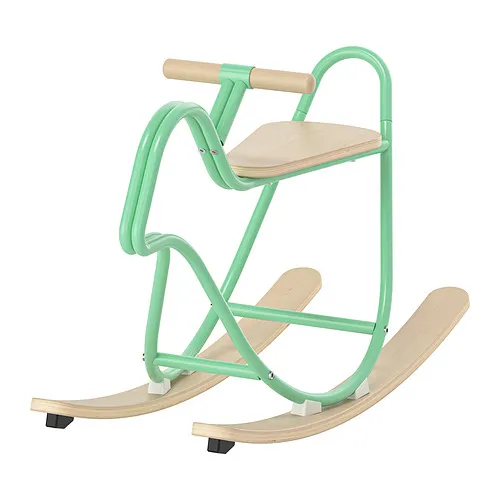
The GREJSIMOJS rocking-bird combines physical activity and imaginative play. Rocking activities help train balance, motor skills, and body perception. This product is recommended from 18 months of age.
Interestingly, its shape doesn't always have to be a bird. In a child's game, the GREJSIMOJS can turn into a dragon, a rocket, or a vehicle heading to a place they imagine.
4. NATTHÄGER to bring story characters to life
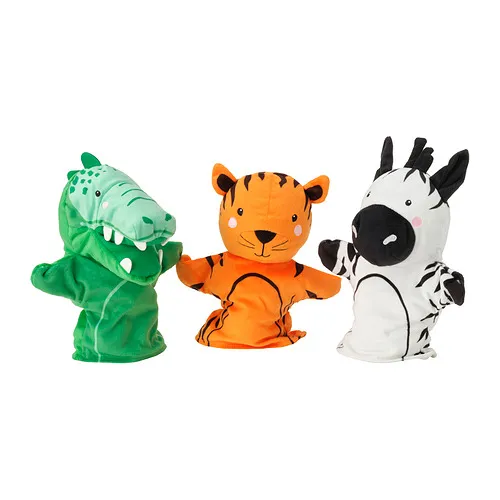
The NATTHÄGER 3-unit hand puppet set brings alligator, zebra, and tiger characters for story play.
Children can give different names, voices, and personalities to each character. Creating new roles and playing out diverse scenarios can help children develop social skills.
Use hand puppets to make a small theater, continue bedtime stories, or invite children to create their own version of a jungle adventure.
5. BLÅHAJ as a companion in imaginary adventures

The BLÅHAJ baby shark soft toy measures 55 cm and is recommended for children from 12 months of age. This toy can be hugged or played with, and has been tested for child use.
In imaginative play, BLÅHAJ can become a companion for exploring the ocean, a passenger on a cardboard boat, or a character in bedtime stories. Let the child decide for themselves what adventure they will go on together.
Create a space that supports your child's ideas
Children do not always need a dedicated playroom. A corner of a bedroom or part of the living room can change functions following the day's activities.
Use easy-to-reach storage so children can choose their own toys and return them when finished. Also leave open areas that allow them to draw, build, move, or role-play without too many restrictions.
Read also: Inspiration for children's playrooms
Let children lead their play
There is no single specific way to boost a child's imagination. What you can do is provide the time, space, and objects that give them the opportunity to create their own ideas.
When playing together, avoid being too quick to determine the "right" way to play. Try following the child's story, ask open-ended questions, and see where their imagination takes the game that day.
Discover more IKEA physical and imaginative play options to bring a wider variety of play activities home. Explore inspiration and other children's needs at IKEA.co.id.
FAQ about ways to boost children's imagination
You can provide free playtime, invite children to role-play, draw, tell stories, and use objects that can be played with in various ways. Avoid setting too many rules so children have space to create their own ideas and stories.
Role-playing games, dolls/puppets, storytelling activities, drawing, and physical games that allow children to create their own scenarios can be choices. You can look at IKEA's physical and imaginative play collection to find options suitable for your child's age and interests.
Yes, you can join the play by following the story created by the child without taking over the direction of the game.
Not always. Simple objects around the house can also become materials for creative play.