Have you ever noticed that one blanket feels perfectly comfortable while another leaves you feeling too warm or not warm enough? The answer often lies in the material it's made from.
Each material has unique characteristics in regulating warmth, airflow, and softness, all of which directly affect your overall sleeping experience.
Before choosing a new blanket, let's explore the different types of blanket materials so you can find the one that best suits your daily comfort and sleeping needs.
In addition to the material, the warmth level also affects sleeping comfort. IKEA offers duvets with different warmth levels, allowing you to choose one that matches your room temperature and personal preference.
Common types of blanket materials
Some materials feel cool and breathable, while others are designed to provide extra warmth when the temperature drops. Each material also differs in terms of maintenance and durability.
Here are some of the most commonly used blanket materials.
1. Cotton
Cotton is one of the most popular blanket materials because of its soft texture and comfortable feel against the skin.
Its natural fibers absorb moisture while allowing good airflow, helping reduce the feeling of overheating during sleep.
These characteristics make cotton blankets ideal for everyday use, especially in tropical climates or rooms with warmer temperatures.
2. Polyester
Polyester is a synthetic material known for being lightweight, durable, and easy to maintain. Polyester blankets generally dry quickly after washing and resist wrinkles, making them practical for regular use.
This material is also relatively long-lasting and is commonly used as the primary fabric or filling in many modern duvets because it provides warmth while remaining lightweight.
3. Fleece
Fleece has a smooth texture with a soft surface that feels comfortable during rest. Despite its lightweight construction, it provides a good level of warmth.
For this reason, fleece blankets are often chosen for air-conditioned rooms or cooler weather without feeling overly heavy during use.
4. Wool
Wool is a natural fiber with excellent thermal insulation properties. It helps retain body heat, keeping you warm even when the surrounding air is cold.
Compared to cotton, wool blankets are generally heavier, yet they still offer good breathability, making them comfortable under suitable conditions.
5. Duvets with synthetic or natural filling
A duvet consists of an outer fabric shell filled with either synthetic or natural materials, such as polyester fibers, feathers, or down. This type of blanket is available in various warmth levels, ranging from cool to extra warm, allowing you to choose one that suits your personal preference.
When selecting a duvet, it's best to focus on the warmth level you need rather than its thickness so you can stay comfortable throughout the night.
How to choose the right blanket material
Choosing a blanket material should not be based solely on its appearance or texture. It's also important to consider your environment and sleeping habits so the blanket remains comfortable over time.
Here are several ways to choose the right blanket material for your needs:
-
Match it to your room temperature: For warmer rooms, choose breathable materials. For cooler rooms, select materials that provide better insulation.
-
Consider your sleeping temperature preference: If you tend to feel hot while sleeping, choose cooler materials. If you often feel cold, opt for blankets with a higher warmth level.
-
Choose a material that feels comfortable on your skin: A soft texture can improve comfort, especially if the blanket is used every day.
-
Consider ease of maintenance: Choose a material that fits your routine, such as one that is easy to wash and dries quickly.
-
Choose the right size for your bed: The correct size provides better coverage without feeling too small or excessively large.
-
Pay attention to the warmth level: For duvets, select the appropriate warmth level based on your sleeping preferences and room temperature, as warmth is not always determined by the blanket's thickness.
IKEA blanket recommendations based on your needs
From lightweight throw blankets for relaxing to duvets with different warmth levels for a comfortable night's sleep, IKEA offers various options to suit your needs.
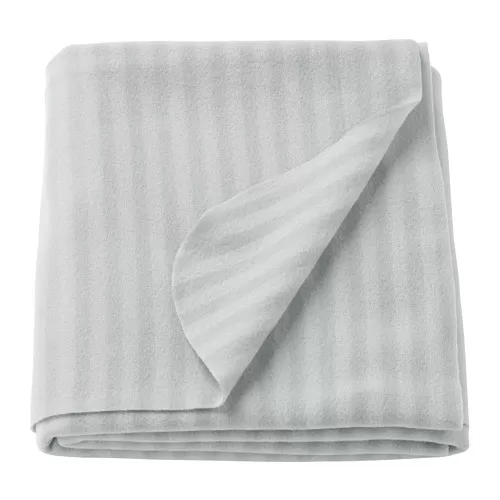
1. VITMOSSA throw blanket
If you're looking for a lightweight blanket for everyday use, the VITMOSSA throw blanket is a great option. Measuring 120×160 cm, it comes in a grey color that complements a wide range of interior styles.
Its lightweight design makes it comfortable for relaxing on the sofa, reading a book, or adding an extra layer of warmth when the weather gets cooler.
2. SMÅSPORRE duvet
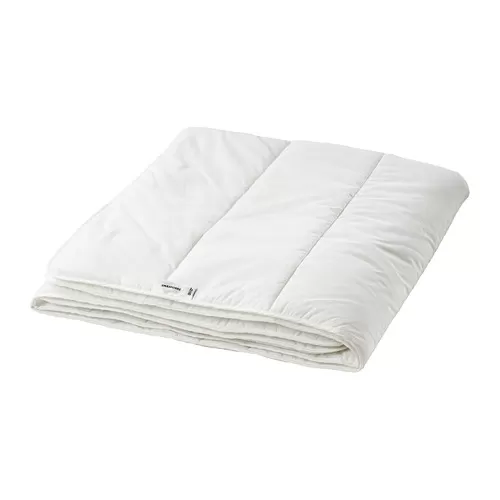
The SMÅSPORRE duvet is available in warmth levels ranging from cool to warm, as well as multiple sizes for different bed dimensions.
It works well as your primary blanket, helping maintain a comfortable body temperature throughout the night. In addition, the material is easy to care for and can be machine washed according to the care instructions.
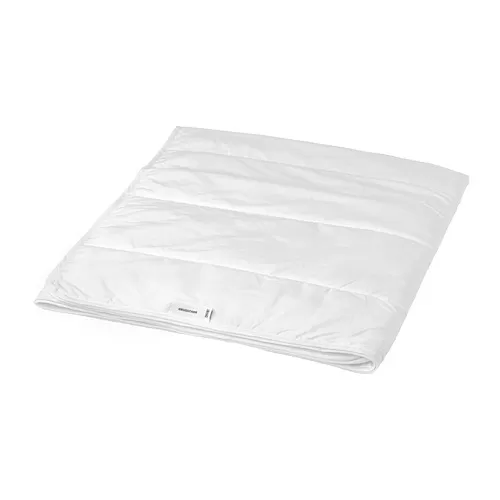
3. GRUSSTARR cool duvet
If you tend to feel warm while sleeping, the GRUSSTARR cool duvet is designed to provide a cooler sleeping experience.
It comes in several sizes to fit different beds, and its material helps create a comfortable sleeping environment in warmer rooms.
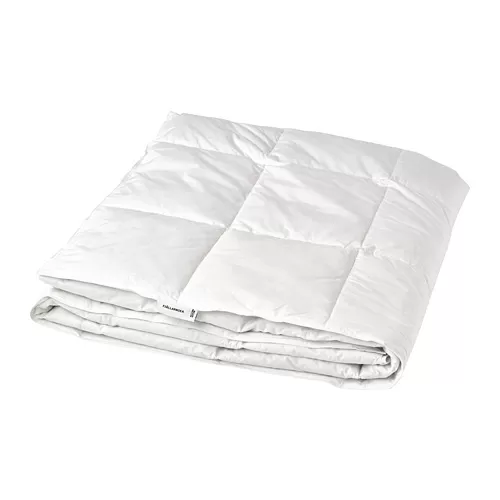
4. FJÄLLARNIKA slightly warm duvet
The FJÄLLARNIKA duvet offers a slightly warm warmth level with an elegant appearance.
Available in multiple sizes, it is suitable for those looking for balanced warmth without feeling overly warm. Its down filling helps provide comfort while maintaining good airflow throughout the night.
How to care for blankets based on their material
To keep your blanket comfortable and long-lasting, follow these care tips according to its material:
-
Follow the washing instructions provided on the product label.
-
Use an appropriate amount of detergent to help preserve the fabric fibers.
-
Avoid using bleach unless recommended on the care label.
-
Dry the blanket thoroughly before storing it to help prevent musty odors.
-
Store it in a clean, dry place with good air circulation.
-
Wash the blanket regularly according to how often it is used and the manufacturer's care recommendations.
Find the right blanket material for a more comfortable sleep
Every blanket material has unique characteristics, from breathability and warmth retention to ease of maintenance. That's why there is no single material that suits everyone.
By understanding the advantages of each material, you can choose a blanket that better matches your daily needs. Select a blanket based on your room temperature, comfort preferences, and intended use.
IKEA.co.id offers a wide selection, from throw blankets to duvets in various warmth levels and sizes, making it easier to find the right product for your home.
Explore IKEA collections:
FAQ
Cotton and duvets with lower warmth levels are generally suitable because they offer good breathability.
Yes. Polyester dries relatively quickly, resists wrinkles, and is practical for everyday use.
A regular blanket usually consists of a single layer of fabric, while a duvet has an outer shell filled with insulating material that provides a specific warmth level.
Choose one based on your room temperature and whether you tend to feel hot or cold while sleeping.
The frequency depends on how often it is used and the care instructions on the product label. Regular washing helps maintain cleanliness and comfort.