Scandinavian sofas are often chosen for their clean appearance, ease of coordination, and ability to support a living room atmosphere that feels spacious. In modern homes that prioritize space efficiency, a minimalist Scandinavian-style sofa can be the first step toward building a neat and well-directed interior design.
Through this article, you will get to know more about the characteristics of Scandinavian sofas, ranging from design and materials to how to choose a sofa that fits the needs of your living room and home.
Read also: Modern Scandinavian style living room interior design ideas
What is the Scandinavian concept in home design?
The Scandinavian concept in home design stems from the Nordic way of life, which values simplicity, function, and visual comfort.
This style does not aim to showcase a room full of ornaments, but rather to organize a home so that it feels light, orderly, and easy to use for daily activities. Therefore, Scandinavian design is often associated with a minimalist approach that still pays attention to the real needs of the residents.
In its application, Scandinavian home design highlights efficient layouts, natural lighting, and the selection of functional furniture. Every element, including the sofa, is chosen not just for its shape, but also for its role in supporting the flow of activities in the living room and other areas of the house.
This approach provides an opportunity for the space to feel more open and organized without having to eliminate the owner's personal character.
Neutral colors such as white, gray, or cream are often used to create a clean and calm impression. Touches of natural materials, especially wood, help provide visual balance so the room does not feel stiff.
This combination makes the Scandinavian concept easy to apply to various house sizes while supporting an interior design that is flexible and relevant for the long term.
Characteristics of Scandinavian style often found in sofas
Sofas in the Scandinavian style are generally designed to support a balance between function and visual appearance.
These characteristics arise from the need for furniture that is easy to use and relevant to daily life at home. Because of this, Scandinavian sofas often look simple yet still feel well-planned within the living room interior design.
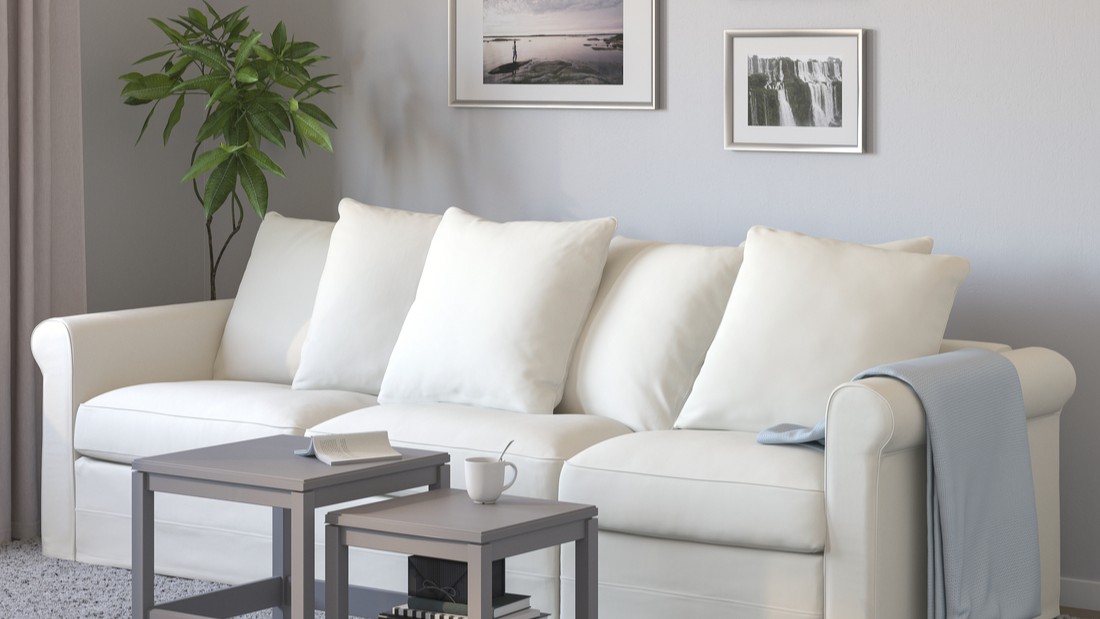
In terms of design, sofa shapes tend to be straight, proportional, and minimal in decorative details. Clean lines help the sofa blend with various styling styles, especially in a minimalist Scandinavian-style living room.
This approach gives you the flexibility to combine the sofa with other furniture without making the room feel crowded or visually heavy.
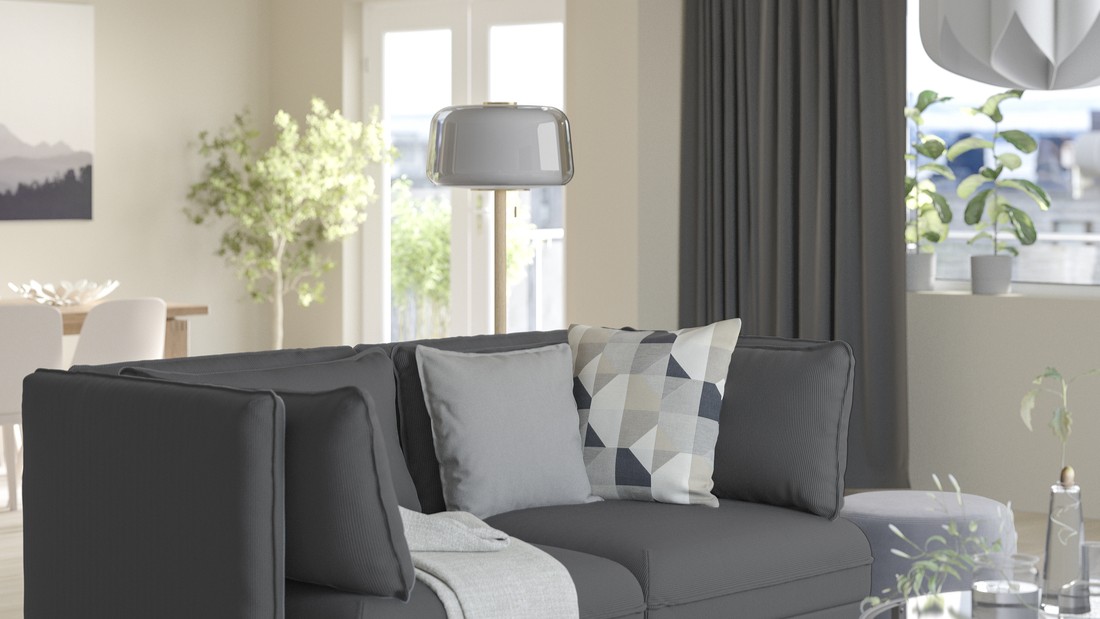
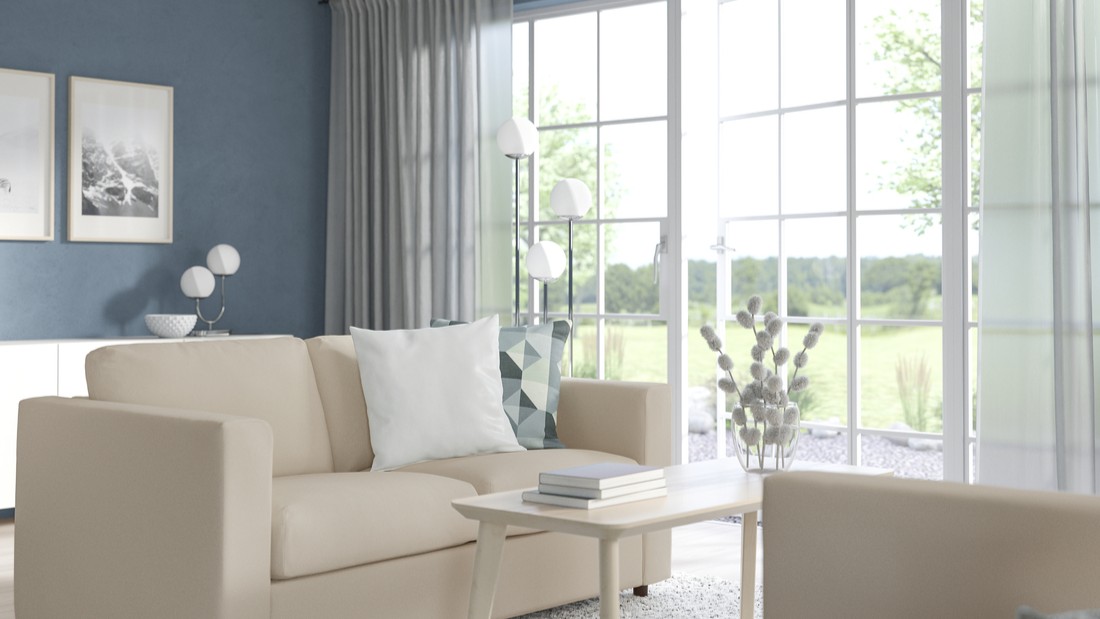
Furthermore, Scandinavian sofas often use neutral colors such as off-white, gray, or beige, which give a bright and spacious impression. These colors provide the opportunity to be combined with other elements, such as decorative pillows or rugs, without changing the basic character of the room.
Additionally, the use of wood materials on the sofa legs is frequently found as a natural accent that strengthens the warm and balanced impression in the room's design.
Regarding materials, fabrics with soft textures and a natural look are used more often than materials that are too shiny. This choice supports a living room atmosphere that feels visually comfortable and is easy to maintain for daily use.
Read also: Choosing the right wall decorations for Scandinavian style
Sofa materials and fabrics that support the Scandinavian style