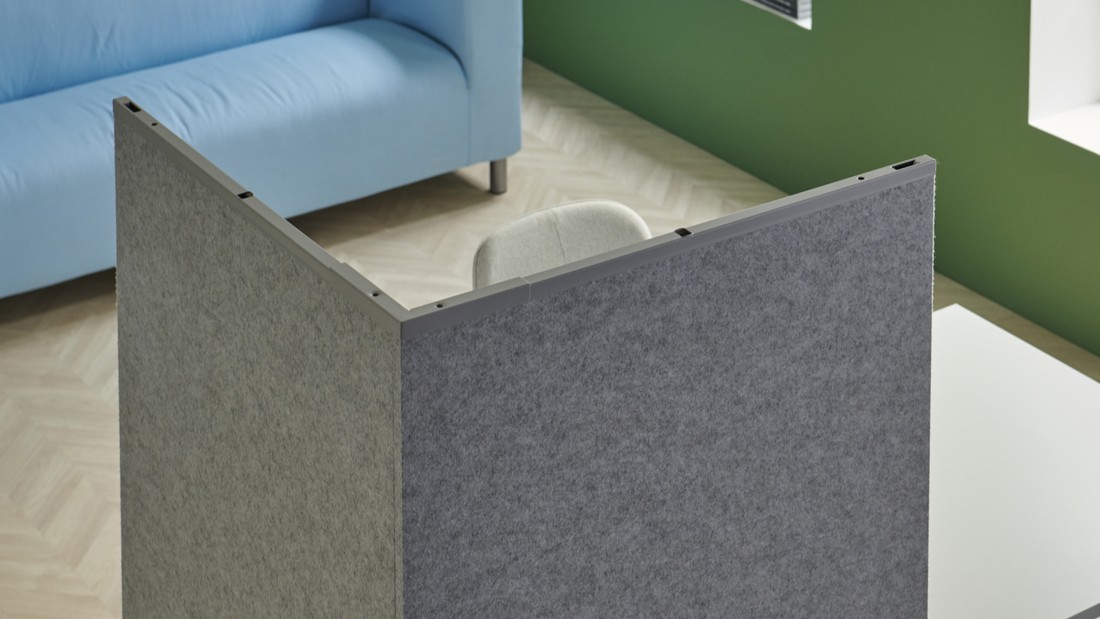
Today, room partitions come in a wide variety of options that can be tailored to your needs and interior design preferences. From flexible models to decorative ones, each type of partition has its own advantages.
By understanding the characteristics of each type, you can choose the best room partition to match both the function of the space and the overall look of your home.
Practical and flexible folding partitions
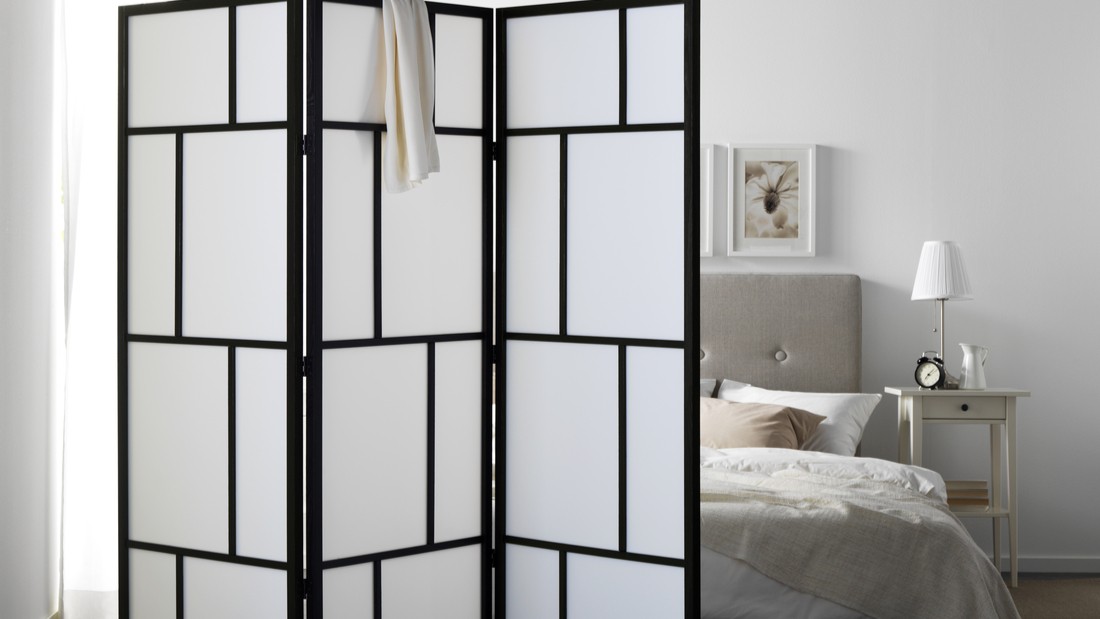
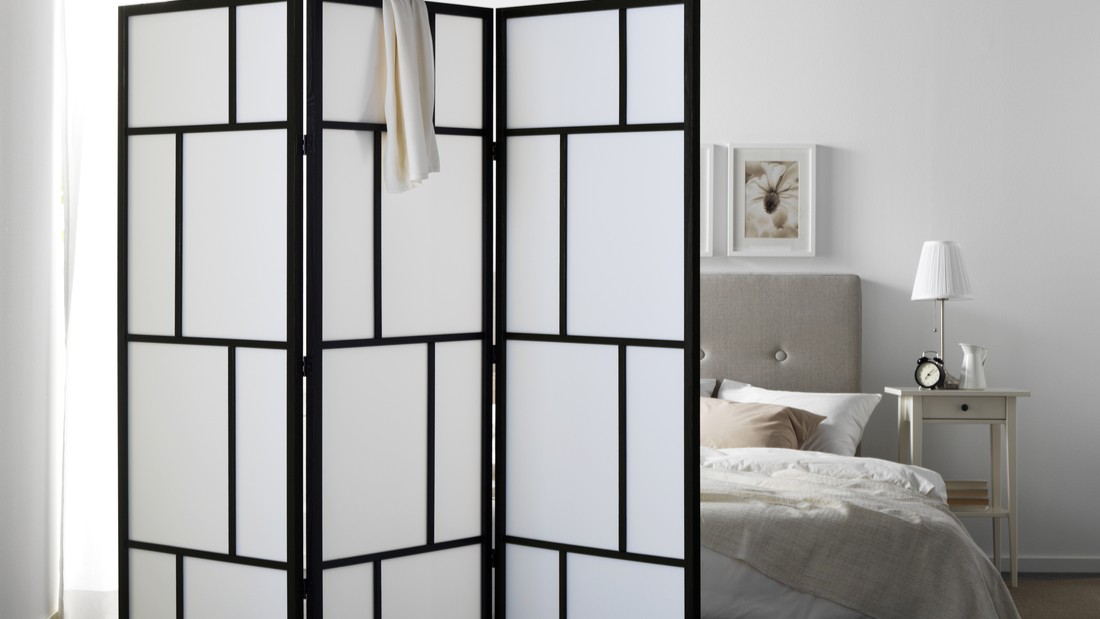
Folding partitions are a favorite choice for minimalist homes or spaces with limited size. This model is designed to be easily opened and closed as needed, making it highly efficient for areas with frequently changing functions.
In addition to saving space, folding partitions are easy to move and adjust without complicated installation, making them a flexible solution for living rooms, family rooms, or home workspaces.
Glass partitions for a modern and open feel
If you want to divide spaces without reducing the sense of openness, glass partitions are an excellent option. Glass allows natural light to flow throughout the room, preventing the space from feeling dark or cramped.
Glass partitions with clear or frosted finishes also create a modern, elegant look while remaining functional as room dividers without disrupting interior visuals.
Open shelves or cabinets as multifunctional partitions
Open shelves or cabinets are often chosen as multifunctional partitions that not only separate spaces but also provide storage. This model is ideal for dividing the living room from other areas while displaying books, décor, or decorative plants.
Besides being practical, using shelves as partitions adds aesthetic value and makes the room appear more organized and well-arranged.
Modern minimalist room partition design inspirations
Room partition design is not just about separating spaces, but also about how the element integrates with the overall interior concept. In modern minimalist homes, the right partition can enhance the character of a space while keeping it neat and comfortable.
Below are several room partition design inspirations to help you create a modern, light, and refined look.
Wood and glass material combination for a light appearance
This combination is commonly found in wardrobe partitions. The blend of wood and glass materials is a popular choice because it delivers warmth while maintaining a modern feel. Wood adds a natural touch, while glass panels help keep the space bright and visually spacious.
This design is perfect for Scandinavian or Japandi-style homes, where the balance between function and aesthetics is a key focus.
Partitions with integrated lighting
If you want to create a more dynamic atmosphere, partitions with integrated LED strip lighting offer a fresh design inspiration. The lighting not only serves as additional illumination but also helps define specific zones within the home, such as the living or dining area.
With proper lighting placement, the partition looks more stylish while enhancing visual comfort throughout the space.
Neutral colors and symmetrical designs for a clean, organized look
Neutral colors such as white, beige, or gray are commonly used in modern minimalist partition designs because they create a clean and orderly appearance. When combined with symmetrical designs, partitions look neater and do not overwhelm the interior.
These color and shape choices also make it easier to match partitions with various home décor styles without appearing excessive.
Tips for choosing room partitions based on your needs and style
Choosing a room partition should not be done carelessly. Beyond aesthetics, you need to ensure that the partition truly functions according to the needs of the space.
With the right choice, partitions can work optimally, align with your interior design, and remain comfortable to use over the long term. Here are some tips to help you select the right room partition.
Consider the function: decorative, privacy, or storage
The first step is to determine the main purpose of the partition. Will it serve purely as a decorative element, as a divider to maintain privacy, or also as additional storage space?
By defining its primary function early on, you can more easily choose the appropriate model, structure, and design to suit your room’s needs.
Match the size and design with the room layout
The size and design of the partition should complement the room layout to avoid disrupting comfort. Partitions that are too large or too dense can make a space feel cramped and overcrowded.
Ensure the partition design supports the flow of movement within the room and allows sufficient space so the room’s functionality remains intact.
Choose durable and easy-to-clean materials
In addition to appearance, the partition material should be carefully considered. Choose high-quality, durable, and easy-to-maintain materials so the partition stays neat over time.
Materials such as engineered wood, lightweight metal, or glass are efficient choices in terms of both functionality and aesthetics and can be applied to various interior design concepts.
Create a flexible layout with the ideal partition