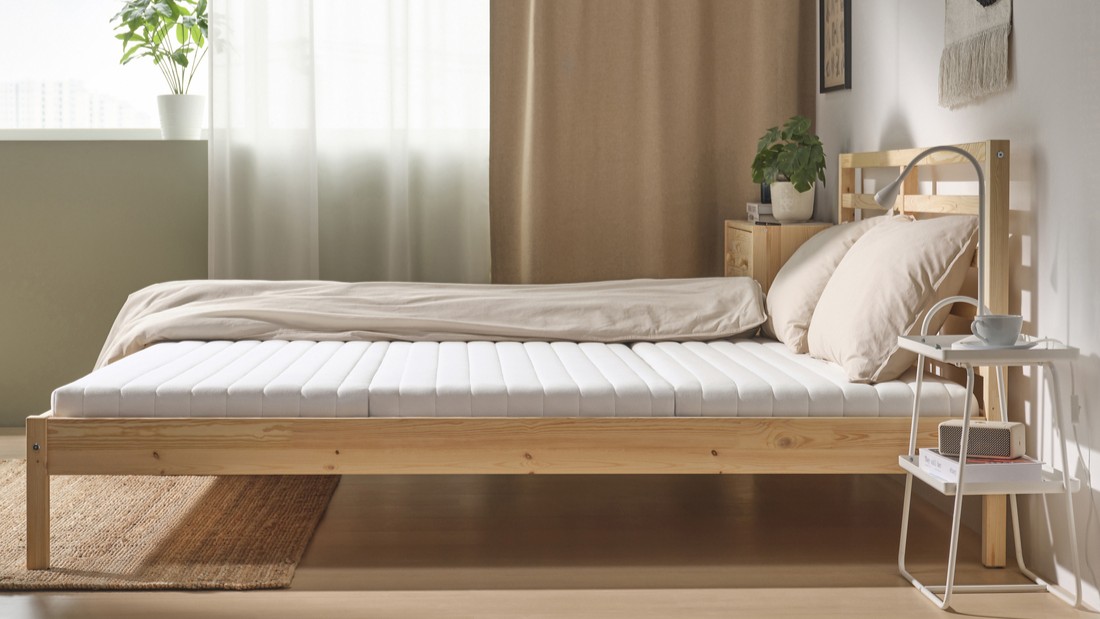
A mattress is not necessarily made from one material from top to bottom. Depending on its construction, it may contain several layers that work together to provide comfort and support while you rest.
Understanding the parts of a mattress makes product specifications easier to read, particularly when you encounter terms such as pocket spring, comfort layer, pillow top, topper, mattress protector and bed frame.
Good to Know : Not every mattress has the same number or arrangement of layers. A mattress may include an outer cover, comfort layer, transition layer, foam or spring support core and base layer. Some designs also include a pillow top or reinforced edge. A mattress topper and protector are separate additions placed above the mattress, while the bed frame, base and headboard belong to the overall bed system rather than the internal mattress construction.
Knowing what these terms mean can also help you choose a mattress according to firmness, materials, sleeping position and personal comfort preferences.
What Is the Difference Between a Bed, Mattress and Spring Mattress?
Although these terms are sometimes used interchangeably, they describe different things.
A bed refers to the complete sleeping setup and may include the mattress, bed frame, base, legs and headboard.
A mattress is the cushioned structure that you lie directly on.
A spring mattress uses a system of metal springs or coils as a major part of its support core.
This means not every mattress is a spring mattress. Foam mattresses and other constructions can provide support without an internal spring system.
Related read: Explore different mattress types and their benefits when choosing the right mattress for your sleeping needs.
Main Mattress Layers from Top to Bottom
The exact construction varies from one mattress to another, but several layers are commonly found in modern designs.
1. Mattress Cover
The cover is the outermost layer surrounding the mattress.
It is the surface closest to your bedding and can be made from different fabrics depending on the product.
Some mattress covers include quilting or additional padding to create a softer initial feel.
Do not assume that every mattress cover can be removed or washed. Always check the individual care instructions to help maintain mattress cleanliness.
2. Quilting or Padding
Some mattresses include quilting or padding near the surface.
This creates an initial cushioning effect when you lie down.
The padding may contain foam, fibre or other materials depending on the mattress construction.
Quilting can also create the familiar stitched appearance seen on many spring mattresses, although it is not always treated as a separate layer.
3. Comfort Layer
The comfort layer strongly influences how the mattress feels when you first lie on it.
Depending on the product, it may contain:
-
foam;
-
memory foam;
-
latex;
-
fibre;
-
or combinations of different materials.
Some foams conform more closely to the body, while latex and other materials can offer a different feel and response.
There is no single mattress material that is best for everyone. Consider both the firmness level and the material in relation to your individual preferences.
4. Transition Layer
Some mattresses include a transition layer between the softer comfort system and the firmer support core.
Its role is to create a more gradual change between these two areas and help distribute pressure into the support structure below.
Not every mattress includes a separate transition layer, so check the individual construction rather than assuming it is always present.
5. Support Core
The support core is the primary structural section of the mattress.
In a foam mattress, this section can use a denser, firmer foam designed to help maintain the mattress shape and provide support.
In a spring mattress, the support core contains coils or springs.
Its main purpose is to support the sleeper and provide structure rather than simply making the mattress feel firm.
6. Bonnell Springs and Pocket Springs
Springs are one of the defining elements of a spring mattress.
In a traditional Bonnell spring system, coils are interconnected and tend to respond more as one unit.
With pocket springs, each spring is individually wrapped, allowing it to react more independently to pressure.
This can be useful when two people share the same mattress because movement may remain more localised.
An example is the VESTERÖY pocket spring mattress, which combines individually wrapped springs with comfort materials.
Related read: What is a pocket spring mattress? A simple guide.
7. Edge Support
Some mattresses have additional reinforcement around the perimeter known as edge support.
Its purpose is to help the sides of the mattress remain more stable when you sit or lie near the edge.
Edge support can be created using denser foam, reinforced springs or other construction methods.
Not every mattress includes the same type of edge support, so consider this a product feature rather than a mandatory mattress component.
8. Base Layer
The base layer is located at the bottom of the mattress.
It supports the construction above and helps keep the overall structure stable.
Different mattresses may use different materials for this section.
A thicker mattress or one with more layers does not automatically offer better comfort. What matters more is how the materials, firmness and support system work together.
Pillow Top vs Mattress Topper vs Mattress Protector
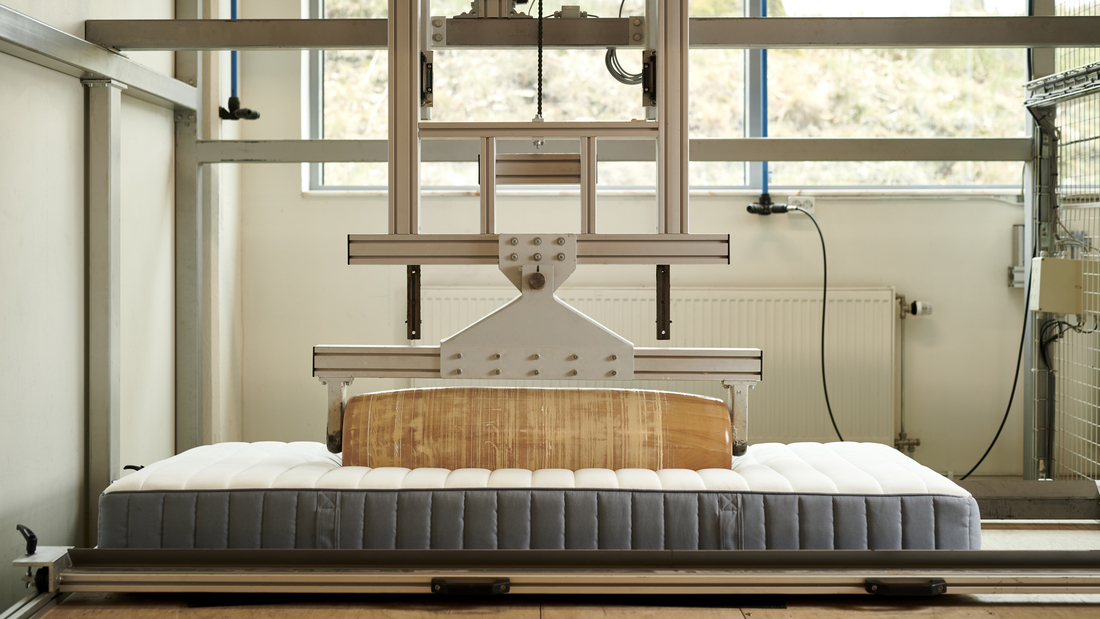
These terms are often confused, but they describe different parts of the sleeping setup.
|
Term |
Position |
Main purpose |
|
Pillow top |
integrated at the top of the mattress |
additional cushioning |
|
Mattress topper |
placed above the main mattress |
adjusts surface comfort |
|
Mattress protector |
placed over the mattress/topper |
helps protect the surface |
Pillow Top
A pillow top is an additional cushioned section integrated into the top of certain mattresses.
Its appearance can resemble another soft layer sitting above the main mattress.
Not every spring mattress includes a pillow top, and a pillow top does not automatically make a mattress suitable for every sleeper.
Mattress Topper
A topper is a separate layer placed on top of the main mattress.
It can be used to modify the surface feel without replacing the entire mattress.
Depending on the product, toppers may contain foam, latex, fibre or other materials.
Mattress Protector
A mattress protector is primarily designed to help protect the mattress surface from stains, dirt or everyday wear according to the individual product specification.
It is not the same as a topper or comfort layer.
Explore IKEA mattress toppers and protectors when completing your bedding setup.
Bed Components That Support the Mattress
Several components support the mattress but are not part of its internal construction.
Bed Frame or Divan
A bed frame provides the structural support beneath the mattress.
Frames may use wood, metal or combinations of materials depending on the design.
Choose an IKEA bed frame with dimensions and support requirements that suit your mattress.
Bed Base
A bed base may use slats or another support structure underneath the mattress.
It works with the bed frame to support the mattress and help keep it stable.
Always check compatibility between the mattress, base and bed frame.
Headboard
A headboard is located at the head of the bed.
It can provide support for your back and head when sitting upright and also contribute to the overall bedroom design.
Depending on the product, a headboard may use timber, metal or upholstered materials such as fabric or synthetic leather.
Importantly, a headboard belongs to the bed structure rather than the internal mattress construction.
What About a Trundle Bed?
A trundle is an additional pull-out sleeping area stored beneath the main bed.
It is useful when extra sleeping capacity is needed in a compact bedroom.
However, a trundle bed is not part of the mattress itself.
How Mattress Construction Can Help You Choose
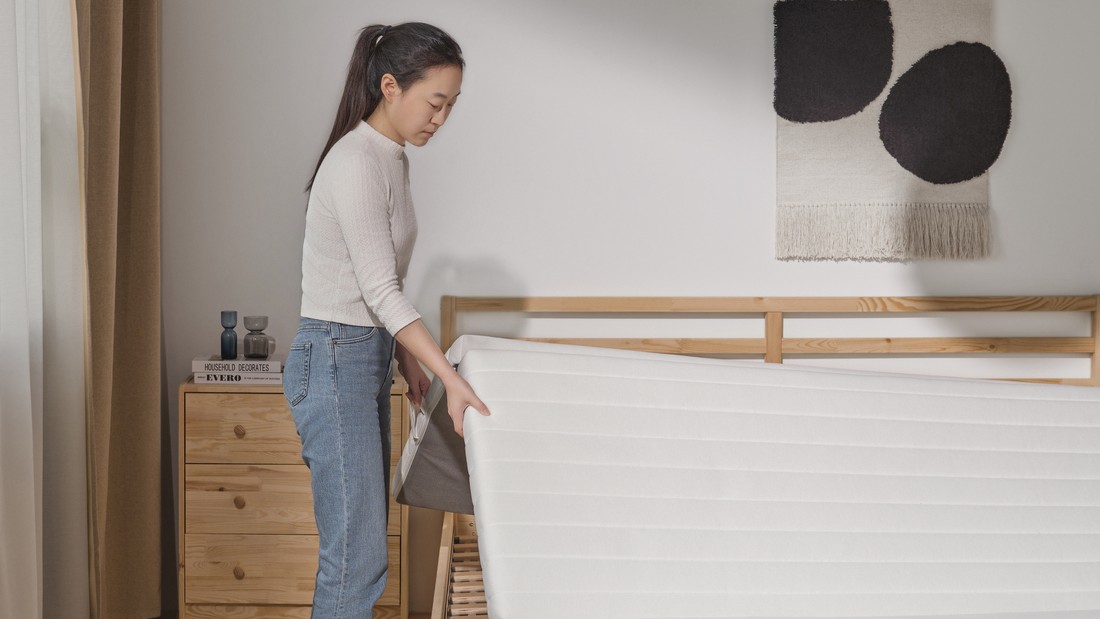
Understanding the layers and components makes it easier to compare mattresses beyond brand names or appearance.
First, identify the support core. Is it made from foam or springs?
For a spring mattress, check whether the design uses pocket springs or another coil system.
Then consider the comfort layer and firmness level. A thicker mattress does not automatically mean a softer or more supportive one.
If you prefer materials such as latex or foam, check the full construction rather than relying on a single material name.
Also consider whether the cover is removable, whether the mattress includes reinforced edges and which bed base is recommended.
Most importantly, more layers do not automatically mean better sleep. Comfort depends on firmness, materials, support, sleeping position, body shape and individual preference.
Find a Mattress That Suits Your Sleep with IKEA
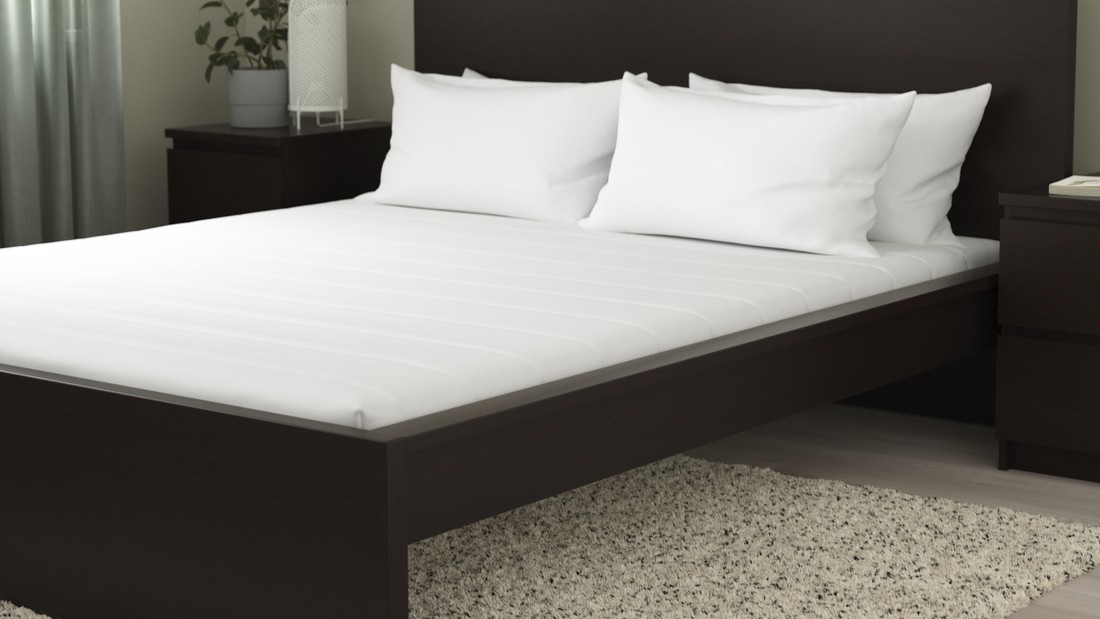
Once you understand the main parts of a mattress, it becomes easier to compare different constructions and comfort options.
Explore IKEA spring mattresses if you prefer coil-based support, including pocket-spring options, or browse IKEA foam mattresses for spring-free constructions.
Complete your sleep setup with mattress toppers and protectors, then choose a compatible IKEA bed frame and base to provide appropriate support beneath the mattress.
FAQ About Mattress Parts
A mattress may contain a cover, comfort layer, transition layer, support core and base layer. The exact construction varies by product.
The defining component is the spring or coil support core, usually combined with comfort materials and an outer cover.
Bonnell springs are interconnected, while pocket springs are individually wrapped and can respond more independently to pressure.
No. A pillow top is usually integrated into the mattress construction, while a topper is a separate removable layer placed above the mattress.
A protector helps protect the mattress surface from stains, dirt or everyday use according to the product's intended function.
No. The bed frame supports the mattress but belongs to the overall bed structure rather than the mattress itself.
A headboard is the panel at the head of a bed. It can provide support while sitting up and also contribute to the bedroom design.
Not necessarily. Comfort depends on materials, firmness, support construction, sleeping position and personal preference rather than simply the number of layers.