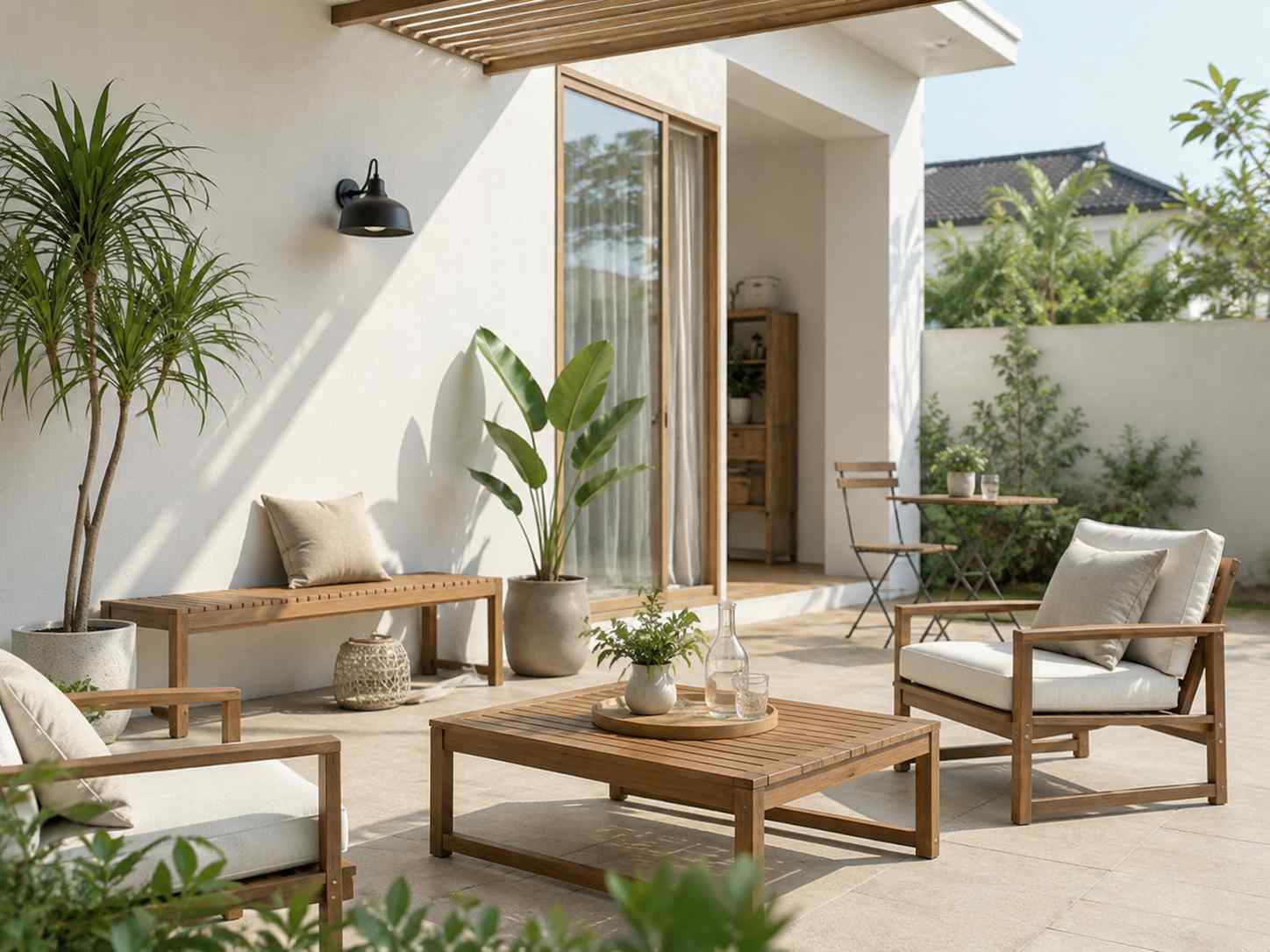
A minimalist house terrace can shape the overall appearance of a home's exterior. Although it is sometimes treated as an additional area, the terrace plays an important role in creating a welcoming first impression that feels neat, comfortable and visually balanced.
With the right layout, the front terrace can become a relaxing corner, a semi-outdoor place for receiving guests or a small green space that brings more life to a simple home. A minimalist approach also works well for compact homes because it prioritises function, efficient planning and furniture that does not overwhelm the available area.
The following minimalist house terrace ideas combine practical planning with different visual styles, helping you create an outdoor area that remains attractive, functional and comfortable for everyday use.
Before choosing a terrace concept, consider the size of the area, its main function, weather exposure and the character of the house facade. For a small terrace, use slim or folding furniture, neutral colours, a limited number of plants and simple decorations. Slip-resistant outdoor flooring, a lightweight canopy and warm lighting can improve both comfort and practicality.
Read also: Inspiration for a charming long side terrace model
12 minimalist house terrace ideas
Colour, flooring, plants, lighting and outdoor furniture all influence how a terrace looks and functions. These ideas can be adapted to suit the size and architectural style of your home.
1. Modern minimalist terrace with a clean look
A clean modern terrace uses simple lines, a restrained colour palette and only a few decorative elements. White, grey, beige and black work well as a visual foundation, especially when paired with plain outdoor flooring and warm wall lighting.
Keep the area practical with one slim outdoor chair and a compact side table. Leaving visible empty space helps the terrace feel calm and uncluttered.

2. Natural minimalist terrace with warm wood accents
Wooden furniture, earthy colours and green plants can give a minimalist terrace a warmer and more personal character. Wood can appear in the seating, ceiling, wall slats or small decorative details.
Choose furniture designed for outdoor conditions and keep the arrangement simple so the natural materials remain the main visual feature.

3. Minimalist terrace with natural stone
Natural stone can strengthen the exterior character of a home while adding texture and an elegant, solid appearance. Use it selectively on one wall, a pillar or part of the flooring rather than covering every surface.
Combine the stone with neutral paint and warm-white lighting for a balanced modern-tropical look.

4. Lush tropical minimalist terrace
A tropical terrace focuses on greenery, airflow and natural light. Potted plants, a small front garden or a vertical plant arrangement can make the area feel cooler and more refreshing.
For limited spaces, use slim pots or vertical plant racks so the floor remains open for seating and movement.

5. Industrial minimalist terrace
An industrial terrace uses stronger materials and colours, such as exposed concrete, black metal and raw textures. Concrete flooring, black wall lamps and chairs with metal frames can establish the look without requiring many accessories.
Limit the number of colours and furniture pieces so the bold materials still feel organised and minimalist.

6. Simple minimalist terrace for a small home
A small front terrace should contain only what is genuinely useful. One folding chair, a compact table, a slim planter and a simple wall light may be enough to create a pleasant outdoor corner.
Furniture that folds or moves easily keeps the space flexible and prevents the entrance from feeling crowded.

7. Minimalist terrace with a canopy
A canopy can protect the terrace from direct sunlight and rain while reinforcing the facade design. For a minimalist home, choose a simple structure in a neutral colour that does not appear visually heavy.
Glass, polycarbonate or metal-framed solutions can be matched to the exterior, while soft lighting and a few plants make the sheltered area more inviting.

8. Semi-outdoor minimalist terrace
A semi-outdoor terrace combines the comfort of an interior sitting area with the openness of the exterior. Lounge chairs, an outdoor rug, a small table and a few plants can turn it into an informal living space.
Use slim furniture and colours that connect visually with the interior and facade.

9. Minimalist terrace with compact seating
For limited areas, use folding chairs, a narrow bench or a two-person table set. Compact pieces are easier to move or store and allow the terrace to support different activities.
IKEA outdoor ranges such as TÄRNÖ and ASKHOLMEN can provide practical references for small terraces and semi-open areas.

10. Minimalist terrace with vertical plants
Vertical planting is a practical way to add greenery without using much floor space. Plant racks, wall-mounted planters and hanging pots can transform an unused wall into a fresh visual feature.
Choose outdoor-tolerant plants that are easy to maintain and arrange them with enough space for light and airflow.

11. Minimalist terrace with neutral paint colours
White, cream, light grey, taupe and beige can make a terrace feel brighter, cleaner and more spacious. These colours also work well with wood, rattan, black metal and natural stone.
Add interest through a small number of accents, such as dark frames, warm wood tones or green plants, instead of introducing many competing colours.

12. Minimalist terrace that follows the house facade
The terrace should feel like part of the house rather than a separate decorative area. Coordinate the furniture, flooring, fence, main door, windows and exterior colours with the overall facade.
A modern facade benefits from similarly clean terrace lines, while a natural facade can be supported by wood, stone and plants. This continuity helps the entire exterior look more intentional.

Minimalist house terrace ideas by function
Besides appearance, the terrace layout should reflect how the area will be used in daily life.
Terrace as a relaxing area
Add a comfortable outdoor chair, a small table and a plant to create a simple place for enjoying the morning or evening air. A lounge chair such as NÄMMARÖ can support a warm, natural setting.
Terrace as a semi-outdoor living room
When the terrace is wide enough, use two chairs, a compact table and an outdoor rug to create an informal reception area. Keep the path to the main door clear and select seating with a visually light profile.
Terrace as a coffee corner
A small table, folding chairs and warm lighting can turn the terrace into a simple coffee corner. Compact ranges such as SUNDSÖ or TÄRNÖ suit outdoor areas where furniture may need to be stored after use.
Terrace as a front garden
Use potted plants, a slim plant rack or a small green strip at the side of the terrace. Arrange plants proportionally and leave enough floor area for circulation and seating.
Terrace as light outdoor storage
Closed or slim storage can keep sandals, umbrellas and gardening tools from cluttering the entrance. Choose weather-suitable storage in colours that blend with the facade and furniture.
Read also: 15 minimalist home terrace design inspirations that are elegant and functional
Tips for arranging an aesthetic and functional minimalist terrace
1. Preserve useful empty space
Minimalism does not require every corner to be filled. Visible empty space makes the terrace feel cleaner and provides room for people to move comfortably.
2. Choose furniture that fits the terrace
Oversized furniture can quickly make a compact terrace feel crowded. Use folding chairs, a small round table or a narrow bench for a small area, and choose larger lounge pieces only when the layout allows.
3. Use decorations selectively
Choose a few elements that provide clear visual or practical value, such as a plant, wall lamp, outdoor rug or decorative pot. Limiting patterns and accessories helps maintain a cohesive appearance.
4. Select suitable outdoor flooring
The floor should withstand weather exposure, be easy to clean and offer a slip-resistant surface. Outdoor tiles, natural stone, exposed concrete and weather-resistant flooring in neutral tones are practical options.
5. Add warm and functional lighting
Wall lights, simple pendant lights or small garden lamps can create a warmer atmosphere at night while improving visibility and safety around the entrance.
6. Use plants as controlled natural accents
For a small terrace, use slim pots or a vertical rack. On a wider terrace, combine a few medium and small plants while keeping the seating and walkway open.
IKEA furniture recommendations for a minimalist house terrace
The right furniture can make the terrace more comfortable without sacrificing valuable space.
-
Outdoor lounge chairs: Suitable for a terrace used as a relaxing area. NÄMMARÖ can support a warm and natural look.
-
Folding table and chair sets: TÄRNÖ and ASKHOLMEN are practical references for compact terraces, balconies and semi-outdoor areas.
-
Minimalist outdoor tables: SUNDSÖ works well for a coffee corner or a casual conversation area with a clean modern style.
-
Slim plant racks or storage: Vertical furniture helps organise plants, outdoor accessories and small items while preserving floor space.
-
Outdoor rugs and seat cushions: Soft accessories can improve comfort and add texture without introducing bulky furniture.
Before purchasing, check the product dimensions, outdoor-use recommendations and care instructions to make sure each item suits the terrace.
Mistakes to avoid when designing a minimalist house terrace
- Using too many decorative objects in one area.
- Choosing furniture that is too large for the available space.
- Blocking the path between the gate, terrace and main entrance.
- Ignoring lighting for evening use and entrance safety.
- Adding too many plants until the seating area feels cramped.
- Using slippery or difficult-to-maintain flooring.
- Creating a terrace style that conflicts with the facade.
A more selective arrangement keeps the terrace comfortable, visually balanced and easier to maintain.
Create a stylish and functional minimalist terrace
A minimalist house terrace is more than a transition between the outdoors and the interior. With careful planning, even a compact front area can become a comfortable place for relaxing, receiving guests or displaying plants.
Choose a design that suits the facade and daily activities, then balance colours, materials, greenery, lighting and furniture. For a small home, slim or folding pieces and controlled decoration can preserve an open feeling while still giving the terrace a distinctive character.
Complete your terrace with outdoor furniture and accessories that suit your space and everyday needs.
FAQ about minimalist house terraces
A minimalist house terrace is the front area of a home designed around simplicity, neatness and function. It usually combines neutral colours, appropriately sized furniture and only a few purposeful decorative elements.
Use a cohesive neutral colour palette, select outdoor furniture that fits the available space, add a limited number of plants and provide practical lighting. Every element should have a clear purpose so the terrace does not feel cluttered.
For a small home, choose a simple arrangement with folding chairs, a compact table, slim plant pots and vertical storage or plant racks. Avoid oversized furniture so the space remains open and easy to move through.
Suitable options include outdoor tiles, natural stone, exposed concrete and weather-resistant flooring with a natural finish. Choose a surface that is slip-resistant, durable outdoors and easy to clean.
Plants can bring freshness, colour and a more natural atmosphere to the terrace. Keep the quantity proportional to the available area so they enhance the space without restricting movement.
Suitable furniture includes outdoor chairs, compact tables, folding sets, plant racks and slim storage. Prioritise outdoor-ready materials and dimensions that match the size and function of the terrace.
A canopy is useful when the terrace is regularly exposed to direct sun or rain. A simple canopy that follows the lines and colours of the facade can provide protection without making the exterior look visually heavy.
Choose slim or folding furniture, use light or neutral colours, limit decorative objects and make use of wall space for plants or storage. Leave a clear walkway between the entrance and the seating area.