Living room and kitchen combined design ideas for a minimalist home

Have you ever felt like your home seems cramped even though the space is actually sufficient? Often, the issue is not about square footage but about partitions that cut the room into small, disconnected sections. Many homeowners are now embracing a combined living room and kitchen design to create a more open space that feels warm and inviting every day. 

This concept is not new, but it has become increasingly relevant for modern minimalist homes. Merging the living room with the kitchen goes beyond aesthetics. It is also about making a home feel truly alive.  

When there are no dividers separating the two areas, conversations flow more naturally, and every family member feels more connected to one another. This is why the open-plan concept remains a popular choice across all types of homes, from small apartments to modern minimalist houses. 

Why are more people choosing kitchens without dividers? 

The trend of divider-free kitchens that make spaces feel open continues to grow across various types of homes. Beyond appearance, there are practical reasons behind this design choice that have led many people to consider it seriously. 

An open layout allows natural light to spread more evenly throughout the room. Without wall barriers, the interior feels more spacious and is easier to keep clean. There are no more hidden corners or difficult-to-reach areas, and daily activities flow more smoothly between the kitchen and living room. 

Read also: Create a beautiful kitchen experience IKEA style, starting your day with cheerful cooking activities 

9 combined living room and kitchen designs to inspire you 

There are many ways to bring the living room and kitchen together without completely restructuring your home. Here are some open-plan living space design inspirations you can adapt to suit your home and your needs. 

1. Modern minimalist open space 

An open-plan kitchen design is the most popular choice for minimalist homes. Without permanent partitions, the living room and kitchen merge naturally, creating a genuinely spacious feel. 

Use proportionally sized furniture to keep the space comfortable for everyday use. Neutral colors, such as white or grey, on the walls and kitchen cabinets help create a harmonious, clean, and uncluttered atmosphere throughout the space. 

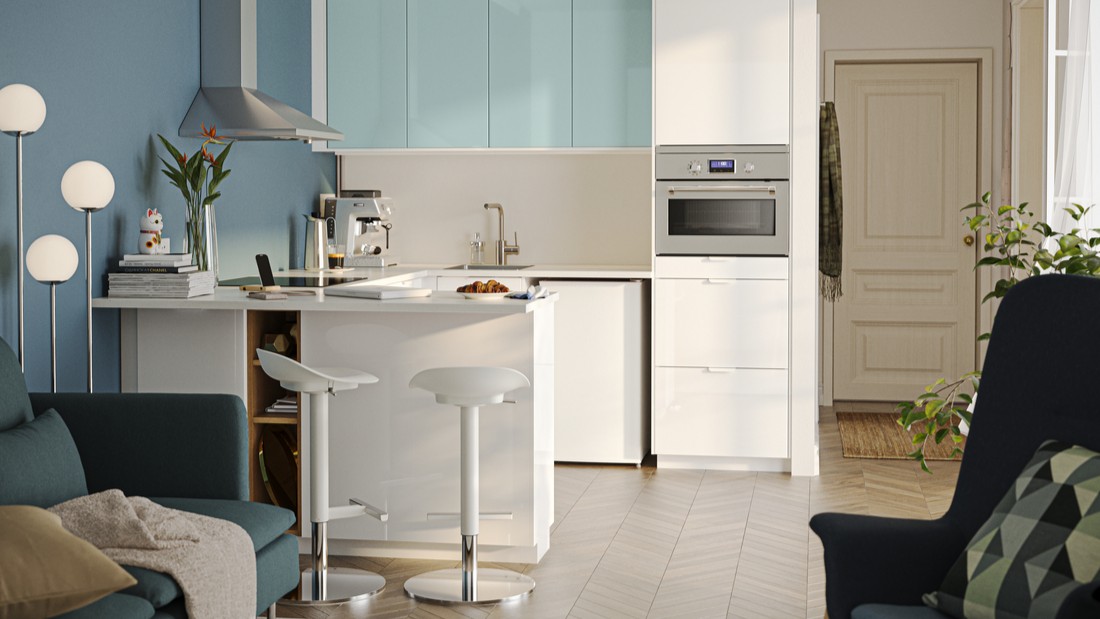
2. Bar counter as a functional divider 

A bar counter is an elegant way to connect the living room and kitchen while providing a clear visual boundary without building a new wall. Its function is truly dual-purpose, serving as both an area divider and a practical dining spot for everyday use. 

Choose a minimalist design with slim, visually lightweight bar stools. A modern feel can be achieved without needing many additional decorative elements that would otherwise make the room feel overcrowded. 

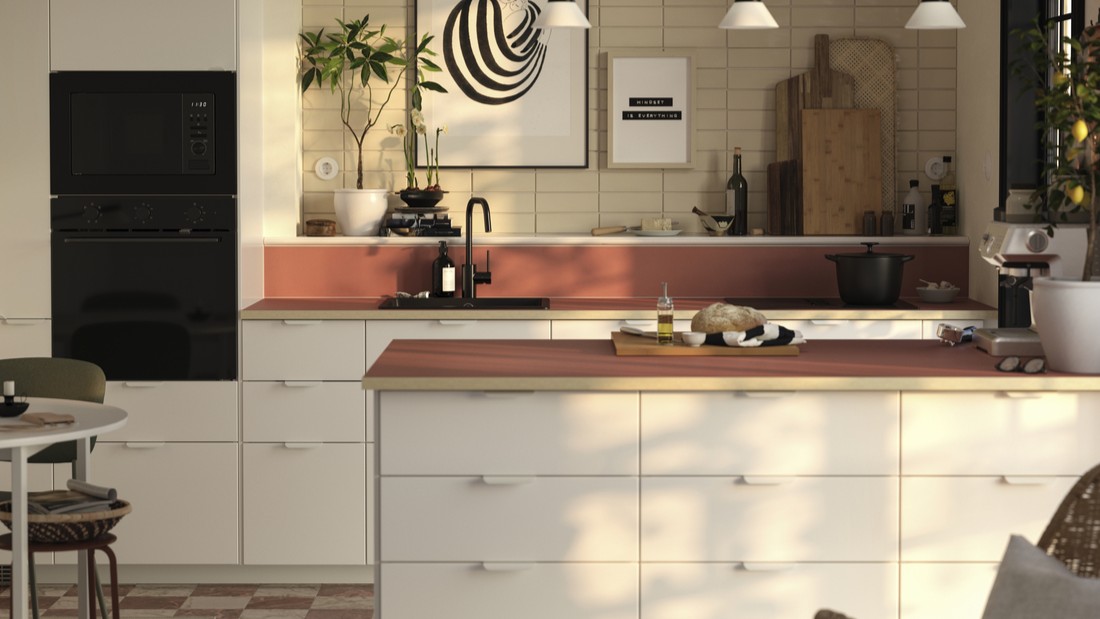
3. Multifunctional kitchen island 

A kitchen island can become a natural gathering point for the family, connecting the kitchen and living room as a center of daily activity. The kitchen area also feels more organized and has a clear focal point with this element in place. 

Choose a kitchen island with drawers or shelves underneath to store kitchen equipment more neatly and efficiently. This design suits kitchens that want to look both functional and aesthetic without requiring too much additional furniture. 

4. Open shelving as a decorative partition 

Open shelves can serve as a light and aesthetic divider between the family room and kitchen without the heaviness of a full wall. Unlike solid walls, open shelves still allow light and sight lines to pass freely throughout the room. 

Fill the shelves with small plants, books, or selected accessories as eye-catching decor. This is one of the most practical open-plan living space design ideas while also giving your room a distinctive character. 

5. Warm and soft pastel tones 

Pastel colors bring a gentle, cozy feel to a combined dining area and family room in a single space. Choose one dominant pastel color and pair it with neutral tones as supporting elements to maintain a balanced overall look. 

For example, a sage-green sofa paired with a minimalist light-wood dining table creates a warm and inviting atmosphere. The result is a family room that blends with the dining area and feels comfortable enough to enjoy every single day. 

6. Grey and white monochrome concept 
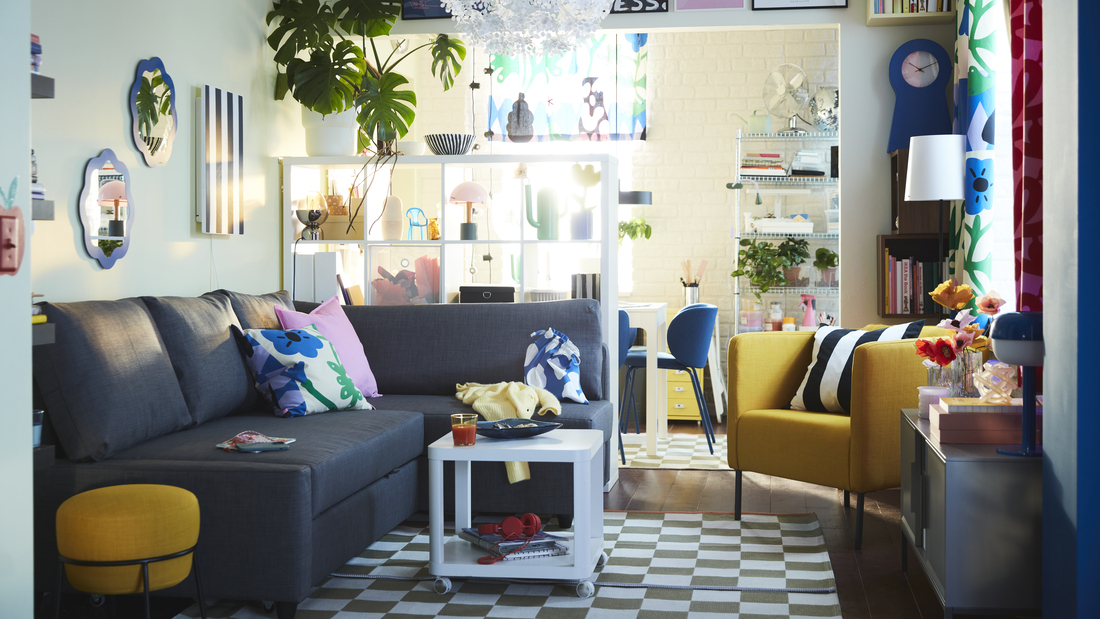
A combination of grey and white from the living room through to the kitchen creates a clean, tidy, and modern look without feeling excessive. This minimalist concept is easy to apply across various home types and does not easily look dated over time. 

Add a simple patterned rug to reinforce the boundary between the living room and dining area without any physical partition. The rug also adds warmth and comfort to the atmosphere for your guests. 

7. Wood material as a unifying element 

Wood is an exceptionally versatile interior design element that can bring together various styles within one room. Applying wood material to the floor, coffee table, or dining table through wall partitions can visually unify the kitchen and living room in a natural way. 

A straight-line kitchen with a wooden kitchen set that extends into the family room creates a natural, flowing layout. The combined family room and dining area feels warmer and more homey, creating a comfortable atmosphere for shared activities. 

8. Urban and characterful industrial style 

An industrial-style kitchen and living room rely on raw materials such as exposed brick, concrete, and metal as its main elements. An unplastered kitchen wall becomes the room's character and primary attraction. 

Pair it with dark-colored sofa and chairs to create a strong visual balance throughout the space. This industrial layout can be a good choice for those who prefer a bolder, more characterful aesthetic. 

9. Family room with maximum natural lighting 

Combining kitchen and living room designs with large windows or a skylight is an effective way to create a fresh, pleasant atmosphere. Natural light that enters the room makes the interior feel more spacious without physically altering the room's size. 

This type of combined family room and kitchen design is well suited to minimalist homes that face a garden or a green outdoor area. Position the sofa facing the window so you can enjoy a relaxed atmosphere to the fullest every day. 

Tips for keeping an open-plan family room and kitchen tidy 

Bringing two functional areas together requires a carefully planned and consistent approach. Here are a few important things to keep in mind so the result feels comfortable for both guests and all household members every day. 

Choose furniture of the right size 

Furniture that is too large will make the open-plan concept feel cramped and uncomfortable to use. Choose a sofa and chairs that are proportional to the available living room area. 

For the dining table, use a minimalist dining table that meets your needs without taking up too much space in the center of the room. This is a fundamental step that greatly determines the final comfort of the living room and kitchen design you create. 

Use decorations selectively and purposefully 

Decoration is important for giving a room character, but too many decorative items in a combined family room and kitchen make the look feel cluttered and unfocused. Choose a few focal points for decoration that are genuinely meaningful. 

For example, a large painting on the wall or a few plants placed at strategic points in the room. This selective approach to interior design maintains a minimalist feel without leaving the room feeling empty or lifeless. 

Manage the kitchen area with closed cabinets 

An open kitchen area is visible from the living room and dining area at all times. Use closed kitchen cabinets to store kitchen equipment so the space always looks tidy and clean, even when the kitchen is being actively used. 

Choose cabinet designs that complement the living room furniture to create a visually clean, cohesive look. The modern minimalist concept is then well maintained even when the kitchen is used intensively every day. 

Use artificial lighting as a zone differentiator 

Beyond natural light, a hanging lamp above the dining table or a pendant light in the kitchen area can help create distinct zones without a physical partition. Each area then has its own identity even while existing within the same shared space. 

Choose warm-toned lighting for the family room and brighter light for the kitchen area. This combination creates an atmosphere that feels both comfortable and functional within a single unified room design. 

Read also: Minimalist kitchen decoration ideas to make your kitchen look spacious and neat 

Start with one small step at home 

There is no shortage of inspiration for combined kitchen and living room designs, but what matters most is starting from your own home's real needs. Create a more open family room or a kitchen design that feels more connected to the seating area without overhauling everything at once. 

Explore living room design inspirations, dining room design ideas, and furniture options that support the open living concept at IKEA.co.id. You can discover a wide range of inspirations and furniture solutions at IKEA.co.id, tailored to the space requirements of your hom


Back to top