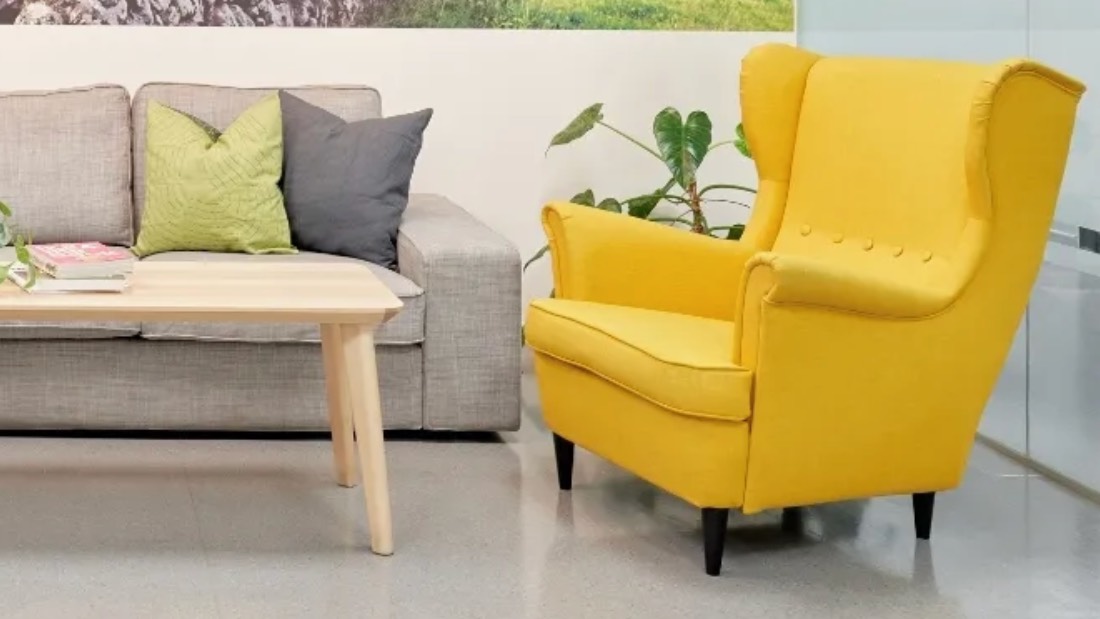
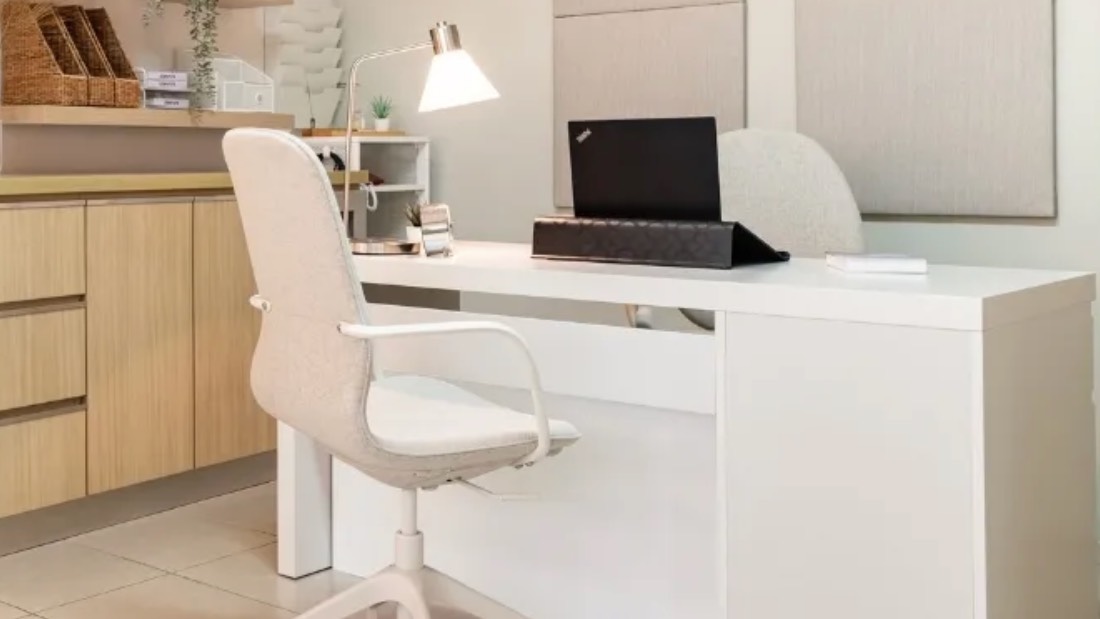
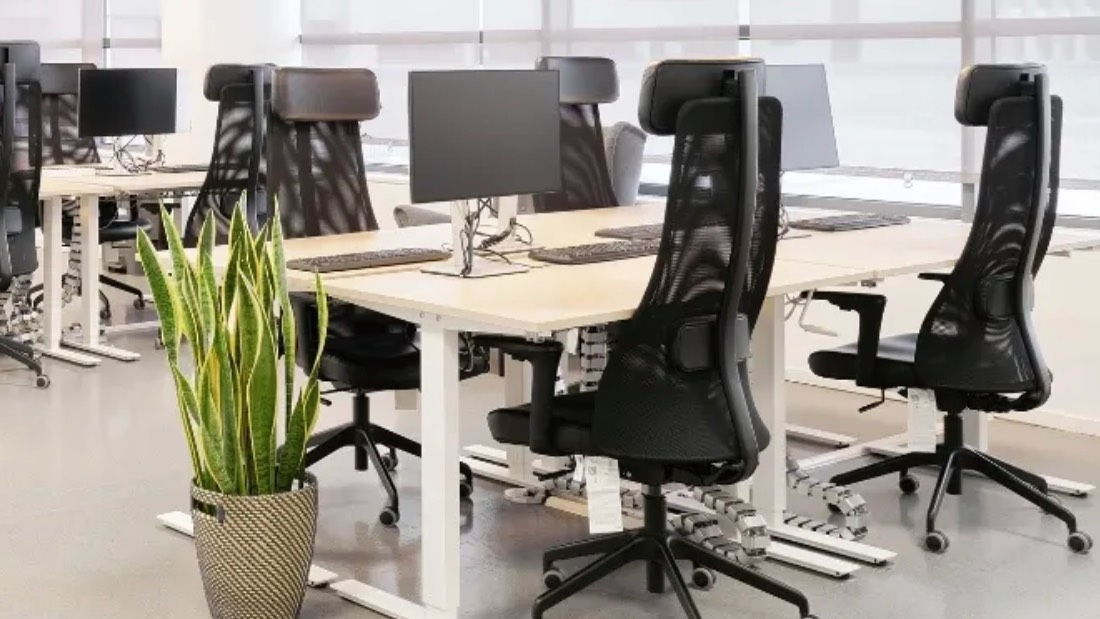
Creating a minimalist office that is both comfortable and productive starts with careful layout planning. Here are several layout strategies to help you optimize every corner of your workspace without making it feel cramped or cluttered.
Maximizing space with efficient layout planning
Space optimization is a key principle of minimalist office design. This can be achieved by clearly dividing work areas, avoiding permanent partitions, and making the most of every corner.
This approach not only ensures smooth workflows but also encourages collaboration between team members.
Even in limited spaces, an efficient layout can create an open and spacious feel, enhancing overall work comfort.
Read Also: Tips for using IKEA Interior Design Services for a comfortable and functional home - IKEA Indonesia
The role of neutral colors and optimal lighting
Color palettes and lighting also play a crucial role in creating a calming office atmosphere. Choices like white, light gray, or cream can give a clean and spacious impression, while also helping to reflect natural and artificial light.
For extra comfort, consider using work lamps with neutral light to keep activities comfortable throughout the day.
The importance of multifunctional furniture and hidden storage
Furniture that serves more than one purpose is essential in a minimalist office. For example, a desk that doubles as a collaboration area or built in storage under the table.
You’ll find various furniture options like closed office cabinets, desks with hidden drawers, or slim storage units that are easy to move.
Multifunctional furniture helps maintain a tidy environment, minimizes clutter, and saves significant space.
Read Also: IKEA interior design portfolio: inspiration for your home - IKEA Indonesia
The benefits of applying minimalist office interior design
Minimalist design isn’t just an aesthetic trend it’s a strategy to enhance productivity and well being in the workplace. To better understand its benefits, here are a few reasons why this approach is worth considering for your office.
Improved focus and concentration
A tidy workspace greatly supports employee focus and concentration. By minimizing distractions, attention can be fully directed toward the task at hand.
In a minimalist space, there are no unnecessary piles of documents or excessive decorations that could divert attention.
As a result, employees can work more efficiently, make better decisions, and ultimately produce higher quality outcomes.
Positive impact on mood and work comfort
A clean, well lit, and organized workspace positively influences mood and comfort. An orderly environment reduces stress and anxiety, allowing employees to work more calmly and with greater focus.
Adequate natural lighting and a well arranged layout create a spacious impression and support emotional stability.
Therefore, attention to the work environment is not only about aesthetics but also a vital part of employee well being.
Practical tips for applying minimalist office interior design
Applying minimalist office design doesn’t have to be complicated. With a few simple adjustments and the right choices, you can create a workspace that’s both efficient and inspiring.
Here are some practical tips to help you build a minimalist office that supports daily productivity without sacrificing style.
Choose functional and ergonomic minimalist furniture
In minimalist design, the focus is not only on function but also on ergonomics. Choose work desks with clean lines and simple forms, and chairs that support good posture throughout the workday.
Ergonomic office chairs help reduce discomfort and fatigue, allowing you to work more effectively. Prioritize quality and timeless design over visually appealing but impractical items.
Avoid common mistakes in minimalist design
Although minimalism emphasizes simplicity, it’s important to avoid common pitfalls like making a space feel too sterile. Don’t be afraid to add personal touches, as long as they align with the overall aesthetic.
Avoid storing items that are rarely used, to prevent clutter and maintain a smooth workflow. The principle is simple, every item in your workspace should have a clear function. That way, the space feels warm and human without losing its minimalist essence.
Add personal touches without disrupting the aesthetic
Adding personal touches is important to make the workspace feel more lively and inspiring even in a minimalist design.
Consider elements like small potted plants, framed artwork, or photographs with clean and minimal frames.
These subtle accents add character without visual clutter, preserving the minimalist look while making your office feel more personal and enjoyable.
Create your dream minimalist office with IKEA