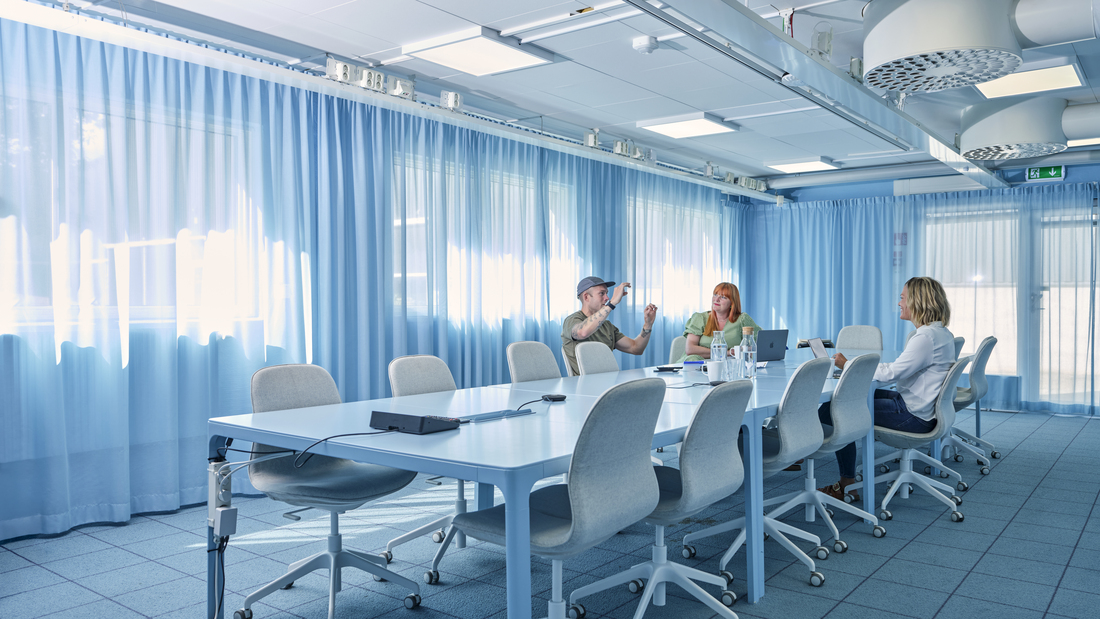
In everyday activities, an executive office is used for various needs, from working and making decisions to receiving guests and holding private discussions. Therefore, the space needs to support work requirements while maintaining privacy.
A professional-looking workspace does not have to feel overly formal. A balance between function, comfort, privacy, and appearance can help create a space that supports work activities while reflecting the character of the company.
a good executive office design does not have to look luxurious or be filled with decorations. Prioritize a proportional desk, an ergonomic chair, organized storage, good lighting, and a layout that supports focus and privacy.
What should you consider when designing an executive office?
An executive office has slightly different needs from a regular office space. In addition to supporting individual work, the area needs to provide room for limited interaction without disrupting concentration.
The office design should start with the user's actual needs. Here are several things to consider when designing an executive office.
1. Prioritize privacy without making the space feel enclosed
Privacy can be created through the positioning of the door, desk, guest chairs, and clear visual boundaries. However, the office does not have to be completely enclosed, as some open space and natural light can help create a more spacious atmosphere.
2. Choose furniture that supports focus
The desk is the center of activity, so its size should be suited to the work being performed. Pair it with an ergonomic chair that can help maintain comfort when used for extended periods.
3. Match the design to the company's character
Neutral colors such as white, gray, beige, or brown can serve as an interior foundation that is easy to combine. Wood elements, black accents, plants, or simple decorations can then be used to add character without making the space feel monotonous.
Also read: Minimalist office workspace design for a modern and comfortable atmosphere
A Layout that supports executive activities
After determining the interior character, consider how the room is used throughout the day. The following arrangements can help create a clearer workflow while keeping circulation comfortable.
-
Make the desk the center of activity: Place the desk in a comfortable position for working, while guest chairs or a short discussion area can be positioned on an easily accessible side.
-
Arrange storage without disrupting circulation: Use closed cabinets or storage units in areas that do not obstruct movement so documents remain easy to access.
-
Consider room privacy: Pay attention to the entrance direction and guest pathways when positioning furniture so brief conversations can take place without disrupting the main work area.
Executive office design inspiration
The choice of interior style can help shape the impression you want to create through an executive office. Here are several design inspirations that can be adapted to the company's character, space requirements, and desired atmosphere.
1. Modern minimalist
Use white, light gray, beige, or light brown as the base colors, paired with furniture featuring simple designs. Place the desk at the center of the room, then complement it with chairs and cabinets in matching tones to create a neat and cohesive look.
Make the most of natural light from the windows and add a desk lamp if needed. Keep decorations to a minimum so the space remains clean and uncluttered.
2. Natural Japandi
Combine warm white, beige, and light wood to create a calm and inviting atmosphere. Place the desk near a window, then add a neutral-colored chair and a small plant as a natural accent.
Choose warm white lighting to maintain a soft atmosphere in the evening. Wood textures and simple decorations can add a professional touch without making the room feel overly formal.
3. Elegant industrial
Combine black, wood brown, gray, and metal to create a more defined character. A wooden desk with a black frame can serve as the focal point, while shelves or cabinets can be placed beside or behind the desk.
Pair gray or concrete-effect walls with wood elements to keep the look balanced. Use black accents sparingly and add warm lighting to prevent the room from feeling too dark.
4. Formal monochrome
A black or dark brown desk can serve as the focal point, paired with chairs and cabinets in white, black, or gray tones. This combination creates a neat and formal look without making the space feel overly busy.
Add a gray rug or wood accents to bring a touch of warmth. Leave enough space between the furniture so the monochrome composition still feels open and does not appear too rigid.
5. Modern natural
A simple wooden desk can be placed near a window to make the most of natural light. Complete the space with a cream or gray chair and a green plant in the corner, while beige, warm white, and light brown can serve as complementary colors.
A few selected books or decorative pieces can add a personal touch. Choose accessories sparingly so the natural elements remain subtle accents without making the space feel crowded.
Furniture recommendations for an executive office
After determining the interior design, furniture can be selected according to the function of each zone. IKEA Indonesia provides various workspace essentials, from desks and chairs to storage, lighting, and accessories that support daily activities.
1. ALEX/LAGKAPTEN Desk

For the main workspace, Ana can choose ALEX/LAGKAPTEN, measuring 140 × 60 cm and equipped with a storage unit on one side.
This combination is suitable for an executive office because it provides a sufficiently spacious work surface while also offering storage space without requiring an additional desk.
2. JÄRVFJÄLLET Adjustable office chair

To support comfort while working, JÄRVFJÄLLET features adjustable seat height, lumbar support, and a headrest. These features help you adjust your sitting position according to your work activities.
3. GALANT Office cabinet

Documents and office supplies can be stored using GALANT, measuring 80 × 45 × 120 cm. Adjustable shelves and closed doors help keep storage organized while supporting a more professional executive office appearance.
4. TROTTEN Cabinet shelf

TROTTEN measures 80 × 55 × 110 cm and can be accessed from both sides. Lockable sliding doors help store documents while dividing the area without completely closing off the workspace.
5. MITTZON Multifunctional frame

MITTZON measures 85 × 50 × 205 cm and comes with a whiteboard and two storage shelves. Its wheeled frame can help divide the workspace while supporting meetings or brainstorming sessions during work.
How to keep an executive office comfortable and professional
A professional impression does not always come from large furniture or expensive decorations. A few simple details can help keep the space neat, comfortable, and ready for work or receiving guests.
-
Maintain good lighting: Make use of natural light and complement it with suitable artificial lighting so the workspace remains comfortable to use.
-
Organize cables: Arrange laptop, monitor, and other device cables so they do not disrupt the appearance or movement around the desk.
-
Use consistent colors: Neutral colors such as white, gray, or beige can create a clean and professional impression without looking excessive.
-
Consider circulation: Leave enough space around the desk and chairs so movement remains easy, especially when receiving guests.
-
Choose decorations sparingly: Plants, artwork, or simple accessories can add character without making the room feel crowded.
Also read: Ergonomic office chairs: a smart investment for work productivity
Create a Professional and Functional Executive Office
An executive office design can feel professional and comfortable when the layout, furniture, lighting, storage, and privacy are adapted to everyday activities.
Choose elements that are truly needed so every part of the room has a clear function without making the overall appearance feel excessive.
IKEA provides a variety of office furniture options that can help complete an executive office. These options can be adapted to the room size, activity requirements, and interior style you want to create.
Visit IKEA.co.id to discover various furniture options and inspiration that can help you arrange an executive office according to your needs.
FAQ
An ideal executive office should be private, comfortable, organized, and supportive of focus. The room should also have enough space to receive guests or hold brief discussions.
Neutral colors such as white, gray, beige, and brown can be flexible choices. You can add wood elements or black accents to give the space more character.
A desk, ergonomic chair, storage, and guest seating are the main elements. Choose the size and quantity of furniture based on the room's size and the activities carried out there.
Arrange the position of the door, desk, and guest chairs so the entrance does not directly face the main work area. Closed cabinets, curtains, or visual partitions can also help maintain privacy.
Use a neat layout, neutral colors, furniture with simple shapes, and good lighting. Add wood elements, plants, or selected decorations as accents so the room still has character.