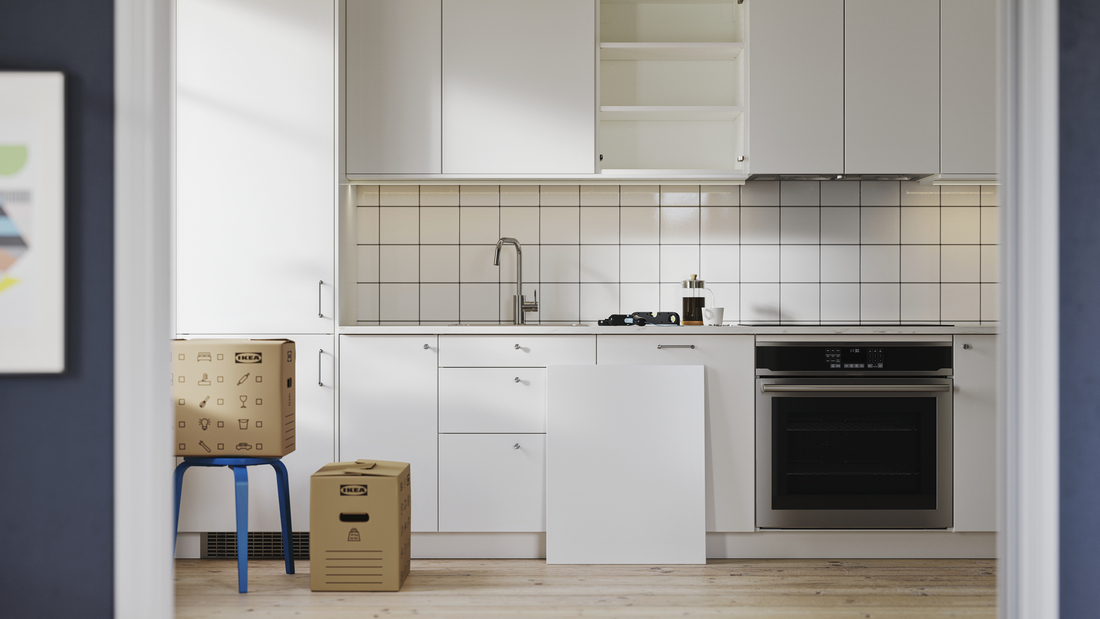
Storage needs at home can change over time. Choosing a storage system that adapts to your needs can help you plan for long-term use.
Flexible storage allows you to rearrange shelves or add components as needed. This way, you can adjust your storage system without replacing entire units that are still in good condition.
Read on to explore different types of storage systems, learn what to consider before buying, and find options that suit your home.
Not all storage systems offer the same level of flexibility. Before choosing one, check whether the shelves can be adjusted, the components are compatible, and additional units are available separately.
What is flexible storage?
Flexible storage refers to storage systems that can be adapted to your needs, for example, by rearranging shelves, adding components, or combining different units. Examples include open shelving and modular cabinets.
Unlike fixed storage systems, flexible storage gives you the option to adjust the configuration as the number of items you own or your storage needs change.
This means you can keep the parts that still work for you and adjust the arrangement without having to replace the entire system.
Benefits of choosing a flexible storage system
Storage that is easy to adjust can help you accommodate changing needs at home without having to replace all your furniture. Here are some benefits to consider:
-
Adapts to changing needs: You can rearrange the setup as your collections, belongings, or activities at home change.
-
Allows gradual expansion: Some systems let you add units or components when needed, depending on product compatibility.
-
Offers more arrangement options: Adjusting shelf positions or combining cabinets can help you customize access and the overall look of your storage.
-
Supports long-term use: You can keep the parts that still meet your needs and adjust the configuration as new requirements arise.
Read also: A guide to choosing modular furniture for your home
Types of flexible storage systems for your home
Each storage system offers different ways to adapt to changing needs. Here are some types of flexible storage to consider for your home.
1. Shelving with adjustable shelves
This system allows you to change the spacing between shelves to accommodate items of different heights. When your needs change, you can adjust the shelf positions without replacing the entire unit.
Be sure to check the weight limits and installation instructions before making any adjustments.
2. Modular storage systems
Modular systems consist of units or components that can be combined in different configurations. Some systems allow you to add compatible cabinets, shelves, or other components as needed.
Check the product dimensions and series to ensure that additional components fit properly.
3. Cabinets with adjustable configurations
Some cabinets offer adjustable shelves, drawers, or doors to suit different storage needs. These options allow you to change the interior layout without replacing the entire cabinet.
How to choose flexible storage for your needs
To find the right option, consider your current storage needs as well as how they might change in the future. Here are a few things to keep in mind before making your choice.
-
Anticipate changing needs: Consider whether the number of items you own or your activities at home might increase, requiring changes to your storage setup.
-
Check component compatibility: Make sure additional shelves, drawers, or other units are designed to work with your chosen storage system.
-
Consider materials and capacity: Choose materials and weight limits that suit the items you plan to store.
-
Set a budget: Compare the initial purchase cost with potential additional costs if you plan to expand your storage system in the future.
Flexible storage does not have to include lots of components or features. Choose the features you genuinely need to keep your storage practical and within budget.
Read also: Wall storage solutions for a tidier home
Recommended cabinets and sideboards for flexible storage
If you are looking for storage that can adapt to your changing needs, consider systems with adjustable shelves or units that can be combined. Here are some cabinet and sideboard options from IKEA to consider.
1. HAUGA storage combination

The HAUGA storage combination measures 244 × 46 × 116 cm and consists of two cabinets with doors and one cabinet with glass doors. This combination offers both concealed storage and space to display your favourite items.
The interior can also be organised using STUK interior accessories, allowing you to adjust the arrangement to suit your needs.
2. LOMMARP cabinet

The LOMMARP cabinet measures 102 × 50 × 101 cm and features adjustable shelves. It is made from a combination of fibreboard and particleboard with a polyester paint finish.
The adjustable shelves allow you to organise the storage space according to the height of your belongings, while the drawers and doors feature a soft-closing mechanism.
3. IKEA PS 2026 cabinet

The IKEA PS 2026 cabinet measures 80.2 × 46.2 × 139.8 cm and is made of solid pine, with pine veneer on the doors. It features three adjustable shelves, each with a maximum load of 25 kg.
Its spacious interior, without additional dividers, makes it easier to store items of different sizes.
4. FJÄLLBO sideboard

The FJÄLLBO sideboard measures 111 × 47 × 95 cm and combines a powder-coated steel frame with a solid pine top and shelves. It provides storage space behind the doors and in the drawers, along with a surface for displaying decorative items.
5. LIXHULT storage combination

The LIXHULT storage combination measures 140 × 35 × 142 cm and consists of eight cabinets, each measuring 35 × 60 cm. The cabinets are made of steel with an epoxy/polyester powder coating, and each shelf has a maximum load of 12 kg.
The doors can be installed to open either to the right or left. The units can also be used with the included legs or placed directly on the floor.
Choose storage that adapts to your needs
Storage needs at home can change as your belongings accumulate or your daily routines evolve. Choosing a system that can be adjusted makes it easier to accommodate these changes without replacing an entire cabinet.
If you're looking to organize your storage to better suit your home's needs, IKEA offers a range of space planning solutions to help you make the most of your available space. Visit IKEA.co.id to explore storage options and find a combination that suits your home.
FAQ
Flexible storage is a storage system whose layout or components can be adjusted to accommodate changing needs.
Flexible storage focuses on adaptability, while modular storage refers to a system made up of units or components that can be combined.
It allows you to add or adjust components as needed, provided the product supports these changes.
Check component compatibility, load capacity, dimensions, ease of adjustment, and budget.
Yes, especially if the system supports configuration changes and compatible additional components remain available.