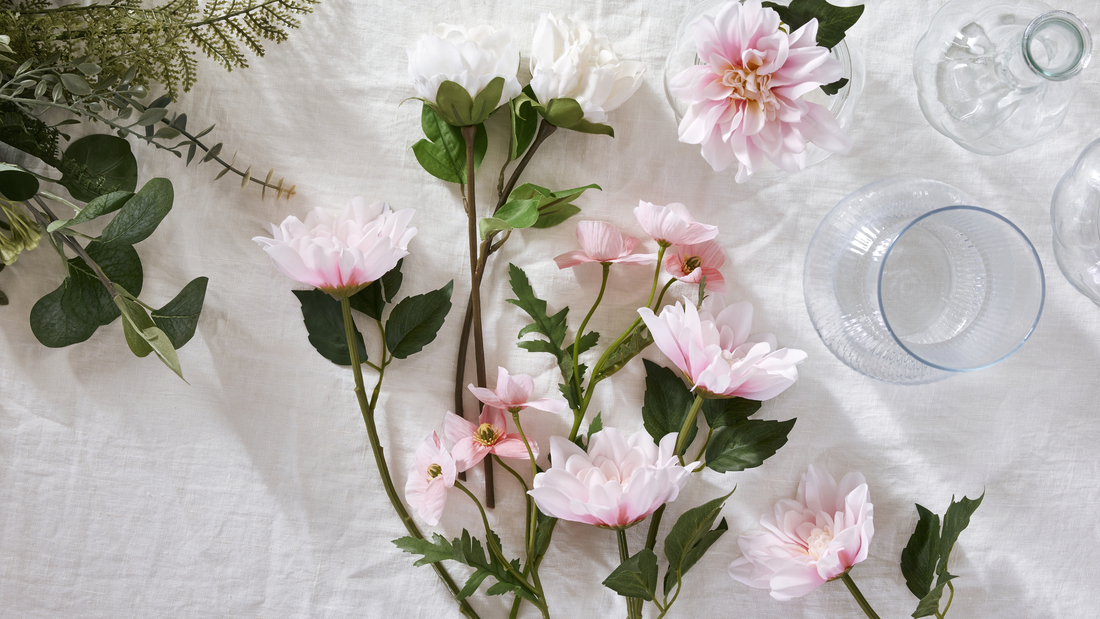
Decorative flowers can make your home look fresher, more beautiful, and more inviting. Choosing the right flowers can also help create an atmosphere that complements your interior style and suits the needs of each room.
There are many types of decorative flowers to choose from, ranging from live plants to practical artificial flowers. To keep your decorations looking attractive, it is important to select flowers based on your room’s conditions, maintenance requirements, and budget.
Read on to discover the different types of decorative flowers, how to choose them, and tips on how to care for them.
Choose decorative flowers based on available light, room size, and your ability to care for them to keep your decorations looking attractive. For a more practical option, artificial flowers can be a great alternative because they do not require watering or fertilizing.
Common types of decorative flowers
Each type of decorative flower has its own visual characteristics and care requirements. Here are several options to consider for beautifying your indoor and outdoor spaces.
| Flower Name | Characteristics | Light Requirements | Suitable Location | Care and Notes |
|---|---|---|---|---|
| Moth Orchid (Phalaenopsis spp.) | Large flowers available in various colors | Bright, indirect light | Near a window or on a shaded patio | Monitor the growing medium's moisture and root condition. Generally non-toxic to cats and dogs. |
| Miniature Rose (Rosa miniature varieties) | Small rose blossoms | Direct sunlight | Patio or garden | Pay attention to watering and pests. Be careful of the thorns. |
| Bougainvillea (Bougainvillea spp.) | Vibrant colors with thin, papery bracts | Full sun | Garden or open patio | Ensure good drainage and prune as needed. Many varieties have thorns. |
| Arabian Jasmine (Jasminum sambac) | White flowers with a fragrant scent | Full sun to partial shade | Garden or outdoor pots | Maintain moisture in the growing medium and make sure you have identified the correct plant species. |
| Flamingo Flower (Anthurium andraeanum) | Glossy, colorful flower-like spathes | Bright, indirect light | Bright rooms or shaded patios | Maintain humidity and good air circulation. The plant's sap and tissues contain crystals that can cause irritation if chewed. |
How to choose decorative flowers for your home
Choosing decorative flowers should involve more than simply considering their colors or shapes. Take your room's conditions and daily habits into account to ensure the flowers remain attractive and easy to maintain.
Here are some tips for choosing the right decorative flowers:
- Match the flowers to the available light: Choose flowers based on the amount and intensity of natural light available indoors or outdoors.
- Consider the room size: Use small flowers for tables and shelves, while larger arrangements are suitable for spacious corners.
- Determine your decorating goals: Choose brightly colored flowers for a bold accent or neutral-colored flowers for a calmer look.
- Consider maintenance requirements: Select plants that match the time and effort you can dedicate to their care.
- Consider artificial flowers: These are ideal if you want practical decorations without the maintenance required by live plants.
How to care for flowering plants for optimal growth
Flowering plants require care suited to their species and growing conditions. Regular inspections, proper fertilization, and pest prevention help keep plants healthy and support flower growth.
Here is how to care for flowering plants to help them grow optimally.
1. Monitor plant conditions regularly
Check the color of the leaves, the condition of the stems, and the moisture level of the growing medium regularly. Yellowing leaves, wilted stems, or excessively wet soil may indicate that your plant needs attention.
Adjust your watering schedule to suit each flower species. Make sure the pot has drainage holes to prevent water from accumulating and causing root rot.
2. Establish a fertilizing and pruning schedule
Fertilizing provides plants with essential nutrients, while pruning removes damaged parts and helps maintain their shape. Both practices should be carried out according to the plant's condition and species.
Use fertilizer according to the product instructions and avoid overfertilizing. A plant that does not flower is not necessarily lacking nutrients, as light exposure, root conditions, and plant maturity can also affect flowering.
3. Check for pests and plant diseases
Regular inspections help you identify problems before the damage spreads. Look for changes from the plant's normal condition rather than focusing solely on the presence of insects.
Use the following checklist during inspections:
- The upper and lower surfaces of leaves.
- New growth, stem joints, and the base of leaf stalks.
- Flower buds and open blossoms.
- Roots visible through the container or drainage holes.
- The smell, moisture level, and surface condition of the growing medium.
If you notice signs of pests or disease, isolate the affected plant from other plants if necessary. Treat the problem according to its cause to prevent it from spreading throughout your plant collection.
When are artificial flowers a better choice for home decoration?
Artificial flowers are a better option when a room's conditions or the occupants' daily routines do not support the growth of live plants. They provide a decorative appearance without requiring sunlight for growth or regular watering.
Artificial flowers still need simple maintenance to keep them looking their best. Remove dust regularly and protect the materials from heat or direct sunlight, which can cause their colors to fade.
Read also: Minimalist ornamental plant racks: beautiful iron and bamboo choices
Flower decoration recommendations from IKEA
If you want to beautify your home without having to care for live plants regularly, artificial flowers can be a practical choice.
IKEA offers a variety of artificial plants and flowers to suit different interior styles, from potted plants to flowers for vase arrangements. Here are some decorative flower options to consider.
1. FEJKA white orchid

The FEJKA white orchid is ideal for anyone who loves an elegant floral look without the hassle of watering plants. Its white color pairs easily with living room, bedroom, or desk decorations.
This artificial plant can help create a fresh atmosphere in areas with limited natural light. It is made with at least 50% recycled plastic, making it a practical decorative choice for long-term use.
2. VINTERFINT green tree

The VINTERFINT green tree is a great way to add a touch of greenery to your room without taking up too much space. The pot is included, so you can place it directly in a corner of your home.
This artificial tree is also suitable for seasonal decorations or festive year-end displays. It is made with at least 50% recycled plastic and does not shed needles like a natural tree.
3. SMYCKA dahlia

The SMYCKA dahlia is ideal for decorating vases, tables, or display shelves with an attractive floral accent. Its stem can be trimmed with pruning shears to fit the size of your container and the arrangement you want to create.
This artificial flower does not require watering, allowing it to maintain its appearance without the upkeep of a live plant. The product is made with at least 50% recycled plastic and can be used indoors or outdoors according to the product instructions.
4. MÄVINN Flower Bouquet

The MÄVINN flower bouquet can serve as a decorative accent on a dining table, console table, or in a living room corner. You can also separate the arrangement to create smaller decorations for different areas of your home.
The dried flowers offer a decorative alternative that does not require daily water changes. This option is ideal for anyone who enjoys a natural look with minimal maintenance.
5. FEJKA Pink Rose

The FEJKA pink rose is perfect for adding a soft, romantic touch to your home decor. Its realistic appearance makes it an attractive accent for side tables, shelves, or room corners.
This artificial potted plant requires neither gardening expertise nor regular watering. Simply remove dust periodically to keep it looking neat and attractive.
Read also: Modern minimalist garden inspiration for the front yard
Beautify your home with decorative flowers from IKEA
Decorative flowers can make your home feel more vibrant, fresh, and inviting without requiring major changes to your interior. Match your flower choices to your interior style to create a cohesive and visually appealing look.
IKEA offers a variety of artificial plants and flowers to enhance different areas of your home, from living rooms and bedrooms to dining tables. You can combine them with flower vases or other decorative accessories to create a look that suits your personal taste, whether you want to brighten up an empty corner or complete your table decor.
Visit IKEA.co.id to explore the collection of flowers, artificial plants, and other decorative accessories. Find options that suit your needs and interior style to create a more attractive, comfortable, and personalized living space.
FAQ
Decorative flowers focus primarily on the beauty of blossoms as a decorative element, while ornamental plants include plants valued for their leaves, stems, flowers, or overall appearance. Both can be used to enhance indoor and outdoor spaces.
Some types of flowers can be grown hydroponically, but their success depends on the plant species and its growing requirements. This system requires a nutrient solution, water, and suitable growing conditions.
The best growing medium depends on the flower species and its root requirements. Soil, compost, rice husks, or porous materials can be combined according to the plant's water retention and drainage needs.
Possible causes include insufficient light, an immature plant, improper pruning, or unsuitable environmental conditions. Check the plant's specific requirements before changing your fertilizing schedule.
Use small to medium-sized flowers and place them where they will not obstruct walkways. Choose pots in coordinating colors and make use of shelves or vertical surfaces to keep the floor area open.