Choosing the right study table size for children is often overlooked, even though it greatly affects their comfort and daily learning process. Many children get tired quickly or lose focus while studying simply because the table is too low or not suitable for their body size.
By having an ideal study table, children can sit more comfortably and stay engaged in learning for longer periods. Through this guide, you will understand how to choose the right study table—from ergonomics and size to models that suit your child’s room.
As a general guideline, you can use standard measurements before adjusting them to your child’s needs and room space. These sizes serve as a starting point for choosing a study table that is close to ideal.
At this stage, children mainly engage in light activities such as drawing and playing. Therefore, it is important to choose a study table that matches their body size and ensures safety.
With the right table size, children will feel more comfortable moving and begin to get used to having their own study space.
Table height: 45–55 cm
Length: 60–80 cm
Width: 40–50 cm
These dimensions help create an ideal study table while maintaining comfort during both learning and playtime.
As children enter school age, their needs grow, requiring a larger table to support learning activities.
A suitable study table at this stage helps children stay focused and adapt to a more structured learning routine.
Table height: 55–65 cm
Length: 80–100 cm
Width: 50–60 cm
With these dimensions, children have enough space for their learning equipment while supporting their study process effectively.
At this stage, learning activities become more complex and often involve devices such as laptops or monitors. Therefore, the table needs to be larger.
Adjusting the table size at this age is important to ensure comfort and sufficient movement space while studying.
Table height: 65–75 cm
Length: 100–140 cm
Width: 60–80 cm
These dimensions provide flexibility and support more serious and focused learning needs.
Read also: Tips choosing sofa size
An unsuitable table size can directly impact a child’s posture. A table that is too low or too high creates an improper sitting position, leading to discomfort and reduced focus while studying.
On the other hand, a study table that fits a child’s needs helps maintain good posture, provides enough movement space, and supports a more optimal learning process ultimately increasing learning motivation.
Choosing a study table size does not always have to follow standard measurements. You can adjust it based on your child’s body proportions for a more precise and comfortable fit.
This approach helps you select a table that truly meets your child’s needs and supports more effective learning activities.
Measure elbow height as a reference
Ensure your child’s feet rest flat on the floor
Maintain a proper eye-to-table distance
Leave enough legroom under the table
Make sure the table is wide enough for study tools
By adjusting the table size directly, you can ensure it truly supports your child’s comfort.
Read also: Tips for creating an efficient and functional minimalist study space in a child's room
Choosing the right study table is not only about size, but also about how the furniture supports your child’s activities and long-term comfort. Each child has different needs, so it’s important to consider several aspects before purchasing.
By understanding your child’s needs and room conditions, you can choose an ideal table without frequently replacing furniture.
Choose a table based on your child’s activities
Adjust it to the room layout and corners
Consider foldable tables for limited spaces
Ensure the size matches your child’s body
Choose a functional design
Consider material and durability
Make sure the table includes storage drawers
With these considerations, you can choose a table that supports your child’s comfort every day.
After understanding the size guidelines and how to adjust them, it’s time to choose the right table type for your child. The right model helps create a tidy, comfortable study space and improves focus.
Here are some recommended study tables:
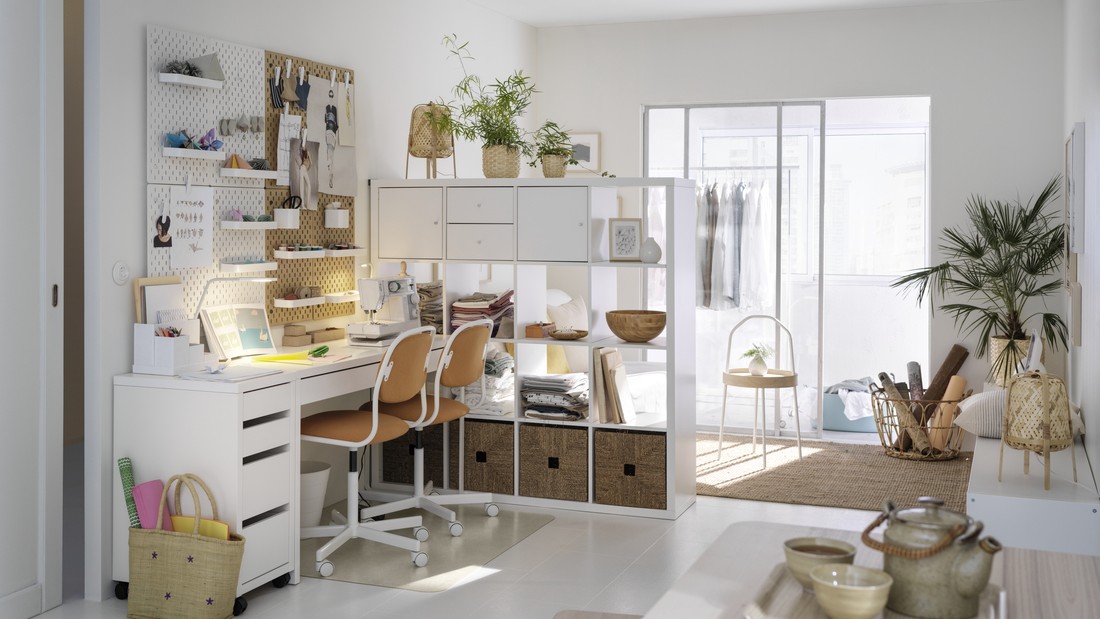
If your child’s room has limited space, the KALLAX table can be a practical solution with a functional design. This model is ideal for children who need a compact study table. Its minimalist design also makes it easy to match with various room layouts.
Advantages of KALLAX include:
39 cm depth to save space
Suitable for small corners
Hidden cable system
Flexible for various layouts
Suitable for children
This table helps create a comfortable study space even in limited areas while supporting your child’s learning comfort.
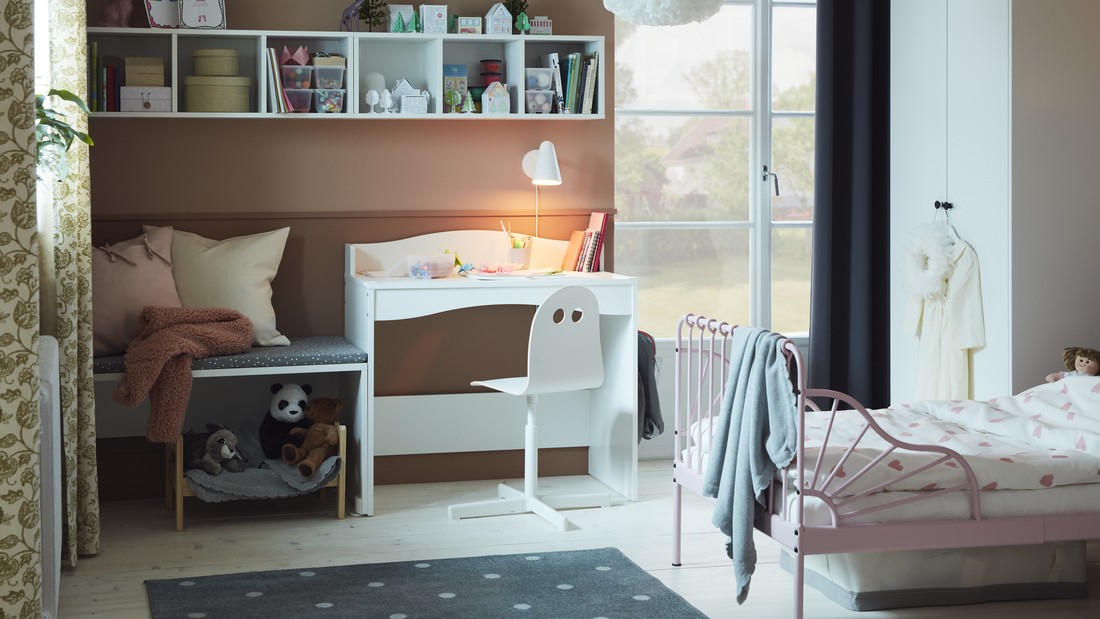
For children who need a wider table, the SMÅGÖRA model is a great choice. It is designed to support both learning and creative activities.
Its design also allows shared use with parents while assisting children during study time. SMÅGÖRA features:
Ideal width for studying
Can be used together with parents
Classic design
Hanging storage area
Suitable for various ages
These features support growing needs and create a more comfortable learning experience.
For teenagers, a table with more complete features is the better choice. The SMYGA table is designed to support more complex learning activities.
With a spacious work area, children can comfortably use devices such as laptops and monitors.
Advantages of SMYGA:
Wide workspace for laptops and monitors
Storage drawers
Strong and durable materials
Supports proper posture
Suitable for high school students
This table helps create a more organized study area, allowing children to stay focused and comfortable for long-term use.
Choosing the right study table size is an important step in creating a comfortable learning environment for your child. With the right table, children can study more effectively, maintain good posture, and improve learning quality.
Additionally, selecting a table that suits your child’s needs supports their development in the new year of school. To explore various ideal study table options, visit IKEA.co.id and find the best solution for your child’s learning space.
Please enter the verification code sent to your WhatsApp
Did not receive OTP?
Resend code in seconds