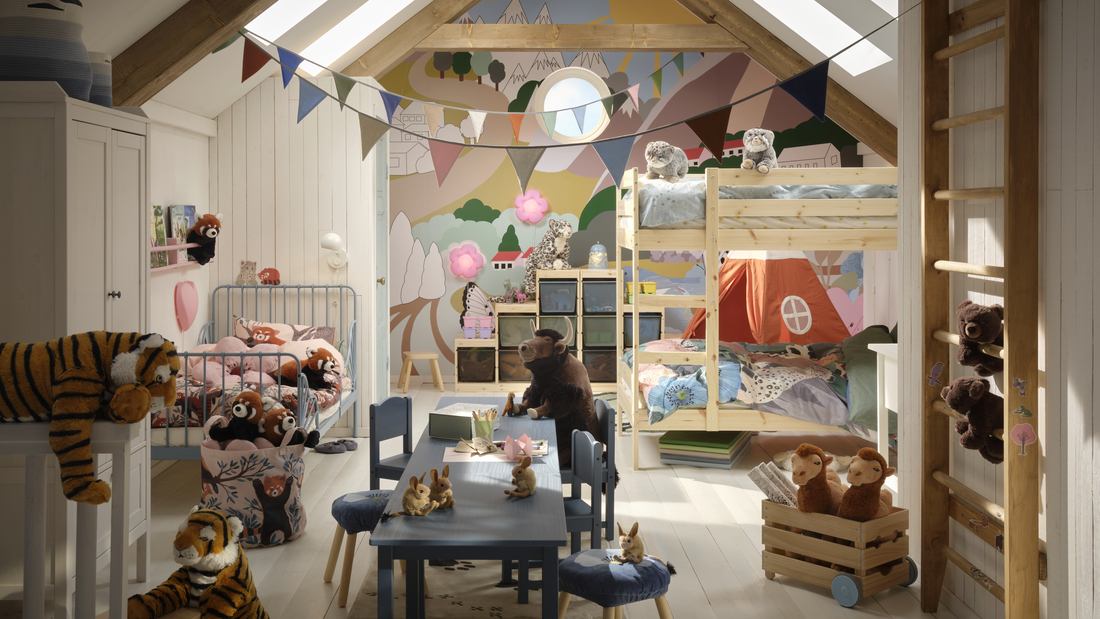
Minimalist bedrooms need furniture that can save space without compromising comfort. Bunk beds and loft beds can be great options because they make use of vertical space.
Although they look similar, they serve different purposes and suit different user needs. Let’s take a closer look at the differences below.
Good to know: Bunk and loft beds can help save space, but each model has different size and safety requirements. Always check the product specifications and the condition of your room before making a choice.
What are bunk beds and loft beds?
A bunk bed is a bed with two or more sleeping surfaces arranged vertically within a single frame. This model is suitable for two or more people who want to share a room without requiring additional floor space.
A loft bed is a single bed raised higher than a standard bed. The space underneath remains open and can be used for a study desk, seating area, storage, or play area.
Key differences between bunk beds and loft beds
Both bunk beds and loft beds make use of vertical space, but they serve different purposes. The following differences can help you determine which model best suits your bedroom needs.
|
Aspect |
Bunk Bed |
Loft Bed |
|
Number of beds |
Two or more beds arranged vertically. |
One raised bed. |
|
Space utilization |
Saves floor space for multiple sleeping areas. |
Saves floor space while providing open space underneath. |
|
Main function |
Suitable for sharing a sleeping space. |
Suitable for sleeping while accommodating other activities. |
|
Ceiling height |
Requires sufficient space above the top bed. |
Requires a higher ceiling to keep both the upper and lower areas comfortable. |
|
Appearance |
Tiered and playful. |
More open, with the feel of a small loft. |
Pros and cons of each type of bed
Each type of bed has its own advantages and disadvantages. The right choice depends on your specific needs. Consider the number of users, room size, ceiling height, and activities you plan to do before choosing a bed.
1. Pros and cons of bunk beds
Pros:
-
Saves floor space for two or more people.
-
Suitable for shared bedrooms.
-
Available in models with drawers, shelves, or additional beds.
-
The lower bed is easier to access.
Cons:
-
The lower area is occupied by a bed, limiting available activity space.
-
Activities on the upper bed may create noise.
-
Requires a safe clearance between the top bed and the ceiling.
-
Less suitable if you need a large open area.
2. Pros and cons of loft beds
Pros:
-
The space underneath can be used for a desk, sofa, or storage.
-
Efficient for small bedrooms or studio apartments.
-
Makes the bedroom more functional.
-
One bed can accommodate sleeping needs while leaving space for other activities.
Cons:
-
Generally designed for one person.
-
Requires a sufficiently high ceiling.
-
The ladder needs to be considered for safety and comfort.
-
The area underneath may feel stuffy if ventilation is inadequate.
Recommended beds from IKEA
IKEA offers a variety of bunk beds and raised beds with different functions. The following options can be selected based on your bedroom needs, number of users, and available space.
1. SMÅSTAD
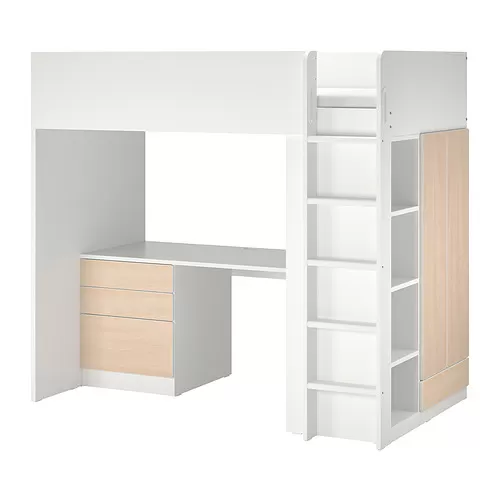
SMÅSTAD is suitable for small bedrooms that need sleeping, studying, and storage areas in one setup. Its combination includes a loft bed, desk, drawers, wardrobe, and bookshelf in one integrated arrangement.
The desk can be arranged to suit the room layout, making the space more flexible. This model is also designed as a multifunctional space for sleeping, studying, storing belongings, and playing.
2. VITVAL
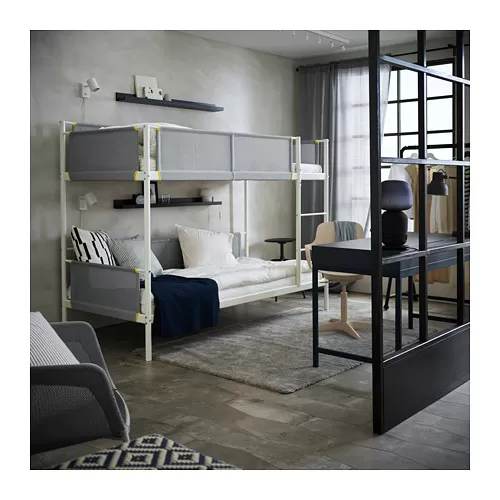
VITVAL offers a bunk bed with a lightweight, stable frame and fabric panels that create a softer look. The lower bed can also be used as a sofa because the side panels can function as backrests.
The VITVAL series is also available as a loft bed, leaving space underneath for a work or study desk or seating area. For installation, a minimum ceiling height of 240 cm is recommended for certain VITVAL loft bed models.
3. TUFFING
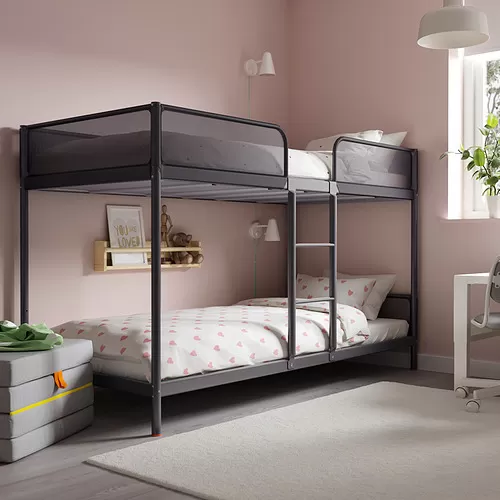
UFFING is a bunk bed designed to save floor space for other activities. Its design is lower than some other bunk bed models, making the bed easier to make and access.
This model is suitable for shared bedrooms that need two sleeping areas within a limited space. Its steel frame also provides a sturdy construction for everyday use.
4. SVÄRTA
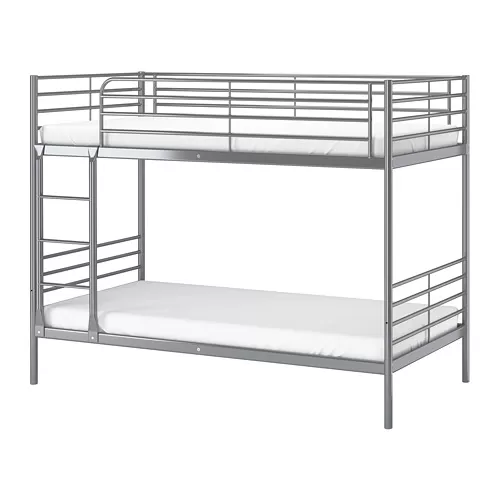
TA is a bunk bed that provides two sleeping areas within the same footprint. The remaining floor space can be used for playing, studying, or accommodating overnight guests.
This model is suitable for shared bedrooms that need more room for activities. SVÄRTA uses a 90 × 200 cm mattress size and has a maximum load of 100 kg per level, according to IKEA product information.
5. KURA
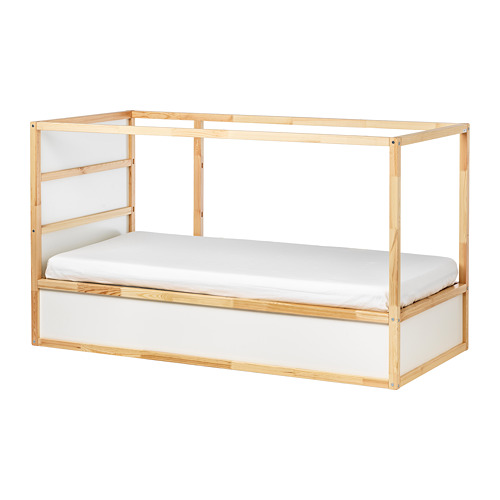
KURA is a reversible bed that can be adapted as a child grows. The frame can be flipped so that the sleeping area changes and the space underneath can be used as a play area.
Its design is suitable for parents looking for a bed that can be used through different stages of a child’s growth. The model also provides space for play without requiring too much additional furniture.
Tips for choosing the right bunk bed or loft bed for your bedroom
Choosing a bunk or loft bed should start with the condition of the room and the user’s needs. Consider the room size, bed capacity, materials, and safety factors before making a purchase.
1. Consider the room size
Measure the floor length and width as well as the ceiling height before choosing a bed. Make sure there is enough space to move around, open doors, and use the ladder comfortably.
2. Consider the users’ needs
Choose a model based on the number of people who will sleep in the room. Bunk beds are suitable for two or more people, while loft beds are more suitable for one person who needs additional space underneath.
3. Choose the right material
Wood creates a warm feel and suits a variety of bedroom styles. Metal or steel offers a more modern look and is easy to clean, so the material can be selected based on your needs and room style.
How to maximize bedroom space with a bunk or loft bed
Organize the bedroom according to function so that every corner remains neat and well arranged. Simple zoning helps a bunk or loft bed do more than save space—it can also make the room feel more spacious and comfortable.
Here are some ways to maximize bedroom space:
-
Separate sleeping, working, relaxing, and storage areas.
-
Use the space underneath a loft bed as a desk or seating area.
-
Use under-bed drawers to store belongings.
-
Add wall-mounted shelves to keep the floor clear.
-
Choose multifunctional furniture, such as benches with built-in storage.
-
Use different lighting to distinguish each zone.
-
Avoid oversized furniture that makes walking areas feel cramped.
Common mistakes to avoid when choosing a bed
Small mistakes when choosing or positioning a bunk or loft bed can reduce the room’s comfort and safety. Check the dimensions, placement, ventilation, and frame strength before installation.
-
Ignoring the ceiling height, making the sleeping area feel too cramped.
-
Placing the ladder in the path of a door, window, or walking area.
-
Ignoring ventilation and lighting in the upper area.
-
Placing too many items on the bed frame or underneath the bed.
-
Choosing a less sturdy material simply because it is cheaper.
-
Failing to ensure that the frame is securely installed.
-
Ignoring the manufacturer’s age limits, weight capacity, and safety instructions.
Read also: How to organize a bedroom easily to keep it neat and cozy
Find the right bed for your bedroom needs
A bunk bed is suitable for those who need multiple sleeping areas within one space. A loft bed is a better choice for one user who wants to use the space underneath for work, storage, or other activities.
IKEA offers a variety of bunk beds and raised beds with different designs and functions. Visit IKEA.co.id to explore the available bed options. Choose a model that suits your room size, user needs, and daily activities.
FAQ
Bunk beds are suitable for small bedrooms shared by two or more people. The vertical arrangement allows two sleeping areas to fit within roughly the same floor space as one standard bed.
Yes, as long as the frame is designed for adult users and has sufficient weight capacity. Check the product specifications, ceiling height, mattress size, and weight limit before purchasing.
Not necessarily, as the height varies between models. Loft beds generally require open space underneath the bed, so some designs may be taller than certain bunk bed models.
The mattress should match the frame size and the maximum thickness specified by the manufacturer. For bunk beds and loft beds, mattress thickness is also important to ensure that the safety guardrail remains at an adequate height.
Make sure the frame is installed according to the instructions and use a mattress that meets the required specifications. Regularly check the ladder, safety guardrails, frame connections, and weight capacity.